
Street photography is unposed photography of everyday life in public places. It is a genre of photography that records ordinary people and chance encounters as they happen, usually without the subject directing anything.
I'm Olivier Duong. I ran Inspired Eye, a street photography magazine, with Don Springer, and I have been shooting in the street for well over a decade. I have never liked the label much. Knowing what it is, and what it isn't, is the fastest way to stop making snapshots.
Street photography definition
Wikipedia defines street photography as "photography conducted for art or enquiry that features unmediated chance encounters and random incidents within public places." That is the classic definition, and it holds up well. Take out the jargon and you get four ideas:
- Unposed. You don't arrange the scene. Street photography captures life as it unfolds.
- Everyday life. The subject is ordinary: commuters, kids, a shopkeeper, a dog on a car roof. Nothing staged for the camera.
- A public place. Sidewalks, markets, parks, beaches, stations. It doesn't have to be a literal street.
- Intent. The photograph is made as art or as a record, not as a snapshot for the family album.
Nick Turpin, who founded the in-public collective in 2000, is described there as a photographer who records everyday life without staging or manipulation. That is the job in one line. The genre is about public life, and life doesn't stop at the curb.
My definition: life photography
The label bothers me because it ties a whole genre to one physical place. Nobody calls it hospital photography when you shoot inside a hospital. Garry Winogrand shot a whole book in the zoo, The Animals (1969), and nobody calls that zoo photography. If you shoot a store from the sidewalk, is it street photography? If you shoot the sidewalk from a window?
A photographer once told me his teacher never used the term at all. She handed out "life photography" assignments. That is the synonym I use. Street photography is photography of life, and it can be done in color photography or in black and white photographs, with or without people, pretty much anywhere you are. It covers life on the streets and life in a public place of any kind: people and places, the everyday people you pass without noticing.
It is also an umbrella term, not a narrow one. Portrait photography, landscape photography, documentary and fine art all converge in it. Don Springer liked to say "everything is street." Some photographers lean toward the documentary side and want a record of the street. Others lean toward art and use the street as a canvas. For me it is about documenting life. For Don it was closer to fine art and his vision of the afterlife. Both are street photography.
So the more useful question is what street photography means to you. Look at what you already shot. More faces or more empty streets? Then ask why. Answer that and you know what you are after, which makes you faster when a picture shows up.
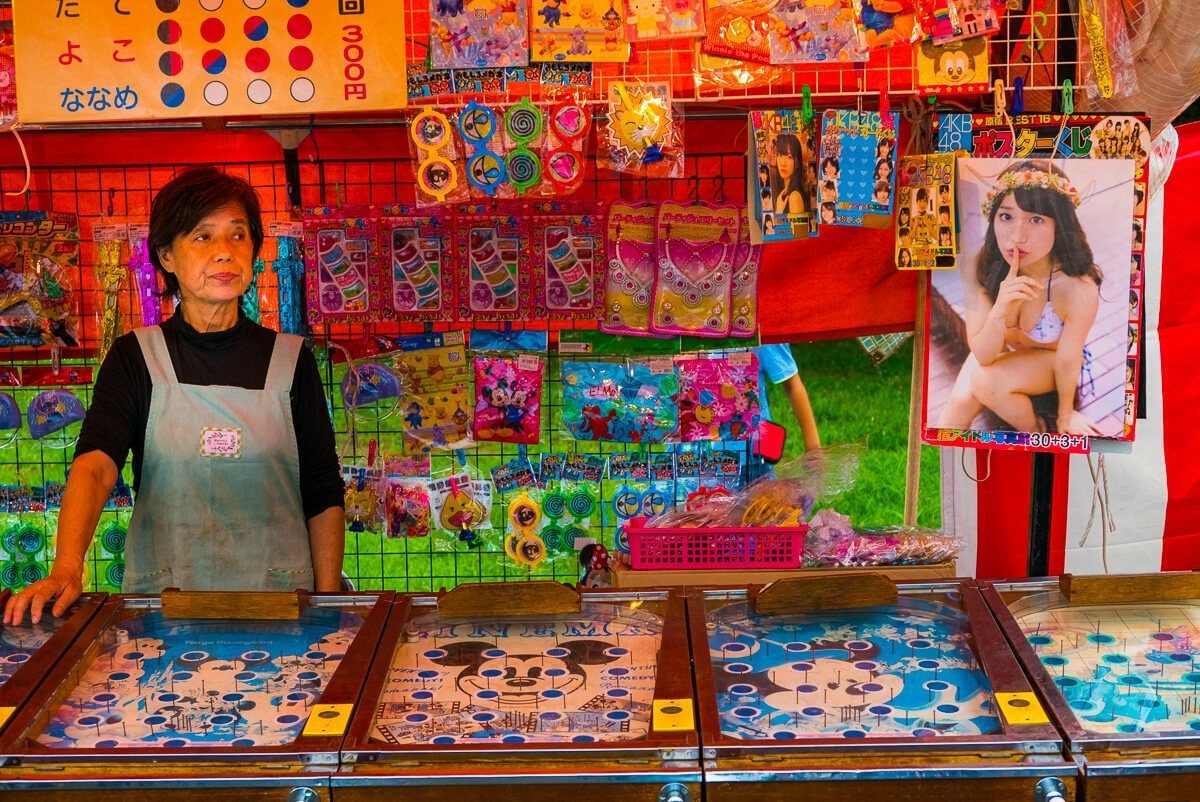
Is this street photography? A quick test
"Photos of a street ≠ street photography" is one of the most repeated replies on the street photography subreddit, and it's right. A picture of someone walking down the sidewalk is not automatically a street photograph. Most street photographs posted online are snapshots with a street in them.
The difference is intent. Give a camera to a relative at a birthday party and they will point it at the kid, check focus and press the shutter. Give it to a photographer and the calculations start. Where is the light? What colors are in the frame? What is distracting? Which angle makes the moment read?
| Street photograph | Snapshot |
|---|---|
| Has intent behind it | No intent, taken on reflex |
| Composition is considered | Subject centered, nothing else checked |
| Thinks about how to shoot | Thinks only about what to shoot |
| Carries an emotion or idea | Records that something was there |
I put it this way: street photographs are made, snapshots are taken. If your photos feel like the right column, read why your street photos look boring and what makes a good photograph.
Street photography vs documentary photography
Street photography is concerned with the instant. Documentary photography is concerned with the sequence. That's the cleanest split I know.
A street photograph has to stand on its own. You chase the one frame that works without a caption. A documentary photograph is usually one part of a story, so it leans on the pictures around it and often on text. Documentary also carries a witness role: it reports on something, like a community or an injustice, while street photography is mostly after art.
Documentary photography has more in common with documentary film than with a single street shot. The two genres still overlap constantly. I have always called myself a documentary photographer who works in the streets. If you want the full breakdown, with 25 documentary photographers to study, read documentary photography.
Street photography vs travel photography
Travel photography is after beauty. Street photography is after reality. That is the real difference, more than black and white versus color or wide angle versus zoom.
A travel photographer waits days for the perfect sunset and will remove a trash can in post. In street photography, removing something from the frame is a sin. You shoot what is there, pretty or not. When I travel I try to shoot like a local, not chase the famous landmark, because the place you are visiting is somebody's home. If you are heading to a city soon, our street photography locations guide lists the neighborhoods worth walking in dozens of cities.
A short history of street photography
Nobody invented street photography. People photographed their own lives as soon as they had a camera. The idea behind it is older than the camera: the 19th century flâneur, the idle walker who watches people in the city, described by the poet Charles Baudelaire. A few milestones in the history of street photography matter.
- 1838, Louis Daguerre. His view of the Boulevard du Temple in Paris is often called the first photograph with a person in it. The exposure took minutes, so the moving traffic vanished and only a man having his boots shined stayed still long enough to register.
- 1877, John Thomson. His Street Life in London, made with the journalist Adolphe Smith, set out to show the city's working poor "taken from life." That intent is why many people call him the first real street photographer.
- 1890s to 1920s, Eugène Atget. Atget photographed old Paris, mostly empty streets and shop windows, as reference material for painters. Berenice Abbott later saved his archive and championed his work.
- 1925, the Leica. Oskar Barnack at Leitz built a small camera that used 35mm cinema film. For the first time you could shoot handheld, fast and unnoticed. Modern street photography starts here.
- 1930s to 1950s. Henri Cartier-Bresson publishes Images à la sauvette (1952), known in English as The Decisive Moment. Helen Levitt photographs children playing in New York City. Walker Evans hides a camera in his coat on the subway.
- 1958 onward. Robert Frank's The Americans breaks the polite rules. Garry Winogrand and Lee Friedlander shoot fast and loose. In the 1970s color street scenes arrive through photographers like Joel Meyerowitz and William Eggleston.
Colour photography took longer to be taken seriously. MoMA's 1976 William Eggleston show was a turning point in the United States, and generations of photographers since have worked in color from the start.
The whole history of street photography follows the camera getting smaller. Today it fits in your pocket as a phone, which is why so many people start here. For the ideas behind it, read the decisive moment, and to meet the photographers, start with our street photographers hub.
Street photography genres and styles
Don't see these as boxes. If you are a beginner, shoot for a while and notice which kind of picture you respond to. You will drift toward one style or mix a few.
Candid street photography
Unposed photos of people living their lives, where the point of the picture is what is happening in it. This is what most people mean by street photography. Candid photography covers how to catch real moments without being noticed or being creepy.
Street portraits
Portraits of strangers made in public, usually with permission and sometimes posed. They are easy for viewers to "get" and a good way to get closer. See how to photograph strangers for what to say and how to ask.
Documentary street photography
Street photography used to tell a story over many frames: one neighborhood or one issue, followed for years. Read documentary photography for the difference from photojournalism and the photographers who defined it.
Urban photography and the urban landscape
Photographs of the city itself: buildings, light on glass, the man-made landscape. Many say it isn't street photography at all when no one is in the frame. Urban photography shows how to photograph the city with or without people.
Small town and rural street photography
Street photography where there is no crowd. It asks you to shoot fewer people more closely and to treat the town as one long project. See street photography in a small town.
Humor and juxtaposition
Photos built on a funny coincidence, like a barefoot man in front of a shoe store. This style is popular because anyone gets the joke. Juxtaposition photography explains how to find and build these.
Fine art street photography
Less about the event, more about emotion, color and composition. Light, shadow and shape become the subject. Start with light and shadow photography and photography composition.
Styles by technique
Some styles come from how you shoot rather than what you shoot. Black and white street photography strips a scene down to gesture and tone, while color street photography makes color the subject. Night street photography and rain photography feed on city lights and wet reflections. Flash street photography freezes people up close with hard light. Motion blur photography uses a slow shutter to show movement. Many photographers still choose film street photography for the look and the slower pace. And if people are what you care about most, people photography covers portraits and candids beyond the street.
The photo essay
A series of street photographs edited and sequenced to say one thing. How to make a photo essay walks through picking a subject, shooting it and sequencing the edit.
Does street photography need people?
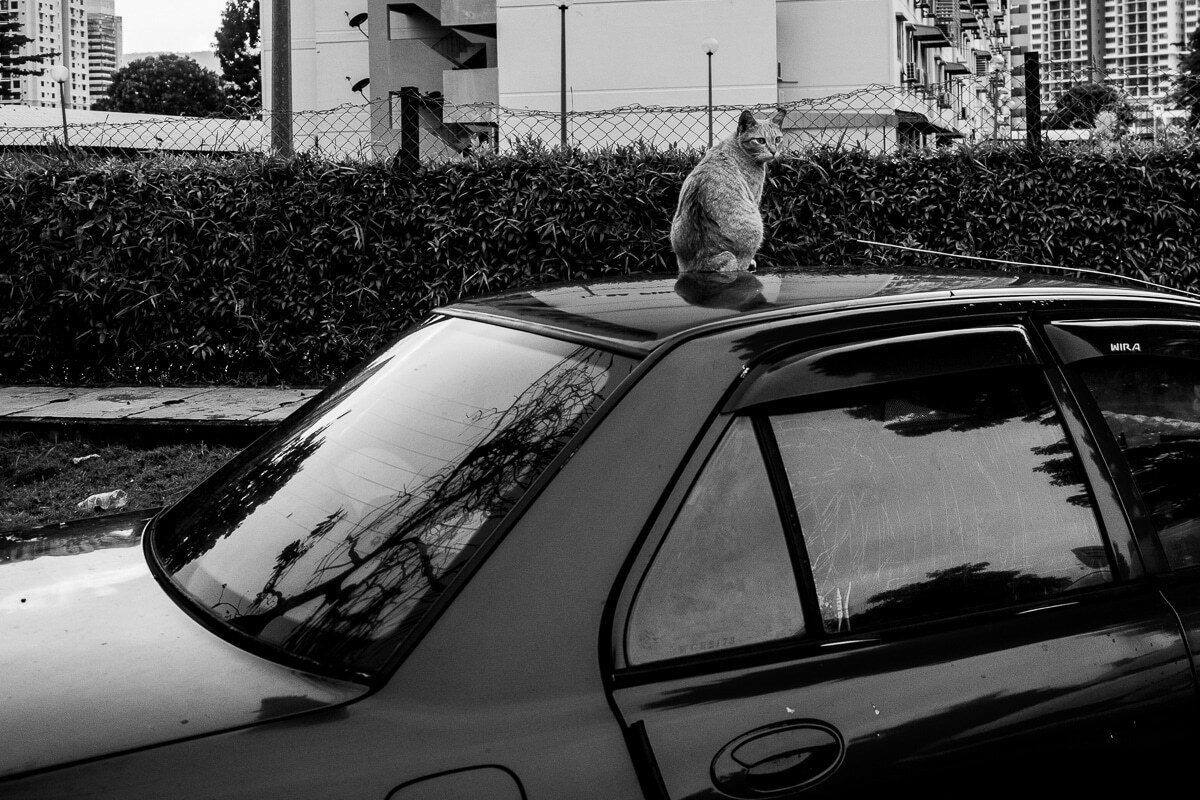
No. Street photography can be made without people, and some of the best work is. But you have to work harder. Nothing grabs a viewer's eye like another human, so without one you need something else to hold attention: strong light, a bold color, a reflection, an animal, or traces that people were there, like a bicycle left against a wall.
Eugène Atget's Paris is mostly empty. Saul Leiter often hid people behind fogged glass until they were shapes of color. See our Saul Leiter profile for how he did it.
What makes good street photography
Every street photograph has a visible part and an invisible part. The visible part is what you shoot: the person or the scene. You can point at it. The invisible part is how and why you shoot it: composition, timing, and the psychology of how a viewer's brain reads the frame. You can't point at that, but it decides whether the picture works.
Most street photographers only think about the what. That is how you end up with a hard drive full of people walking down the street. Good street photography comes from the how and the why. In my online street photography course I call these picture patterns. They include frame dynamics, the law of proximity, the law of similarity and mid-point tension, all taught through what I call the Eye, Heart and Mind of the photographer. Once they are installed, you start seeing them in the wild without effort.
Street photography tips to get you started
You need any camera and a public place. A phone is enough to take photos and learn to see. If you want a dedicated camera, pick something small you will carry every day: a compact or a small mirrorless camera. An old DSLR (digital single-lens reflex camera) works too if that is what you own. A big zoom lens makes you conspicuous. Many street photographers use a 28mm or 35mm focal length instead.
For camera settings, aperture priority mode at f/8 gives you enough depth of field to forgive small focus errors. With zone focus you can bring the camera to your eye and shoot without waiting for autofocus. Keep your camera on and in your hand, not in the bag. Then walk slowly and watch people. The good shots come to photographers who stay in one place long enough to isolate and capture moments that might otherwise go unnoticed.
- Gear: best camera for street photography and best lens for street photography.
- Settings: street photography settings for zone focus and daylight.
- Nerves: taking pictures of strangers is the hardest part for most people. Read how to overcome the fear of street photography.
- Ethics: photographing people who are vulnerable, or children, deserves more thought. See is street photography creepy.
- The law: in most countries, taking photos of people in public is legal, with exceptions. Read is street photography legal before you go.
The full path from first walk to first keeper is in street photography for beginners. If you'd rather learn it as a system, the street photography course teaches the picture patterns in short 3 to 5 minute videos.
Frequently Asked Questions
What is street photography in simple terms?
Street photography is unposed photography of everyday life in public places. You photograph ordinary people and chance moments as they happen, without directing them. It doesn't have to be on a street: markets, beaches, parks and stations all count. What separates it from a snapshot is intent: the photographer thinks about composition and timing before pressing the shutter.
Does street photography have to include people?
No. Street photography can be made without people, using light, color, reflections, animals or traces of human presence as the subject. Eugène Atget photographed mostly empty Paris streets. It is harder, because a person is the strongest draw for a viewer's eye, so an empty frame needs something else strong enough to hold attention.
What is the difference between street and documentary photography?
Street photography is about the single instant: one frame that stands on its own. Documentary photography is about the sequence: a series of images that tells a story about a subject, often with text. Documentary also has a witness or reporting role. The two overlap, and many photographers, including me, do documentary work in the streets.
Who is considered the first street photographer?
It depends on the definition. Louis Daguerre's 1838 Boulevard du Temple image is the earliest photograph showing a person on a street. John Thomson's 1877 Street Life in London was the first deliberate street photography project. Modern handheld street photography became practical with Oskar Barnack's Leica, released in 1925.
Is street photography legal?
In most countries you can photograph people in public places without permission, because there is no reasonable expectation of privacy on a public street. There are exceptions. Some countries, such as France, give people stronger rights over their image, and a photo used for commercial purposes, like an ad, usually needs a model release. This is general information, not legal advice. Check the rules where you live.
Is street photography considered art?
Yes. Street photography is collected by major museums such as MoMA and the Art Institute of Chicago, and photographers like Henri Cartier-Bresson, Helen Levitt, Robert Frank and Garry Winogrand are central to the history of photography. Some street photographers lean toward fine art, using the street as a canvas for light and form, while others lean toward documenting life as a record. Both sides care about aesthetics and storytelling.