
Yes, you can do street photography in a small town. Shoot fewer people more closely, and treat the whole town as one long project instead of hoping for a crowd.
I'm Olivier Duong. I have photographed in big cities and in places where nothing much happens, and I get the same email over and over: "I can't do street photography where I live." One Reddit user put it perfectly: "I wish I could properly convey how absolutely dead my town is." Another: "There just aren't enough people or places to shoot the way I'd like." Small towns have produced some of the best street photography ever made.
Why street photography feels hard in a small town
Most street photography advice assumes you live in a big city like New York City. Walk the busy avenue and blend into the crowd. In a smaller town that falls apart for two reasons.
- Fewer people. A quiet main street might give you a handful of passers-by an hour, not hundreds. Waiting for something to happen feels like waiting forever.
- You stand out. There's no crowd to hide in. As one photographer wrote, "since there's so few people walking about you tend to freak folks out a bit when you point a camera directly at them." In a small rural town, locals notice a stranger with a camera, and they may know you.
Both are real. Street shooting in rural towns asks you to adapt, and to interact with people more than a street photographer in a big city would. Both problems also point to the fix. The bustle of big cities is not what makes a good photograph. Seeing is. And a small town gives you something a tourist in a big city never gets: time with the same streets.
Photographers who shot great work in small places
When people tell me their town is too dull, I show them these photographers. None of them needed a famous city.
- Tom Wood lived for about 25 years in New Brighton, across the River Mersey from Liverpool, and photographed it almost every day. Locals called him "Photie Man." He was such a familiar figure that people got used to him, and many posed willingly. See the Photie Man archive.
- Mark Cohen was born in Wilkes-Barre, Pennsylvania, a small city in coal country, and photographed there for most of his life. His close-up, flash-lit street photographs, often cutting people off at the frame edge, are some of the most radical in the genre.
- Jim Mortram photographed people within a few miles of his own front door in Dereham, Norfolk, for his project Small Town Inertia. It is documentary more than street, and it's proof that depth beats distance.
- Alec Soth made Sleeping by the Mississippi (2004) in small river towns along the Mississippi River. Quiet portraits and interiors, no crowd in sight.
- Scott Strazzante, a newspaper photographer, spent 27 years on Common Ground, following one Illinois family farm as it was sold and turned into a suburban subdivision.
Notice the pattern. Shooting in small towns worked for them because every one of them stayed. They went back to the same place for years and built a body of work. That is the small-town advantage. For more on long projects, read documentary photography.
Use your home-turf advantage
The best place for street photography is wherever you are. Familiarity breeds contempt: great images can be right in front of your nose, and you stop seeing them because you walk past them every day. Every place goes from "wow" to "meh" in a few weeks. That happens in Tokyo too. I have moved between countries with my family, and the energy of new fades everywhere.
Living in a small town gives you a home-turf advantage. You know the little streets no travel guide mentions. You know when the school lets out and where the sun hits in the evening. You can make mental notes of where a picture could happen and come back again and again until it does. When I travel, I often see a frame that is missing one element, like a person on the left, and I can't wait for it because I'm leaving. You can.
And big cities have been photographed to death. Nobody else is shooting your town. Work from somewhere new stands out.
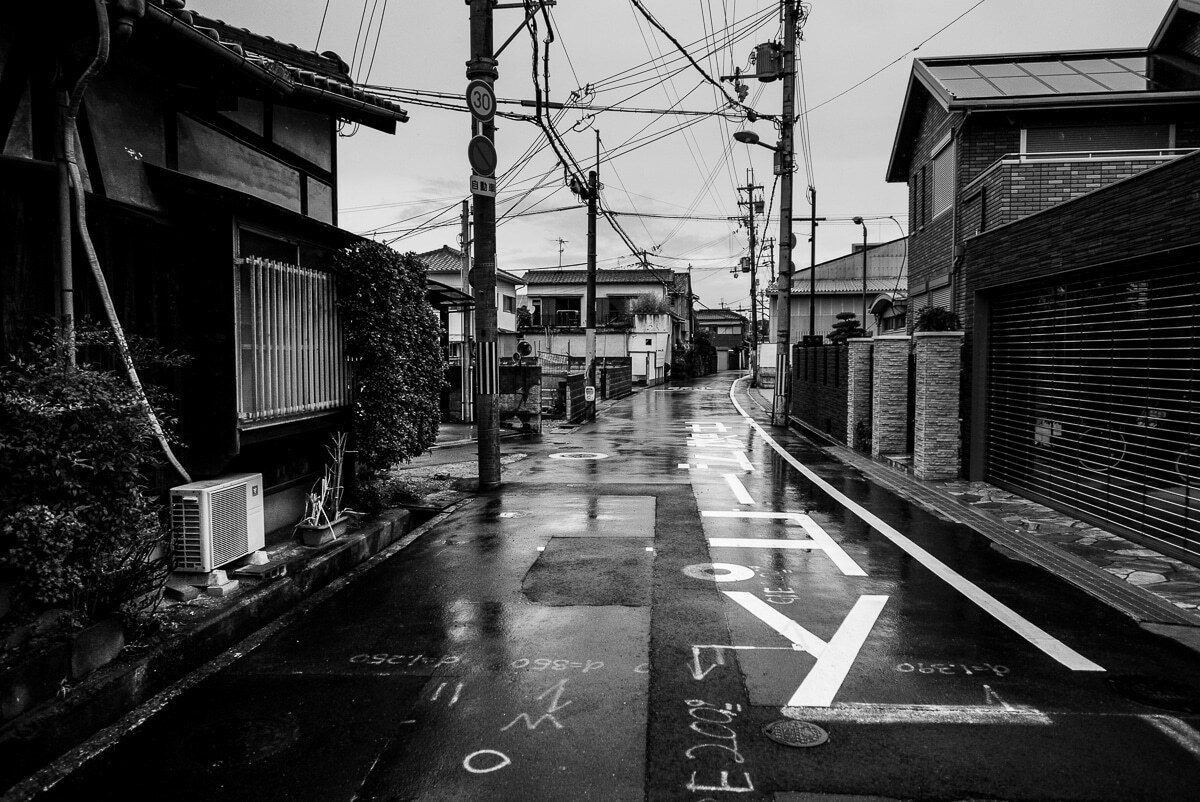
What to shoot when nobody's around
Street photography without people is harder, because nothing attracts the eye like another human. So you need something else strong enough to hold the viewer. These work well in quieter areas:
- Light. In a small town you can plan for it. Find the one street that catches the low sun at dusk and go there at the right time of day.
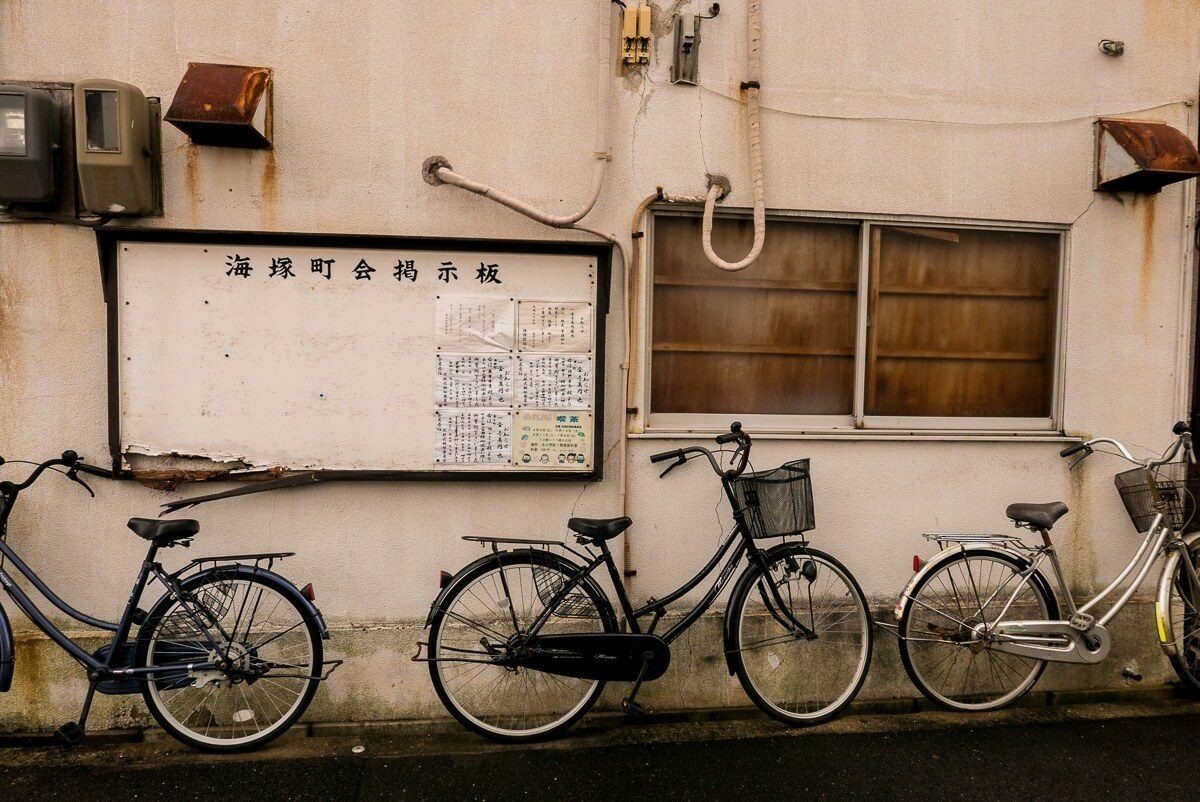
- Traces of people. A bicycle against a wall, laundry, a chair on a porch, a hand-painted sign. Shoot like an archaeologist who just found the scene.
- Color. A red door or a faded storefront. Make one color the whole picture.
- Animals. Dogs and cats are everywhere in small towns and rarely mind a camera.
- Weather. Fog and snow turn a plain street into a mood.
- Change. Shops closing and new ones going up. Record it now. In ten years it will be history.
The photographer Jon Lister, whom we featured in Inspired Eye, did exactly this on Parramatta Road in Sydney. He "would rarely see any people on the street," so he photographed the color of the buildings and the shops that kept closing. Years later much of it was gone.
Where to find people in a small town
Street photography is really life photography, so go where life is. Every town has pockets where people gather, even if they are small.
- Main street and the biggest crossroads, especially at lunch and after work.
- Markets, the bus station, the school gate, the park. Places people wait are gold.
- Special events. Fairs, parades, a festival, fireworks, a pop-up circus, a high school football game. Fairs are probably your best bet. Search local events online and put them in your calendar.
- The next town over. If yours is truly empty on weekdays, a larger town nearby on market day gives you practice with crowds.
For more ideas when you're stuck, see street photography ideas.
How to photograph people when everyone notices you
You can't hide in a small town, so stop trying. Be visible and relaxed instead.
- Become the local photographer. Tom Wood's neighbors knew him as the man with the camera. Once people know you, they stop reacting to you and go back to living. That's when the candid pictures come.
- Talk to people. A nod or a hello, then a sentence about what you are doing if they ask. In a small town, conversation is normal. Use it. See how to photograph strangers for what to say.
- Make street portraits. With fewer people around, asking for a portrait is often easier than sneaking a candid. Local people are frequently happy to be photographed by someone who clearly lives there.
- Consider a longer focal length. Some small-town photographers use a 50mm or a short zoom lens to leave people more room in a quiet area. It's a fair choice when you're learning. I still prefer getting closer with a wider lens, because the pictures feel like you were there.
- Know the rules. Photographing people in public is legal in most places, but a small town talks. Read is street photography legal and be ready to explain yourself kindly. If fear is the real block, read how to overcome the fear of street photography.
Treat the town as one long project
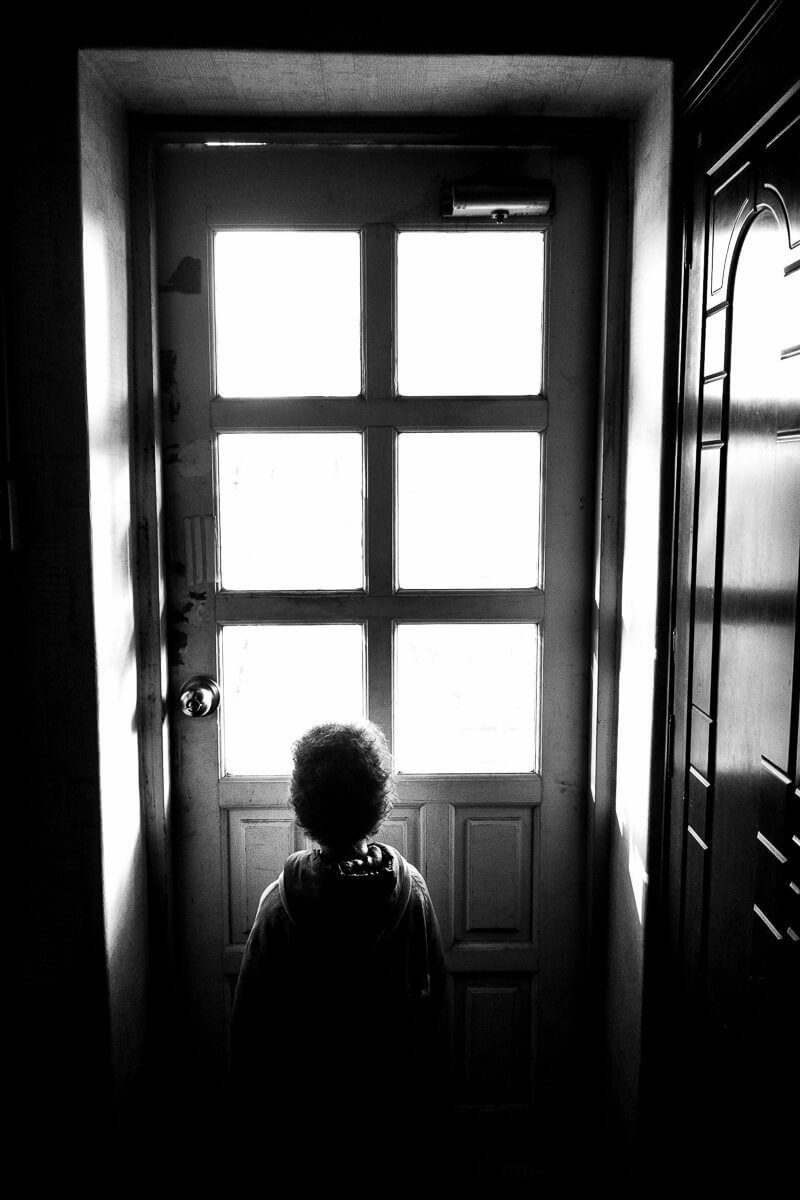
In a big city you can go out, hunt for single great street photographs and come home with a few. In a small town, single frames are rarer, so think in series. Pick a theme and add to it every week: the main street through the seasons, the people who work at night, one family business, the buildings that are changing.
A project gives every walk a purpose, even a quiet one, and it gives you a reason to revisit the same surroundings. You stop taking photos at random and start trying to tell a story about your part of the world. It also turns ordinary, mundane pictures into something bigger once you edit and sequence them together. That is how a small-town gallery or book gets made. Read how to make a photo essay for the editing side.
Your seeing matters more than your location
A lot of photographers in famous cities make boring pictures too. Just being somewhere "street-genic" doesn't make great street photography. The difference is how you see, and that travels with you.
That is what my street photography course is about: composition and picture patterns that work on any subject, and how to find images you didn't think about. It is not a small-town course and it won't find you more people to shoot. But it trains you to make more from the scenes you already have, at any time of day. If your photos feel flat wherever you shoot, start with why your street photos look boring.
If you do travel, our street photography locations guide and urban photography guide cover the big cities. But come home and keep shooting where you live.
Frequently Asked Questions
Can you do street photography in a small town?
Yes. Photographers like Tom Wood in New Brighton, Mark Cohen in Wilkes-Barre, Jim Mortram in Dereham and Alec Soth along the Mississippi built major bodies of work in small places. Shoot fewer people more closely, find the spots where people gather, use light and traces of people when streets are empty, and treat the town as one long project you return to for years.
What do you photograph when there are no people on the street?
Make something other than a person the subject. Light at dusk, a bold color, reflections, animals, weather and traces of people such as bicycles, laundry, a chair on a porch or signs all work. Buildings and shops that are changing are worth recording too. Without a person you need a stronger visual hook, so be pickier and wait for the light.
How do I avoid attention doing street photography in a small town?
You mostly can't, so be open instead. Walk the same streets often enough that people know you, and explain what you are doing if asked. Street portraits with permission are often easier than candids. Tom Wood became known as the local photographer, and that familiarity is what let people relax around his camera.
Is rural or small-town street photography still street photography?
Yes. Street photography is about unposed everyday life in public places, not about crowds or city streets. Rural and suburban street photography covers main streets, fairs, parking lots and front yards. Alec Soth's small-town river work and Scott Strazzante's farm-to-subdivision project show how much there is to photograph outside big cities.