
Urban photography records the city itself, with or without people. Street photography is about people and moments, while urban photography treats the buildings and light of the urban environment as the main subject.
I'm Olivier Duong, a street photographer who has lived in and photographed cities in several countries. Most of my frames have people in them, but some of my favorites are empty streets, walls and light. City pictures without people only work when something else holds the viewer, and that can be learned.
What is urban photography?
Urban photography is a broad genre that covers anything shot in a built-up area: architecture, cityscapes, the urban landscape at street level, night photography, and the traces people leave behind. Its subject is urban life and the city that shapes it.
It overlaps with older genres. Architectural photography focuses on single buildings, usually shot straight and clean. Cityscape photography shows the skyline from a distance. Landscape photography brings its patience and its tripod. Documentary photography records how people live in the city. Urban photography borrows from all of them but stays closer to the street, and it is usually looser and more personal.
Urban landscape photography is the part I care most about. The man-made landscape at eye level: a wall catching the last sun, a staircase, a fire escape, a row of windows. On the old Inspired Eye street photography hub I listed urban landscape as one of the sub-genres of street photography, and I also noted that many would argue it isn't street photography at all.
Urban photography vs street photography
The difference is the main subject. In street photography, the main subject is people: a gesture or a moment between strangers. In urban photography the main subject is the city, and people, when they appear, are part of the scenery. A tiny figure crossing a vast plaza is an urban photograph. A close shot of that same person's face is a street photograph.
Both share the same tools and often the same walk. On a good day I shoot both. If you want the full definition of the other side, read what is street photography.
| Street photography | Urban photography | |
|---|---|---|
| Main subject | People and moments | The city and its light |
| People | Essential | Optional, often small in the frame |
| Pace | Fast, reactive | Slower, you can wait for light |
| Typical lens | 28mm or 35mm | Wide-angle to telephoto |
| Tripod | Almost never | Sometimes, for long exposure |
Urban photographers to study
Learning from urban photographers speeds you up more than any gear. These are worth a long look:
- Eugène Atget photographed old Paris street by street, mostly empty, before it was torn down.
- Berenice Abbott made Changing New York in the 1930s: skyscrapers and storefronts in a city being rebuilt.
- Fan Ho turned 1950s and 1960s Hong Kong into light and geometry. Read our Fan Ho profile.
- William Klein shot New York City in the 1950s with grain and blur, and broke every polite rule.
- Stephen Shore and the New Topographics photographers (a 1975 exhibition at the George Eastman House) looked at parking lots and tract houses without romance.
- Michael Wolf filled the frame with the facades of Hong Kong tower blocks in Architecture of Density, with no sky and no horizon.
Few of these were only urban landscape photographers. Most shot people too, and their best photos mix the bustle of urban life with the structure of the city landscape. More photographers are in our street photographers hub.
What to photograph in the city
Nothing attracts the eye more than another human. When you take the people out, you have to work harder to hold the viewer's attention by other means. These are the subjects I lean on:
- Buildings with something extra. A building alone rarely makes a great photograph. Wait for dramatic light or a strange detail.
- The scenery. Look at the street the way a landscape photographer would. A wide-angle lens is perfect for the urban landscape.
- Color as the subject. One bold color against gray concrete can carry a whole frame.
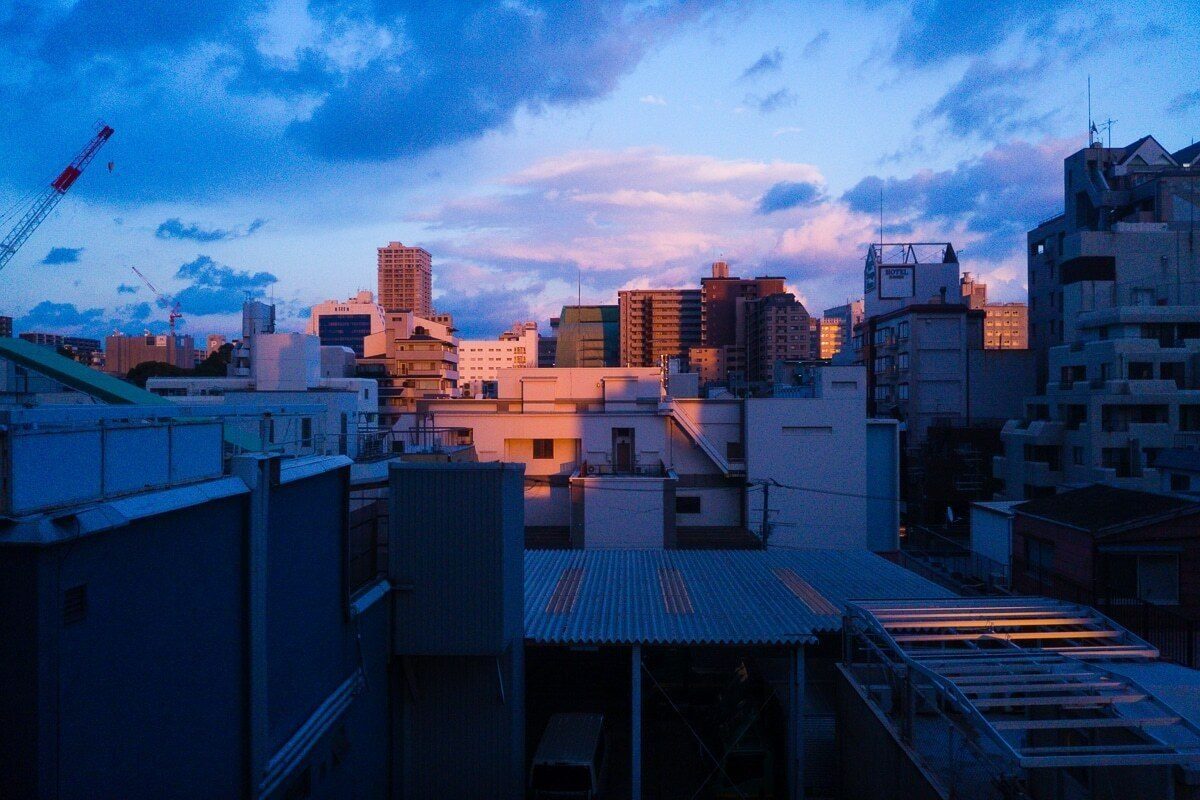
- Light as the subject. Slivers of sun between towers or window light at dusk.
- Reflections. Windows, puddles, car doors and polished floors give you patterns and layers.
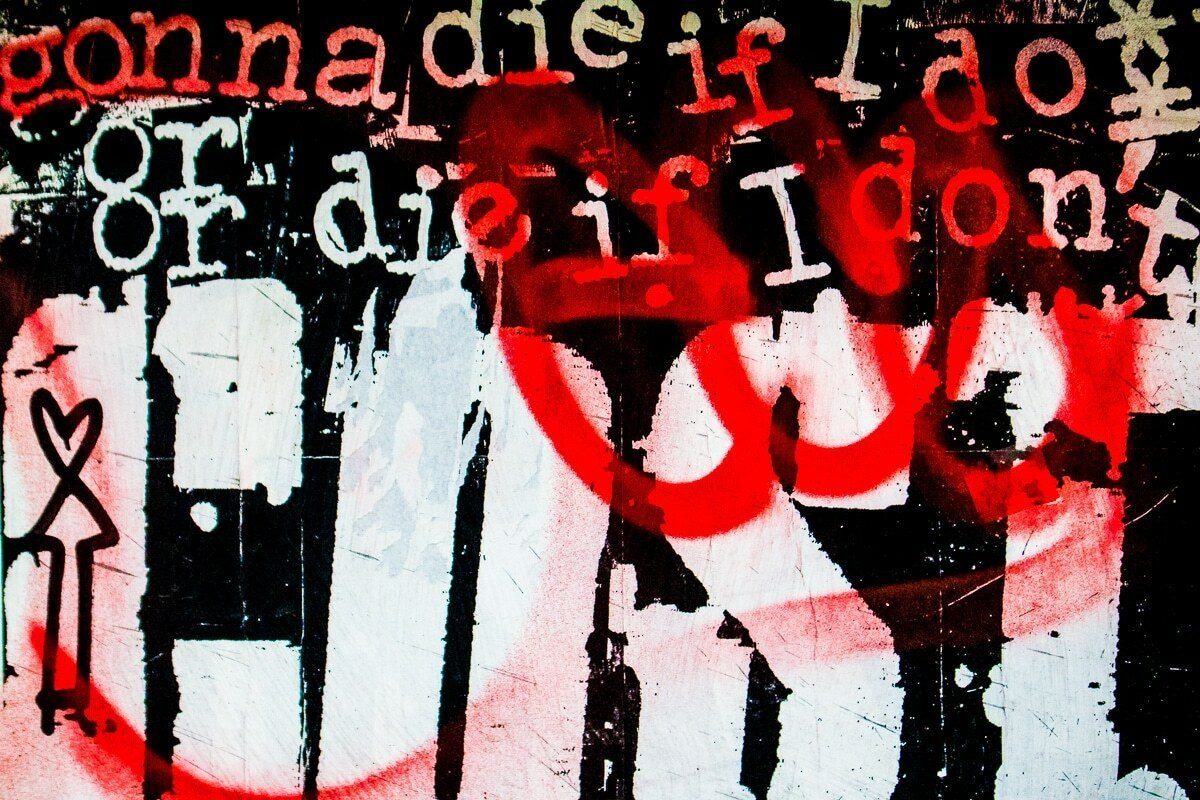
- Murals, billboards and graffiti. Easy subjects, fully human-free. Crop in tight.
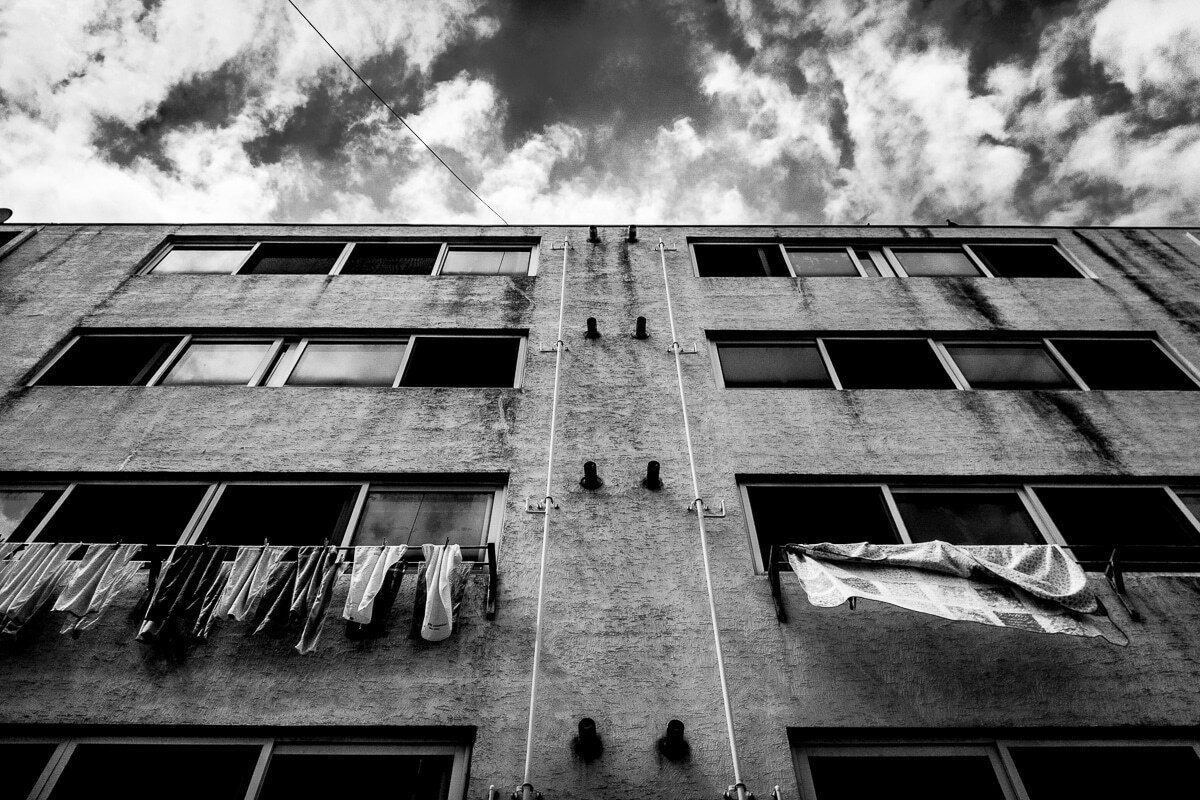
- Traces of people. Laundry on a balcony, a bicycle, a shopping cart, a chair left on the sidewalk. Shoot like an archaeologist.
Best lenses and cameras for urban photography
Any camera works. A phone is fine for city photography in good light. A full-frame or APS-C mirrorless camera helps at night, when you need higher ISO. What matters more is the focal length.
- Wide-angle (16mm to 28mm): for tight streets and tall buildings. Watch for converging verticals when you tilt up.
- 35mm and 50mm: close to how we see. Good for the urban landscape at eye level and for placing a small figure in a scene.
- Telephoto (85mm to 200mm): compresses distance, so buildings stack on each other and the city feels dense. Great to isolate one detail on a facade, or to frame the Empire State Building between towers from blocks away.
A zoom lens covers all of it if you don't want to change lenses. A small prime lens is lighter and less conspicuous, and it teaches you to compose with your feet. Framing through the viewfinder rather than the rear screen also helps you see perspective and keep verticals straight. For more detail, see best camera for street photography and best lens for street photography.
Camera settings for city photography
Urban subjects are mostly static, so you have more freedom than in street photography. Lighting conditions change fast between streets, though, so check exposure whenever you turn a street corner.
- Aperture: f/8 to f/11 keeps the whole scene sharp. Use aperture priority for most shooting.
- Shutter speed: 1/250 s or faster if people are walking through. Switch to shutter priority when you want to control motion.
- Motion blur: 1/15 s to 1/2 s handheld or braced turns crowds and traffic into streaks while the buildings stay still.
- Long exposure: several seconds on a tripod for light trails and smooth water after dark.
- ISO: as low as the light allows in daytime, as high as you need at night.
- White balance: auto white balance works in daylight. Under mixed artificial light sources at night, shoot RAW and set it later.
Exposure for high contrast scenes: expose for the highlights and let the dark shadows go black. That is how Fan Ho's pictures work. The full setup for walking around is on street photography settings.
Composition for the urban landscape
The city is full of lines, shapes and repetition. That makes it a great place to practice composition.
- Leading lines. Streets, rails, curbs and building edges pull the eye into the frame. See leading lines photography.
- Frames within frames. Doorways, arches, windows and gaps between buildings. See framing in photography.
- Repetition and pattern. Rows of windows or balconies. Break the pattern with one different element and the eye goes straight to it.
- Vantage point. Don't shoot everything from eye level. Go up a parking garage or a footbridge, or crouch low and shoot up.
- Negative space. A small figure against a huge wall shows scale. See negative space photography.
- Light and shadow. Hard light makes graphic shapes. See light and shadow photography.
Composition is where most city photos fail. They show a nice building, but nothing about how it is placed in the frame holds the viewer. In my online street photography course I teach this as picture patterns: frame dynamics, the law of proximity, the law of similarity for repeating shapes and mid-point tension. They apply to a facade as much as to a crowd. For the basics, start with photography composition.
Best time to photograph the city
Every time of day gives you something different, which is the advantage of the city.
- Golden hour around sunrise and sunset paints walls warm and throws long shadows down the street.
- Blue hour just after sunset balances the sky with the city lights. It lasts only a short time, so be in position early.
- Midday on a sunny day gives hard, graphic shadows between tall buildings. Great for black and white.
- An overcast day gives soft, even light for textures and color.
- Night turns shop windows and neon into your light. Rain doubles it with reflections.
Where to practice urban photography
The best place is wherever you are. Every city gets boring once you live in it, and that's exactly when you start seeing it properly. Famous views have been photographed to death. The side streets you know better than any tourist have not, and you can return to them until the light is right. That home-turf advantage is worth more than a plane ticket.
If you are traveling, dense cities with strong light reward urban photographers. Our city guides for Hong Kong, Tokyo, Osaka and New York list the best spots, and the full list is on street photography locations. If your town is small and quiet, read street photography in a small town.
Frequently Asked Questions
What is urban photography?
Urban photography is photography of cities and built-up places, where the city itself is the main subject. It includes architecture, cityscapes, the urban landscape at street level and night scenes, with or without people. When people appear, they are usually part of the scene rather than the focus, which is what separates it from street photography.
What is the difference between street photography and urban photography?
Street photography is about people and moments in public places, so a person is usually the main subject. Urban photography is about the city itself: buildings, light, structure and space. People can appear but are often small in the frame. The two overlap and many photographers shoot both on the same walk.
What is urban landscape photography?
Urban landscape photography treats the city the way a landscape photographer treats nature. The subject is the man-made landscape: streets, walls, buildings and the space between them, often at eye level rather than from a skyline viewpoint. Stephen Shore and the New Topographics photographers of the 1970s are its best-known examples.
What lens is best for urban photography?
A wide-angle lens between 16mm and 28mm is the most common choice, because it fits tall buildings and tight streets into the frame. A 35mm or 50mm works well for eye-level scenes. A telephoto lens is useful for compressing buildings together and isolating details. A zoom covering wide to short telephoto handles most situations.
Is street photography without people just urban photography?
Yes, although many would call it urban photography at that point. Without a person in the frame you need something else to hold attention, like strong light, a bold color, a reflection or signs that people were there. Eugène Atget's mostly empty Paris streets are among the most influential photographs in the genre.