
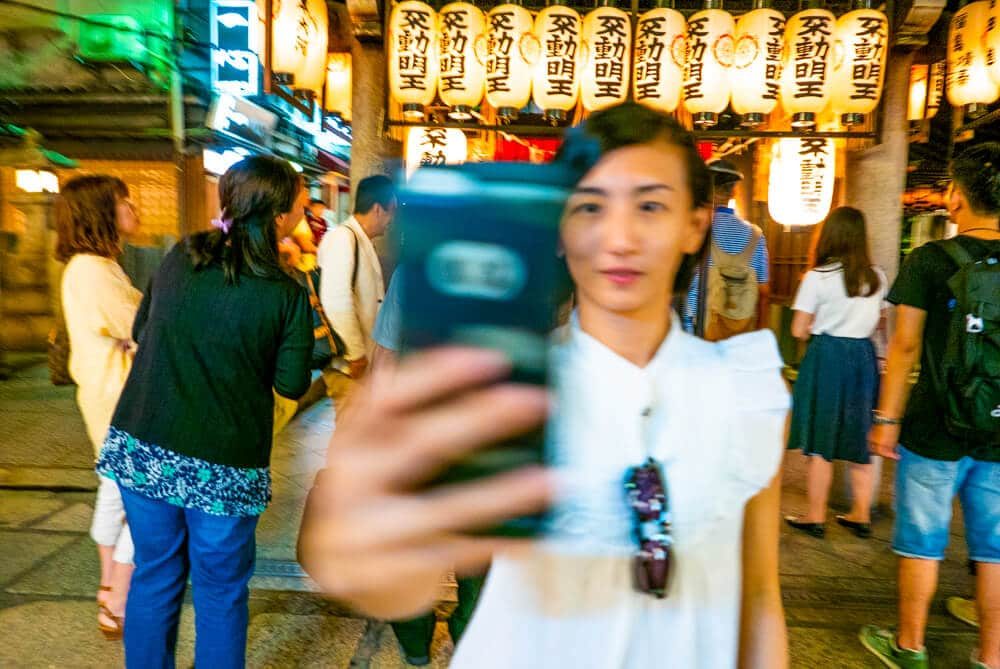
Street Photography in Osaka
Osaka mixes the neon of Dotonbori and Shinsekai with busy markets and quiet suburbs a few train stops away, and Olivier Duong rates it above Fukuoka for street work.
- Spots
- 7
- Best time
- Year round
- Lens
- 35mm
- Photographing people
- Strict: ask first
Osaka is one of the best cities in Japan for street photography because it is crowded and covered in signs, and it gives you very different pictures a few minutes outside the centre. I have shot two Japanese cities, Osaka and Fukuoka, and Osaka takes the crown for me. I first came on a visa run from Korea and kept coming back, finding something new each time.
The shop signs remind me of Hong Kong. Dotonbori gives you neon and crowds at night, while Shinsekai works all day with its stalls and cooks. Kyoto is a short train ride away, so you can base yourself here and shoot both. Japan has stricter norms around photographing people than most places, so read the section on people before you go. Most of my pictures here were made with a Ricoh GR Digital IV and a Panasonic LX100.
Best street photography spots in Osaka
Dotonbori & Ebisu Bridge
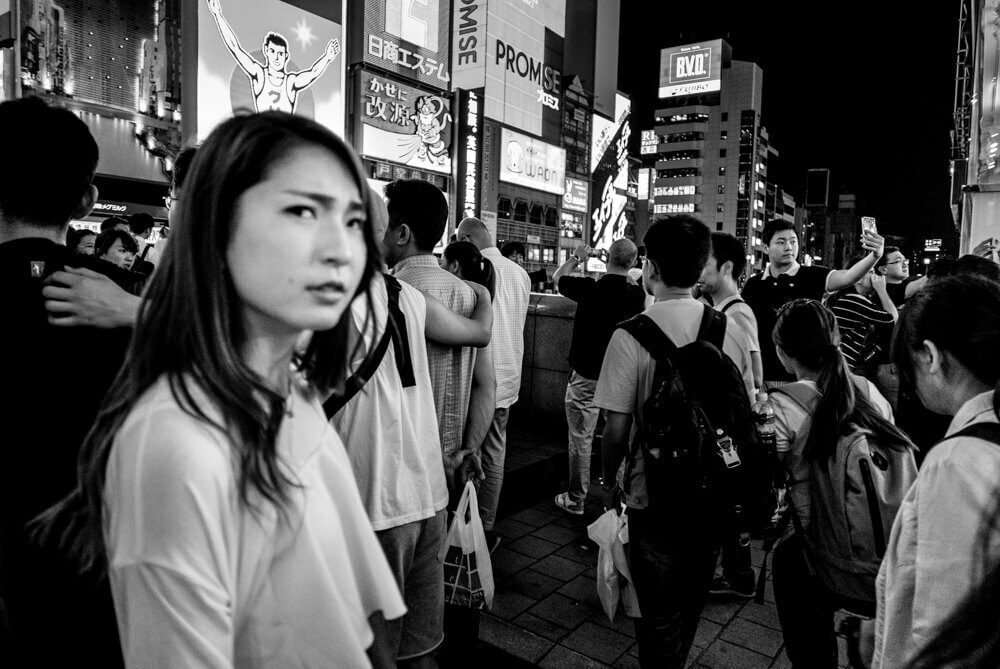
Dotonbori is where I made about half of my Osaka pictures. It is famous for its light up signs, especially the Glico running man, and the visual chaos is perfect for street work. Go at night. By day it is not that great. Stand on Ebisu Bridge facing east for the signs, then walk the canal and the side streets. Composition idea: put a passerby in silhouette against a lit sign and let the crowd fill the midground. Caution: only the main strip is well lit. Step one street back and the light drops fast, so bring a camera that handles high ISO.
Shinsekai & Tsutenkaku
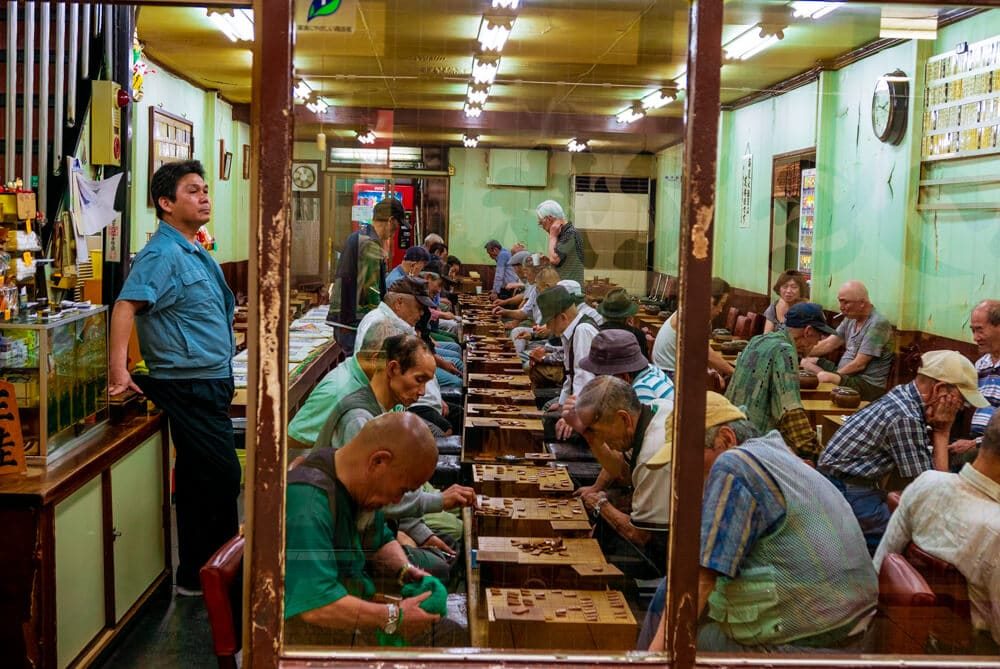
Shinsekai is my other top pick. The tower makes an iconic background, and there are lots of little stalls and restaurants, which makes it perfect for shots of Japanese chefs at work. There is also a well known shogi parlor in the area. Unlike Dotonbori, Shinsekai works throughout the day, so plan a daytime visit. Stand in the main street looking north to frame Tsutenkaku above the signs. Composition idea: use a kushikatsu counter as a frame and wait for the cook to turn. Caution: many restaurants do not want photos inside, so shoot from the street unless they invite you in.
Nipponbashi & Den Den Town
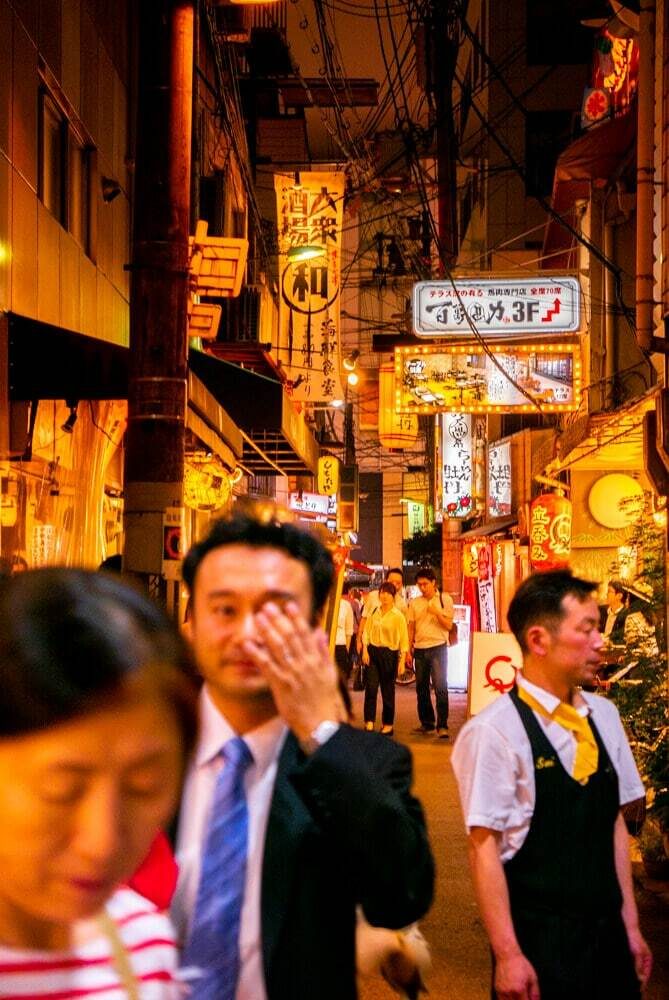
Nipponbashi, also called Den Den Town, only works well when there is a festival or event on. Every time I went on an ordinary day, it was deserted. Still, the anime decorations give you juxtaposition shots. You may also find up and coming idols promoting themselves on the street, and I made a portrait there. Composition idea: line up a shopper with a cartoon face on a shop sign so the two look at each other. Caution: idols and performers may have their own rules about photos, so ask first.
Kuromon Ichiba Market
Kuromon is a covered market full of seafood stalls and grills. It sits a short walk east of Dotonbori. Morning is best for vendors setting up; by midday it fills with visitors eating at the stalls. The roof gives soft, even light. Stand at the end of a stall and shoot along the aisle for depth. Composition idea: frame a vendor behind ice and fish, with the customer as a soft shape in the foreground. Caution: this is a place of work and the aisles are narrow. Do not block trade, and ask before close portraits.
Osaka Castle Park
Osaka Castle leans toward travel photography, but with the crowds and the castle as a background you can still make street pictures. Arrive early, before the tour buses, when runners and school groups have the paths. Plum blossoms come in February and cherry blossoms around the end of March. Composition idea: use the castle small in the background and a person large in the foreground. Caution: during hanami, people sit on blue tarps in groups. Treat those as private picnics and do not shoot into them close up.
Tenjinbashisuji Shopping Street
Tenjinbashisuji is a covered shopping arcade that runs for more than two kilometres north to south in Kita ward. It is a local street, not a tourist one, with everyday shoppers and shop owners chatting at their doors. The roof makes it a good plan B when it rains. Walk it slowly from end to end and look for signs and faces lined up along the aisle. Composition idea: use the long perspective of the arcade and wait for a single figure to cross the centre. Caution: bicycles ride through the crowd. Keep to one side and watch your back.
Namba Yasaka Shrine
Namba Yasaka is a small shrine with a lion head stage about 12 metres tall. It is a short walk west of the busy Namba streets and much quieter. Its tug of war festival falls on the third Sunday of January. On other days, wait for a visitor to stand in front of the open mouth for scale. Composition idea: shoot low and wide so the lion fills the top of the frame and a person anchors the bottom. Caution: this is an active shrine. Keep quiet, and do not photograph people while they pray.
Photographing people in Osaka
Strict: local law or custom protects people's image. Ask first, or keep faces out of frame.
Japan is one of the stricter places for street photography. Taking pictures of people in public is not a crime, but portrait rights (shozoken) are recognised in civil law. Publishing an identifiable person, especially for commercial use or in a way that embarrasses them, can lead to a civil claim. Many shops and restaurants post no photo signs. Locals rarely confront you. More often they cover their face or make an X with their arms, and you should respect that. On trains, be very respectful and careful. Never use flash there, and do not photograph people sleeping in a way that would shame them. In crowded tourist spots people expect cameras. For close portraits, a smile and a gesture work. Delete if asked. This is general information, not legal advice. See is street photography legal for more.
General information, not legal advice. More in is street photography legal?
What to photograph in Osaka
- Neon and color. I associate Osaka with yellow and red, mostly from the light in Dotonbori. Shoot RAW so you can work with those colors later.
- Layers. In the busy areas it is hard not to layer your frames. Put someone in the foreground, the crowd in the middle and the signs behind.
- Cooks and stall owners. Shinsekai and Kuromon give you people working with their hands, behind counters and grills.
- Train life. People spend a lot of time on trains. You can shoot cinematic frames inside, use the reflections in the windows, or shoot the trains from outside.
- Urban landscapes. Leave the centre and the suburbs give you graceful old houses and quiet streets. There are few people, so think of it as urban landscape work, which also works well in daylight.
A one-day photo walk
- 8 am, Osaka Castle Park. Start before the tour groups. Walk the moat and the main lawns.
- 10:30 am, Tenjinbashisuji. Take the subway to Tenjinbashisuji 6-chome and walk south through the arcade for an hour or two.
- 1 pm, Kuromon Market. The Sakaisuji line runs south to Nippombashi in about 10 minutes. Eat and shoot the stalls.
- 3 pm, Den Den Town to Shinsekai. Walk south through Nipponbashi, then continue on foot to Shinsekai, roughly 15 to 20 minutes. Stay until the lights come on.
- 7 pm, Dotonbori. Ride one stop back to Nippombashi or walk about 25 minutes north. Shoot the canal and bridges until late.
When to shoot
Year round. Dotonbori after dark, Shinsekai and markets by day. Plum blossoms in February, cherry blossoms around late March, autumn colour in November.
The light
Signs in Dotonbori throw warm yellow and red light at night, but the back streets go dark quickly. Covered arcades give soft light on rainy days.
What to bring
Small, quiet camera such as a Ricoh GR. For Dotonbori at night, a larger sensor and a fast lens: Olivier found a compact at ISO 3200 was not enough. Shoot RAW.
Safety
Very safe day and night. Watch for bicycles in arcades and crowds on the Dotonbori bridges at night.
Tips for Osaka
- Go to Shinsekai in the day and Dotonbori at night. Dotonbori is not that great by day.
- Bring a camera that handles high ISO for Dotonbori. My LX100 at ISO 3200 was not good enough away from the brightest signs. A larger sensor and a fast lens help. See street photography settings.
- Shoot RAW. The yellow and red light needs work in editing.
- Check the calendar for Den Den Town events. On ordinary days it is quiet.
- Namba Yasaka Shrine holds its tug of war festival on the third Sunday of January.
- On rainy days, shoot the covered arcades by day and the wet reflections in Dotonbori at night.
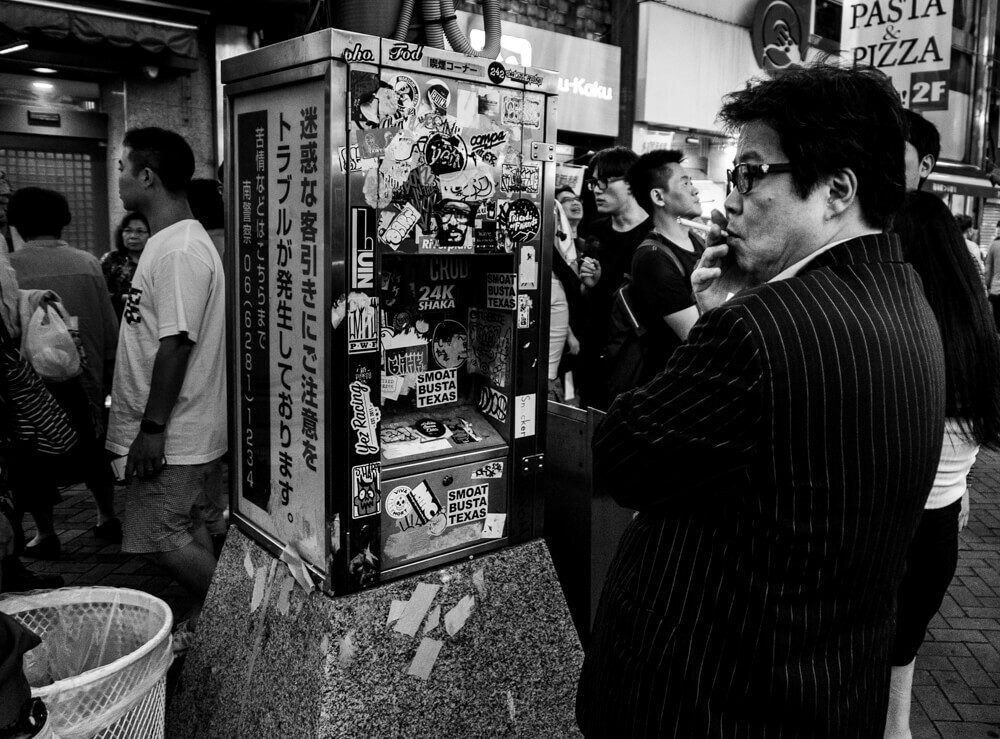
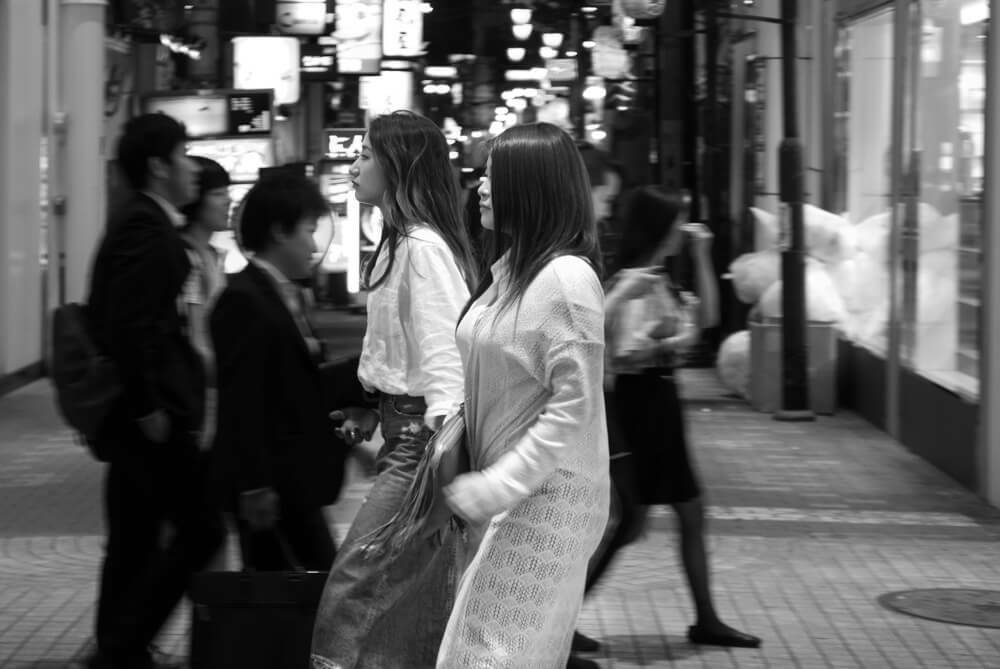
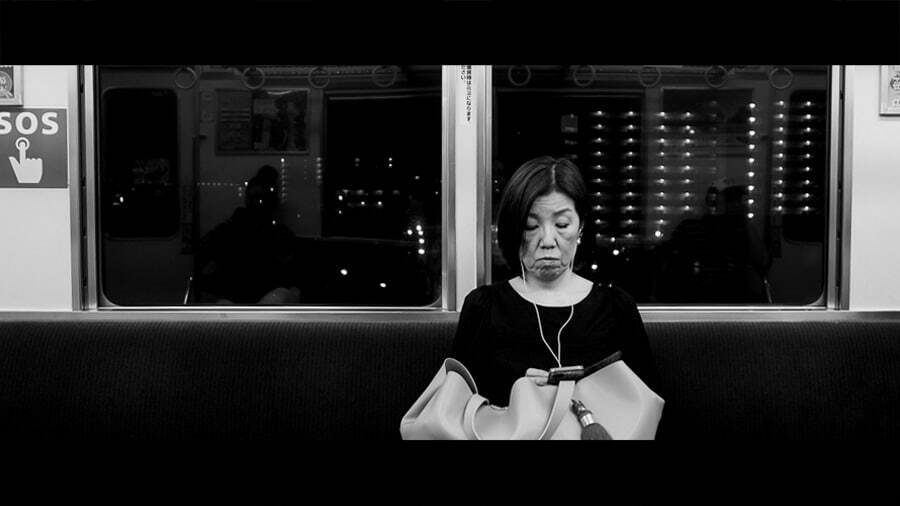
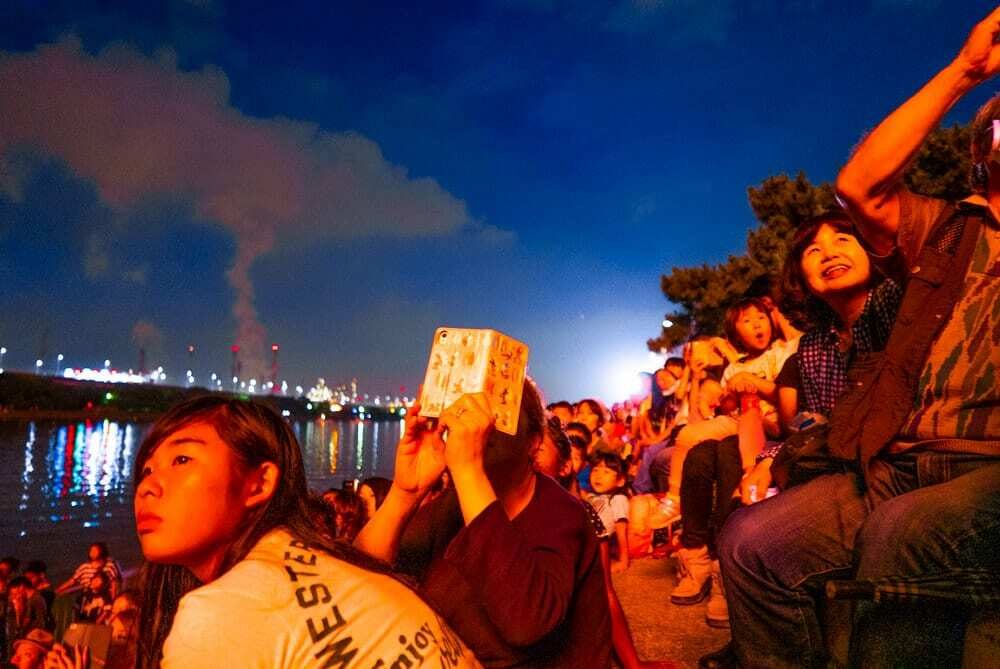
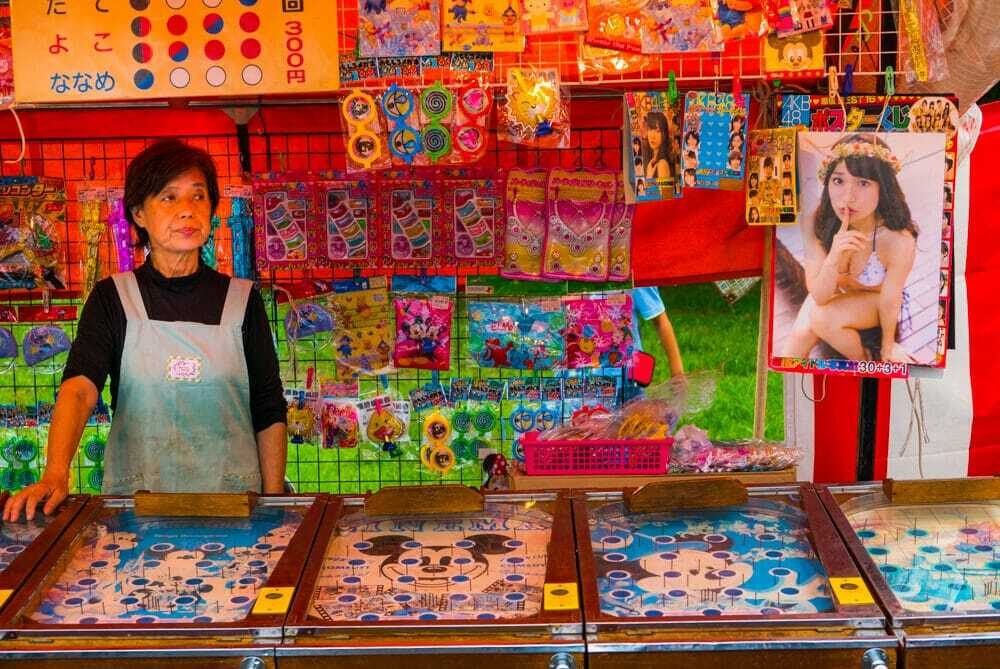
Photos by Olivier Duong in Osaka.
Frequently asked questions
Is street photography legal in Osaka?
Strict on publishing. Photographing people in public is not a crime in Japan, but portrait rights are protected in civil law, and commercial use of an identifiable person needs consent. Many shops and restaurants ban photos inside. Be quiet and careful on trains.
Where are the best street photography spots in Osaka?
Start with Dotonbori & Ebisu Bridge, Shinsekai & Tsutenkaku, Nipponbashi & Den Den Town, Kuromon Ichiba Market. Neon signs over the canal, including the Glico running man. Best at night; flat by day.
When is the best time for street photography in Osaka?
Year round. Dotonbori after dark, Shinsekai and markets by day. Plum blossoms in February, cherry blossoms around late March, autumn colour in November.
What lens should I bring to Osaka?
Small, quiet camera such as a Ricoh GR. For Dotonbori at night, a larger sensor and a fast lens: Olivier found a compact at ISO 3200 was not enough. Shoot RAW.
Is Osaka safe for street photographers?
Very safe day and night. Watch for bicycles in arcades and crowds on the Dotonbori bridges at night.
More street photography in Japan
Start with the Japan street photography guide, then pick a city.
More street photography cities
Further reading: the Inspired Eye guide to Osaka.