
The best camera for street photography in 2026 is the Ricoh GR IV. It fits in a jacket pocket and has a large APS-C sensor behind a sharp 28mm lens. Nobody on the street looks at it twice.
If you prefer a 35mm view and a viewfinder, get the Fujifilm X100VI. On a budget, a used Ricoh GR or the Fujifilm X-M5 with a small prime will do the job. I'm Olivier Duong from Inspired Eye, and after years of shooting and teaching street photography, here is the honest truth: the camera matters far less than how you see. Pick one of these, then spend your energy on your eye.
Best street photography camera picks at a glance
Prices are US list prices as of September 2026. Street prices move, and some models sell above list because stock is short.
| Camera | Type | Sensor | Lens (full-frame equivalent) | Approx. price | Best for |
|---|---|---|---|---|---|
| Ricoh GR IV | Compact, fixed lens | APS-C, 25.7MP | 28mm f/2.8 | $1,599 | Best overall, most pocketable |
| Fujifilm X100VI | Compact, fixed lens | APS-C, 40MP | 35mm f2 | $1,799 (often more) | Viewfinder shooters, 35mm lovers |
| Ricoh GR IIIx | Compact, fixed lens | APS-C, 24MP | 40mm f/2.8 | Varies, production ending | A tighter, calmer view |
| Fujifilm X-E5 + XF 23mm f/2.8 | Mirrorless, interchangeable lenses | APS-C, 40MP | 35mm f/2.8 pancake | $1,899 kit | One small body, many lenses |
| Fujifilm X-M5 | Mirrorless, interchangeable lenses | APS-C, 26MP | Your choice | $799 body | Budget street camera |
| Leica Q3 | Compact, fixed lens | Full frame, 60MP | 28mm f/1.7 | $7,350 | Low light, the Leica experience |
| Nikon Zf | Mirrorless, interchangeable lenses | Full frame, 24.5MP | Your choice | About $2,000 body | Full frame with dials |
| Pentax 17 | Film, half frame | 35mm film | About 37mm f/3.5 | $499 | Best film camera to buy new |
Every camera on this list shares two traits. It is small, and it lets you shoot with one lens. That combination is what makes a great street photography camera.
What makes a good camera for street photography
Street photography rewards speed and invisibility. Megapixels and video specs barely matter. Here is what I look for in a street camera:
- Size. A camera you carry every day beats a better one left at home. Pocketable wins.
- A fixed or single prime lens. One focal length trains your eye. You learn where the frame edges fall before you raise the camera.
- A quiet shutter. Leaf shutters in fixed lens cameras are close to silent. People stay natural.
- Fast focus or easy zone focusing. Autofocus is good on every modern camera. A snap focus or distance scale is even faster for candid street work.
- Good image quality at high ISO. An APS-C sensor is plenty. Full frame helps at night, but it costs size and money.
Notice what is missing: zoom lenses and big bodies. A zoom makes you stand still and twist a ring. A prime makes you walk closer. If you want the long answer on focal length, read my guide to the best lens for street photography.
Ricoh GR IV: the best camera for street photography overall
The Ricoh GR IV launched in 2025 at $1,499 and now lists at $1,599 in the US. It is the latest in a line of Ricoh GR cameras that street photographers have carried for decades, and it is the most pocketable APS-C camera you can buy.
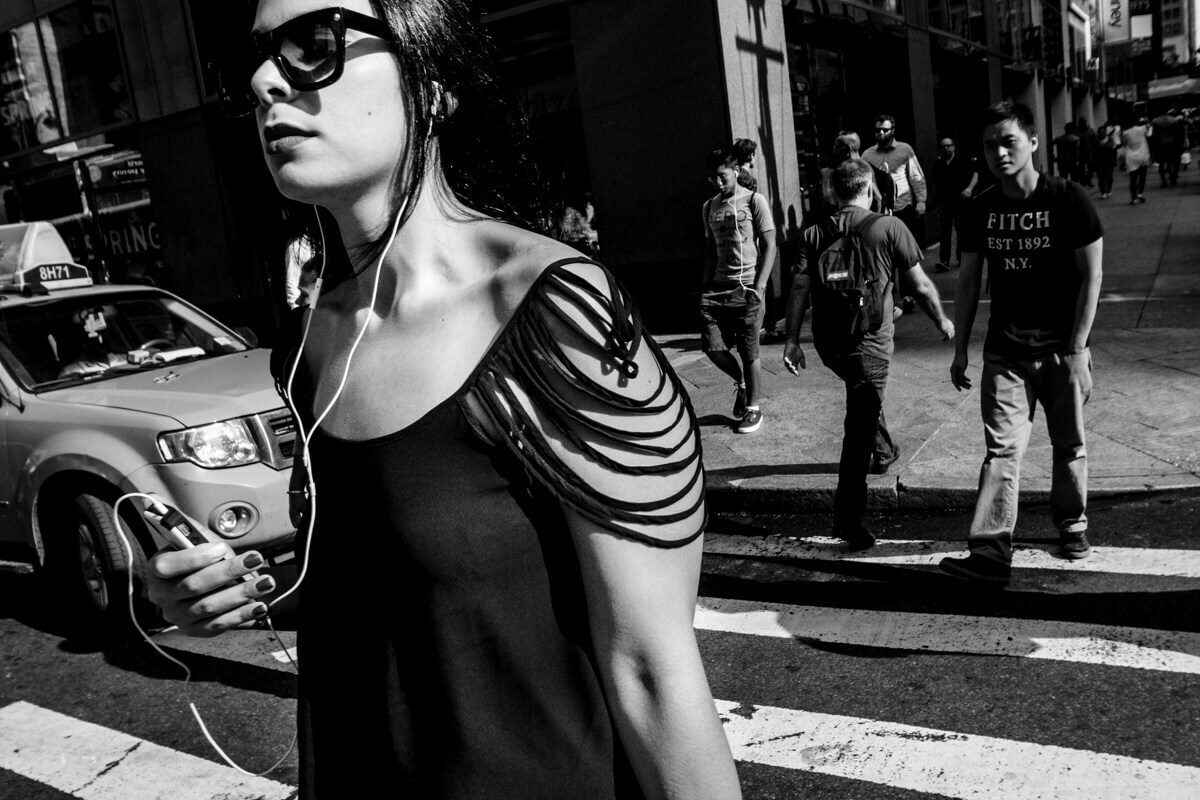
- 25.7MP APS-C sensor with better dynamic range than most phones will ever reach
- 18.3mm f/2.8 lens, a 28mm equivalent, wide enough to shoot close in a crowd
- 5 axis stabilization, so slow shutter speeds at dusk stay sharp
- Snap focus: set a distance and the camera fires there instantly, no autofocus wait
- 53GB of built-in storage, handy when a card fills up mid walk
The trade-offs are real. There is no viewfinder, only an LCD screen. There is no weather sealing, and battery life is short, so carry a spare. The 28mm view also asks you to get close. That scares some people at first, and it is exactly why the pictures improve.
Ricoh also sells a GR IV Monochrome ($2,199.95) with a black and white only sensor. It is a lovely tool, but the standard GR IV converts to black and white just fine.
Fujifilm X100VI: best compact camera for street photography with a viewfinder
The X100 series made the fixed lens compact cool again, and the Fujifilm X100VI is the current model. List price is $1,799. It has been hard to find since launch, so expect waits or prices above list in 2026.
- 40MP APS-C sensor with room to crop heavily in post
- 23mm f2 lens, a 35mm equivalent, the classic street focal length
- Hybrid viewfinder: optical like a rangefinder, or electronic when you need it
- In-body stabilization and Fuji film simulations that look great straight out of camera
- A built-in digital crop feature for 50mm and 70mm framing
It is larger than the GR IV and will not fit a jeans pocket. But it is a joy to hold. The dials put shutter speed and ISO under your thumb. If the X100VI is out of reach, a used X100V gives you the same lens and feel with a 26MP sensor and no stabilization. Many street photographers still shoot the X100V happily.
Ricoh GR IIIx and the coming GR IVx: the 40mm option
The Ricoh GR IIIx has a 24MP APS-C sensor and a 26.1mm lens, a 40mm equivalent. Forty millimeters feels close to how your eyes see. Pictures look calm and honest, with less distortion near the edges than 28mm.
Ricoh has announced that GR IIIx production ends with units shipped in October 2026. It has also announced the GR IVx, a 40mm version of the GR IV, due in winter 2026 or later. If you love 40mm, buy a GR IIIx while stock lasts or wait for the new model. If you are unsure, start with 28mm or 35mm.
Best mirrorless camera for street photography
A mirrorless camera with interchangeable lenses makes sense if you also shoot travel or portraits. The trick is to keep it small. Put one compact prime on the body and leave the zoom at home.
- Fujifilm X-E5. A flat, rangefinder style body with a 40MP sensor. Kit price is $1,899 with the XF 23mm f/2.8 pancake. It is basically an X100VI with interchangeable lenses.
- Nikon Zf. A full-frame camera with retro dials, about $2,000 body only. Pair it with a small 28mm or 40mm f2 prime and it becomes a serious street and travel camera.
- Sony A7C II. One of the smallest full-frame cameras, with a 33MP sensor and fast autofocus. The lens choice is huge. List price has sat between roughly $2,100 and $2,500 body only in 2026.
- Canon and other mounts. Any modern mirrorless camera works. Choose one where a small prime exists for it.
Full frame gives you better low light and shallower depth of field. For daytime street photos you will rarely see the difference over APS-C.
Leica for street photography: Q3 or M11?
Leica is tied to the history of street photography. Henri Cartier-Bresson and many Magnum photographers shot Leica rangefinders. So is a Leica worth it today?
The Leica Q3 is the one I'd look at first. It is a full-frame compact with a 60MP sensor and a 28mm f/1.7 lens. US price is $7,350 after Leica's March 2026 price increase. The Leica Q3 43 ($7,950) swaps in a 43mm lens for a more natural view. Both are superb in low light and built to last.
The Leica M11 is the rangefinder. It costs around $9,500 for the body alone, before a lens. Manual focus with a rangefinder is slow to learn and fast once learned.
My honest take: a Leica is a beautiful tool, not a shortcut. The photos come from you. A GR IV at a fifth of the price will not hold you back.
Best budget camera for street photography
You do not need to spend $1,500. Good street photography has been made on cheap cameras for as long as the genre has existed.
- Fujifilm X-M5 ($799 body). A small, affordable camera with a 26MP APS-C sensor. Add a compact prime such as a 27mm pancake and you have a real street kit.
- A used Ricoh GR III or GR II. The GR III was discontinued in 2025, but used copies are everywhere and they still make excellent street photos.
- A used Fujifilm X100V or older X100. Same idea, same fixed lens freedom.
- Any old mirrorless body with a cheap 35mm or 50mm prime. Often the cheapest route under $500.
Used prices change weekly, so compare a few listings before you buy. If you are brand new, my street photography for beginners guide covers what to do in your first weeks.
Best film camera for street photography
Film photography slows you down, and that can be good for your eye. You cannot check the screen, so you learn to trust the moment.
The Pentax 17 is the easiest film camera to buy new. It is a half frame camera, so you get about 72 photos from a 36 exposure roll. The lens is a 25mm f/3.5, close to 37mm in full-frame terms, with zone focusing marked on top. It costs $499.
Beyond that, the used market is full of point and shoot film cameras and old rangefinders. Prices for popular film compacts have climbed a lot, so check condition and the light meter before you pay.
Film or digital? Shoot both if you like. The way you see a scene carries over either way.
Is a phone good enough for street photography?
Yes. A modern phone is a real street photography camera. It is always with you and nobody notices it. Many strong street photos on Instagram today were made on a phone.
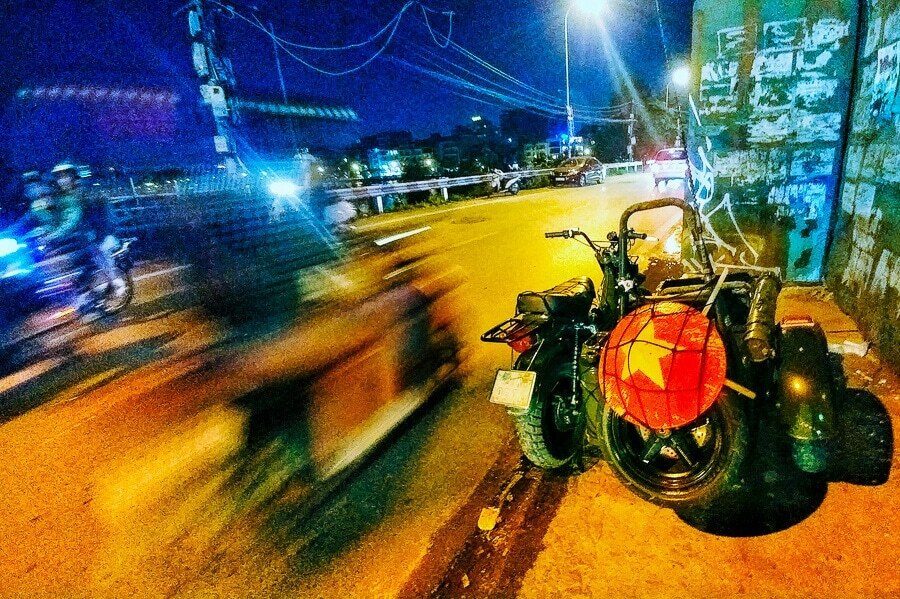
Phones do have limits. Processing can look heavy. Shutter lag can cost you a moment. Turn off extra processing if you can, and lock focus and exposure before the moment arrives.
If you only own a phone, start there. Upgrade when you can say exactly what the phone stops you from doing.
The camera matters less than how you see
What camera do most street photographers use? Whatever camera they have with them. I have seen great street photographs made on a Ricoh GR, a Leica, a cheap point and shoot and a phone. I have seen dull ones made on all of them too.
A new camera gives you a week of excitement. Learning to see gives you a lifetime of pictures. That means composition, light, timing and reading a street before anything happens. That is exactly what we teach in Phototactic, our street photography course with Don Springer. It is short daily videos on composition and seeing, plus a Photography Basics bonus that makes camera settings clear, because all cameras behave the same.
Once your camera is chosen, set it up with my street photography settings guide. Then go shoot.
How to choose your street photography camera
- Pick a focal length first. 28mm (GR IV) puts you close. 35mm (X100VI, X-E5 with the 23mm) is the classic balance. 40mm or 43mm feels calm, and 50mm on a mirrorless body gives you a little distance.
- Decide on a viewfinder. If you hate composing on a screen, skip the GR and get an X100VI or a mirrorless body with an EVF.
- Be honest about size. If it does not fit your daily bag, it will stay home.
- Set a budget and stick to it. Spend the rest on travel, prints or a street photography course that trains your eye.
Still comparing ways to learn? See my review of the best street photography courses.
Frequently Asked Questions
What is the best camera for street photography?
The Ricoh GR IV is the best camera for street photography for most people in 2026. It is pocketable and discreet, with an APS-C sensor and a sharp 28mm equivalent lens. If you want a viewfinder and a 35mm view, the Fujifilm X100VI is the best alternative.
What camera do most street photographers use?
Most street photographers use small cameras with a single prime lens. The Ricoh GR series and the Fujifilm X100 series are the most common. Leica Q and M cameras and compact mirrorless bodies from Fujifilm, Sony, Nikon and Canon follow. Many also shoot on their phones.
What is the best starter camera for street photography?
Start with the phone you already own, then move to a used Ricoh GR III or a Fujifilm X-M5 with a small prime lens. Both are small and simple. A starter camera should teach you one focal length, not give you every feature.
Is a Leica worth it for street photography?
A Leica is worth it if you love the handling and can afford it. The Leica Q3 costs $7,350 and the M11 body around $9,500 in the US. They make superb images, but a Ricoh GR IV or Fujifilm X100VI gives you nearly the same results for street work at a fraction of the price.
Is 28mm or 35mm better for street photography?
Both work. 28mm, like the Ricoh GR IV, pushes you close and shows more of the scene. 35mm, like the Fujifilm X100VI, is a little tighter and feels more balanced. If you are unsure, start with 35mm. Our lens guide compares them in detail.
What is the best camera for street photography under $500?
New, the Pentax 17 film camera costs $499. For digital, look at used cameras such as a Ricoh GR II or any mirrorless body with a cheap 35mm prime. Your phone is also a capable street camera that costs nothing extra.
Do I need a full-frame camera for street photography?
No. APS-C sensors like those in the Ricoh GR IV and Fujifilm X100VI are more than enough for street photography. Full frame helps in low light and costs more in size and money. For daytime street photos, most viewers cannot tell the difference.