
Yes. In the United States it is legal to photograph people in public places without asking permission, because nobody has a reasonable expectation of privacy on a public street. What gets you in trouble is not taking the photo. It is how you use it, for example putting a stranger's face in an ad without a model release.
I'm Olivier Duong. I've photographed strangers on the street for years, and I teach it with Don Springer. Street photography is legal in most of the world, but the rules around publishing change from country to country. France and Germany are much stricter than the US or the UK.
This page is general information, not legal advice. Laws vary by state and by country, and they change. If you plan to sell or publish a photo of someone and you are unsure, talk to a local lawyer.
Is street photography legal in the US?
Yes. The First Amendment protects taking photographs in public. The ACLU puts it simply: when you are in a public space where you are lawfully present, you have the right to photograph anything that is in plain view. That includes people, police officers, federal buildings and transit stations.
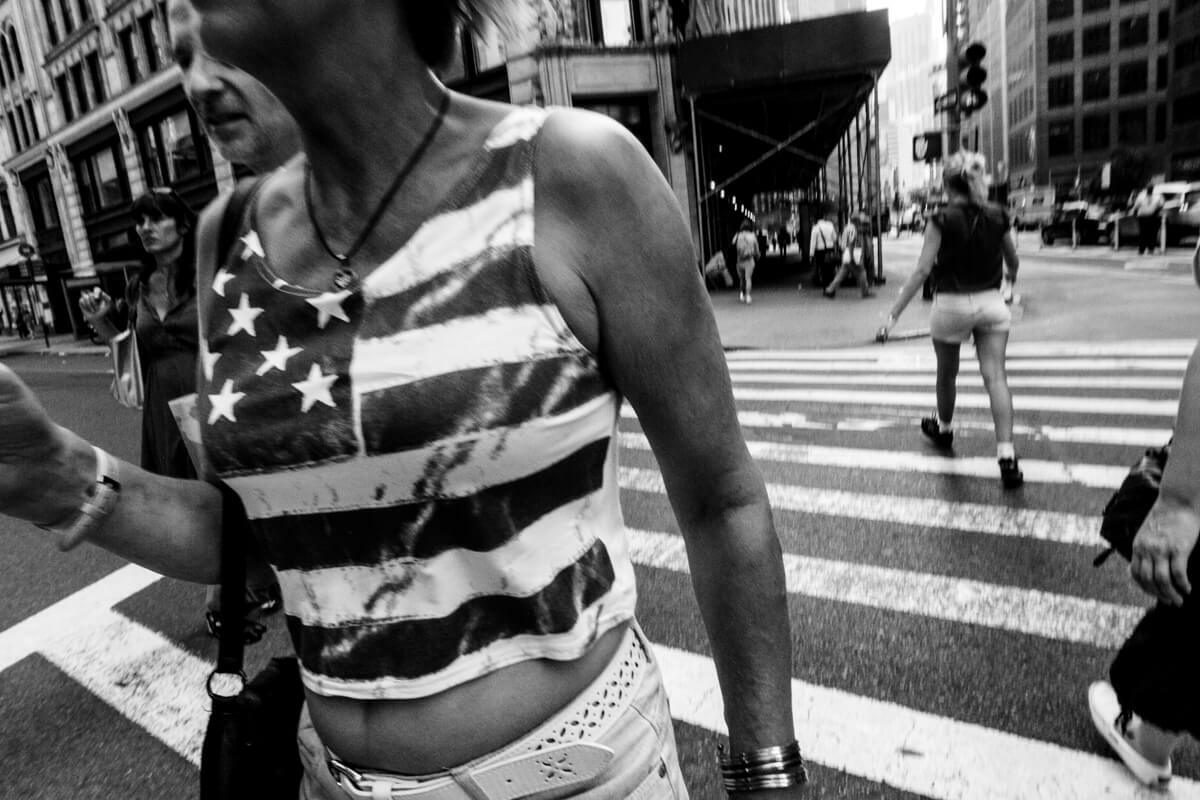
The key legal idea is the reasonable expectation of privacy. A person walking down a public street or sitting in a park does not have one. So you can take pictures of people in public, candid or posed, and you don't need to ask for permission first.
A few limits apply everywhere in the US:
- Private spaces. Bathrooms and changing rooms are protected, and so is the inside of someone's home. Shooting into them, even from the sidewalk, can break state voyeurism laws.
- Private property. A mall or a store can ban photography. If they ask you to stop or leave, you have to. They cannot take your camera or make you delete anything.
- Audio. Still photos are fine. Recording a private conversation with sound can break wiretap laws, and some states require consent from everyone in the conversation.
- Harassment. Following someone, or shooting again and again after they tell you to stop, can become harassment or stalking. The camera doesn't protect that behavior.
Standing on a public street and photographing a house or a person on private property is generally allowed, as long as what you shoot is in plain view and you aren't peering into a private space.
Do you need consent to photograph strangers?
Not in the US, and not in the UK. Candid photography is legal. You can photograph someone without their permission as long as you are in a public place and they are too.
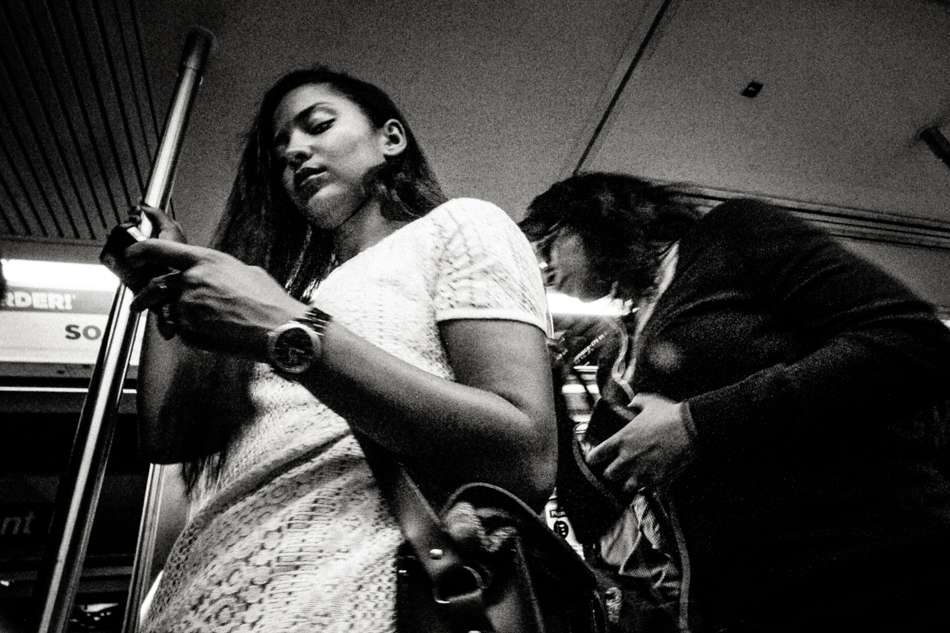
Consent becomes a question later, when you use the photo. The law splits uses into a few groups, and each one has its own rules. Personal use and editorial use almost never need consent. Commercial use usually does.
Many street photographers never ask permission. Others make street portraits and always ask. Both are legal. Asking is a style choice, not a legal requirement. If you are just starting out, I cover both approaches in my guide to street photography for beginners.
Can you sell street photos of strangers?
Usually yes, if you sell them as art or use them for news. Usually no, if you use them to sell something else. That second case is where the model release comes in.
Most US states have a right of publicity. It stops you from using a person's name or likeness for commercial purposes, like advertising or on a product, without their consent. New York's version is in Civil Rights Law sections 50 and 51. California's is Civil Code section 3344. The details vary by state.
| How you use the photo | Model release needed? |
|---|---|
| Keeping it in your archive | No |
| Posting it on Instagram or your portfolio | Generally no |
| News and blog posts (editorial use) | Generally no |
| Fine art prints, or to publish it in a book | Generally no in the US |
| Stock licensed for commercial use | Yes, agencies require one |
| A photo for advertising or on a product | Yes |
The best known case is Nussenzweig v. diCorcia. Philip-Lorca diCorcia photographed a man in Times Square with a hidden strobe for his "Heads" series. Prints sold for thousands of dollars. The man sued under New York's privacy law. The lower court held that the photo was art, not trade, and the state's highest court ended the case in 2007 because he sued too late. Photographers still cite it, but it is one state and one set of facts.
The line to watch is endorsement. If a photo makes it look like a stranger supports a brand or a product, you need a release. A fine art print of the same frame is a different use.
Photographing children in public
In the US, no law bans photographing children in public places. The same rules apply as for adults. Posting a candid photo of a child on the street is generally legal too, unless it's for commercial use, which needs a parent's consent.
Legal is not the same as wise. Parents react much more strongly than adults photographed alone, and schools or youth sports events often have their own rules. My own rule: I photograph kids when they are part of a scene with their family or a crowd, and I never follow a child or make them the focus of a series. If a parent objects, I show them the photo and delete it.
The UK is more careful here. In Murray v Big Pictures (2008), the Court of Appeal let a privacy claim go ahead over photos of J.K. Rowling's young son taken on an Edinburgh street. France requires parental consent to publish a photo of an identifiable minor.
What to do if someone asks you to delete a photo
In the US, a private person has no legal power to make you delete a photo taken in public. Neither does a security guard. The ACLU is clear that police officers may not confiscate or demand to view your photos without a warrant, and may not delete them under any circumstances.
That's the law. Here is what I actually do when someone notices me and isn't happy:
- Smile and don't walk away. Running makes you look guilty.
- Show them the photo on the back of the camera. Most people relax once they see it.
- Explain what I do in one sentence: "I photograph everyday life in this neighborhood."
- If they still want it gone, I delete it in front of them. No photo is worth a fight.
That rarely happens. Most people don't notice, and most who do just nod. If you get stopped by the police, stay calm and politely say you know your rights as a photographer. In most cases you don't have to explain why you are taking pictures, though some states require you to give your name if you are lawfully detained. A friendly answer often ends the conversation faster anyway.
Is street photography ethical?
Legal and ethical are different questions. The law gives you room. Your personal ethics decide how you use it. The photography community argues about this constantly, and the debate usually centers on Bruce Gilden, who fires a flash in strangers' faces at close range. It's legal in New York. Plenty of photographers think it crosses a line.
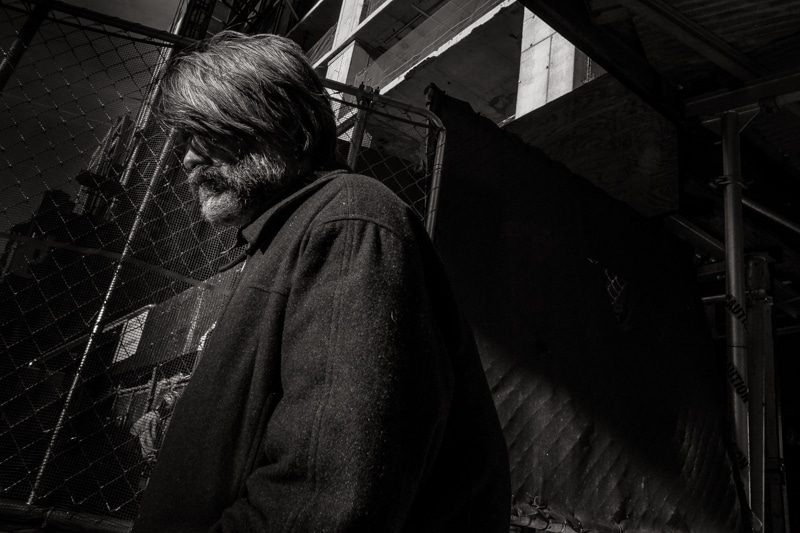
These are the questions I ask myself before I publish:
- Does this photo mock the person, or does it show them with some empathy?
- Is the person in a vulnerable moment, like crying or injured, and does the photo exploit that?
- Would I be okay if they found it online?
- Am I shooting a scene, or am I hunting one person?
- Is the person clearly identifiable, and does that matter for this image?
How you shoot matters too. Hiding behind a long lens from across the street feels like surveillance to the people you photograph. Working close with a wide lens means people can see you, and you can make eye contact. It's one reason most street shooters use a 28mm or 35mm. More on that in the best lens for street photography.
Street photography laws in the UK, France, Germany and the EU
Laws vary from country to country. The US and the UK are the most permissive. France and Germany protect a person's image much more strictly, and the EU's GDPR adds another layer.
| Country | Taking the photo in public | Publishing an identifiable stranger |
|---|---|---|
| United States | Legal | Legal for art and editorial use. Ads need a release. |
| United Kingdom | Legal | Generally legal. Privacy claims possible in some cases, especially children. |
| France | Generally tolerated | Consent usually needed, with exceptions for crowds and news events. Art is weighed case by case. |
| Germany | Generally tolerated | Consent needed unless a KUG exception applies, such as crowds or art. |
United Kingdom
The Metropolitan Police says members of the public do not need a permit to photograph in public places, and police have no power to stop you photographing incidents or officers. There is no general law against taking a photo of someone in public. Under UK GDPR, photos taken for purely personal reasons fall outside the rules, and the Data Protection Act 2018 has exemptions for journalism and art. Courts can still find a misuse of private information, as the Murray case shows.
France
France has the droit à l'image, a right to your own image built by the courts from Article 9 of the Civil Code. The problem is publication. Publishing a photo where a stranger is the clear subject, without their consent, can lead to a claim. Some French rulings have even treated capturing the image without consent as a fault. There are exceptions. People lost in a crowd are usually fine, and so are people tied to a news event. In 2008 the Paris Court of Appeal ruled in a case over François-Marie Banier's book Perdre la tête that the right to your image can give way to artistic expression, unless the photo harms the person's dignity or has serious consequences for them.
Germany
Section 22 of the Kunsturhebergesetz (KUG) says images of a person may only be distributed or shown publicly with their consent. Section 23 lists exceptions, including crowd scenes, people who are only an accessory to a landscape, public gatherings and images serving a higher interest of art. In 2018 the Federal Constitutional Court looked at a street photo by Ostkreuz photographer Espen Eichhöfer. It recognized street photography as art protected by the constitution, but it left the lower courts' ruling in favor of the woman in the photo in place. So each case is a balancing act. Separately, section 201a of the criminal code punishes photos that violate someone's most private sphere, such as inside their home.
The EU and GDPR
A photo of an identifiable person is personal data under GDPR. Purely personal or household activity is exempt. Article 85 tells each member state to balance data protection with freedom of expression, including artistic expression. Every country does this differently, so street photography that is fine in one EU country may be risky in another. If you live in the EU and plan to publish, check your local laws.
How to photograph strangers without getting into trouble
Knowing the law takes away half the fear. The other half goes away with practice. Here is what keeps me out of trouble:
- Stay in public places and shoot what is in plain view.
- Don't hide. Hold the camera where people can see it.
- Keep moving after the shot. Lingering and staring makes people nervous.
- Get a release before you use any photo for commercial purposes.
- When someone objects, talk to them, and delete if they ask.
- Learn the rules before you shoot abroad, especially in France and Germany.
Fear of confrontation is the main reason people never start. That's why Don and I built a full module on fearless street photography into Phototactic, our street photography course. There is also a live shooting demo bonus where you watch how to get close to strangers in a real street. If you want to learn street photography with confidence, it comes with a 60 day money back guarantee.
A small, quiet camera helps too. People react less to it. See my picks for the best camera for street photography.
Frequently Asked Questions
Is it illegal to take a picture of someone without their permission?
In the US and the UK, no, as long as you are in a public place and they have no reasonable expectation of privacy. You can photograph someone on a public street without asking. Using that photo for advertising is different and needs a model release. France and Germany are stricter about publishing identifiable people without consent.
Are candid photos illegal?
No. Candid photography in public places is legal in the US and most countries. It becomes illegal when you shoot into private spaces like bathrooms or homes, or when you follow and harass someone. The legal risk with candid street photos is almost always about how you publish them, not taking them.
Can I post street photos of strangers on Instagram?
In the US, generally yes. Posting a street photo as personal expression or art is not commercial use, so no model release is needed. Using the same photo in a sponsored post or to promote a product is commercial use. In France and Germany, posting a photo where a stranger is clearly the main subject can lead to a claim without consent.
Do street photographers need a model release?
Only for commercial use. If a photo is used in advertising or on a product, you need a signed release. For fine art, exhibitions, books, news and editorial use, US law generally does not require one. State right of publicity laws vary, so check yours before you sell.
Can police make me delete my photos?
In the US, no. According to the ACLU, police may not confiscate or demand to view your photos without a warrant, and may not delete them under any circumstances. Stay calm and politely say you do not consent to a search. Private security guards have even less power. They can ask you to leave private property, but they cannot take your camera.
What are the basic rules of street photography?
Legally, shoot in public places and get a release for commercial use. Ethically, most photographers add their own rules. Don't mock people, and delete a photo if someone asks. Laws vary from country to country, so check before you shoot abroad.