
Street Photography in France
Street photography grew up on the streets of Paris, and France still gives you cafe terraces and both soft northern light and hard southern sun within a few hours by train.
France street photography has the longest history of any country. Eugène Atget walked Paris with a view camera before 1900. Henri Cartier-Bresson and Robert Doisneau later turned its streets into the look most people still picture when they hear the words street photography. You can stand on the same corners today.
The country is easy to shoot. Cities are walkable and trains are fast. People spend a lot of their day outside, at cafe terraces and markets. Paris gives you soft light and elegant crowds. Marseille gives you hard sun and a mixed port city.
The catch is the law. France is known for strict image rights, the droit à l'image. Taking a photo in public is generally fine. Publishing a recognizable stranger without consent is where the risk sits, and French photographers have argued about it for decades. This guide covers what makes France different, which city suits you, when to go and how to work with people without trouble.
City guides for France
- Paris
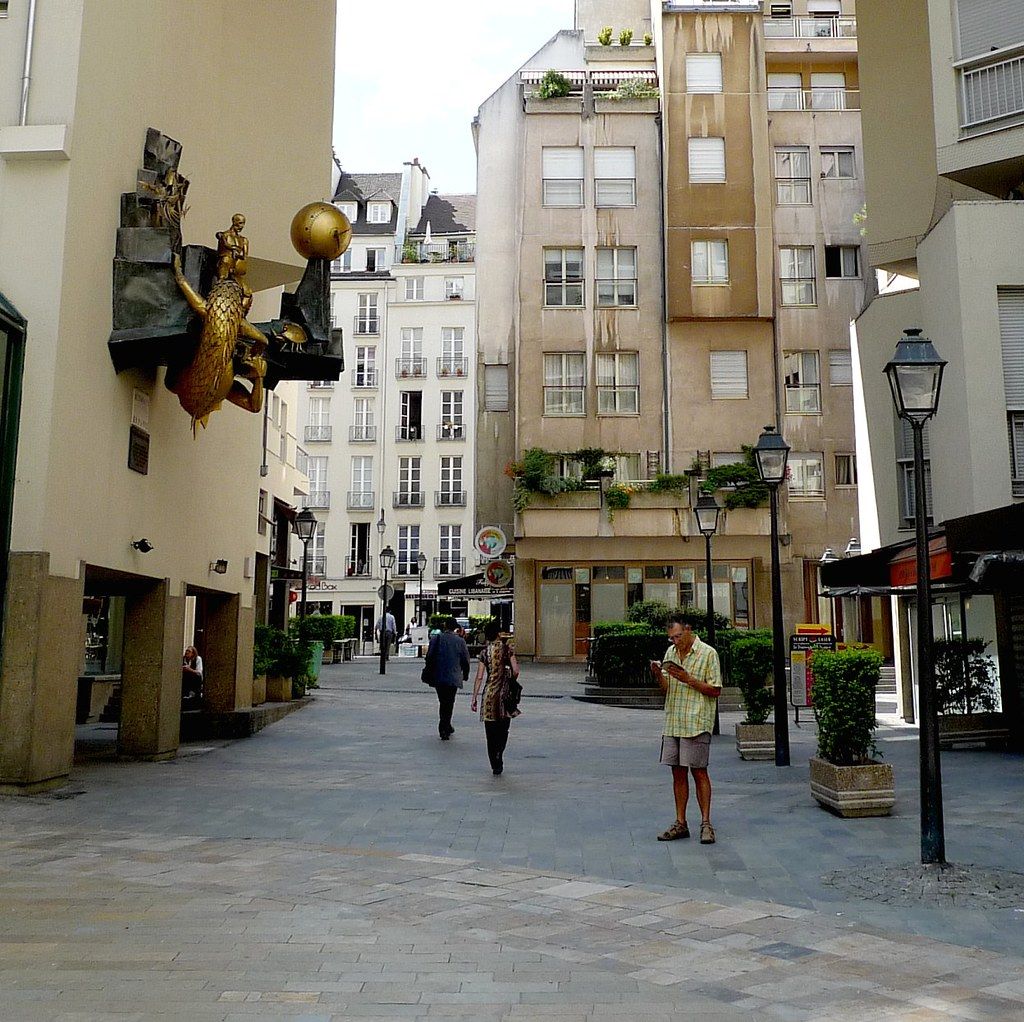
Where the genre was born, from Atget to Cartier-Bresson: cafes, boulevards and soft light at every corner.
 Toulouse
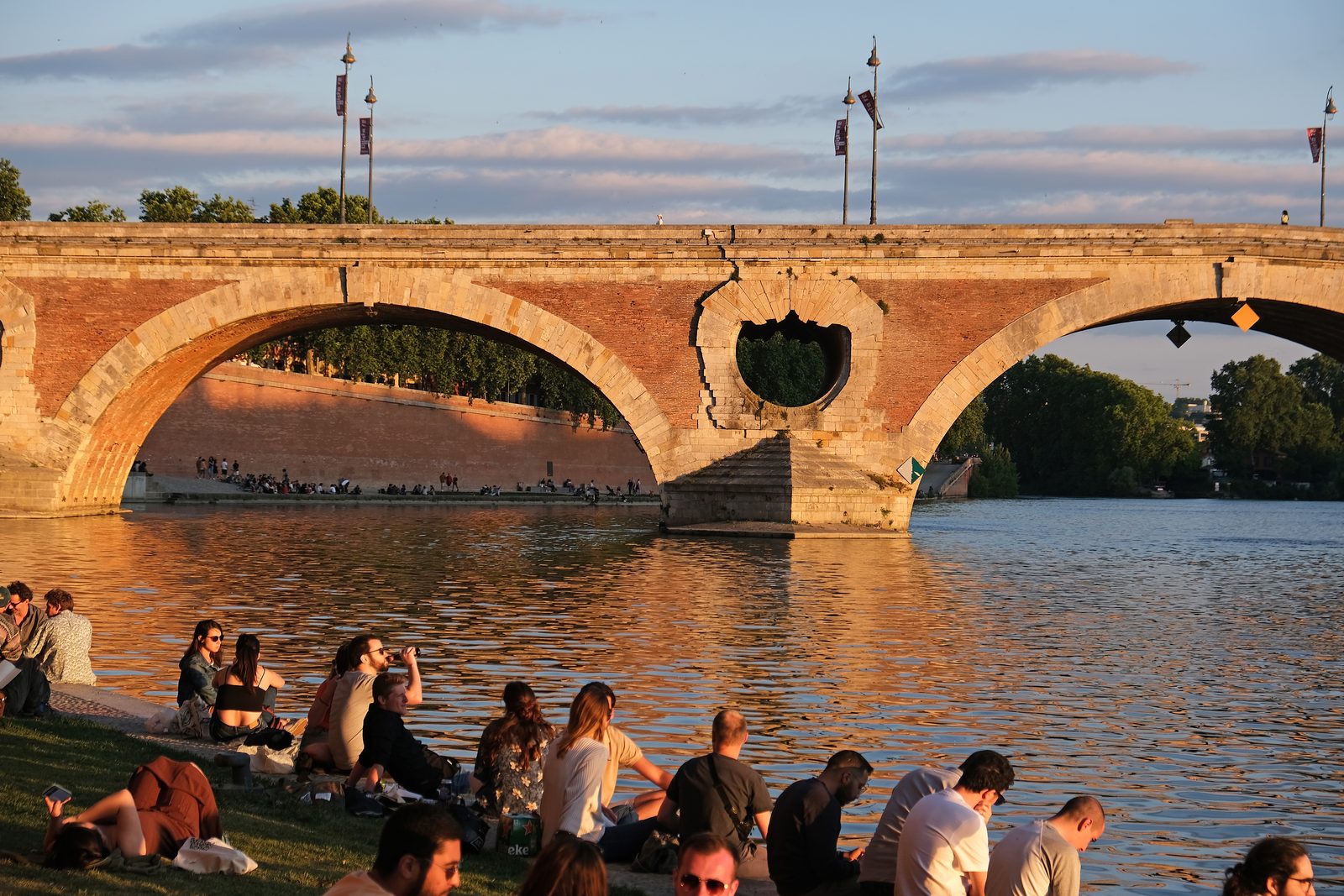
Toulouse is a warm, student-heavy city of pink brick, where life gathers on the big Capitole square and on the Garonne's banks at sunset, with a covered market and old working-class quarters close by.
 Marseille
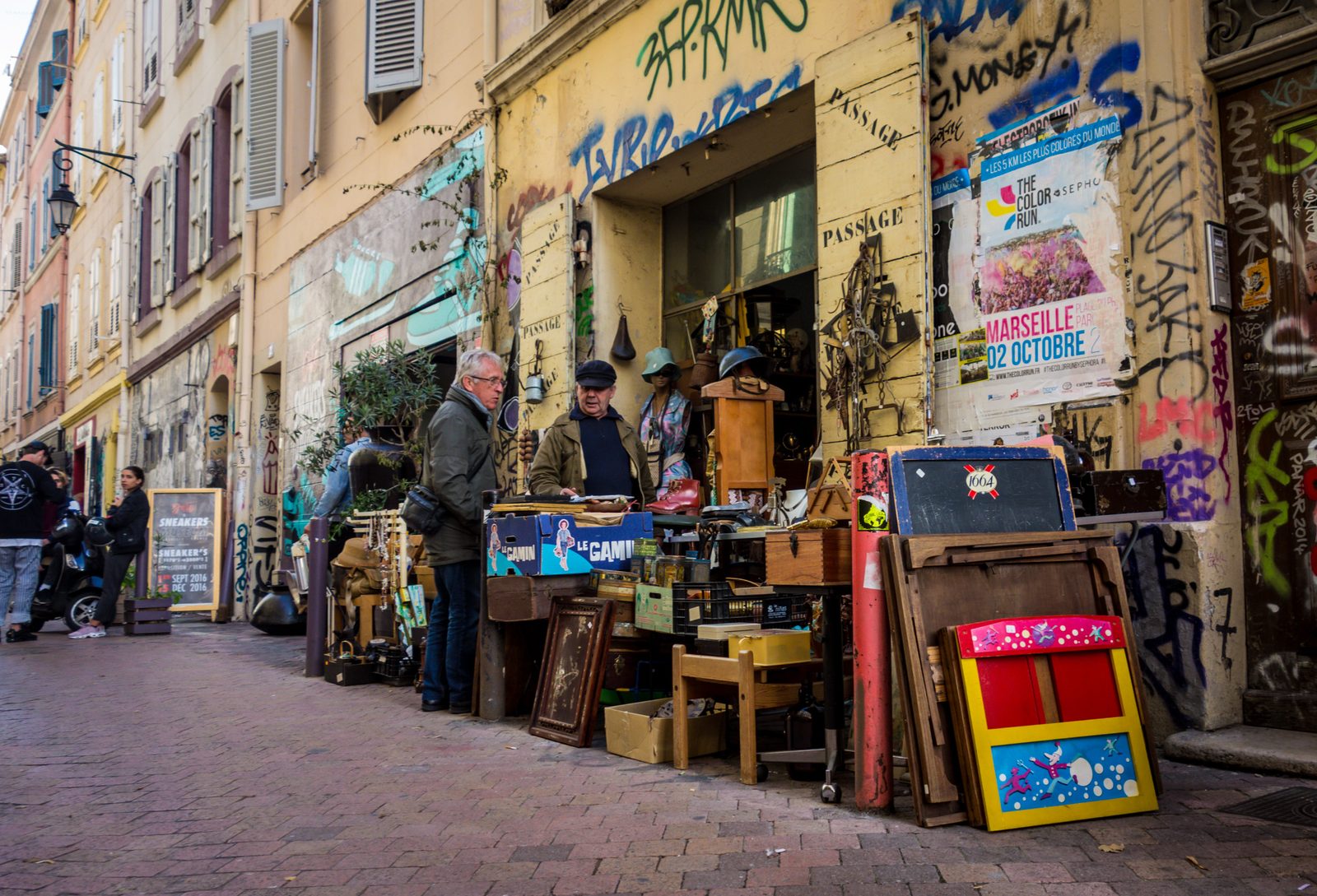
Marseille pairs hard Mediterranean light with a mixed, working port city, so you get sharp shadows on the waterfront and North African market life in Noailles a few minutes apart.
 Bordeaux
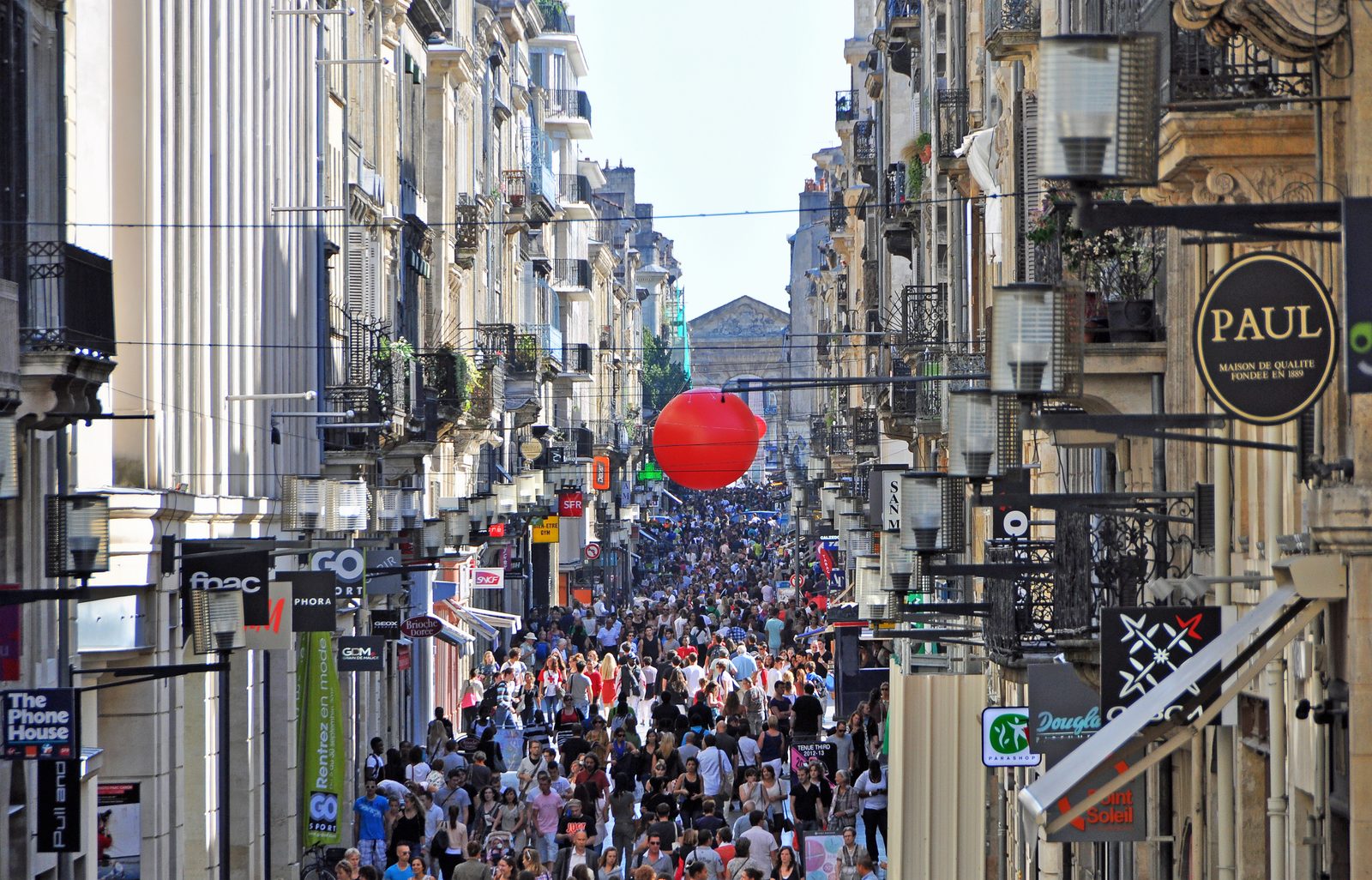
Bordeaux has grand 18th century stone along a riverfront full of skaters and musicians, so you get elegant backdrops and everyday life in the same walk.
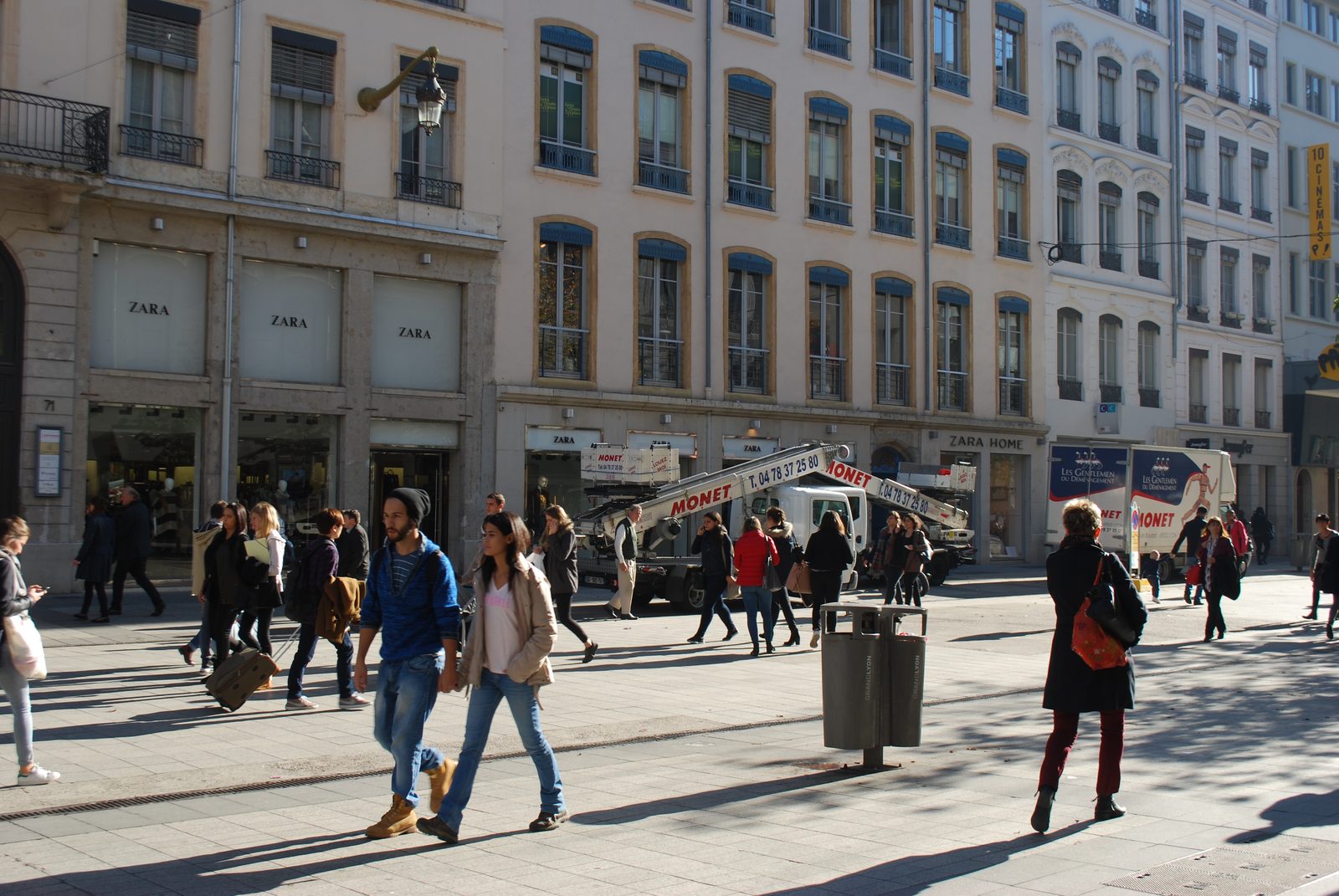 Lyon
LyonLyon is France's big city of hills and rivers, where a Renaissance old town and the silk workers' slopes of the Croix-Rousse give you stairways and passages, with Europe's best-known light festival every December.
Why France is different to shoot
Life happens on the street. Cafe terraces face the pavement, so rows of people sit watching the street, and you can shoot them as a stage. Markets run most mornings. Protest marches cross Paris often and are public events, which gives you crowds and emotion in the open.
The light changes from north to south. Paris often has soft, gray light that suits black and white and faces. The south has hard sun and deep shadows, better for graphic frames with rays on the pavement.
People are more reserved than in southern Europe or Asia. A stare back is common. A few will ask what you are doing. Answer calmly and in French if you can, and most conversations end fine.
The history is useful homework. Read about the decisive moment and look at Brassaï's Paris at night before you go. Then try to find your own version instead of copying famous frames. If you want structured practice in seeing before the trip, that is what our online street photography course is built for.
Which city for which photographer
Paris is the classic. Go for cafes, bridges, covered passages and the Metro. The Marais and Belleville feel lived in. Rue de Rivoli and the Tuileries are packed with tourists, which is a subject too. It suits photographers who like elegance and layers.
Marseille is rough and bright. Fish sellers on the Vieux-Port in the morning and North African market life in Noailles give you color and gesture. It suits photographers who like hard light and a city that does not try to be pretty.
Three more cities are on our list for future pages. Lyon has hilly old lanes and covered passages called traboules, plus the Fête des Lumières in December. Bordeaux has wide stone quays and a big reflecting pool on the riverfront. Toulouse is built in pink brick that glows at sunset.
Small towns work too. A Sunday market in any Provence village gives you more faces than a week in a museum district.
Moving between cities
The TGV network makes a two city trip easy. Paris to Marseille takes a little over three hours on the fastest trains. Paris to Lyon takes about two hours, and so does Paris to Bordeaux. Book early for the cheapest fares, and look at the low cost Ouigo trains.
A simple ten day plan: five or six days in Paris, then south to Marseille for three or four. Stop in Lyon on the way if you have a spare day. Inside cities, walk. Paris and Marseille both reward slow walking more than jumping between sights on the Metro.
Keep your gear small. A compact or a small mirrorless body with a 28mm or 35mm lens draws less attention on a terrace than a big zoom.
Seasons and festivals
Spring and early autumn are the best seasons. Light is softer and cities are full of locals rather than only visitors. In August many Parisians leave on holiday, so parts of the city feel empty while the big sights stay packed.
Plan around the calendar:
- Fête de la Musique, June 21. Free concerts on streets all over the country, late into the night. One of the best nights of the year for street photography in France.
- Bastille Day, July 14. A military parade on the Champs-Élysées and big crowds for the fireworks.
- Nice Carnival, February. Parades and flower battles on the Riviera.
- Fête des Lumières, Lyon, around December 8. Light shows and dense evening crowds.
Rain is common in the north. Don't stay in. Wet Paris streets at dusk are a genre of their own. See our guide to rain photography.
Etiquette and safety
- Say bonjour. Greeting people before anything else is basic French manners. It matters when you want a portrait.
- Terraces are public, tables are personal. Shooting a whole terrace from across the street is normal. A tight shot of one couple eating is more likely to annoy people.
- Protests can turn. Shoot from the edge and move away when police start to clear a street.
- Pickpockets work the Paris Metro and the Marseille trams. Keep the strap on.
- Children need extra care. French law has special rules and penalties where minors are involved.
Photographing people in France
Strict: local law or custom protects people's image. Ask first, or keep faces out of frame.
France is the strictest country on this list on paper. Article 9 of the Civil Code says everyone has the right to respect for private life, and courts have built the droit à l'image on it. According to Wikimedia Commons, taking a photo of a person in public does not normally require consent for personal use. Publishing and commercial use are where consent matters. Consent is generally implied or not needed for people in a crowd, people in a public place who are not the main subject, public figures at work and news events.
The case law is mixed. The New York Times reported that in 2008 an appeals court sided with the photographer François-Marie Banier when a woman objected to her picture in his book. It ruled that the right to one's image must yield when a photo contributes to the exchange of ideas and opinions. In 2012, another appeals court went the other way in a case against a tabloid magazine. Judges decide case by case.
In practice, shoot freely in public. Be careful about publishing photos where one stranger is the whole subject, and ask when you want a close portrait. Delete if someone asks. This is general information, not legal advice. See is street photography legal and how to photograph strangers.
General information, not legal advice. More in is street photography legal?
When to go
April to June and September to October. June 21 for the Fête de la Musique, and avoid Paris in August if you want locals rather than tourists.
Frequently asked questions
Is street photography legal in France?
Taking photos of people in public is generally legal. France protects the droit à l'image, so publishing a recognizable person without consent can lead to a claim, especially for commercial use. Courts weigh it against freedom of expression and art. This is general information, not legal advice.
Do I need permission to photograph people in Paris?
Not to take a photo in a public place. Consent matters if you publish an image where one identifiable person is the main subject. People in crowds or in the background of a public event are treated differently. Ask for close portraits.
Can someone make me delete a photo in France?
In general, a private person cannot force you to delete a photo, and image rights disputes go to the courts. Still, deleting when someone asks is the decent choice and usually ends the conversation.
Is Paris or Marseille better for street photography?
Paris has more variety and the classic look of cafes and soft light. Marseille has harder light and a rougher, more mixed street life. They are a little over three hours apart by TGV, so you can do both.
Can I photograph the police or protests in France?
Protests are public events, and photographing them is common and generally allowed. Photographing police doing their job in public is generally legal too, but rules on publishing police images have been debated in recent years, so blur faces if you are unsure and keep a safe distance.