
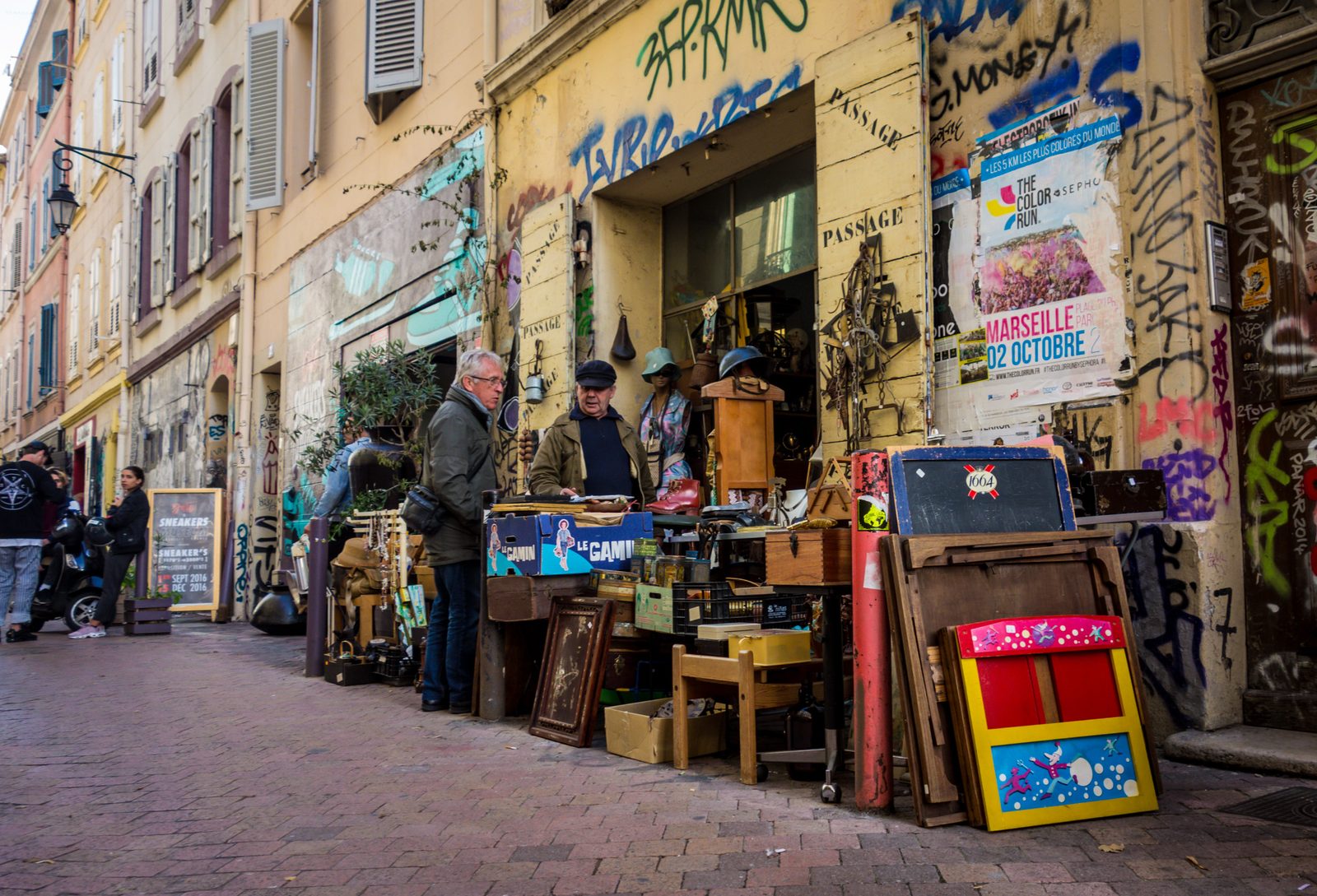
Street Photography in Marseille
Marseille pairs hard Mediterranean light with a mixed, working port city, so you get sharp shadows on the waterfront and North African market life in Noailles a few minutes apart.
- Spots
- 8
- Best time
- April to June and September to October
- Lens
- 28mm or 35mm
- Photographing people
- Strict: ask first
Marseille is a very good city for street photography because its light is hard and clear, and its people come from all over the Mediterranean. In one walk you can go from fish sellers on the old harbor to spice shops in Noailles that feel closer to Tunis than to Paris. Local photographer Yves Vernin told Eric Kim that he spends his time walking the city looking for rays on the ground and faces caught in odd light. That is the game here.
It is France's second city and it does not try to be pretty. Some streets are dirty and loud, and the center is compact enough to cover on foot or by tram. I'd build the day around the light: markets in the morning and the Mucem shadows once the sun drops.
Best street photography spots in Marseille
Vieux-Port & Ombrière
The Vieux-Port is the heart of the city. In the morning, fish sellers set up on the Quai des Belges and sell straight off the boats. Next to them is the Ombrière, a polished steel canopy designed by Norman Foster that mirrors everything under it. Stand under the edge and shoot up to catch the crowd upside down, or shoot the real people and their reflection in one frame. Come early for the fish market, then again near sunset from the north quay, with Notre Dame de la Garde on the hill behind. Watch your bag in the crowd.
Noailles & Marché des Capucins
Noailles is called the belly of Marseille. The streets around the Marché des Capucins and Rue d'Aubagne are packed with produce stalls and spice shops, and vendors call out in Arabic and French. The mornings are busiest. Shade from the tall buildings means you can work faces under the awnings while the street behind is bright. Try a low angle from the curb with crates in the foreground and a vendor behind. The area is lively but gritty, with rubbish on the street and some people who do not want a camera near them. Keep it discreet.
Le Panier
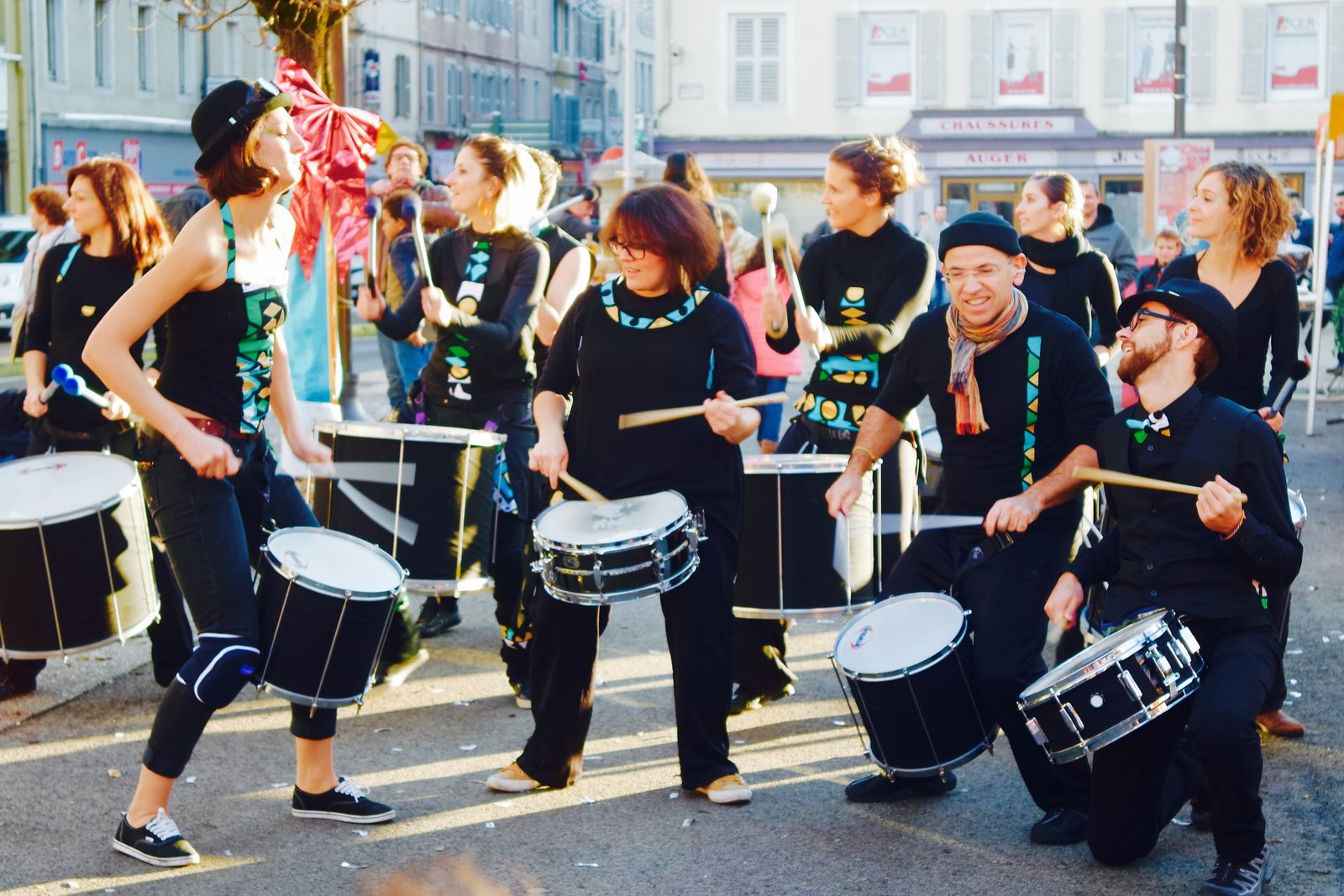
Le Panier is the oldest part of Marseille, a hill of narrow streets just north of the port. It has pastel walls and plenty of street art. Stairways are the best feature. Stand at the top of one in the late afternoon and wait for a figure to climb into a patch of sun. Rue du Panier and Place de Lenche are the busiest points, with cafés and small shops. The lanes around them are quieter and residential. It has become touristy, so arrive in the morning if you want locals rather than visitors in your frames.
Cours Julien
Cours Julien is a raised square and a set of streets covered in graffiti, a short climb from Noailles. Walls and staircases are painted top to bottom, and the terraces fill with a young crowd in the evening. Use a busy mural as the background and wait for someone whose clothes pick up its colors. The stairs down toward Noailles make a strong diagonal. After dark the bar light is enough for a fast lens. Nights here are friendly, but keep your camera close late on.
La Canebière
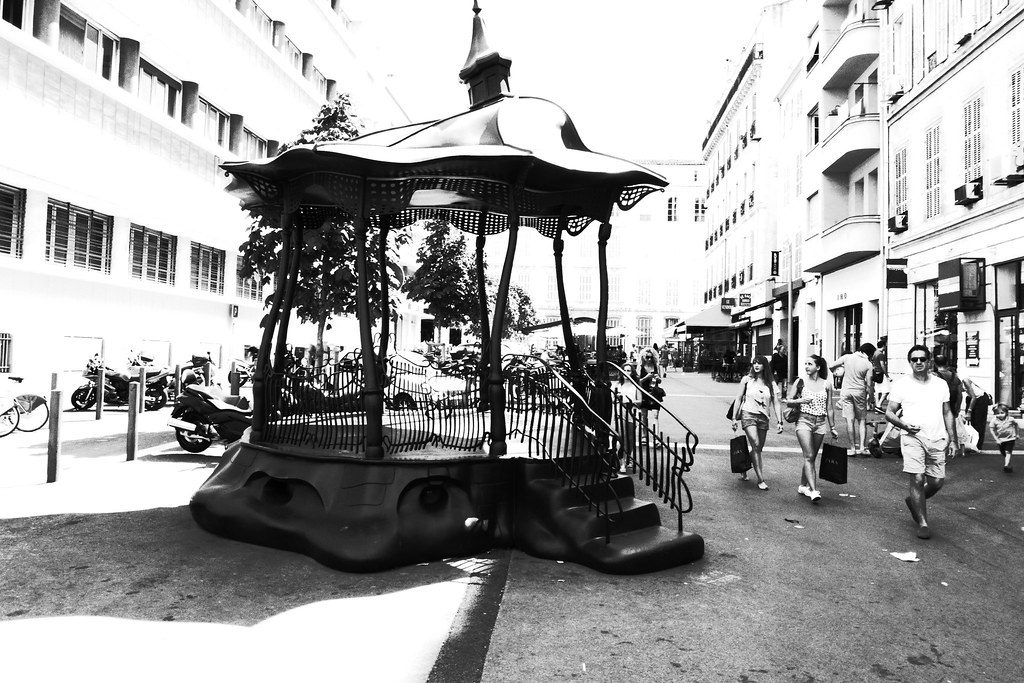
La Canebière is the big avenue that runs up from the Vieux-Port. It is not beautiful, but it carries the whole city: trams, shoppers, students and people waiting at stops. Stand at a tram stop with the sun low behind you and shoot along the platform, or shoot through the tram windows as they pass. The side streets into Belsunce are busier and more local. Midday light is flat on the wide pavement, so come in the early morning or late afternoon.
Mucem & Fort Saint-Jean
The Mucem is a modern museum at the harbor mouth, wrapped in a concrete lattice. When the sun is out, that lattice throws a net of shadows across the ramps and the people walking them. It is the best spot in the city for pure light and shadow work. Go in the afternoon when the sun comes through at an angle. Wait on the outer ramps for a walker to cross a clean patch of pattern. A footbridge links it to Fort Saint-Jean, which has good frames of people against the sea. The ramps are open air and hot in summer.
Vallon des Auffes
Vallon des Auffes is a tiny fishing harbor tucked under the Corniche road, a short bus ride from the center. Small wooden boats sit next to old fishermen's huts, and a big stone road bridge arches over the inlet. Late afternoon is best, when the light turns warm and diners fill the terraces. Shoot from the path under the bridge to use the arch as a frame, with a fisherman or a swimmer in it. It is small and busy at dinner time, so move slowly around people eating.
Plage des Catalans
Plage des Catalans is the city beach closest to the center, about 20 minutes on foot from the Vieux-Port. On summer afternoons it fills with volleyball games and families. The scenes are graphic: bodies against pale sand and bright water. I'd shoot from the promenade above, looking down, for clean layered frames. Late afternoon light is warm and low, and the swimmers coming out of the water make good silhouettes against the sea. People on a beach expect privacy, so avoid close shots of swimwear and anything that singles out children.
Photographing people in Marseille
Strict: local law or custom protects people's image. Ask first, or keep faces out of frame.
France is known for strict image rights. Article 9 of the Civil Code protects private life, and courts have built a droit à l'image on it. Taking a photo in public is generally fine. The risk is in publishing a recognizable person without consent. As the Wikimedia Commons summary notes, French judges weigh that right against freedom of expression and art, case by case, and people who are part of a crowd or public event are treated differently from a tight portrait. This is general information, not legal advice. See also is street photography legal.
On the street, Marseille is direct. Some people will wave, some will ask what you are doing. In Noailles, many people do not want to be photographed, sometimes for good reasons. Work wider there, and ask when you want a face. A bonjour first goes a long way.
General information, not legal advice. More in is street photography legal?
What to photograph in Marseille
- Hard shadows. Rays on the pavement and lit faces against black backgrounds, the approach Yves Vernin is known for.
- Fish sellers on the Quai des Belges in the morning.
- Market life in Noailles: spice sacks and hands weighing produce.
- Graffiti in Cours Julien and Le Panier as backgrounds for passersby.
- Reflections under the Ombrière and in the harbor water.
- The mistral. On windy days coats and hair all fly in one direction, and the sky is very clear.
- Football. Olympique de Marseille shirts are everywhere, and match days change the mood of the whole city.
- Sea swimmers jumping off rocks along the Corniche in summer.
A one-day photo walk
- 8:00, Vieux-Port. Fish sellers on the Quai des Belges and commuters under the Ombrière. About an hour.
- 9:30, Noailles. A 5 minute walk up La Canebière. Work the market streets while they are busy.
- 11:30, Cours Julien. A 5 minute climb. Graffiti first, then a coffee break.
- 14:00, Le Panier. About 20 minutes on foot back across the port. Work the stairways as the sun moves west.
- 16:30, Mucem. A 10 minute walk down to the harbor mouth. Shadows on the ramps.
- 18:30, Vallon des Auffes. A short bus ride along the Corniche, or about 40 minutes on foot. Stay for the evening light and dinner.
When to shoot
April to June and September to October. The fish sellers are on the Vieux-Port quay in the morning. The last two hours before sunset are best on the waterfront. July and August are hot and crowded.
The light
Bright, hard southern light, often very clear when the mistral wind blows. Local photographer Yves Vernin waits for a low sun and exposes for the highlights, letting shadows go black.
What to bring
A 28mm or 35mm prime. Bring a lens hood for shooting into the low sun.
Safety
Mostly fine in the center with city precautions. Pickpockets work the Vieux-Port and the trams. Parts of Noailles and Belsunce feel rough after dark, so keep your camera close there at night.
Tips for Marseille
- Season: spring and autumn. Summer is hot and crowded; winter light is low and good, and the mistral clears the sky.
- Exposure: in hard light, expose for the highlights and let shadows go black, as Yves Vernin does. More in street photography settings.
- Lens hood: you will shoot into the sun a lot. Keep the front element clean.
- Lens: a 28mm suits the tight lanes of Le Panier and Noailles. See best lens for street photography.
- Transport: the center is walkable. Use the tram along La Canebière and buses along the Corniche.
- Fête de la Musique: on 21 June the streets fill with free concerts until late, as in every French city.
- Match days: check the Olympique de Marseille schedule. Crowds in the center before a home game are loud and colorful.
Frequently asked questions
Is street photography legal in Marseille?
STRICT. French law protects the droit a l'image under Article 9 of the Civil Code. Taking photos in public is generally fine, but publishing a recognizable person without consent can lead to a claim. Courts weigh this against freedom of expression and art, and crowds or public events are more tolerated. General information, not legal advice.
Where are the best street photography spots in Marseille?
Start with Vieux-Port & Ombrière, Noailles & Marché des Capucins, Le Panier, Cours Julien. The old harbor. Morning fish sellers on the quay and the mirrored Foster canopy overhead.
When is the best time for street photography in Marseille?
April to June and September to October. The fish sellers are on the Vieux-Port quay in the morning. The last two hours before sunset are best on the waterfront. July and August are hot and crowded.
What lens should I bring to Marseille?
A 28mm or 35mm prime. Bring a lens hood for shooting into the low sun.
Is Marseille safe for street photographers?
Mostly fine in the center with city precautions. Pickpockets work the Vieux-Port and the trams. Parts of Noailles and Belsunce feel rough after dark, so keep your camera close there at night.
More street photography in France
Start with the France street photography guide, then pick a city.