
Street Photography in Milan
Milan rewards patient street photographers with arcades, tram lines and glass reflections, well dressed commuters crossing strict architecture, and looser life along the Navigli canals and in Chinatown.
- Spots
- 8
- Best time
- Spring and autumn
- Lens
- 28mm or 35mm
- Photographing people
- Strict: ask first
Milan is good for street photography if you like structure more than chaos. Ersan Ceviz, who photographs the city, says many visitors leave thinking it is too polished or too reserved, and that the opposite can be true. Arcades, tram lines, columns and long perspectives give you reliable geometry. Well dressed commuters, office workers and students move through it with purpose. Your job is to build the frame and wait for the right person to break it.
The city changes by district and by hour. The center is formal and fast in the morning. Ticinese, the Navigli and the Darsena loosen up in the late afternoon, when aperitivo crowds meet the evening light. Chinatown and the street markets add everyday life. I'd plan Milan as a city of short, focused sessions rather than one big walk, and use the arcades when the midday sun gets hard. This is a good city to learn patience and editing.
Best street photography spots in Milan
Piazza del Duomo & Galleria
The cathedral square is the most photographed place in Milan, and Ceviz says street photographers dismiss it too fast. Everyone looks up at the Duomo, so watch the ground instead: workers crossing tourist crowds, pigeons scattering, people hesitating. Next door, the Galleria Vittorio Emanuele II arcade has polished mosaic floors, repeated arches and luxury windows. Pick a clean section of arcade and wait for a single figure to cross it. Morning gives the most purposeful movement. Pickpockets and bracelet sellers work the square, so keep moving and hold your bag.
Navigli & Darsena
The Darsena is the old harbor basin where the Naviglio Grande and Naviglio Pavese canals meet. The canal sides fill with bars and aperitivo crowds in the evening. Ceviz says most people photograph it badly by chasing atmosphere. He suggests working the edges instead: bridges, railings, café windows, shadows on the water. Early morning shows local life before the social scene starts. On the last Sunday of each month, a large antiques market runs along the Naviglio Grande for about 2 km, which is a great day for vendors and browsers. Watch for cyclists on the towpath.
Colonne di San Lorenzo & Ticinese
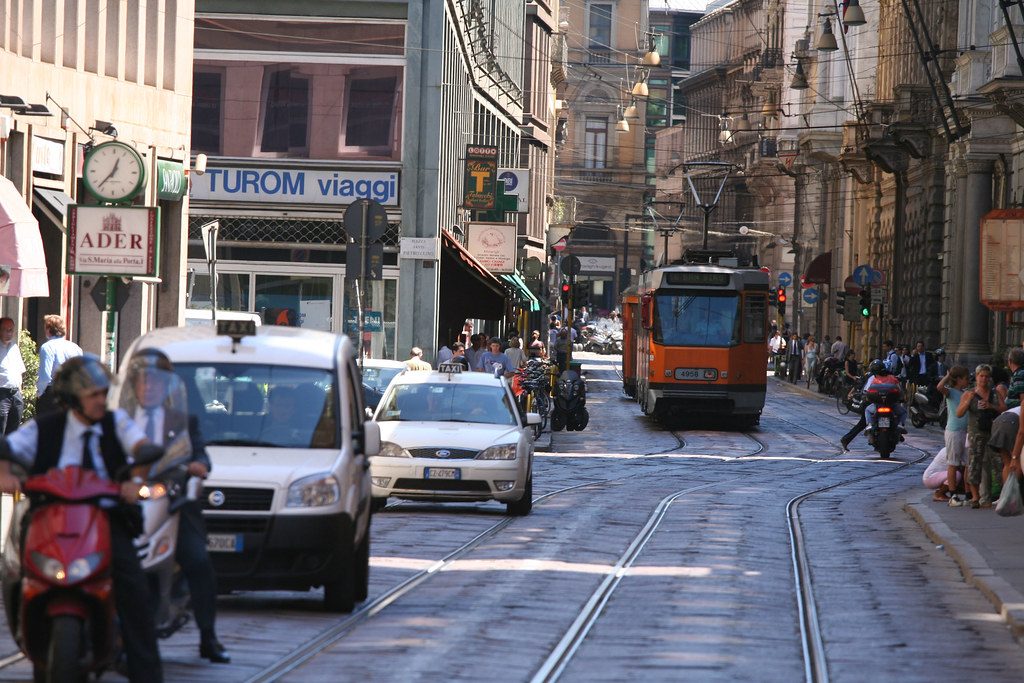
A row of Roman columns stands in front of the Basilica of San Lorenzo on Corso di Porta Ticinese. At night, young people gather on the steps with drinks. By day, Ceviz notes Ticinese is a street of transition: people meeting, crossing, smoking, checking phones. The Walking Photographer adds street artists and skateboarders. Stand across the street and use the columns as a repeating frame. Trams pass right in front, which gives you motion and layers. At night, raise your ISO and use bar light.
Brera
Brera is the old artists' district, with narrow streets, galleries and the fine arts academy. Ceviz calls it a place of measured pacing: less crowd, more quiet moments between architecture and people. Work with windows, doorway light and café thresholds. He warns it can become too pretty, so wait until something human disturbs the order: a pause, a mismatch, a person crossing at the right moment. Late afternoon light is soft in the side streets. Terraces are close together, so be discreet around diners.
Via Paolo Sarpi (Chinatown)
Via Paolo Sarpi is the pedestrian heart of Milan's Chinatown, northwest of the center. The Walking Photographer lists it for diverse street life, signs, markets and local characters. Expect shop signs in two languages, deliveries on carts and bikes, and people queuing at food shops. Late morning is busy with deliveries. Shoot along the street to layer signs and walkers, or stand by a shop door for people coming and going. Many shopkeepers are busy and camera shy, so ask before photographing inside a shop.
Milano Centrale
Milano Centrale is a huge station with a monumental hall, high ceilings and long platforms. The Walking Photographer points to shafts of light, strong geometry and travelers in motion. Morning and evening rush hours bring streams of commuters. Stand at the top of the escalators or in the main hall and let the architecture dwarf the people. The station is private property run by the rail operator, and staff may ask you to stop. The streets around the station can feel rough at night.
Isola & Piazza Gae Aulenti
Piazza Gae Aulenti is a raised modern plaza surrounded by glass towers, next to the old Isola neighborhood and the Bosco Verticale towers. Ceviz says Isola shows the tension between old habits and new development, and that the best frames come from people moving under the towers rather than the buildings alone. Use the plaza's curves and glass for reflections and small figures. Then walk into Isola for local shops and street art. Midday light is harsh on the plaza, so come early or late.
Viale Papiniano Market
The Viale Papiniano market is the biggest and busiest street market in Milan, held on Tuesdays and Saturdays near Sant'Agostino metro. Stalls sell fruit, fish, clothes and shoes, and bargain hunters dig for designer labels. It is a rare chance to see Milanese off guard. Go in the morning when it is busiest. Shoot from the end of a stall toward the crowd, or wait for hands reaching into piles of clothes. Keep your bag closed in the crush.
Photographing people in Milan
Strict: local law or custom protects people's image. Ask first, or keep faces out of frame.
Taking photos of people in public places is legal in Italy. Publishing is where the rules bite. Article 10 of the Civil Code and Articles 96 and 97 of the Copyright Law protect a person's image. As lawyer Andrea Monti explains, candid photos in public are generally allowed, but publishing a recognizable person as the main subject can need consent, while people who are part of a wider public scene usually do not. Photographing into private homes can be a crime. This is general information, not legal advice. See is street photography legal.
Milanese are reserved and busy. Ceviz notes some areas are visually rich but socially closed, and suggests working with distance, body language, reflections and silhouettes rather than forcing interaction. If someone objects, move on. For a portrait, ask; see how to photograph strangers.
General information, not legal advice. More in is street photography legal?
What to photograph in Milan
- Dress and posture. Ceviz notes clothing and built space often feel in conversation here.
- Reflections in glass, polished stone, tram windows and café fronts.
- Thresholds. A person stepping from light into shadow, or a waiter between inside and outside.
- Repetition and interruption: columns, windows and tram lines broken by one figure.
- Trams, old orange cars and newer ones, crossing the center.
- Aperitivo crowds on the Navigli and in Ticinese in the early evening.
- Market life at Papiniano and the monthly Navigli antiques market.
A one-day photo walk
- 8:00, Piazza del Duomo and the Galleria. Commuters and cleaners before the tourists. About an hour.
- 9:30, Brera. A 15 minute walk north. Doorways and café life.
- 11:30, Via Paolo Sarpi. Metro to Moscova or a 20 minute walk. Lunch in Chinatown.
- 14:00, Isola and Piazza Gae Aulenti. About 20 minutes on foot. Reflections and scale.
- 16:30, Colonne di San Lorenzo. Metro to Missori, then walk 10 minutes, or take a tram south. Afternoon on Corso di Porta Ticinese.
- 18:00, Navigli and Darsena. A 10 minute walk. Stay for aperitivo crowds and blue hour. On a Tuesday or Saturday, start the day at Papiniano instead.
When to shoot
Spring and autumn. Weekday mornings for commuters, early evening for aperitivo on the Navigli. Fashion weeks in February and September and Design Week in April bring crowds of dressed up people.
The light
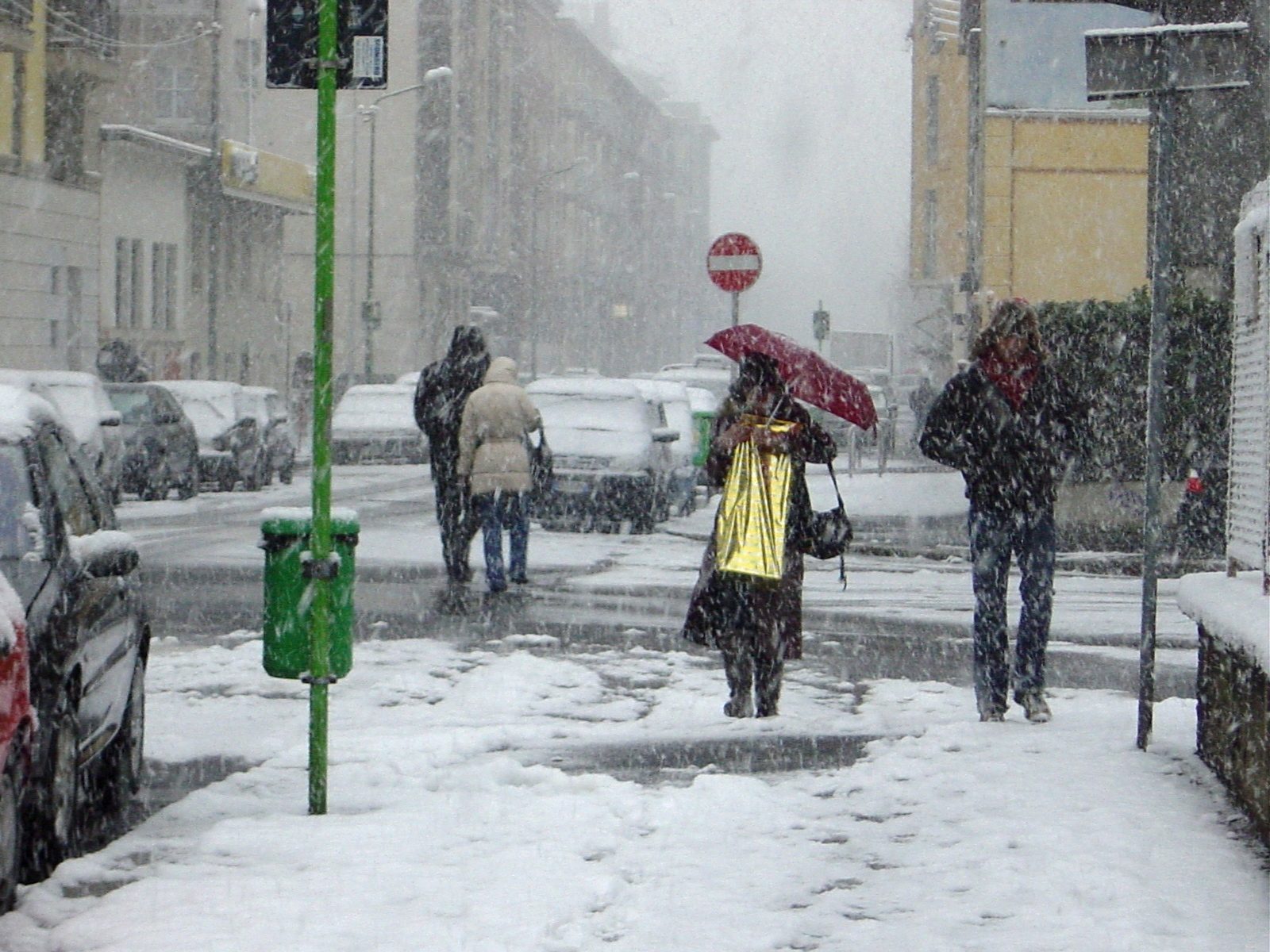
Hard contrast in open squares at midday; softer under arcades and porticos. Winter can be foggy and grey.
What to bring
A small camera with a 28mm or 35mm lens. The Walking Photographer shoots the city with a Leica Q at 28mm. Work with distance and reflections where people keep to themselves.
Safety
Generally safe. Pickpockets around the Duomo, on trams and on the metro. The area around Centrale can feel rough at night.
Tips for Milan
- Season: spring and autumn. Summer is hot and many locals leave in August. Winter brings fog and grey days.
- Events: Fashion Week, usually in February and September, and Design Week in April fill the streets with dressed up crowds.
- Markets: Papiniano on Tuesdays and Saturdays, the Navigli antiques market on the last Sunday of the month.
- Midday: work under arcades and porticos, where the light is softer.
- Lens: 28mm or 35mm. See best lens for street photography.
- Method: build the frame first, then wait. More in street photography settings.
Frequently asked questions
Is street photography legal in Milan?
STRICT on publishing. Taking photos in public is legal in Italy, but Article 10 of the Civil Code and Articles 96 and 97 of the Copyright Law restrict publishing a recognizable person's image without consent, with exceptions for people who are part of a wider public scene. Milanese are reserved and move fast; many prefer distance.
Where are the best street photography spots in Milan?
Start with Piazza del Duomo & Galleria, Navigli & Darsena, Colonne di San Lorenzo & Ticinese, Brera. Crowds, pigeons and workers in front of the cathedral; polished floors and repetition in the Galleria arcade.
When is the best time for street photography in Milan?
Spring and autumn. Weekday mornings for commuters, early evening for aperitivo on the Navigli. Fashion weeks in February and September and Design Week in April bring crowds of dressed up people.
What lens should I bring to Milan?
A small camera with a 28mm or 35mm lens. The Walking Photographer shoots the city with a Leica Q at 28mm. Work with distance and reflections where people keep to themselves.
Is Milan safe for street photographers?
Generally safe. Pickpockets around the Duomo, on trams and on the metro. The area around Centrale can feel rough at night.
More street photography in Italy
Start with the Italy street photography guide, then pick a city.