
Street Photography in Italy
Italian life is lived in the piazza, with talk and gesture on show against old stone in warm light.
Italy street photography comes down to the piazza. Italians meet, argue, flirt and people-watch in public squares, and the evening stroll called the passeggiata turns whole streets into a parade. Add old stone that glows in low sun, and hands that talk as much as mouths, and you have a country built for candid pictures.
The cities are close together and very different. Naples is loud and raw. Rome is theater in every square. Venice is quiet and foggy once you leave the crowds. Milan is fast and well dressed, and Florence is compact and packed with visitors. A fast train links them all in a few hours.
Two things to plan for. The famous sights are crowded with tourists for much of the year, so the best work usually happens early or in the neighborhoods where people live. And Italian law protects a person's portrait when you publish it. This guide covers what makes Italy different to shoot, which city suits you, a route, the seasons and how consent works.
City guides for Italy
- Rome
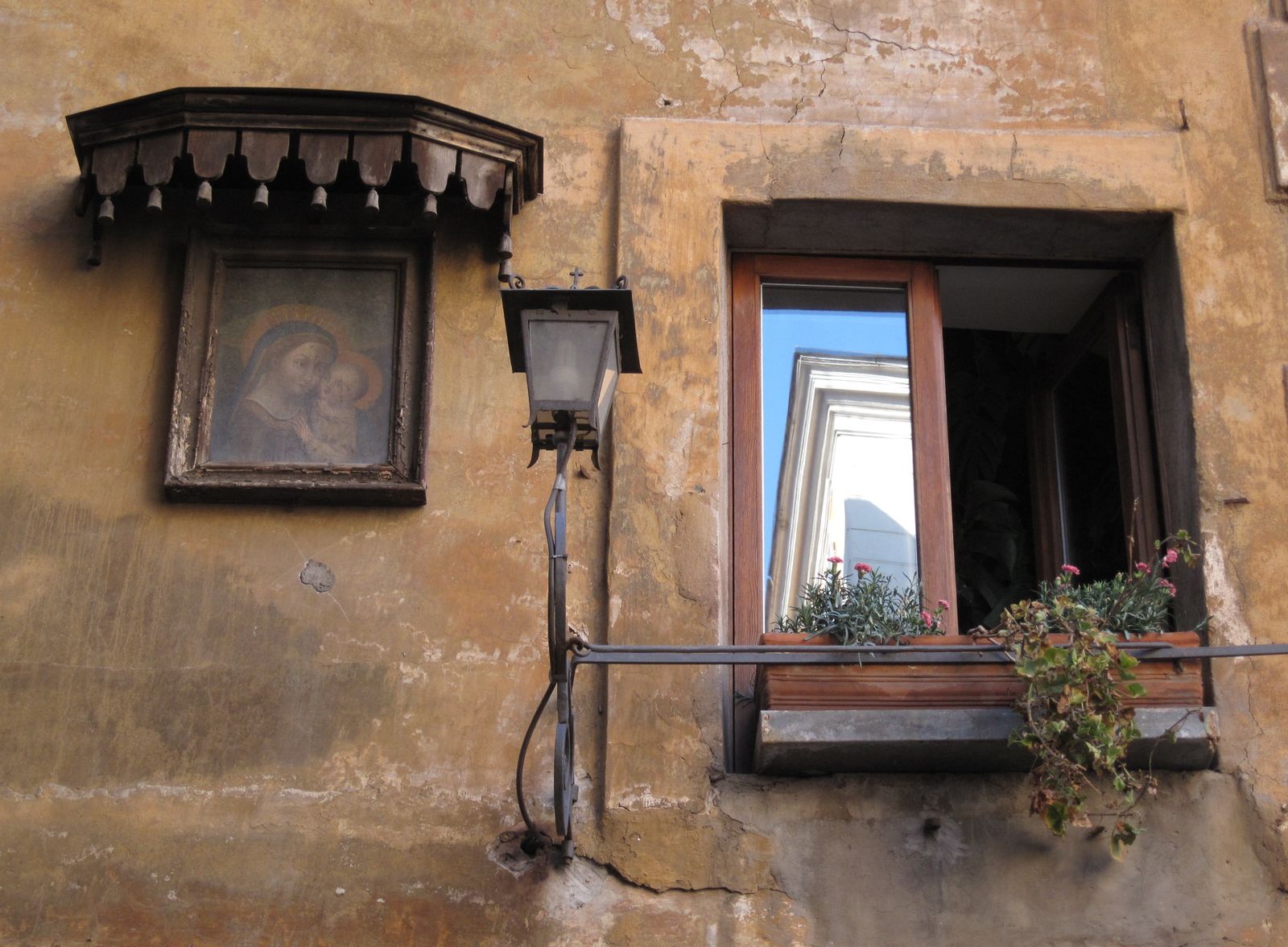
An open-air museum with Italian style and theater in every piazza; warm light on old stone.
 Venice
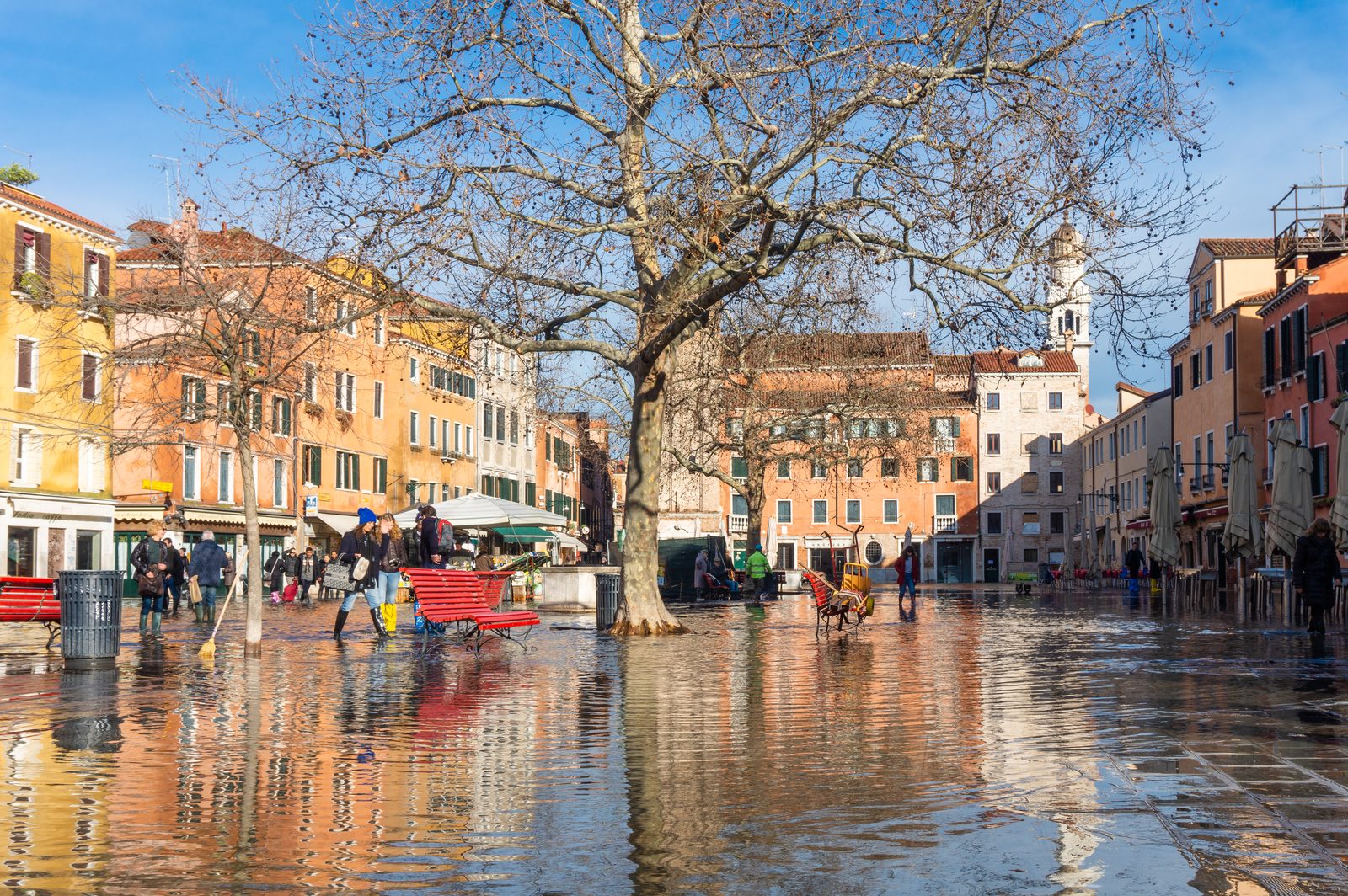
Once you leave San Marco and Rialto, Venice gives you narrow calli, canals full of working boats and dawn fog, and the residential sestieri of Cannaregio, Castello and Dorsoduro still have real daily life.
 Milan
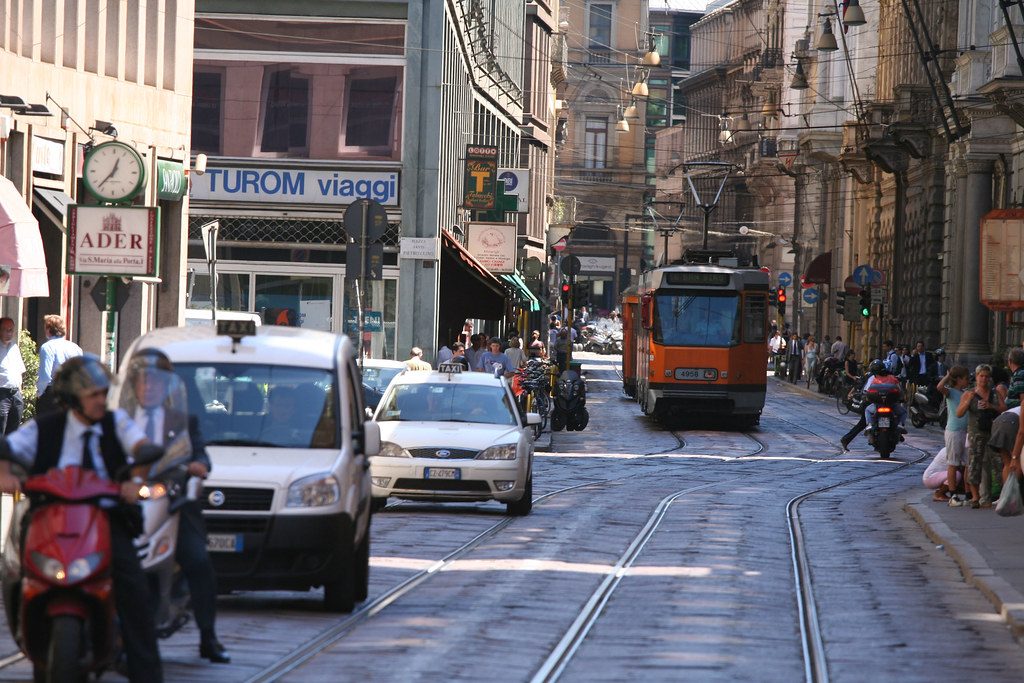
MilanMilan rewards patient street photographers with arcades, tram lines and glass reflections, well dressed commuters crossing strict architecture, and looser life along the Navigli canals and in Chinatown.
 Florence
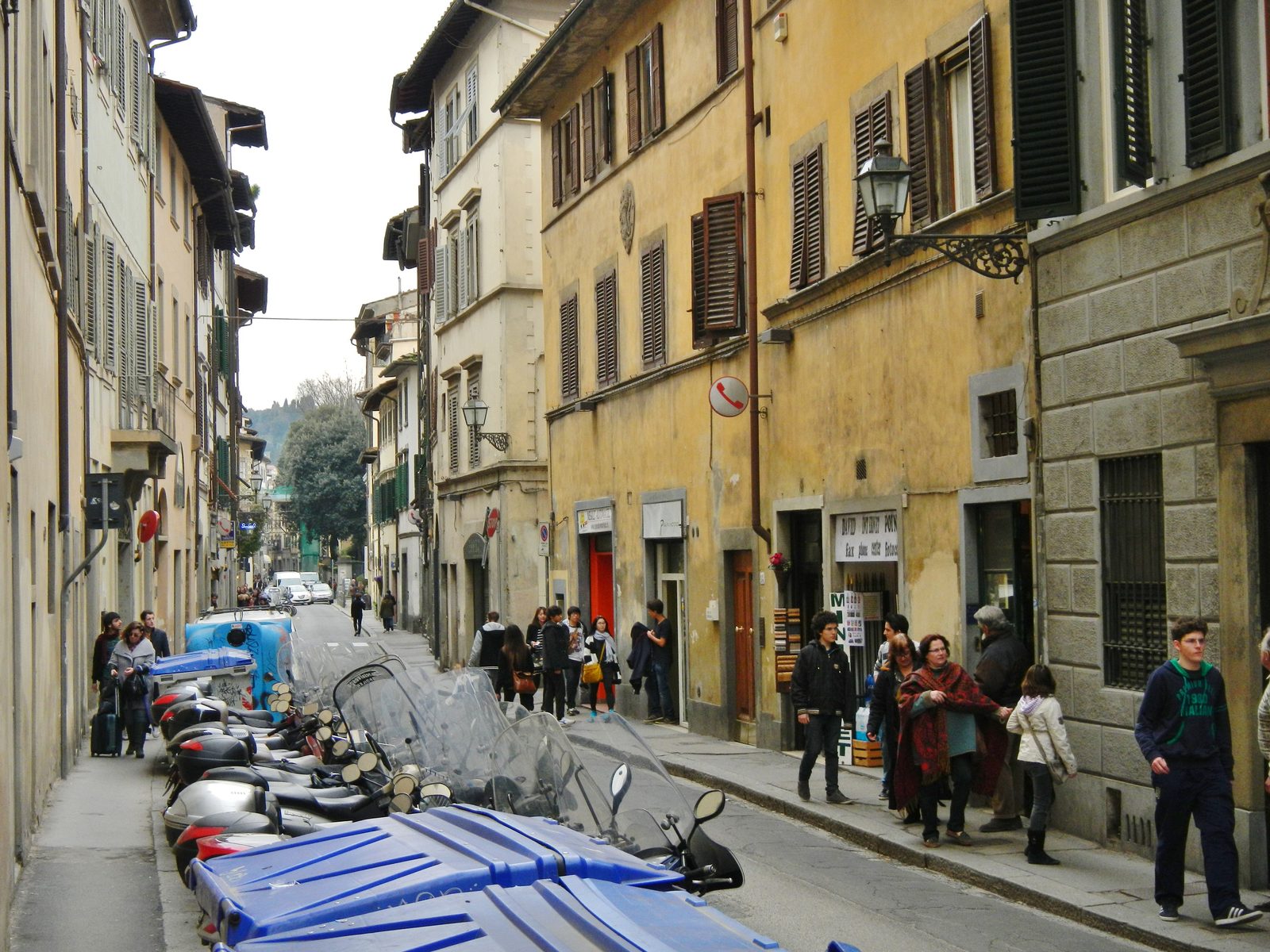
Florence is compact and walkable, with crowded Renaissance squares in warm light and a quieter local life across the river in the Oltrarno.
 Bologna
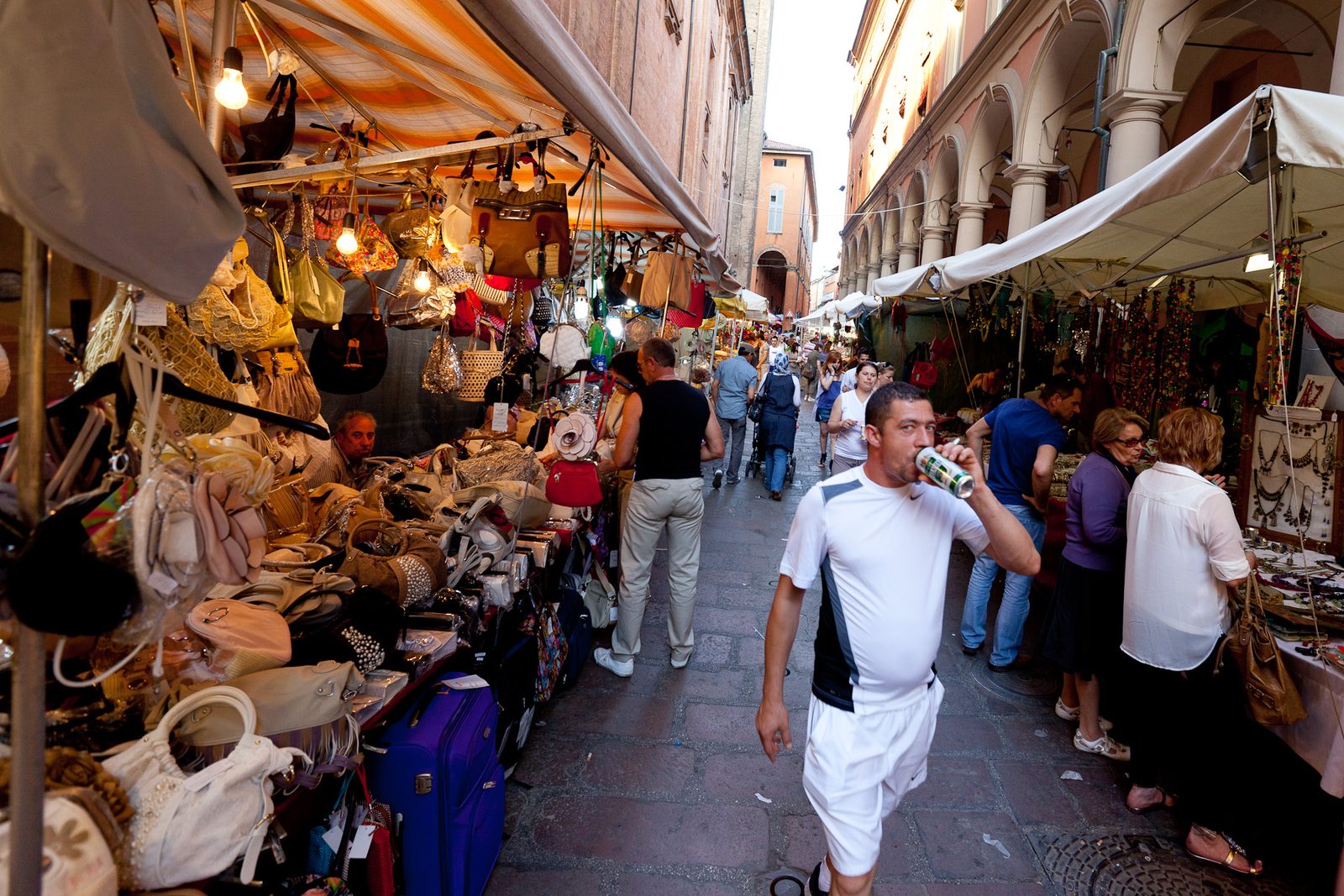
Bologna has about 40 km of porticoes in its historic centre, so every street comes with repeating arches and side light, and a big student population keeps those streets full into the night.
 Naples
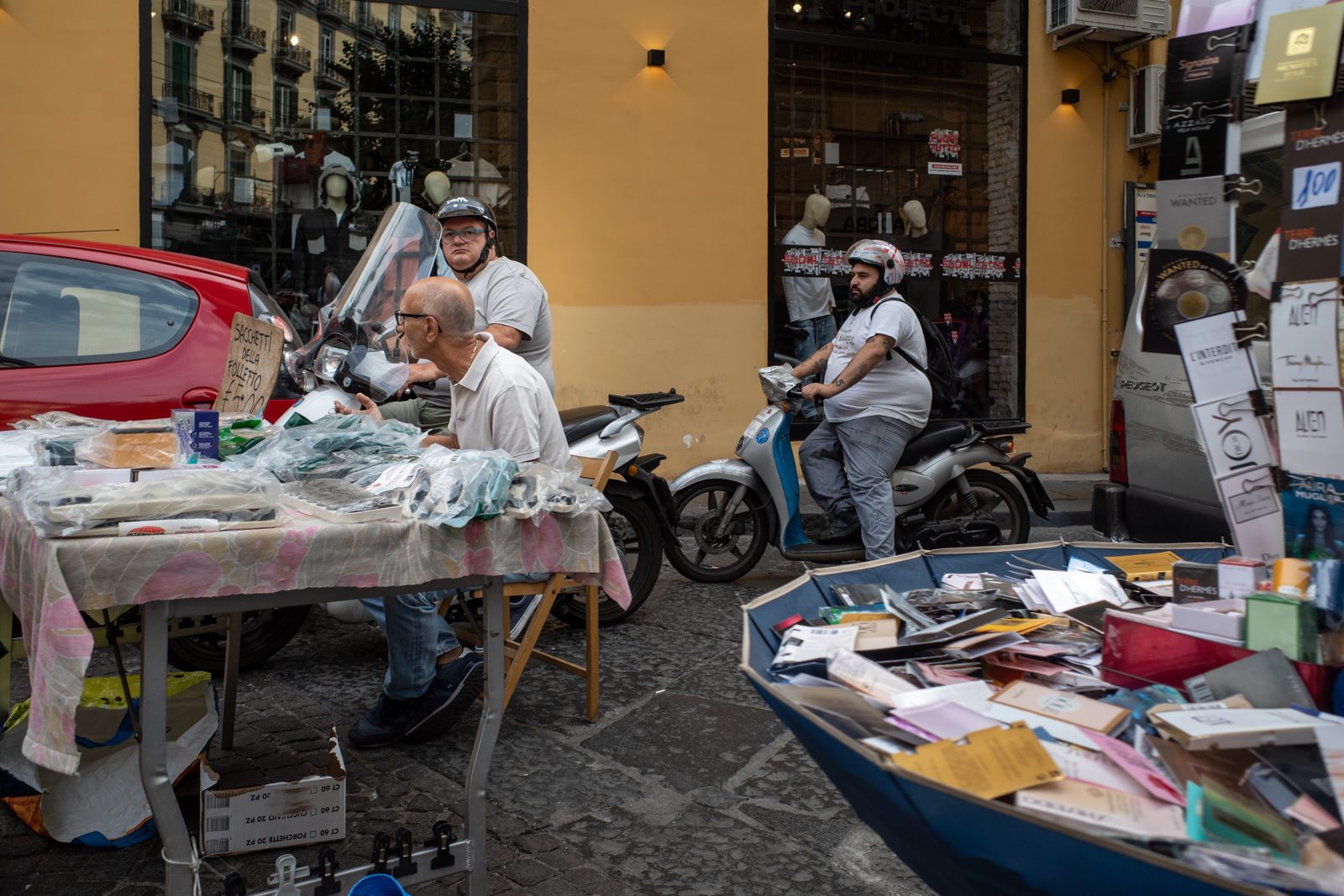
Naples is raw and loud, with laundry lines over narrow alleys, street shrines, scooters, hand gestures and residents who are mostly open to a camera, which makes it one of the liveliest street cities in Europe.
What makes Italy different to shoot
Gesture. Italians talk with their hands. Two people chatting on a corner can give you a better frame than any monument. Watch groups of older men in the squares and wait for the peak of the gesture.
Light on stone. Ochre and terracotta walls bounce warm light into faces in the morning and late afternoon. At midday in summer the light is hard and the streets are empty, so rest then.
Style. People dress well, especially in Milan. Clean suits against strict architecture make formal, graphic frames.
Tourists as the subject. In the big tourist cities, the crowds of visitors are part of the scene. Selfie sticks and tour flags are rich material if you shoot them with humor rather than contempt. Martin Parr built a career on it.
Small towns at night. Hill towns like Siena and Perugia change after the tour buses leave. Streetlights on narrow lanes give you pools of light and deep shadow. See light and shadow photography.
Italy rewards patience at one good backdrop more than rushing between sights. If you want to train that habit, our online street photography course covers it in short daily lessons.
Which city for which photographer
Naples is the pick for raw street life. Laundry over narrow alleys, street shrines, scooters and residents who are mostly open to a camera. Start in Spaccanapoli and the Quartieri Spagnoli.
Rome is for theater. Morning markets at Campo de' Fiori, then evening crowds in Trastevere and Monti.
Venice is for mood. Skip San Marco and head into Cannaregio, Castello, Dorsoduro and San Polo, where locals still shop and chat. Winter fog is the prize.
Milan is for graphic, urban work: arcades, trams, reflections and commuters. The Navigli canals loosen up in the evening.
Florence is small and walkable. The old center is crowded, so cross to the Oltrarno for local life.
Bologna is on our list for a future page. Its long porticoes give you repeating arches and locals on bicycles, and many photographers rate it above the famous cities.
A route by fast train
Italy's high speed trains make one country trip easy. Rough times on the fastest services:
- Milan to Florence, under two hours
- Venice to Florence, a little over two hours
- Florence to Rome, about an hour and a half
- Rome to Naples, a little over an hour
A two week plan runs north to south: Venice for three days, a stop in Bologna, Florence for two or three, Rome for four and Naples for three. Milan fits at the start if you fly in there. Book fast trains early for lower fares. Regional trains are cheaper and never sell out, but they are slower.
Stay central in each city so you can walk out at dawn. The first two hours of light are when the streets belong to residents, before the day trippers arrive.
Seasons and festivals
Spring and autumn are best: April to June and September to October. Summer is hot, and in mid August, around the Ferragosto holiday on August 15, many locals leave the cities and shops close. November to February brings fog in Venice and the north and fewer visitors. It is underrated.
Events worth planning around:
- Venice Carnival, in the weeks before Lent, usually February. Masks and costumes everywhere, and huge crowds.
- Holy Week before Easter, with religious processions in many southern towns.
- Palio di Siena, July 2 and August 16, a horse race in the main square with days of build-up in the streets.
- Christmas in Naples, when Via San Gregorio Armeno fills with nativity stalls and shoppers.
- Milan Fashion Week, in February and September, when the streets outside the shows fill with dressed up people.
Etiquette and safety
- Greet first. A buongiorno or buonasera before a portrait changes the whole exchange.
- Churches have rules. Cover shoulders and knees, and don't photograph during mass. Some churches ban photos inside entirely.
- Never shoot into homes. In Venice and Naples, doors and ground floor windows open straight onto the lane. The street is public, the room behind it is not.
- Pickpockets work crowded buses and the big stations. In Naples, bag snatching from scooters happens, so keep your camera on the side away from the road.
- Street vendors near the sights may press bracelets or roses into your hand. A firm no and walking on is enough.
Photographing people in Italy
Strict: local law or custom protects people's image. Ask first, or keep faces out of frame.
Taking a photo of someone in a public place is legal in Italy. Publishing is where consent comes in. Article 96 of the copyright law, Law 633 of 1941, says a person's portrait may not be published or sold without their consent. Article 97 lists the exceptions: well known people and public officials, scientific, educational or cultural purposes, and images linked to events or ceremonies of public interest or held in public. Even then, a portrait may not be shown if it harms the person's honor or reputation. Article 10 of the Civil Code adds a general protection against misuse of someone's image.
How this applies to street photography is debated, and courts decide case by case. Wikimedia Commons reads it as allowing non-commercial publication of people in public, with commercial use needing consent. The safe habit: publish crowds and scenes freely, and ask before publishing a close portrait of one recognizable stranger. This is general information, not legal advice. See is street photography legal and how to photograph strangers.
General information, not legal advice. More in is street photography legal?
When to go
April to June and September to October. Winter is underrated for fog in Venice and the north, and mid August is when many city residents are away.
Frequently asked questions
Is street photography legal in Italy?
Yes, taking photos of people in public is legal. Publishing a recognizable portrait generally needs consent under Article 96 of Law 633 of 1941, with exceptions such as public figures and public events. Commercial use always needs consent. This is general information, not legal advice.
Do I need consent to post street photos taken in Italy?
For crowds and scenes where people are part of a public event or place, usually not. For a close portrait of one identifiable stranger, asking first is the safe choice, and it is required for commercial use.
What is the best city in Italy for street photography?
Naples for raw street life and people who are open to cameras. Rome for piazza theater. Venice for mood away from San Marco. Milan for graphic urban work.
Are Italians okay with being photographed?
It depends on the city. Many Neapolitans are relaxed and even enjoy it. Milanese tend to be more reserved. Greeting people in Italian and accepting a no goes a long way everywhere.
When is the best time for street photography in Italy?
Spring and autumn for the light and the weather, or winter for fog and fewer tourists. Avoid midday in July and August, when light is harsh and streets are empty.