
Street Photography in Bologna
Bologna has about 40 km of porticoes in its historic centre, so every street comes with repeating arches and side light, and a big student population keeps those streets full into the night.
- Spots
- 8
- Best time
- April to June and September to October
- Lens
- 28mm or 35mm
- Photographing people
- Strict: ask first
Bologna is a very good city for street photography because it is built for it: about 40 km of porticoes in the historic centre give every street repeating arches and pools of side light. Photographer Scott Allen Wilson says the porticoes were what first drew his eye, with columns repeating into the distance and shadows moving slowly across the pavement. Add a university founded in 1088, generally considered the oldest still operating, and you get a centre that stays busy with students late into the night.
People planning a trip search for Bologna photo spots, and most lists point to the same postcard views. This guide adds the places where locals spend their day. I'd do the markets in the morning and save the late afternoon for the San Luca portico. The Two Towers are fenced off for a long restoration, so plan around them.
Best street photography spots in Bologna
Piazza Maggiore & Neptune Fountain
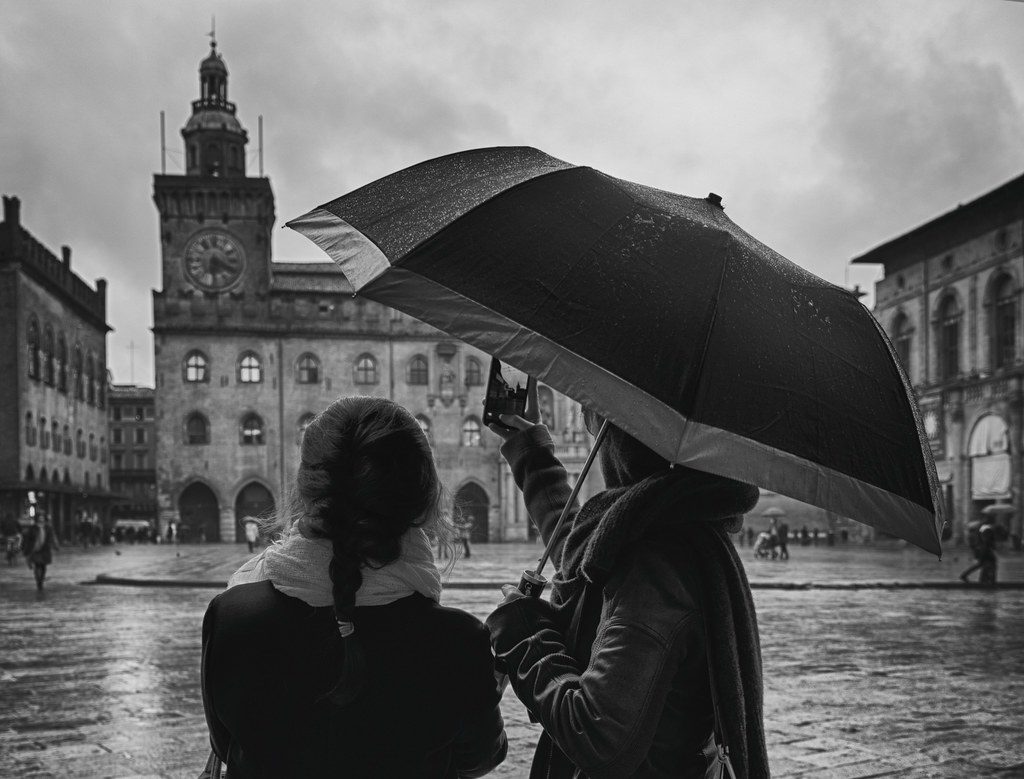
Piazza Maggiore is the heart of the city, under the half-finished facade of San Petronio. Wilson calls it the city's living room in the warmer months, full of people sitting and talking, with outdoor cinema on summer nights. Sit on the basilica steps and shoot across the square as people cross, using the long shadows of late afternoon. The Neptune Fountain in the next piazza draws a steady crowd. Watch your bag during big events and film screenings.
Quadrilatero & Mercato di Mezzo
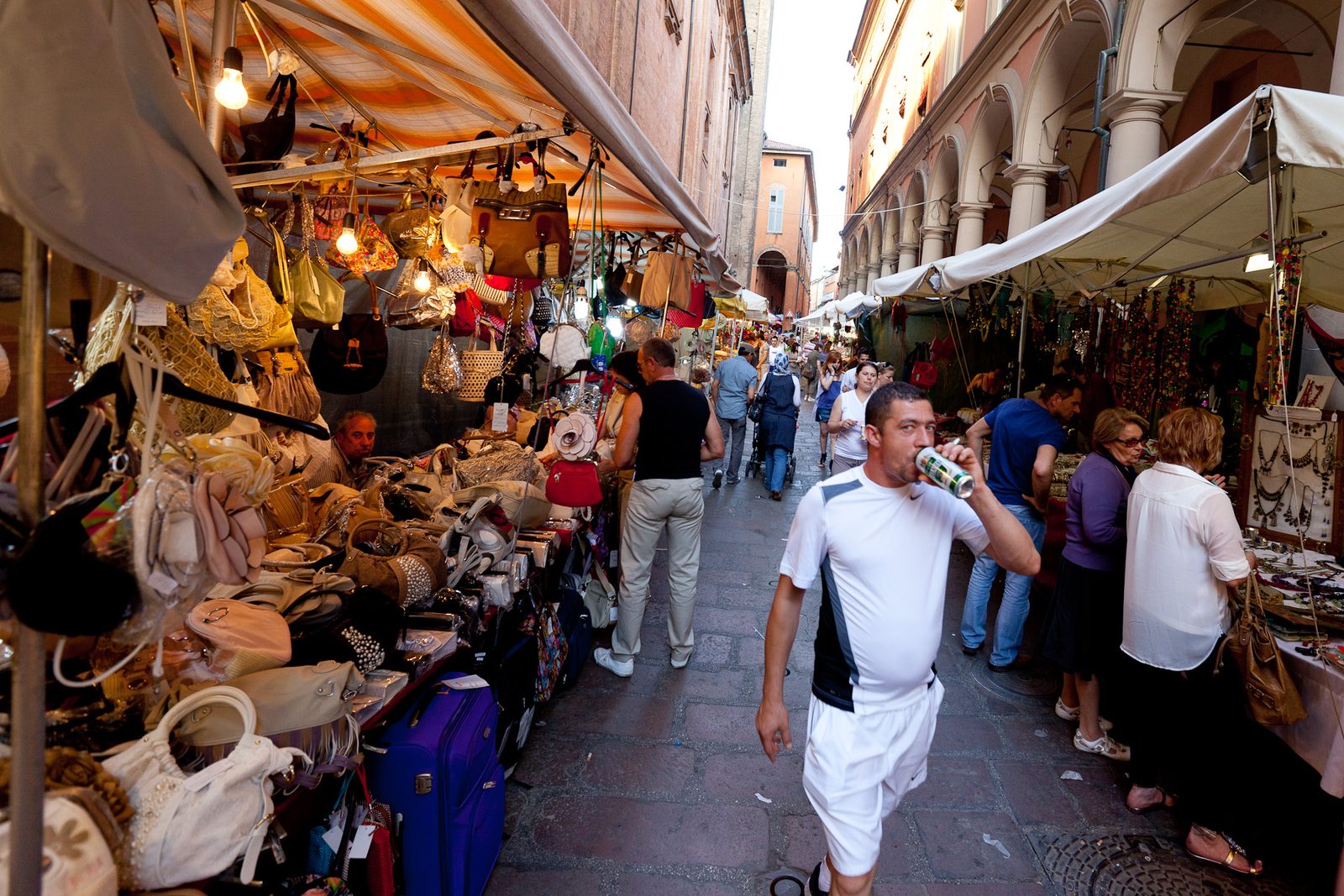
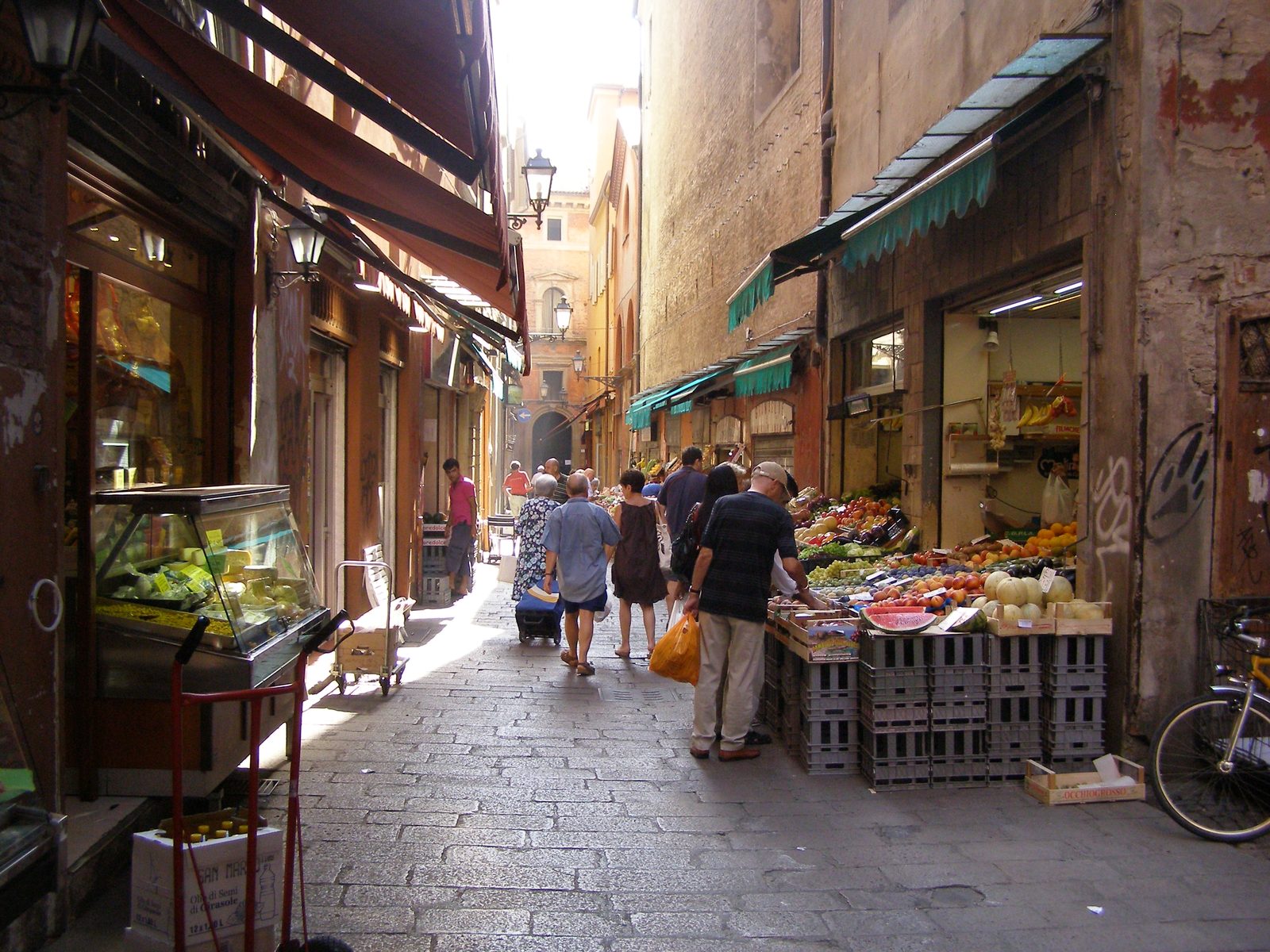
The Quadrilatero is the old market district just east of Piazza Maggiore, a grid of narrow lanes like Via Pescherie Vecchie and Via Clavature. In the morning, delis hang hams and cheeses over the street and shoppers queue at the counters. From about 6pm the same lanes fill with aperitivo tables. Stand at a corner and shoot down the lane for layers of hanging food and faces. Mercato di Mezzo is a covered food hall. The lanes are tight, so step into a doorway to shoot without blocking the flow.
Piazza Santo Stefano
Piazza Santo Stefano is triangular, not square, which gives it a tapering perspective towards the Seven Churches. Victoria Vanderberg calls it the prettiest square in the city and suggests morning light, when the sun comes low across the piazza and crowds are thin. Stand at the wide end so the church anchors the frame, and wait for a cyclist or a figure to cross the cobbles. On weekends the square is busier.
Via Zamboni & Piazza Verdi
Via Zamboni runs through the university quarter, lined with faculties under long porticoes and walls covered in posters and graffiti. At the top, Piazza Verdi is the students' square, quiet in the morning and crowded after dark with groups drinking and talking. By day, use the porticoes as frames for students with books and bikes. At night, work the edges of the crowd with a fast lens. It gets rowdy late, so keep your gear close and don't stick a camera in anyone's face.
Via del Pratello
Bologna City Breaks calls Via del Pratello the city's counter-culture spine: once its poorest quarter, then a centre of student and antifascist movements. Political murals cover the walls, and osterie and pubs fill from around 6pm until the early hours. Go at dusk for pavement tables under the porticoes. The murals make strong backdrops for passers-by. Every 25 April the street closes for the Pratello R'esiste festival. People here are relaxed but may not want their faces online, so ask.
Finestrella di Via Piella
The Finestrella is a small window in a wall on Via Piella. Open it and you look down on the Canale delle Moline, the view that earned Bologna the nickname Little Venice. Vanderberg says to go early, before the queue forms. For street work, do the opposite: come at midday and photograph the queue. People crowd around the window with phones, which is a better picture than the canal. Stand across the lane and wait for a gesture.
Portico di San Luca
The Portico di San Luca is the longest in the world: 666 arches and about 3.8 km from Porta Saragozza up to the sanctuary. Bologna Bites suggests standing at the outer edge of the long curve halfway up with a telephoto to compress the arches into a tunnel. Walkers and runners give you a single figure in that tunnel. The Arco del Meloncello, where the climb begins, is a good first stop. Late afternoon light slants through the arches. It is a steep walk, so bring water.
Porticoes of Via Farini
Via Farini has some of the most elegant porticoes in the centre, with warm red and ochre ceilings over smart shops. Vanderberg suggests the hours after sunrise or before sunset, when low light reaches deep under the arches and lights the ceilings from the side. Stand at one end and use the columns as leading lines, then wait for a figure to step into a patch of light. The street is busy with shoppers in the afternoon. Keep your back to a column so you don't block the walkway.
Photographing people in Bologna
Strict: local law or custom protects people's image. Ask first, or keep faces out of frame.
Taking photos of people in public places is legal in Italy. As lawyer Andrea Monti explains, the Supreme Court has held that people in public space have no reasonable privacy expectation, and he notes that police cannot order you to delete photos; only a prosecutor can. Publishing is where the rules bite. Article 10 of the Civil Code and Articles 96 and 97 of the Copyright Law protect a person's image, so a recognizable person as the main subject may need consent, while people in a wider public scene usually do not. Never shoot into homes. This is general information, not legal advice. See is street photography legal.
Bolognesi are used to cameras around the centre, but some will object to a close shot. If someone says no, delete it and move on. For portraits, ask; see how to photograph strangers.
General information, not legal advice. More in is street photography legal?
What to photograph in Bologna
- Repeating arches and columns, with a single figure in the light.
- Students with bikes around Via Zamboni and Piazza Verdi.
- Hanging hams and cheeses in the Quadrilatero, with shoppers queuing.
- Aperitivo crowds at pavement tables from early evening.
- Political murals and posters in Pratello and the university quarter.
- Evening crowds on the steps of San Petronio.
- Walkers and runners climbing the San Luca portico.
The porticoes also mean rain is not a problem. When it pours, people crowd under the arches, and the wet street outside reflects the light. On sunny days, midday turns the porticoes into stripes of light and shadow, which you can use for graphic frames.
A one-day photo walk
- 8:00, Piazza Santo Stefano. Low morning light and an empty square. About 45 minutes.
- 9:00, Quadrilatero. A 5 minute walk. Delis opening and shoppers queuing.
- 10:30, Piazza Maggiore. Right next door. People on the steps of San Petronio.
- 12:00, Via Zamboni and the Finestrella. A 10 minute walk north. Students, then the queue at the window.
- 16:00, Portico di San Luca. Walk out to Porta Saragozza, about 20 minutes, then climb as the light drops.
- 19:30, Via del Pratello. A bus or 30 minute walk back. Aperitivo and murals into the night.
Everything except San Luca is within a 20 minute walk of Piazza Maggiore, so you can reshuffle freely.
When to shoot
April to June and September to October. Summer is hot, but the Piazza Maggiore outdoor cinema brings big evening crowds. Mornings for the markets and Santo Stefano. Evenings for Pratello and Piazza Verdi, when the students are out. 25 April for the Pratello R'esiste street festival.
The light
The porticoes filter the light, so you can shoot in almost any weather. The hours after sunrise and before sunset reach under the arches and light the ceilings from the side. Midday gives you hard stripes of light and shadow between the columns.
What to bring
A 28mm or 35mm for the porticoes and markets. A short tele to compress the arches on the San Luca portico.
Safety
Safe overall. Piazza Verdi and Via del Pratello get loud and messy late at night. As in any busy Italian centre, watch for pickpockets.
Tips for Bologna
- Two Towers: the city has closed Piazza di Porta Ravegnana until the end of the Garisenda restoration. Shoot the hoardings and the people reading them instead.
- Summer cinema: Piazza Maggiore hosts outdoor film nights in summer, with thousands of people in the square.
- Pratello R'esiste: every 25 April, Via del Pratello closes for a day of music and communal cooking.
- Rain: the porticoes keep you dry, so a wet day is a good day here.
- Lens: a 35mm for the lanes, a 50mm to 90mm to compress the San Luca arches. See best lens for street photography.
- Exposure: under the porticoes, meter for the lit street or the shaded arch, not both. More in street photography settings.
Frequently asked questions
Is street photography legal in Bologna?
STRICT on publishing. Taking photos in public is legal in Italy, and the Supreme Court has held there is no reasonable privacy expectation in public space. Publishing a recognizable person's image is restricted by Article 10 of the Civil Code and Articles 96 and 97 of the Copyright Law, with exceptions for people in public scenes. Lawyer Andrea Monti notes that only a prosecutor, not police, can order photos deleted. General information, not legal advice.
Where are the best street photography spots in Bologna?
Start with Piazza Maggiore & Neptune Fountain, Quadrilatero & Mercato di Mezzo, Piazza Santo Stefano, Via Zamboni & Piazza Verdi. The city's living room. People sitting on the steps of San Petronio, and outdoor cinema on summer nights.
When is the best time for street photography in Bologna?
April to June and September to October. Summer is hot, but the Piazza Maggiore outdoor cinema brings big evening crowds. Mornings for the markets and Santo Stefano. Evenings for Pratello and Piazza Verdi, when the students are out. 25 April for the Pratello R'esiste street festival.
What lens should I bring to Bologna?
A 28mm or 35mm for the porticoes and markets. A short tele to compress the arches on the San Luca portico.
Is Bologna safe for street photographers?
Safe overall. Piazza Verdi and Via del Pratello get loud and messy late at night. As in any busy Italian centre, watch for pickpockets.
More street photography in Italy
Start with the Italy street photography guide, then pick a city.