
You photograph strangers in one of two ways. Either you shoot candidly from close range with a calm, visible presence, or you ask in one short sentence and make a street portrait. In US public places both are legal.
I'm Olivier Duong. I've done both for years, and the fear of photographing strangers is the thing that stops most people before any camera setting does. One Reddit beginner put it perfectly: "still feels like a crime to take pictures from strangers." It isn't a crime. It's a skill, and it has steps. Below are the scripts I'd use and the settings for each approach, plus the mindset that keeps you in the street when your nerves tell you to go home.
Candid shots or street portraits: pick your approach first
Photographing strangers on the street splits into two types of photography. Decide before you raise the camera whether you want a candid photo or a street portrait. The two need different behavior and different settings. Mixing them up is where most awkward moments come from.
A candid shot is taken without asking. People are raw and real because they have no time to put a face on for the camera. A posed portrait is taken after you ask. You lose the surprise, but you gain control. You can move the person into better light and shoot a few frames from different angles.
| Candid (no asking) | Street portrait (you ask) | |
|---|---|---|
| What you get | Real gesture and expression, a moment | Eye contact, a face, a person revealed |
| Control | None. The way you arrive is the way you shoot | Light, background, angle, a few frames |
| Typical lens | 28mm or 35mm, close | 50mm to 85mm for a close-up, 28mm for an environmental portrait |
| Hardest part | Staying calm when they notice you | Opening your mouth |
| Best for | Street photography, stories, humour | Faces, travel photography, a photography project like a series of portraits |
Candid doesn't mean taking photos of strangers without them knowing at all costs. It means you don't direct them. Your job is to catch something interesting happening, then let the person get on with their day. A posed shot is different: you choose whether you want them to pose a certain way or would like them to pose however feels natural.
My own view: beginners do well to start by asking. Asking eases you into shooting strangers, and you find out quickly that most people are open to it. Later, shoot candid, because that's where the real life is. If you want the full definition and technique for unposed pictures, read my guide to candid photography.
One rule I hold to: don't ask for a portrait and then pass it off as a candid moment. Viewers expect street photography to be unscripted. When they find out a "moment" was staged, the picture loses something, even if it shouldn't.
How to ask a stranger for a photo (scripts)
To ask a stranger for a photo, say who you are and what you noticed in one sentence, then ask a yes or no question. A set script removes the worry of what to say, which frees your eyes to study the person and the light while you talk.
Here are scripts you can use word for word. Change them until they sound like you.
- The compliment: "Hi, I'm a photographer and I love your hat with that yellow wall behind you. Could I take a quick portrait of you here?"
- The project: "I'm doing a photography project on people who work on this street. Would you mind if I made a photo of you at your stall?"
- The traveller: "I'm visiting and trying to photograph the people who make this neighbourhood what it is. Can I take your picture?"
- The after-the-fact ask: "I just took a photo of you because the light on your face was beautiful. Want to see it? I'm happy to send it to you."
- The friend: "Thanks! Would your friend mind if I take their photograph too?" Let the person who already said yes do the asking for you.
- The graceful no: "No problem at all, have a good day." Then smile and walk on. A no costs you nothing.
How you approach people matters as much as the words. Walk up from the front, not from behind, and make eye contact before you speak. It's less intimidating for them and for you. And be honest if your project is simply to expand your portfolio. People respond well to a real reason.
While you speak, look at their face. Which eye is more open? What's behind them? Is the light hard or soft? If they say yes, you can usually take about three shots before you become a bother, so plan the shot while you ask.
Carry a few business cards or have your Instagram handle ready. Offering to send the photo is the fastest way to build trust, and it shows people you are a photographer at work, not a random person with a camera.
How to take candid photos of strangers on the street
To take candid photos of strangers, pre-set your camera, get close enough that your subject fills a real part of the frame, and stay relaxed and visible. You are not trying to be sneaky. You are trying to be unremarkable, a person who belongs in the crowd.
What works for me:
- Set up before the moment. Zone focus at about 2 to 3 metres and f/8 so you never hunt for focus. My street photography settings guide has the exact numbers.
- Stay in one spot. Find good light and a clean background, then let people walk into it. Standing still reads as normal. Following someone reads as a threat.
- Use a small camera. I only use small cameras, partly because people dismiss me. A big black body with a huge lens draws eyes, and it's easy to spot even from far away.
- Don't hide. Shooting from behind a pillar or from across the street makes you look like you're doing something wrong. Blend in with the crowd and shoot out in the open instead.
- Stay after the shot. Lowering the camera and fleeing looks guilty. Keep your posture and keep scanning. Smile if they look at you.
Street photographers talk about invisibility as if it were a trick. You become invisible when you've been in one place long enough for people on the street to stop noticing you. Give yourself time to observe before you take photos. Stay on one corner long enough and you become part of the scenery, and able to blend in.
Your behavior does more than any gear. The streets react to you. I call it the karma principle: people mirror what they see, a bit like mirror neurons in the brain. If you act suspicious, people get suspicious. If you look calm and friendly, most people ignore you or smile back. A Reddit comment said it well: "If you act shy and nervous, it reads LOUD in public."
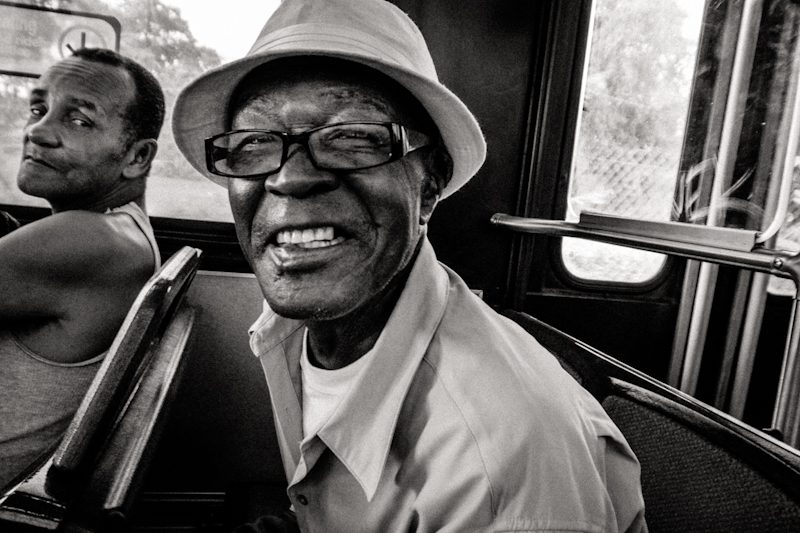
Do you need permission to photograph strangers?
In the United States you don't need permission to photograph strangers in a public place, because nobody has a reasonable expectation of privacy on a public street. Other countries are stricter, so check where you are before you shoot.
The US case people cite is Nussenzweig v. diCorcia. Photographer Philip-Lorca diCorcia photographed a man in Times Square without consent and exhibited and sold the print. The man sued, and the New York courts sided with the photographer. Using someone's likeness in an advertisement is a different matter and needs a release.
Other places are different. South Korea and Japan recognise portrait rights, and when I lived in Korea I shot far less street photography because of it. France and Germany protect a person's right to their own image more than the US does. I'm not a lawyer and this isn't legal advice. My guide to whether street photography is legal covers the US, the UK, France, Germany and the rest of the EU with sources.
Legal is not the same as right, though. A portrait of someone's kid, even in a public place? Not for me. I won't shove a flash in anyone's face either. Shooting random strangers is legal where I shoot, but my belief is that the person in the frame still deserves respect, so I don't photograph people in crisis to make a picture of their suffering. A silhouette or a crowd from behind is a different story from a face in pain.
How to build trust when a stranger notices you
When a stranger notices you, stay where you are and tell the truth in one sentence, with a smile. Most people only want to know you aren't mocking them. When someone asks why you wanted to take their photo, the honest answer is almost always the best one. Running away is what turns a curious look into a confrontation.
- "Hi! I'm a street photographer. The light on you was beautiful."
- "I photograph everyday life around here. Do you want to see it?"
- "If you'd rather I didn't keep it, I'll delete it right now."
- "Thank you. Have a great day."
Offering to delete the photo usually ends the tension on the spot, and many people relax once they see the picture. If you're shooting film and can't delete, say so honestly and offer to send them a print.
Some people will stay upset no matter what you say. That's fine. Say thank you and walk away. Don't let one bad encounter end the hobby. Also use your judgment about who you point a camera at. People doing something illegal can think you're the police, even if they were only at the edge of your frame. People on drugs can be very paranoid. Skip those shots.
How to overcome the fear of photographing strangers
Most beginners feel weird the first time they point a camera at complete strangers. You overcome the fear of photographing strangers by managing it, not by waiting for it to disappear. Make the first step smaller, and give your brain a bigger fear to focus on than the fear of being seen.
The trick I use is simple: fear beats fear. Fear lives in your head, not in the street, so the work happens in your head too. When you feel tense, focus on the fear of losing that shot forever. That moment will never come back. For most people, the fear of loss is stronger than the fear of a stranger's look.
A few other things help:
- Start in busy places like markets or tourist spots, where cameras are normal.
- Ask for a few portraits at the start of a walk. After two yeses, taking pictures of people candidly feels easier.
- Join a beginners photography group or a photo walk. Shooting next to other people makes it feel less weird.
- Photograph people who are busy: vendors, performers, people waiting for a bus.
- Go out with music in your ears to tune out your worries and settle into the zone.
If you want to overcome your fear of photographing people step by step, I wrote a plan with a 7 day exposure routine in my guide to overcoming the fear of street photography, so you can shoot strangers without fear running the show. The fearless street photography module of my online street photography course goes further with reframing, the mindset shift that makes the fear smaller instead of pretending it isn't there.
Best lens and settings for photographing strangers
For candid photos of strangers, use a 28mm or 35mm lens and zone focus at f/8. For a close-up street portrait with a blurry background, use a 50mm to 85mm lens at f/1.8 to f/2.8. The focal length decides how close you have to stand, so it shapes the whole encounter.
| Setting | Close-up portrait (blurry background) | Environmental portrait | Candid street |
|---|---|---|---|
| Mode | Aperture priority | Aperture priority | Aperture or shutter priority |
| Aperture | f/1.8 to f/2.8 | f/5.6 to f/8 | f/8 |
| Focal length | 50mm to 85mm | 28mm to 35mm | 28mm to 35mm |
| Focus | Eye AF, on the dominant eye | Single point on the face | Zone focus at 2 to 3 m |
| ISO | Lowest | Lowest | Auto ISO with a 1/500 s minimum shutter speed |
A telephoto lens lets you stay meters away, which feels safer. But it makes you look like you are hiding, and a long lens pointed at someone from across the road reads as creepy. A wide angle lens forces you into their space, which feels scarier but looks honest. Personally, I don't care much for a random stranger's portrait with the background blurred, so I use a small camera with a 28mm. It's about what you want to make. My guide to the best lens for street photography compares every focal length.
Street portrait photography tips that make the picture
A great street portrait needs good light and a background that helps the subject. It also has to reveal something about who the person is. Getting a yes is only the start. Whatever makes a good photograph also makes a good portrait.
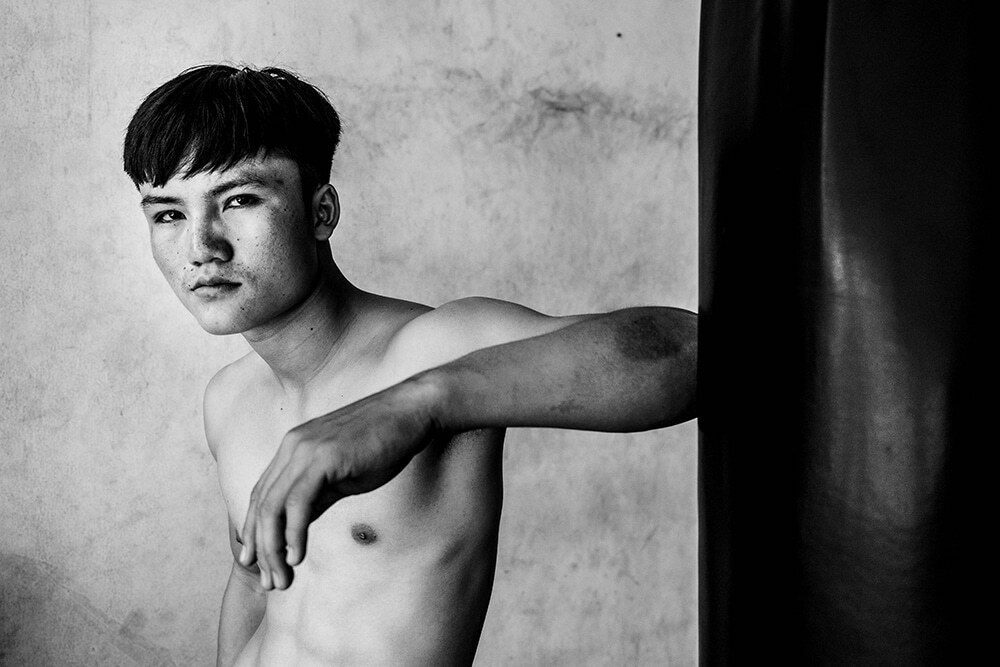
- Read the light. Direct sun gives hard light and dramatic shadows. Open shade or an overcast sky gives soft, even light that fashion photographers pay for. If the light is bad, ask them to step into the shade.
- Watch the background. The background either adds to your subject or steals from it. Move left or right until nothing behind them pulls the eye away.
- Focus on the dominant eye. One eye is usually a little more open than the other. Put that eye closest to the camera and focus on it.
- Use falling light. Put your subject at the edge of a shadow, like under a bridge, with light on the face. Light falls off quickly, so the background goes dark and the face pops.
- Read the body language. Hands and gaze tell the viewer who this person is. A hand on the hip reads as pride. A raised chin does too.
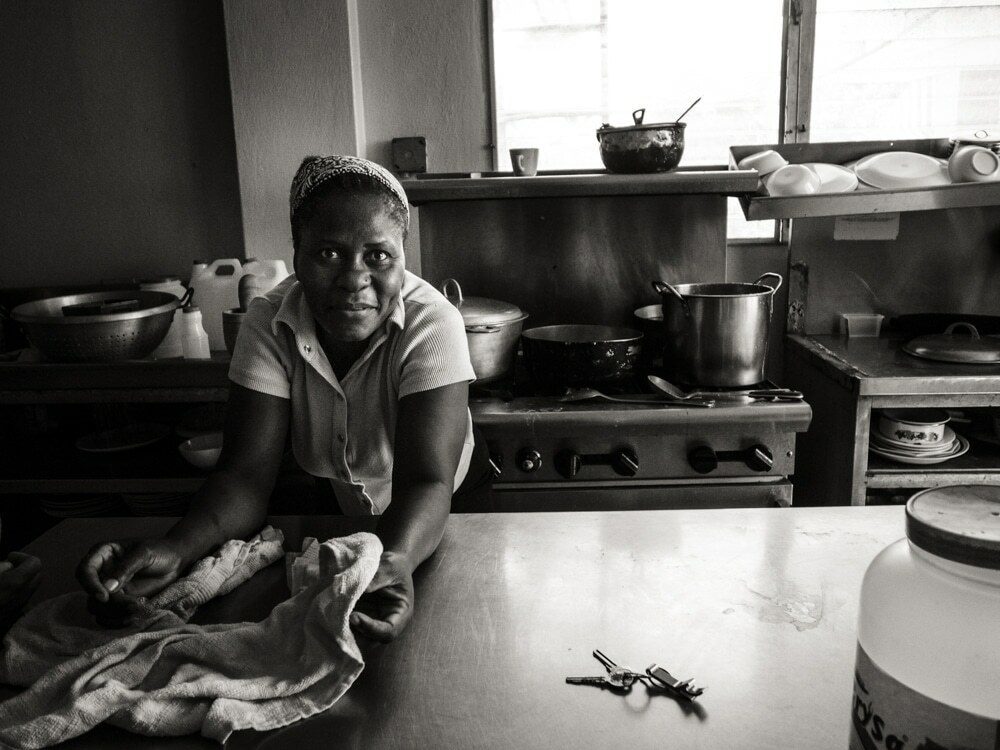
Portraiture on the street borrows from classic portrait photography, but you don't control the set. An environmental portrait is two portraits in one: the person and the place. The more you move away from the face, the more the background reveals or hides about your subject, so choose what you include on purpose.
Get closer to the picture, not just the person
Getting physically close to strangers doesn't make a photo good. Plenty of street photographers shove a camera in someone's face and come home with a bigger version of a bad picture. Get close enough, then put your energy into the picture itself.
That means seeing light, shapes, layers and gesture before you think about how brave you are. Better photos come from perception, not proximity. If your shots of people feel random even when you get close, read why your street photos look boring. Humans of New York is a good example. Brandon Stanton's portraits of people on the street work because of the conversation and the story he pairs with each face, not because of how near he stood. Those portraits became a best selling photo book because he knew how to connect with people.
This is the part Don Springer and I spent years turning into a system. Our street photography course, Phototactic, teaches the picture patterns behind strong images, plus a module on fearless street photography. It doesn't include feedback on your photos. It gives you a way of seeing you can use on any street, with any camera. If you're just starting, begin with my street photography guide for beginners.
Frequently Asked Questions
Is it legal to photograph random people in public?
In the United States it is legal to photograph people in public places without their permission, because there is no reasonable expectation of privacy on a public street. Commercial use of someone's likeness, like an ad, needs a release. Other countries, including France, Germany, South Korea and Japan, give people stronger rights over their image. This is not legal advice, so check the rules where you shoot.
How do you ask a stranger to take their picture?
Say who you are and what caught your eye in one sentence, then ask a yes or no question. For example: "Hi, I'm a photographer and I love the light on you by that wall. Could I take a quick portrait?" Smile, keep it short, and if they say no, thank them and walk on. Offering to send them the photo helps a lot.
Should I ask permission before or after taking a street photo?
Ask before if you want a posed street portrait with control over light and background. Don't ask if you want a candid photo, because asking changes how people act. If someone notices you after a candid shot, you can show them the photo and offer to delete it. Beginners often find asking first the easiest way to get used to photographing strangers.
What lens is best for photographing strangers?
A 28mm or 35mm lens is best for candid street photography because it keeps you close and shows the person in context. For close-up street portraits with a blurry background, a 50mm to 85mm lens at a wide aperture like f/1.8 works well. Avoid long telephoto lenses for candid work, since shooting from far away often looks more suspicious, not less.
How do I stop feeling like a creep when photographing strangers?
Act openly instead of hiding. Stand still in good light rather than following people, keep your camera visible, smile when someone looks at you and explain what you're doing if asked. Avoid photographing children and people in distress, and delete a photo if someone asks. Feeling nervous is normal. Acting like you have nothing to hide is what makes people relax.