
To take better pictures of people, put them in good light and wait for a real expression instead of a posed smile. Keep the background simple, get close enough that the face and hands read clearly, and most of the work is done before you touch a setting.
I'm Olivier Duong. I photograph strangers on the street and I've done paid portrait and wedding work, and the same few habits make the difference in both. If you feel nervous, you're in good company. One beginner on Reddit wrote: "I'm scared of people getting upset if I happen to photograph them." A good photo of a person needs the photography side and the confidence side, and both are learnable.
What makes a good photo of a person
A great photo of a person works like any great photograph. It has to be well built and it has to make you feel something. People photography adds one more layer: revelation. A good portrait tells you something about the person, even when neither you nor the viewer knows them.
That something can come from the face alone. It can also come from what surrounds them: their workplace, their clothes, the object in their hand, the way they stand. A portrait that reveals nothing is just a record that a person was there.
So before you shoot, ask one question: what do I want this photo to say about them? The answer tells you how close to get and what to keep in the frame. For the bigger picture on what makes photos work, read what makes a good photograph.
Pick your distance: close-up or environmental portrait
Portraits sit on a range. At one end is the close-up, where the face fills most of the frame. At the other end is the environmental portrait, where the person and their surroundings share the picture. Everything else, like the bust shot or the half-body shot, sits between the two.
- Close-up. The whole photo depends on the face. A charismatic face with strong eyes carries it. Little background means little can go wrong, which makes close-ups the easiest place to start. A 50mm lens or longer helps.
- Environmental portrait. Two portraits in one: the person and the place. A wide lens like a 28mm or 35mm works well. You have to watch every corner, because the background can reveal or hide things about your subject.
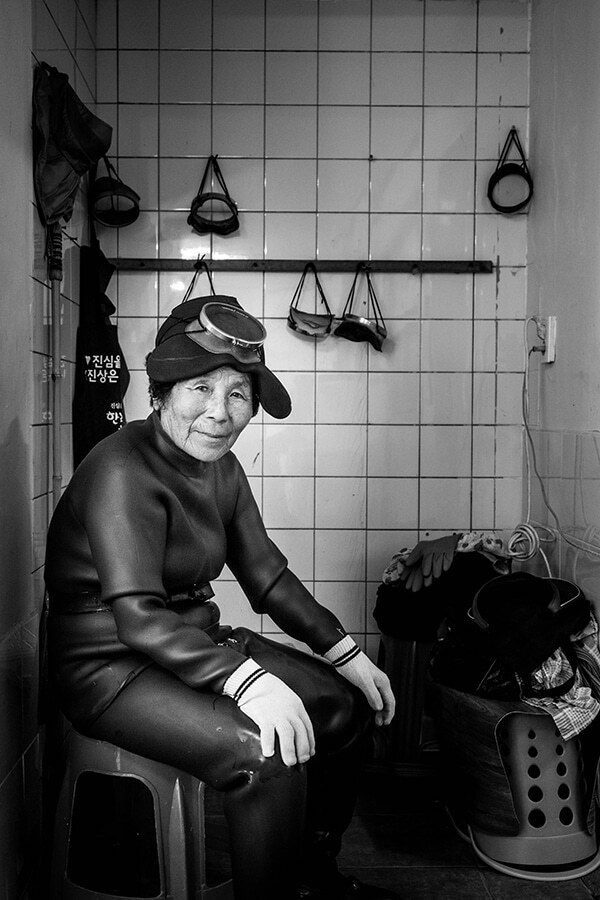
The rule I teach: the further you move from the face, the more attention you have to pay to the background and what it says about your subject.
Find the light before you find the pose
Nothing breaks a portrait faster than bad light. Natural light is all you need for most portraits. The one distinction you need to recognize on the spot is soft light versus hard light.
- Hard light comes from direct sun. It carves strong shadows under the eyes and nose. It can look dramatic, but it's hard on faces.
- Soft light comes from an overcast sky or open shade, or from a big window indoors. It wraps evenly around the face. Fashion photographers pay a lot to recreate it.
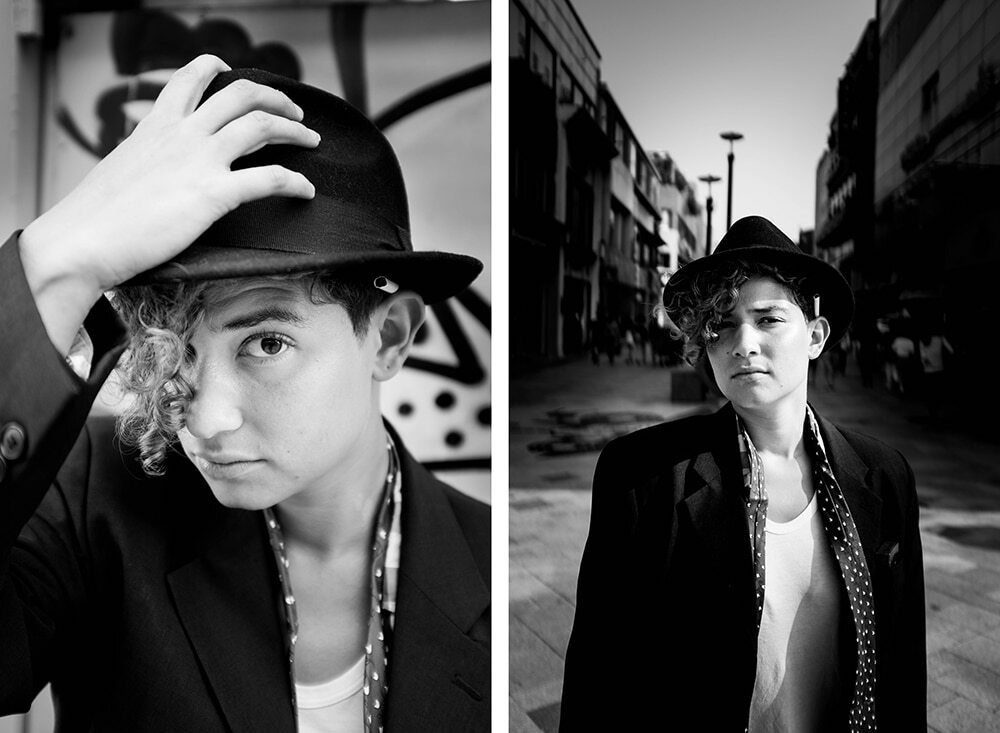
In the pair above, I shot the frame on the right first. I didn't like the light, so I asked her to step into the shade and shot again. If your subject isn't in good light, ask them to move a few steps. Most people don't mind.
A few more light habits that work anywhere:
- Shoot during golden hour, the hour after sunrise or before sunset, when the sun is low and warm.
- Put your subject near a window indoors, turned slightly toward it.
- If the sun is behind them, expose for the face and let the background brighten.
- Avoid the on-camera flash pointed straight at someone, unless you want that hard look on purpose.
Make the background work for you
Once you know who your subject is, the background becomes the most important thing in the frame. It either supports the person or pulls the eye away. A pole growing out of a head or a bright sign behind a shoulder will steal the photo.
Move your feet before you touch a dial. Step left or right, or ask the person to stand in front of a plain wall. I wiggle around until nothing in the background fights my subject. When you can't clean up the background, you have other options:
- Blur it. Use a wide aperture like f/1.8 or f/2 and a longer focal length for a shallow depth of field.
- Burn it out. Keep the person in shade and overexpose by one or two stops, so a busy background disappears in light. This is a high key portrait.
- Drop it into shadow. Light falls off quickly (the inverse square law). Put someone just at the edge of shade under a bridge or awning, facing the light, and the background goes dark on its own.
- Fix it in editing. Darken the background and lighten the face slightly with a mask. The subject pops.
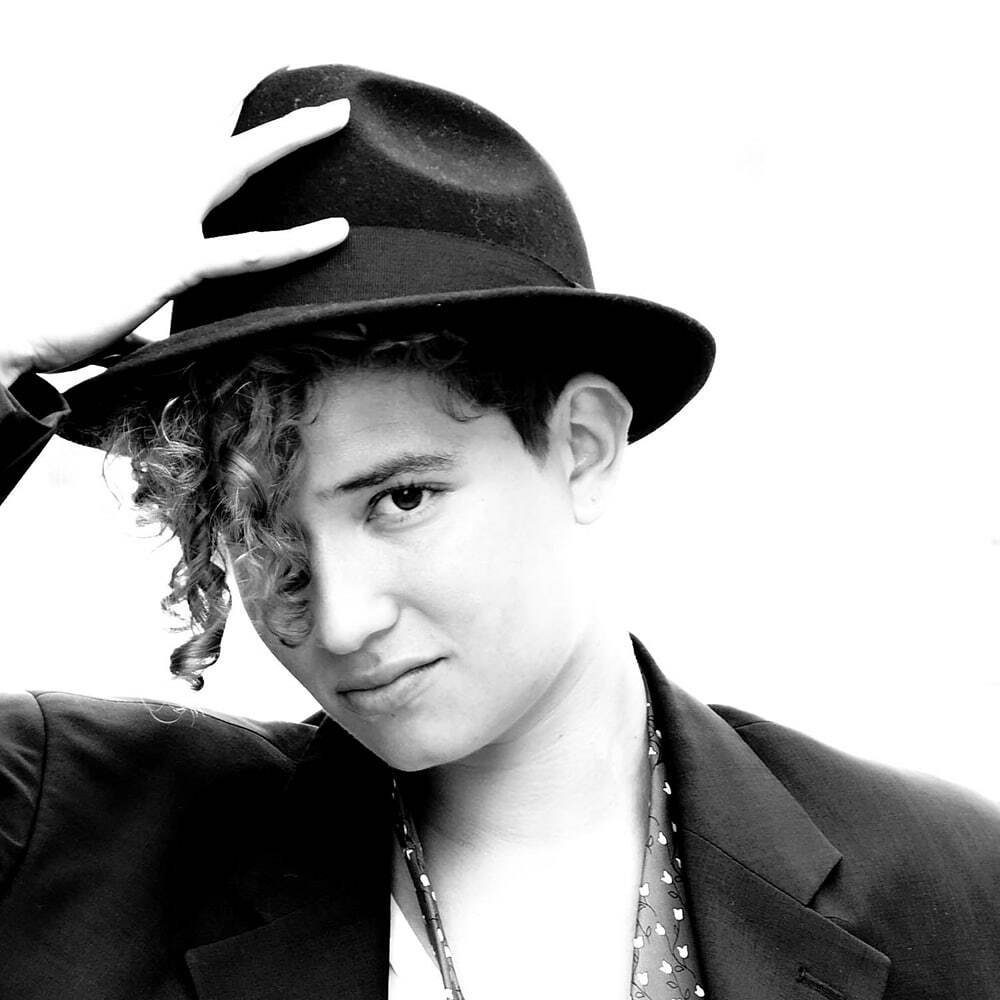
Focus on the eyes, and pick the right one
In almost every people photo, the eyes should be sharp. If you only get one thing in focus, make it the eye closest to the camera.
I picked up a subtle trick from professional portrait work, not from street photography. Look closely at anyone's eyes. One eyelid usually opens a little wider than the other. That's the dominant eye. When you can, turn the person so the dominant eye is closest to the camera. The face looks more open and alive.
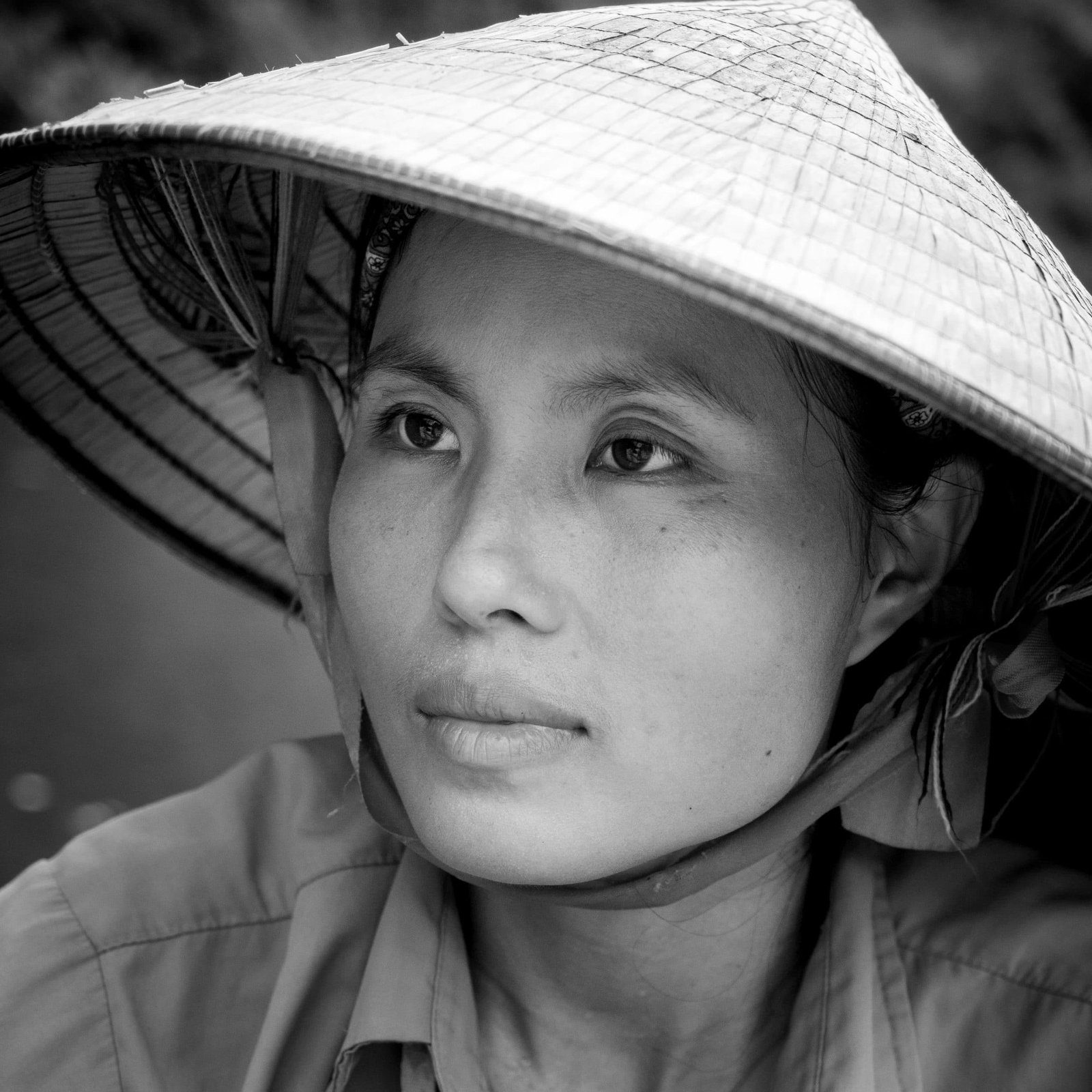
I broke that rule in the portrait above. I was sitting in a small boat in Vietnam, and moving to the other side would probably have tipped it. It's still a good portrait, but compare her two eyelids and you'll see the difference. Rules are for when you have the choice.
Expression and body language
A forced "say cheese" smile looks the same on everyone. A real expression is what makes a photo of a person worth keeping. The fastest ways to get one:
- Talk to them. Ask a question about their work or their day. The face you want shows up while they answer, once there's a small connection between you.
- Give their hands a job. Holding a cup or a tool relaxes people who don't know what to do with their arms.
- Keep shooting after the "pose". The moment right after someone thinks you're done is often the most natural one.
- Don't overstay. With a stranger you get about three frames before you become a bother, so plan the shot while you ask.
Body language carries as much information as a face, especially in environmental portraits. In the couple below, his hand on his hip reads as pride, and her two hands on his arm read as tenderness. None of it was directed.
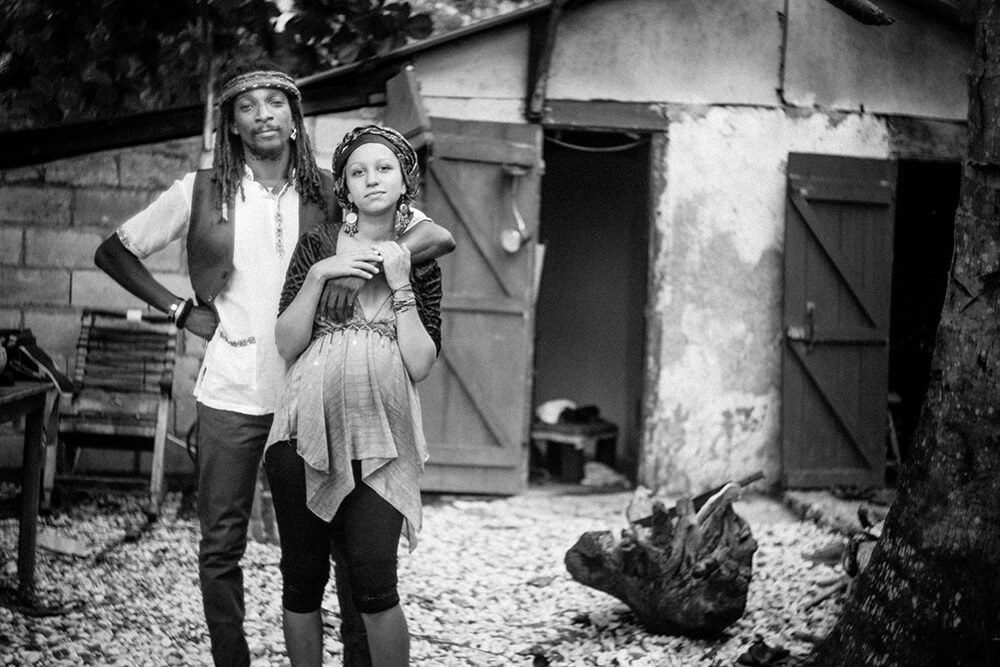
For the emotional side of people pictures, read emotion in street photography.
Camera settings for photographing people
There's no single setting that always works, but these starting points cover most situations. Shoot in aperture priority so you control depth of field and the camera handles the rest.
| Setting | Blurry background portrait | Environmental portrait |
|---|---|---|
| Mode | Aperture priority | Aperture priority |
| Aperture | f/1.8 to f/2.8 | f/5.6 to f/8 |
| Lens | 50mm to 85mm (full frame equivalent) | 28mm or 35mm |
| ISO | Lowest that keeps the shutter fast | Lowest that keeps the shutter fast |
| Shutter speed | 1/250s or faster for moving people | 1/250s or faster for moving people |
| Focus | Single point or eye detection on the nearest eye | Single point on the face |
Shoot RAW if you can, so you have room to adjust skin tones and shadows later. On a phone, portrait mode fakes the blurry background well enough for close-ups, but tap on the face to set focus and exposure. For more on gear, see the best lens for street photography and street photography settings.
Photographing friends and family
The people closest to you are the best place to practise, and often the most meaningful work you'll ever make. They're also the hardest to photograph well, because they know you and they perform for the camera.
- Photograph them doing something, like cooking or reading. Activity beats posing.
- Get down to eye level with kids. Shooting from adult height makes them look small and distant.
- Carry the camera often, so it stops being an event. Soon nobody notices it.
- Look for the in-between moments at gatherings, not the group photo everyone lines up for.
A portrait I made of my son was shot with a 28mm lens on a small camera that focuses very close. You don't need a portrait lens to make a portrait. You need to know what your camera can do.
Photographing strangers without freezing up
Everything above gets harder with a stranger, because nerves eat your attention. Two ideas help me most.
First, turn fear against itself. When I hesitate, I focus on a bigger fear: losing that picture forever. That feeling is usually stronger than the fear of a "no".
Second, the street reacts to you. If you act suspicious, people get suspicious. If you look relaxed and friendly, most people relax too. A short, ready-made line for asking ("I like your hat, can I make a portrait of you?") also helps, because you're not searching for words while you should be studying the light.
Some shots are posed with permission, some are candid. Both are valid. For the full approach, start with how to photograph strangers, then read candid photography. If nerves are the real problem, how to overcome fear of street photography goes deeper. Rules on photographing people in public vary by country, so check is street photography legal before you publish.
Learn to see people pictures before they happen
Our street photography course, Phototactic, has a module on fearless street photography that helps you manage nerves and get closer with less stress, and a module on emotion in images. Both apply to any photo of a person, not only street work. The lessons are short 3 to 5 minute videos. The course doesn't include feedback on your own photos, so pair it with an honest friend or a local photo club if you want critiques.
Frequently Asked Questions
How do you take good pictures of people?
Put the person in soft light, such as open shade or window light, and keep the background plain. Focus on the nearest eye, and talk to them so a real expression appears. Take several frames, because the natural moment often comes right after the pose.
What is the best lens for photographing people?
For close portraits with blurry backgrounds, a 50mm to 85mm lens (full frame equivalent) at a wide aperture is the classic choice. For environmental portraits that show where someone lives or works, a 28mm or 35mm works better. Any lens can make a good portrait if you know how close it focuses.
How do I make people look natural in photos?
Give them something to do instead of a pose: hold an object, walk, talk to you or carry on working. Keep the camera up and keep shooting after they think you're finished. Short, friendly conversation relaxes people faster than directions do, and hands that have a job stop looking awkward.
What camera settings are best for people photography?
Start in aperture priority. Use f/1.8 to f/2.8 for a blurry background or f/5.6 to f/8 for environmental portraits. Keep the shutter speed at 1/250s or faster if people are moving, and raise ISO only as needed. Focus on the eye closest to the camera.
Do I need permission to photograph people in public?
It depends on the country. In many places, including the United States, you can usually photograph people in public spaces without consent, but commercial use needs a release. Some countries protect image rights more strictly. This is general information, not legal advice, so check the rules where you shoot and publish.