
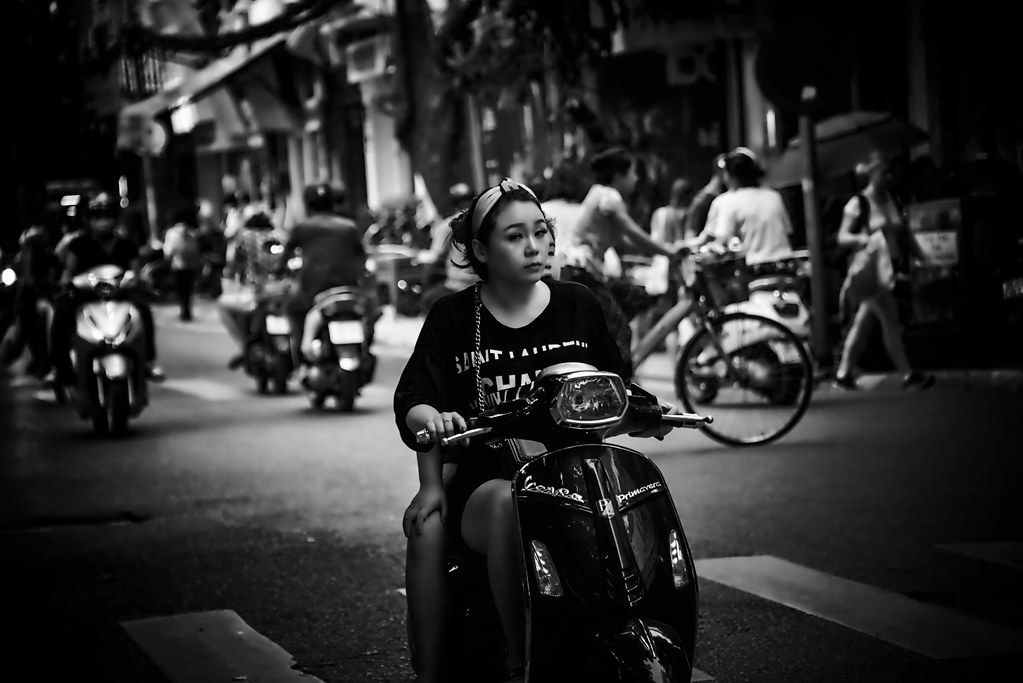
Street Photography in Vietnam
In Vietnam daily life happens on the sidewalk, from breakfast on plastic stools to barbers on the pavement, so the street is full from dawn to midnight.
Vietnam street photography is sidewalk photography. People eat, work, nap, sell and get their hair cut on the pavement, a few feet from the traffic. In most countries you have to wait for life to step outside. In Vietnam it is already there.
I lived in Hanoi for two years, and what stayed with me is how easy the city is to read with a camera. Worn yellow walls with a flash of red from a flag. A vendor framed in a tiny shopfront. The subjects repeat, and the light at the end of the day turns them into pictures.
The country is also long, and the three main cities feel very different. Hanoi is old and gritty. Ho Chi Minh City is bigger and faster. Hoi An is a small old town that belongs to residents only until the tour groups arrive. The weather is different in each at the same time of year, so the season matters more than you might think. This guide covers what makes Vietnam different, which city suits you, a route, when to go and what the law and local custom say.
City guides for Vietnam
- Hanoi
Life lived on the sidewalk: plastic stools, motorbikes and lake exercise from dawn to night, with no expectation of privacy.
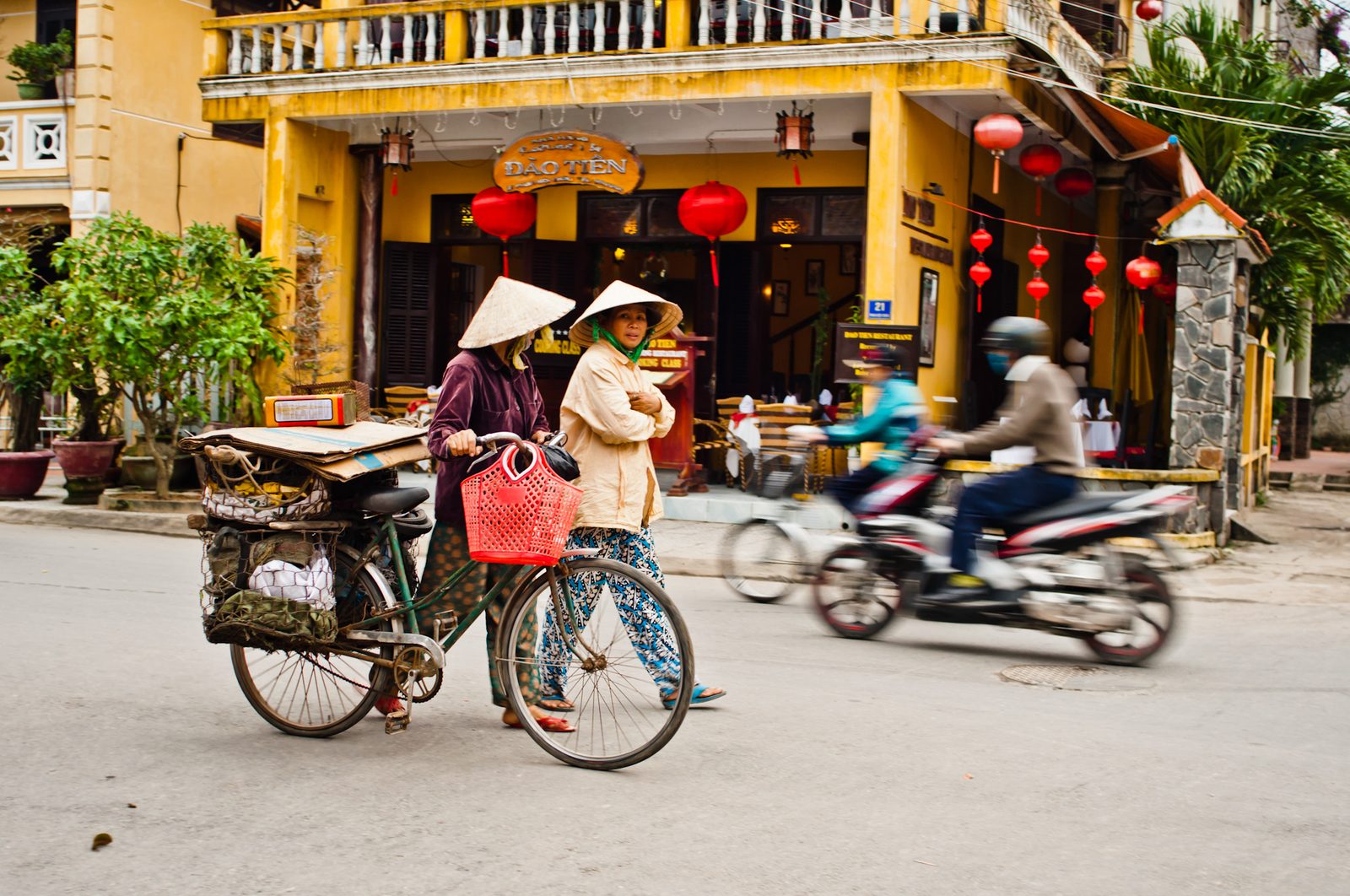 Hoi An
Hoi An gives you yellow walls and river boats in a small old town, but only before about 8:00, when residents still own the streets and the tour groups have not arrived.
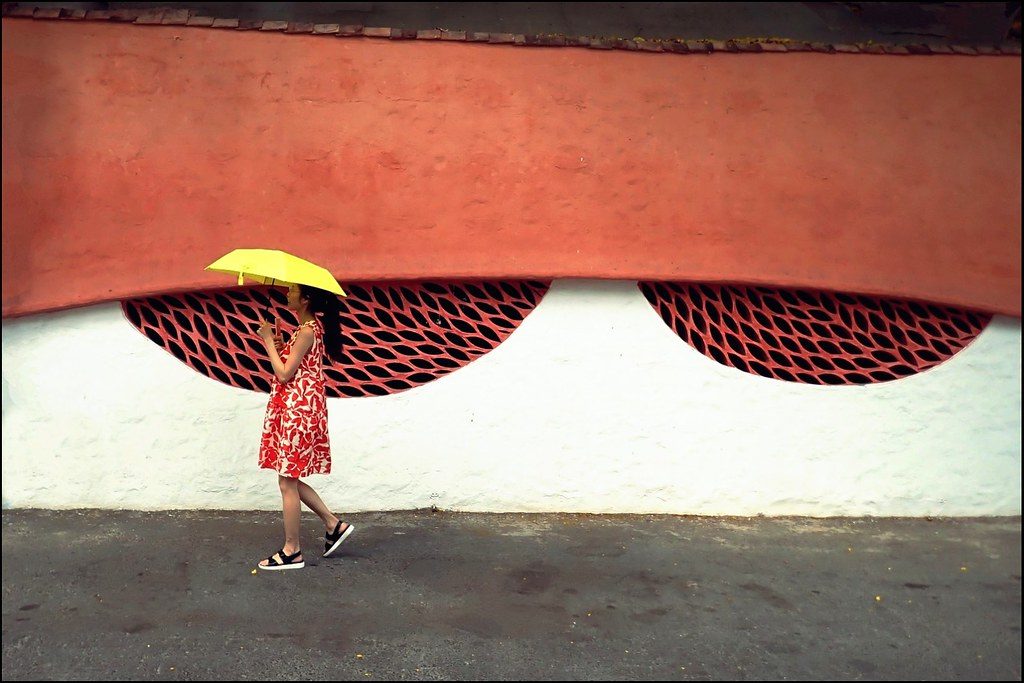 Ho Chi Minh City
Saigon packs motorbikes and street food into dense, photo friendly neighbourhoods, with the old Chinatown of Cholon a short ride from the modern centre.
What makes Vietnam different to shoot
Shoot low. Much of the action happens at hip height, because street food is eaten on tiny plastic stools. Lower your camera and your frames change.
Make flat pictures. Sidewalks are thin and walls are long. Stand across the street, wait for people to pass in front of a wall and you get a flat, stage-like frame where everyone sits on one layer.
Use the shopfronts. Vendors often work inside a small open rectangle. Use it as a frame within the frame. The shop is usually in shade and the street in sun, so watch your exposure.
Follow yellow. Many walls, especially in Hanoi and Hoi An, are painted a worn yellow, and red flags are everywhere. Yellow and red sit close on the color wheel, so they hold together. See our guide to color photography.
Watch the motorbikes. Traffic is a subject, not only a hazard. Slow shutter speeds turn it into streaks of light. See motion blur photography.
Vietnam gives you a lot of subjects in a small space, so the hard part is choosing. Training that choice is what our online street photography course does, a few minutes a day.
Which city for which photographer
Hanoi is the best street city in the country for most people. The Old Quarter near Hoan Kiem Lake is packed with activity, and on weekend evenings some streets close to traffic. Around the lake it is calmer, with morning exercise and couples doing engagement shoots. Go for texture and gesture.
Ho Chi Minh City, still called Saigon by most people, is louder and more modern. The old Chinatown of Cholon and its markets are the draw, with neon walking streets at night. Go for energy and night work.
Hoi An is small and beautiful, with yellow walls and boats on the river. It is also crowded with visitors from mid morning. Shoot it from about 5:30 to 8:00, when residents still own the streets.
Hue, the old imperial capital between Hanoi and Hoi An, is worth a stop for its quieter streets and river life.
A route from north to south
Two weeks lets you cover the three cities:
- Hanoi, five days. The Old Quarter at dawn and again around 5pm, when the low sun rakes the alleys.
- Hoi An, three or four days. Fly to Da Nang, then drive about 45 minutes south. Stay in town so you can be out before sunrise.
- Ho Chi Minh City, four days. Fly from Da Nang. Spend mornings in Cholon's markets and evenings on the walking streets.
With more time, take the Reunification Express train for part of the way. The Hue to Da Nang stretch runs along the coast and is the most scenic. Inside cities, walk or use ride hailing motorbikes. Crossing the street is its own skill: walk slowly and steadily and let the bikes flow around you.
Seasons and Tet
Vietnam has three climates. The north has a cool, gray winter from about December to February, with drizzle and mist that suit moody work, and a hot summer. The south stays warm all year, with a dry season from about December to April and short, heavy storms in the afternoons the rest of the year. The center gets its heaviest rain from about September to December, and Hoi An's old town often floods in October and November.
Tet, the lunar new year, falls in late January or February. The days before it are great for photography: flower markets and people carrying peach trees and kumquat trees on motorbikes. During Tet itself many shops close for several days and cities empty out. The Mid-Autumn Festival, in September or October, fills Hanoi's Hang Ma street with lanterns and children. Hoi An lights its lanterns for a monthly full moon evening.
Etiquette and scams
- Acknowledge people. Eye contact and a smile before you raise the camera work better than any phrase. A wave or a turned back means no.
- Pay for portraits if it feels right. Many vendors earn a dollar or two per sale. If someone gives you time for a portrait, a small tip is fair.
- Skip the posed conical hat shots. In Hoi An and Hanoi some vendors pose for money. It is fine, but it is not street photography.
- Ask about children. Get a parent's okay before photographing kids up close.
- Watch your gear. Motorbike snatch theft of phones and cameras happens, especially in Saigon. Keep the strap on and the camera on the side away from the road.
- Watch your shoes. In Hanoi's Old Quarter, a common scam is a man who glues your sole loose and then offers to fix it. Keep walking and say no.
Photographing people in Vietnam
Street photography is broadly accepted in Vietnam. Article 32 of the 2015 Civil Code says people have rights over their own image and that using someone's image requires their consent. The same article allows use without consent when the image comes from public activities, such as meetings or performances, as long as it does not harm the person's honor or reputation, according to ASL Law. Commercial use needs consent and payment. A 2023 decree on personal data also treats images as personal data.
Vietnam Streets, a local photography community, says photographing adults in public for personal or artistic use needs no permission in practice. The firm lines are elsewhere. Never photograph military bases or vehicles. Border areas need permits. Many pagodas and temples ban photos inside. Drones need permits and the rules are enforced.
Treat funerals with care and stay back. This is general information, not legal advice. See is street photography legal and how to photograph strangers.
General information, not legal advice. More in is street photography legal?
When to go
February to April is the safest bet for the whole country. The north is cool and misty from December to February, and the south is dry from December to April.
Frequently asked questions
Is street photography legal in Vietnam?
Yes, photographing people in public for personal or artistic use is broadly accepted. The Civil Code protects a person's image, so commercial use needs consent. Military sites and border areas are restricted, and drones need permits. This is general information, not legal advice.
Do Vietnamese people mind being photographed?
Most people are relaxed about cameras, especially in busy areas. Make eye contact and smile first. Some vendors in tourist spots expect a tip for a posed photo, and a wave of the hand means no.
Is Hanoi or Saigon better for street photography?
Hanoi's Old Quarter is denser and more textured, and most photographers prefer it. Saigon is bigger and faster, with great markets in Cholon and neon at night. If you have time, shoot both.
Can I photograph Train Street in Hanoi?
Authorities closed Train Street to visitors in October 2019 for safety, and it reopened to tourists in early 2023. Access can change again, so check locally, sit where the cafe owners tell you and never stand on the tracks when a train is due.
What is the best time for street photography in Vietnam?
February to April works across the country. The weeks before Tet, in late January or February, are the busiest and most colorful, but many shops close during Tet itself.