
Street Photography in Hoi An
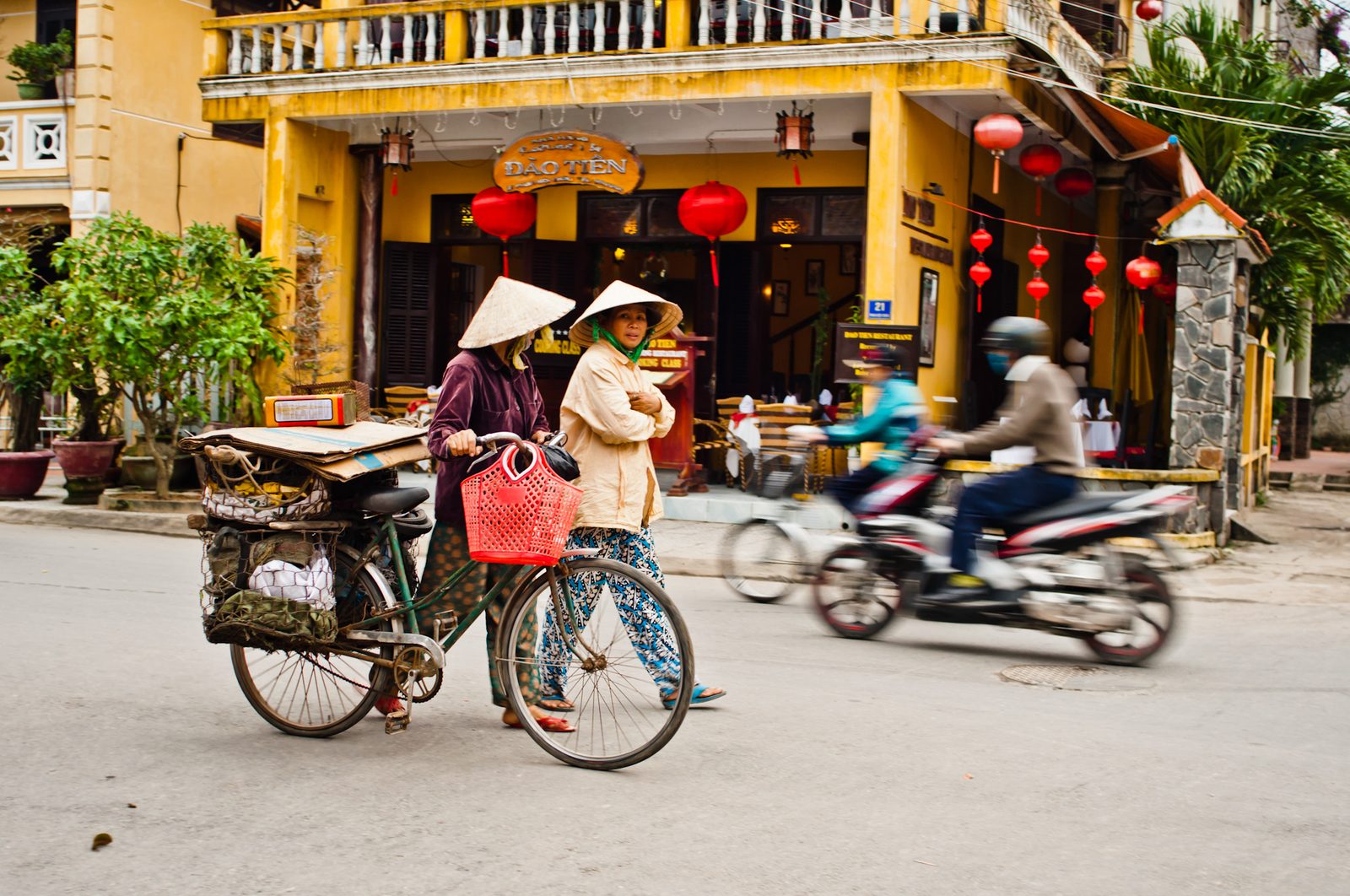
Hoi An gives you yellow walls and river boats in a small old town, but only before about 8:00, when residents still own the streets and the tour groups have not arrived.
- Spots
- 8
- Best time
- February to April is the most reliable, before the summer heat
- Lens
- 35mm or 50mm
- Photographing people
- Generally allowed
Hoi An is good for street photography if you work it at dawn, because the old town's yellow walls and river give you some of the best backgrounds in Vietnam, and at 5:30 residents still own the streets. Réhahn, who has lived and photographed there for over a decade, says the first tourists reach the Japanese bridge around 8:00. Jack Ross of Vietnam Streets puts the real working window at roughly 5:30 to 8:30.
After that, Hoi An is one of the most tourist saturated towns in Asia, and the old town turns into a stage for selfies. So I'd plan the day in two halves. Shoot the old town and the market at first light, then ride a bicycle out to the villages around town, where potters and farmers work all morning. Come back after dark for the lanterns and accept that you will share them with thousands of people.
Best street photography spots in Hoi An
Japanese Covered Bridge
The covered bridge dates from the 1600s and marks the west end of the old town. It is the most photographed thing in Hoi An, so the only time to work it is before 7:00. Vietnam Streets suggests the east side at dawn. Rather than the postcard view, stand on the street and frame the bridge's mouth, then wait for a cyclist or a woman with a shoulder pole to pass through it. Locals eat breakfast along Tran Phu and Nguyen Thai Hoc nearby. The bridge sits inside the ticketed zone, so carry your old town ticket.
Hoi An Central Market
The central market sits on the river at the east end of the old town and starts around 5:30. Réhahn describes older women from Tra Que arriving in conical hats with baskets on bamboo poles, and vendors unloading fruit and fish from boats. Get there at 6:00, while the light is low and the unloading is at its peak. Stand at the river edge of the market and shoot toward the stalls so the hats stack up. The rooftop of the market also gives a view over the old town roofs. The floors are wet and slippery near the fish.
Nguyen Thai Hoc Street
Nguyen Thai Hoc runs parallel to the river through the old town, lined with yellow walls and old merchant houses with blue shutters. At dawn residents sweep their doorsteps and school girls in white ao dai ride past on bicycles. This is the street for the classic Hoi An frame: find a colored wall with a doorway, set your exposure and wait for someone to walk or ride through. Mitch Green did exactly this every morning. By 9:00 shops spill their stock onto the pavement and the walls disappear behind tourists. Be gentle with residents, who are photographed all day.
Bach Dang Riverside
Bach Dang is the riverfront road along the Thu Bon. In the early morning, fishing boats come in and small traders work the bank, with the sunrise behind you if you face east. It is the strongest dawn position in town, according to Vietnam Streets. At night the same bank fills with lantern boats and people selling paper candles to float on the water. Use the lanterns as out of focus color behind a face, or shoot the boats with a slow shutter. Boat touts are persistent, and the river edge has no rails.
An Hoi Islet
An Hoi is across the river, connected by the An Hoi bridge with its big lanterns. It is more residential in the morning, with breakfast stalls serving locals and wooden boats moored at the western tip. From its bank you get the best view back to the old town skyline with boats in front. At night An Hoi hosts the night market, full of stall light and crowds. Stand at the foot of the bridge and use the lanterns as a frame as people cross. The night market is packed, so keep your bag in front.
Thanh Ha Pottery Village
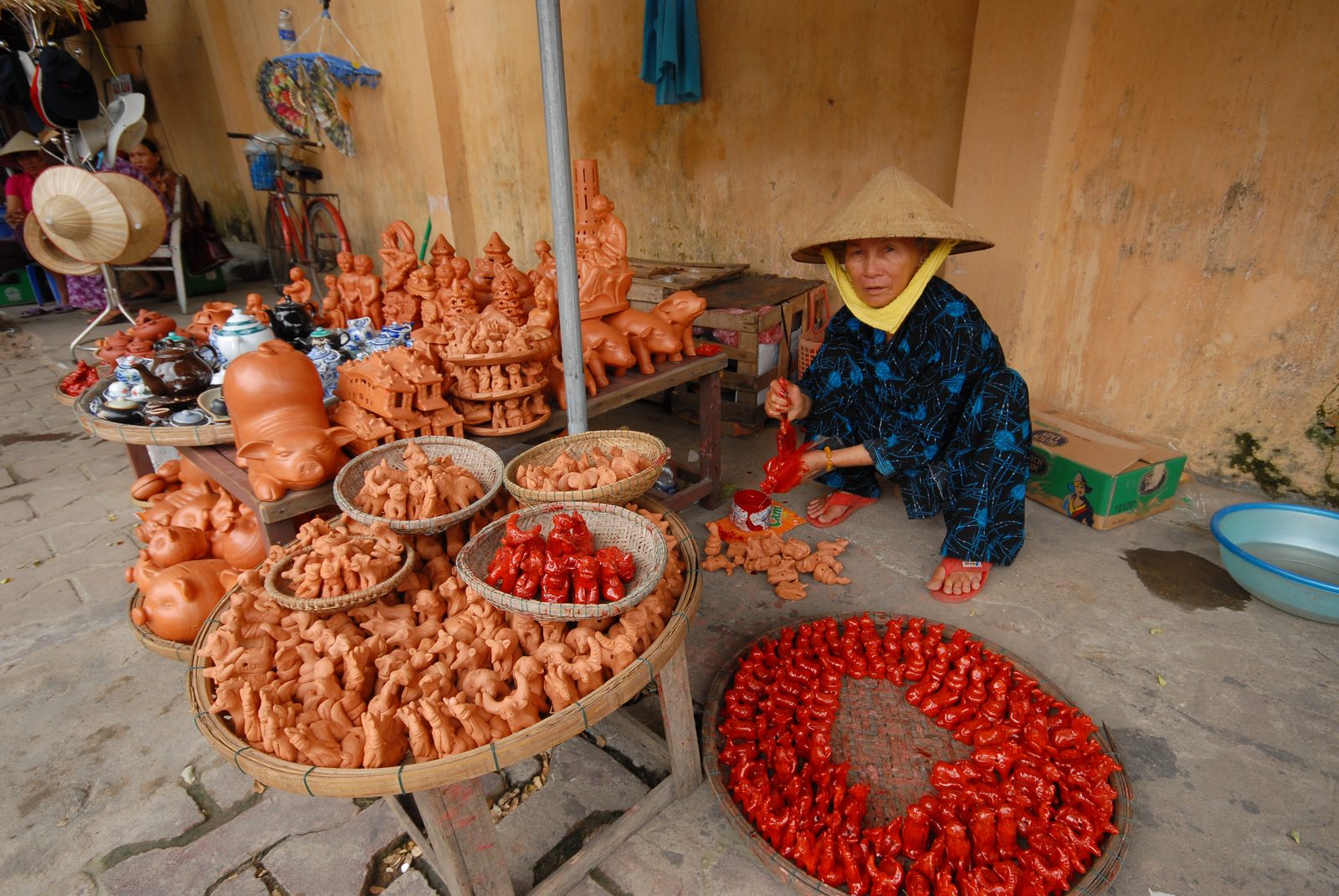
Thanh Ha has made terracotta pottery for about 500 years and lies roughly 2 to 3 km west of the old town, an easy bicycle ride. Potters work the wheels from about 8:00 to 11:00, and pots dry in rows in the sun. The workshops are dim, so place yourself so the light from the door falls across the potter's hands. Kilns and stacked pots make strong textures even when nothing is firing. This is a working village and some workshops charge for entry, so ask before you shoot inside and buy something small.
Cam Thanh Coconut Forest
Cam Thanh is a water coconut forest east of town, cut by narrow channels. Fishermen pole round basket boats through the palms, and the light inside stays soft and filtered even at midday. The main channels are full of tourist basket boat rides with loud music, which can make fun, chaotic pictures in their own right. For calmer scenes, Vietnam Streets suggests hiring a local boatman to reach the quieter channels. Shoot from a low boat with a longer lens to compress the palms around a fisherman. Keep your camera strapped on: it is easy to drop over the side.
Tra Que Vegetable Village
Tra Que is a market garden village a short ride north of the old town, known for its herbs. At dawn farmers water long beds by hand, with watering cans hung from a shoulder pole, and the low sun lights the spray. Arrive before 7:00, before the cooking class groups. Get low at the end of a row so the lines of the beds lead to a farmer in a conical hat. There is an entrance point for visitors. Walk only on the paths between the beds, because these are people's livelihoods.
Photographing people in Hoi An
Photographing people in public is generally tolerated in Vietnam. The firm rule is security: do not photograph military sites, and note that the UK FCDO flags restrictions near military areas. This is general information, not legal advice.
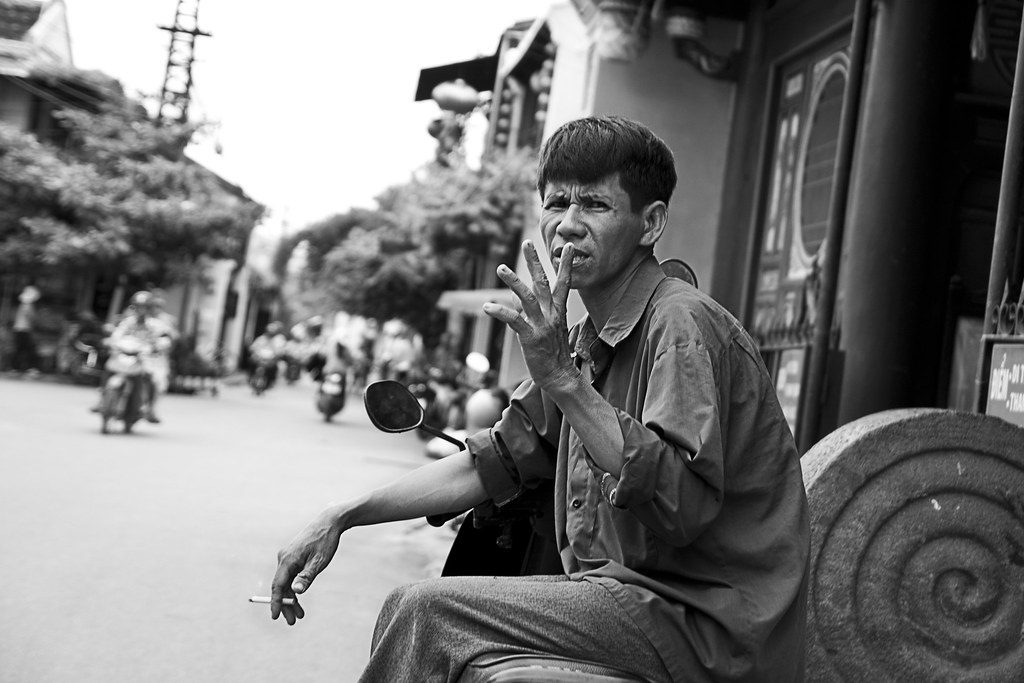
Hoi An's problem is fatigue, not law. Residents have cameras pointed at them all day, and Vietnam Streets notes that some are warm about it while others are worn out. What matters is how you treat them: as people or as scenery. Sit at a breakfast stall and order. Let people get used to you before you raise the camera. Ask with a smile, or learn Cho tôi chụp ảnh không? (May I take your photo?). Some women in conical hats with fruit baskets pose for money in the old town. That is a staged portrait, not street photography, so decide if you want it. More in how to photograph strangers.
General information, not legal advice. More in is street photography legal?
What to photograph in Hoi An
- Yellow walls with blue shutters and one figure passing.
- Conical hats and shoulder poles at the market and in the gardens.
- White ao dai on schoolgirls cycling to class in the morning.
- Lanterns on the old houses and on the An Hoi bridge after dark.
- Basket boats spinning in the coconut forest.
- Hands at work: potters at the wheel, lantern makers opening their workshops early.
- Breakfast on low stools: bowls of cao lau and banh mi eaten on the pavement.
- Tourists themselves: rented costumes and posing under bougainvillea make a subject if you look at them with some humor.
A one-day photo walk
- 5:30, Bach Dang Riverside. Fishing boats and sunrise, facing east.
- 6:00, Hoi An Central Market. Next door. Unloading at its peak.
- 6:45, Nguyen Thai Hoc Street and the Japanese Covered Bridge. A 5 minute walk west. Doorsteps and bicycles, then the bridge before 7:30.
- 8:30, Thanh Ha Pottery Village. About 10 minutes by bicycle. Potters at the wheel.
- 11:00, rest. The midday light is harsh. Eat, then nap like the locals do.
- 16:30, Tra Que Vegetable Village. About 10 minutes by bicycle north. Evening watering.
- 18:30, An Hoi Islet. Back across town to the bridge for the lanterns and the night market.
When to shoot
February to April is the most reliable, before the summer heat. September to December is the rainy season, and the old town often floods in October and November. Arrive in the old town by 5:30 to 6:00 and leave by about 8:30. The monthly full moon lantern night falls on the 14th day of the lunar month.
The light
Soft dawn light on yellow walls that bounce warm color onto faces. Midday is flat and harsh, and the wall light turns unflattering. After dark the old town runs on lantern light, mixed with neon from stalls on An Hoi.
What to bring
A 35mm prime for the lanes at dawn, or a 50mm to isolate one figure against a wall. Plan on high ISO for lantern light. Bring a rain cover from September to December.
Safety
Very safe for violent crime. Watch for bag snatching from motorbikes and pickpocketing in the night crowds. Floods in October and November can cut off parts of the old town. Hoi An is now administered as part of Da Nang city.
Tips for Hoi An
- Timing: in the old town, 5:30 to 8:30 is the whole working window.
- Ticket: foreign visitors need the old town ticket, 120,000 VND, which covers entry to the zone and a few heritage buildings. Carry cash.
- Full moon lantern night: on the 14th day of each lunar month the old town is given over to lanterns and floating candles. It is beautiful and extremely crowded.
- Floods: October and November often bring floods into the old town. It can be dramatic, but check conditions and stay out of fast water.
- Settings: for lanterns, try ISO 3200 at f/2 and let the highlights glow. See street photography settings.
- Bicycle: rent one. Every spot outside the old town is 10 to 15 minutes away on flat roads.
- Wall light: place a subject so the reflected light from a yellow wall falls on their face.
Frequently asked questions
Is street photography legal in Hoi An?
Photographing people in public is generally tolerated in Vietnam, but do not photograph military sites or restricted areas. Residents are photographed constantly and some are tired of it, so engage first and ask before close portraits. Some vendors in conical hats ask for money to pose for staged shots. Foreign visitors need an old town ticket (120,000 VND) to enter the ticketed zone. General information, not legal advice.
Where are the best street photography spots in Hoi An?
Start with Japanese Covered Bridge, Hoi An Central Market, Nguyen Thai Hoc Street, Bach Dang Riverside. The 1600s covered bridge at the west end of the old town. Empty before 7:00, crowded from about 8:00.
When is the best time for street photography in Hoi An?
February to April is the most reliable, before the summer heat. September to December is the rainy season, and the old town often floods in October and November. Arrive in the old town by 5:30 to 6:00 and leave by about 8:30. The monthly full moon lantern night falls on the 14th day of the lunar month.
What lens should I bring to Hoi An?
A 35mm prime for the lanes at dawn, or a 50mm to isolate one figure against a wall. Plan on high ISO for lantern light. Bring a rain cover from September to December.
Is Hoi An safe for street photographers?
Very safe for violent crime. Watch for bag snatching from motorbikes and pickpocketing in the night crowds. Floods in October and November can cut off parts of the old town. Hoi An is now administered as part of Da Nang city.
More street photography in Vietnam
Start with the Vietnam street photography guide, then pick a city.
- HanoiVietnam
- Ho Chi Minh CityVietnam
More street photography cities
- Phnom PenhCambodia
- BangkokThailand
- MacauChina
- Hong KongHong Kong SAR, China