
Street Photography in Hong Kong
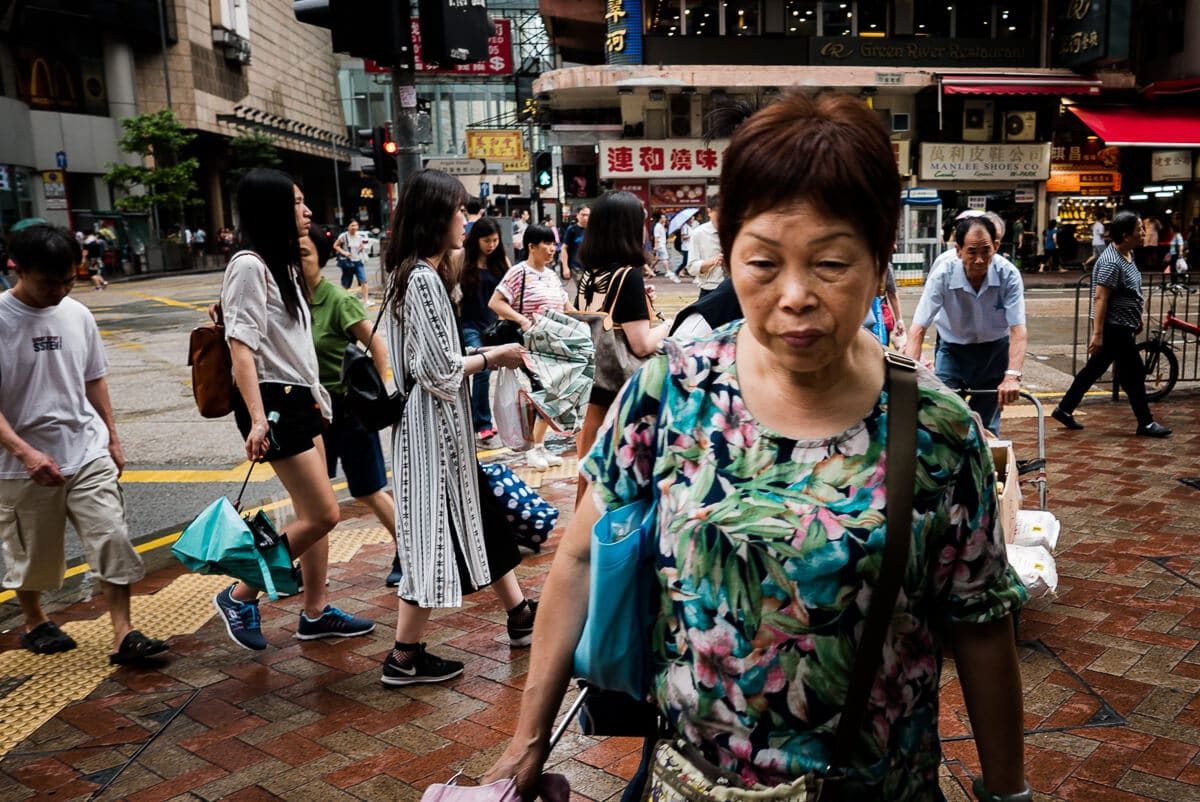
Vertical density, neon signs and markets packed into tight streets: layered frames at every step.
- Spots
- 7
- Best time
- October to December for clear, comfortable weather
- Lens
- 28mm or 35mm
- Photographing people
- Generally allowed
Hong Kong is one of the best cities in Asia for street photography because it stacks so much life into so little space: markets under towers, and old neighborhoods one metro stop from glass banking districts. Density does the layering for you. Stand still on almost any corner in Kowloon and people and signs will fill the frame in depth.
It is also an easy city to work in. It is very safe, and most people are too busy to care about a camera. Photography in public is legal. The main things to avoid are protests and police operations. Much of the classic neon has been taken down over the last decade, so what remains is worth seeking out. I would plan around mornings in Sham Shui Po and nights in Kowloon, with the harbor and Hong Kong Island in between.
Best street photography spots in Hong Kong
Nathan Road
Nathan Road runs about 3.6 km north through Kowloon from the harbor, and the Inspired Eye called it the one street you must walk. It is a stream of shoppers and buses under signs and towers. It is best at night. Stand at the crossing outside Chungking Mansions in Tsim Sha Tsui and shoot people as they cross, a spot Jared Poole recommends. Composition idea: a red taxi streak behind a sharp pedestrian at a slower shutter. Caution: pavements are packed, so step into a doorway before you stop to shoot.
Mong Kok markets
Mong Kok is one of the densest places on earth, and it shows. Ladies' Market on Tung Choi Street runs from around noon to late evening, with stalls of clothes and trinkets. Nearby streets specialize in goldfish or sneakers. Night is the time. Climb the footbridges over the junctions to look down on the crowds, and use the upper floors of shopping centers for a higher view. Composition idea: one face lit by a stall bulb among a sea of shadowed heads. Caution: some vendors do not want their stock photographed, so move on if waved off.
Sham Shui Po
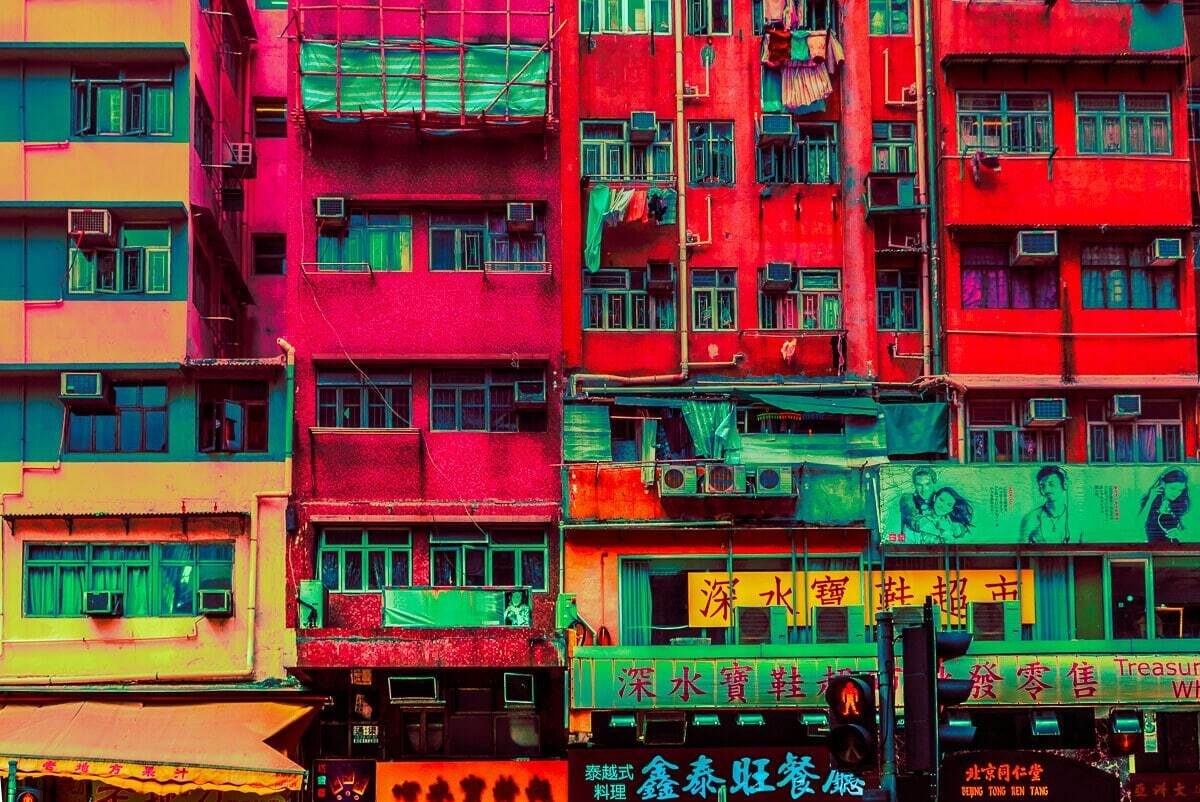
Sham Shui Po is one of Hong Kong's oldest districts, with fabric stalls, wet markets, cha chaan teng diners and an electronics street market on Apliu Street. Start at 6 to 7 am as trucks unload and shutters go up. In winter, golden hour light runs straight down the streets. The Pei Ho Street market building has a wet market with moody shadows on the lower floors. Composition idea: a shopkeeper framed by a half-raised shutter. Caution: some stalls on Tai Nan Street operate informally and do not want photos, and a lot of residents are elderly, so be gentle.
Central & Mid-Levels escalator
The Central to Mid-Levels escalator is an 800 meter chain of covered escalators climbing the hill above Central. It runs downhill from 6 to 10 am for commuters, then uphill until midnight. Ride it and shoot down onto the streets it crosses, or stand at street level and shoot up at riders. Around it you get office workers and the Graham Street market. Composition idea: a line of commuters on the escalator, stacked by a long lens. Caution: do not block the narrow walkway, and step off at an exit before you stop.
Tsim Sha Tsui & Star Ferry
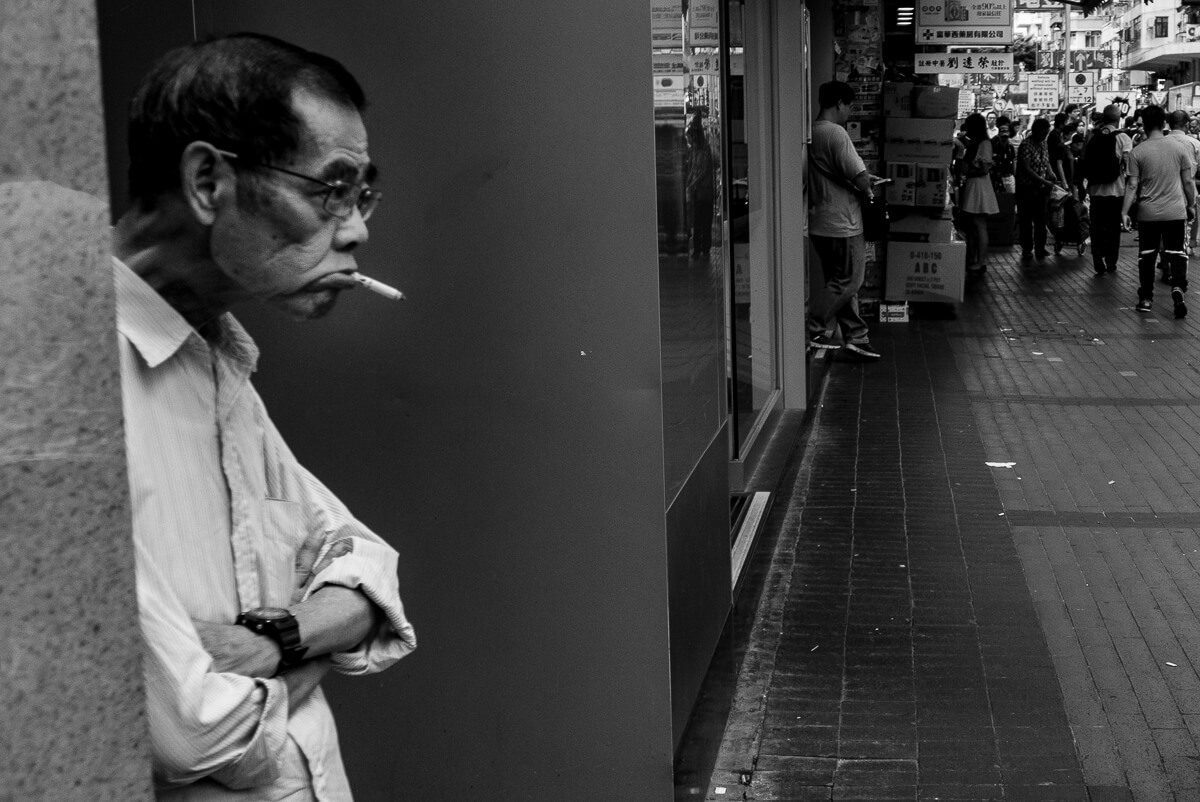
Eric Kim names Tsim Sha Tsui as his area in Hong Kong. The waterfront promenade gives you tourists and fishermen in front of the Hong Kong Island skyline. Golden hour and blue hour are the times. The Star Ferry to Central takes about ten minutes and the open sides make great frames of passengers against the harbor. Composition idea: a silhouette at the ferry rail with the skyline soft behind. Caution: the promenade is a tourist magnet, so watch your gear at the busiest spots.
Trams on Hong Kong Island (ding-ding)
The double-decker trams have run along the north shore of Hong Kong Island for over a century, and a ride costs a few dollars. Sit at the front of the top deck and shoot down into the streets of Central and Wan Chai as you pass. From the street, the trams make strong colorful foreground shapes. Late afternoon light down the east-west tram line is best. Composition idea: a passenger in the upper window as the tram passes, framed by the window edge. Caution: shooting through glass needs a lens hood pressed to the window to cut reflections.
Temple Street Night Market
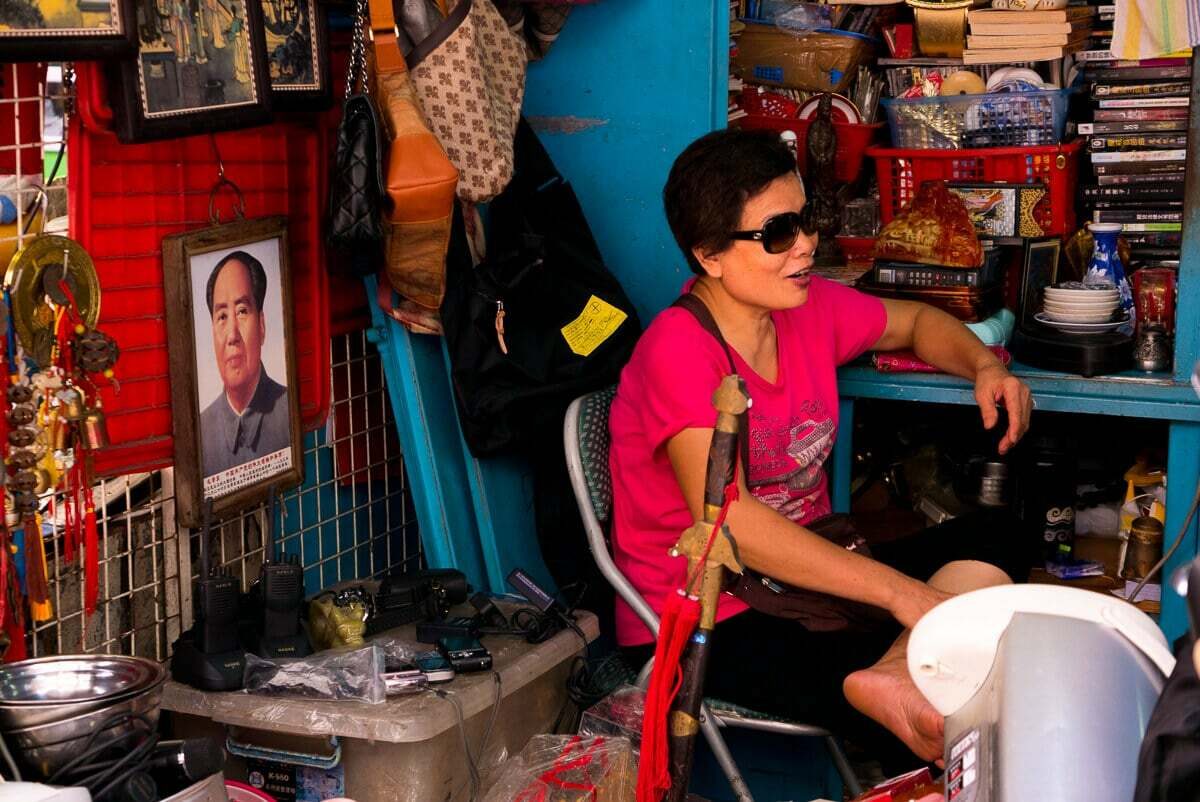
Temple Street in Jordan fills with stalls and fortune tellers in the evening. It is busiest after about 7 pm. The bare bulbs over the stalls give warm pools of light and deep shadow, which is perfect for dramatic faces. Stand at the end of a row of stalls and shoot along it for layers. Composition idea: diners at plastic tables in the foreground, the lit market behind. Caution: fortune tellers and some vendors expect a fee or a purchase before photos, so ask first.
Photographing people in Hong Kong
Taking photos of people in public places is legal in Hong Kong. The Personal Data (Privacy) Ordinance is about collecting and using personal data, and it is not aimed at street photography, though compiling images to track a specific person could raise issues. Commercial use of a recognizable face still needs a release. The real limits are political. Since the 2020 national security law, photographing protests or police operations carries risk, and the government has designated some national security premises as prohibited places where officers can order you to stop. Follow those orders. Day to day, people are busy and mostly ignore cameras. Some older residents and market vendors will wave you off, and a few will ask for money. A smile and a nod work better than stealth. At Chungking Mansions, Jared Poole suggests chatting before you raise the camera. This is general information, not legal advice. See is street photography legal.
General information, not legal advice. More in is street photography legal?
What to photograph in Hong Kong
- Signage: hanging signs and hand-painted shopfronts, which stamp a place on your photo.
- Market workers in wet markets and dry goods stores, often older and wearing aprons and rubber boots.
- Cha chaan teng diners, the Cantonese cafes where strangers share tables. Many of the old ones are closing.
- Minibus drivers and bus passengers seen through open or lit windows.
- Morning tai chi in parks such as Kowloon Park and Victoria Park.
- Domestic workers gathering in Central on Sundays, one of the city's biggest weekly scenes. Be respectful; it is their day off.
- Crowds from footbridges, shot looking down on crossings.
- Alleys behind main streets, which the Inspired Eye shot with a telephoto to compress the layers.
A one-day photo walk
- 7:00 Sham Shui Po. Take the MTR to Sham Shui Po. Shoot the markets opening for two hours and eat breakfast at a cha chaan teng.
- 10:30 Central and the escalator. MTR Tsuen Wan Line to Central, about 20 minutes. Ride the escalator up once it switches uphill.
- 13:00 Trams. Board a tram in Central heading east to Causeway Bay, about 30 minutes on the top deck.
- 16:30 Star Ferry and Tsim Sha Tsui. Get back to Central Pier and take the ferry to Tsim Sha Tsui. Work the promenade at golden hour and blue hour.
- 19:00 Nathan Road to Temple Street. Walk north up Nathan Road for about 20 minutes to Jordan and turn into Temple Street.
- 21:00 Mong Kok. Keep walking north 15 minutes to Ladies' Market and finish on the footbridges.
When to shoot
October to December for clear, comfortable weather. Mornings in Sham Shui Po, nights in Mong Kok and Temple Street.
The light
Deep shadow in narrow streets with bright slivers of sun; neon everywhere after dark.
What to bring
28mm or 35mm; Inspired Eye switched to a telephoto in the alleys. Fast lens for night.
Safety
Very safe.
Tips for Hong Kong
- A 28mm or 35mm covers most of the city. Pack a short telephoto for alleys and footbridges, where compression stacks the layers. See best lens for street photography.
- Bring a fast lens for night. Neon is sparser than it was, so the markets and shop lights do most of the work.
- Get an Octopus card or tap a contactless card at MTR gates to move between districts fast.
- October to December is the most comfortable season, with clear, dry air. June to September is hot and humid, with typhoons possible.
- After rain, Mong Kok and Nathan Road turn into neon mirrors. Go out as soon as it stops.
- The Tai Hang Fire Dragon Dance runs over the Mid-Autumn Festival, usually in September or October, with a dragon covered in burning incense sticks.
- Chinese New Year brings flower markets in Victoria Park and lion dances in the streets.
- Midday light in narrow streets is harsh. Use it for hard slivers of sun, or go indoors to markets.
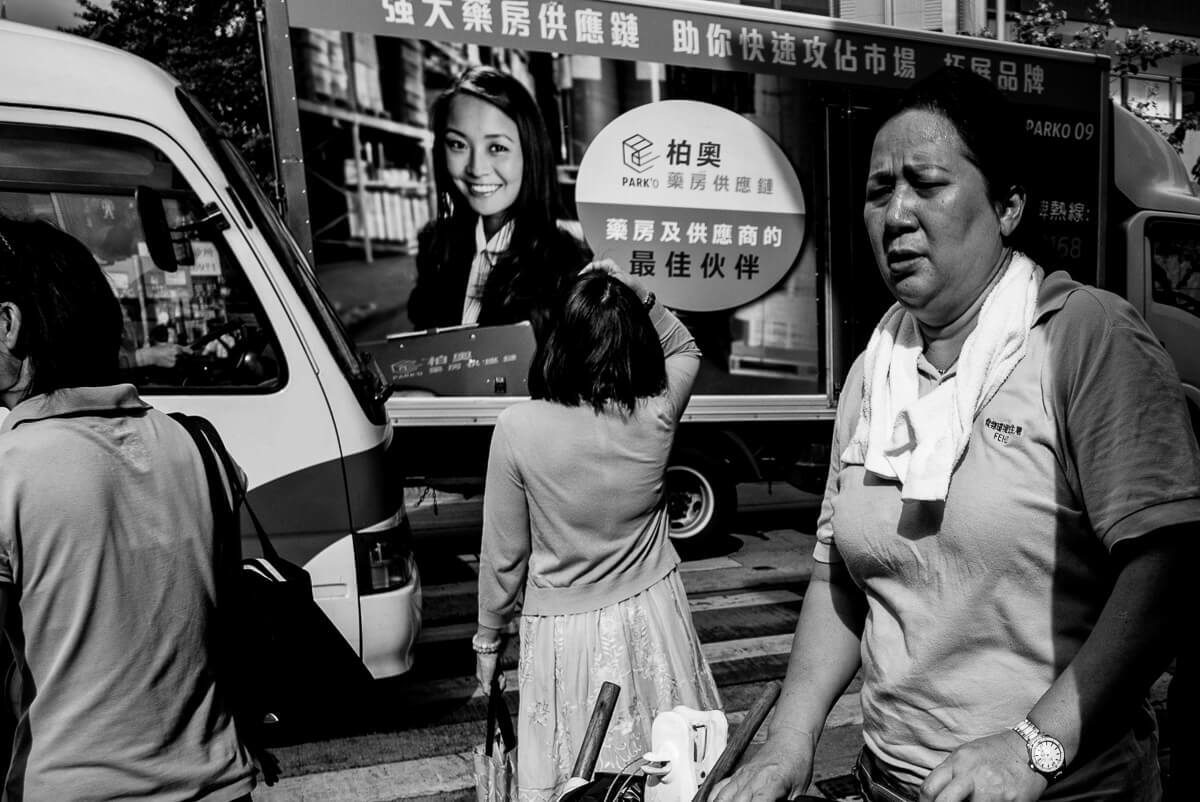
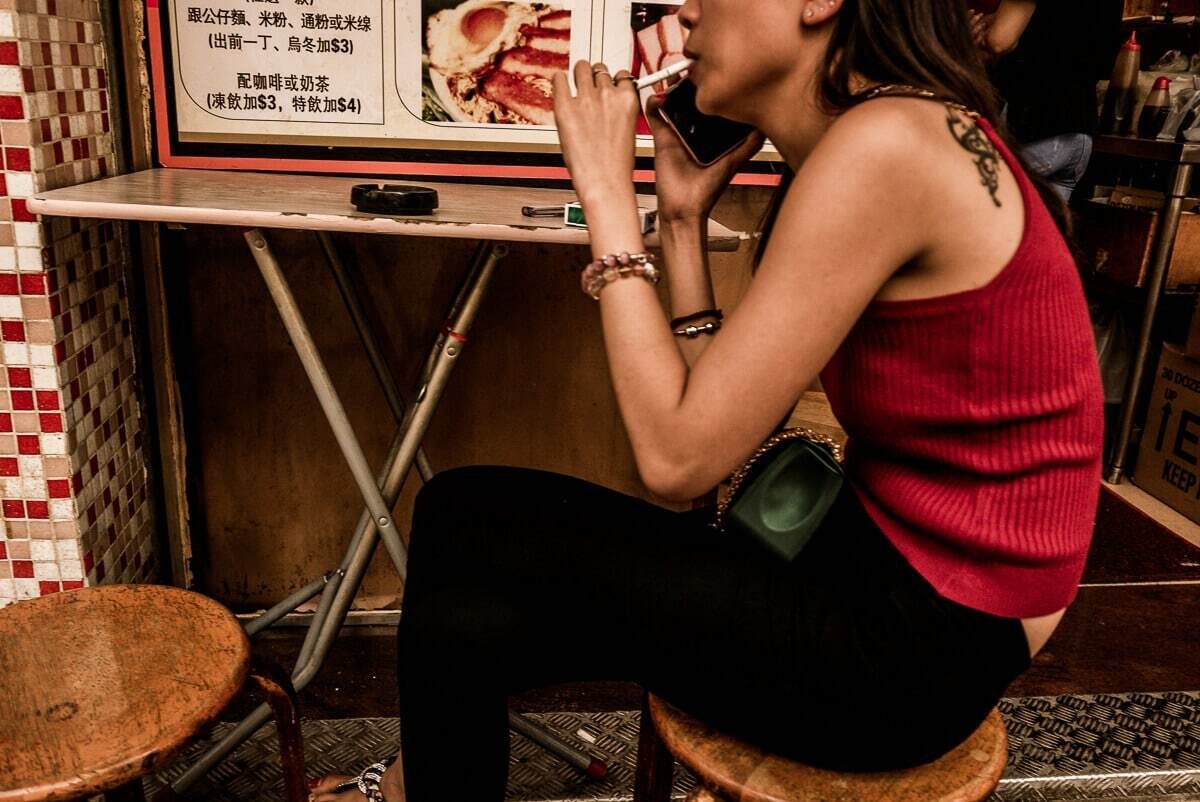
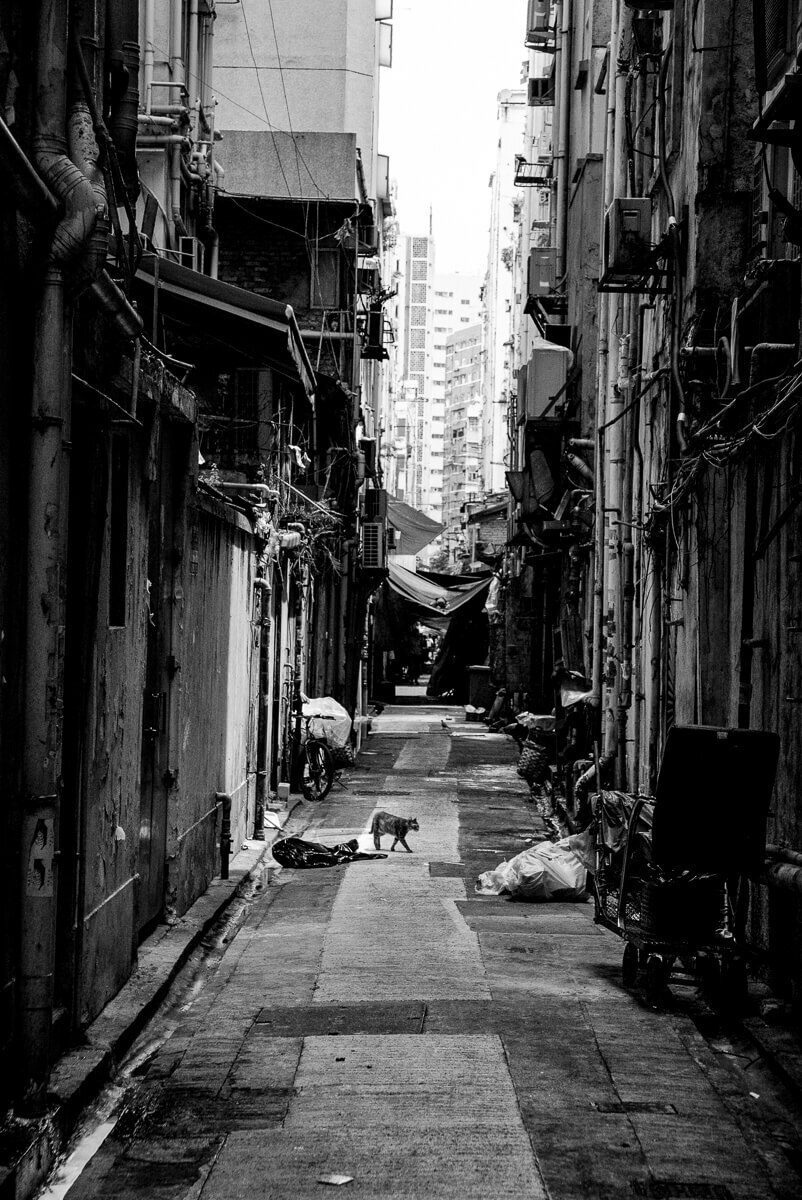
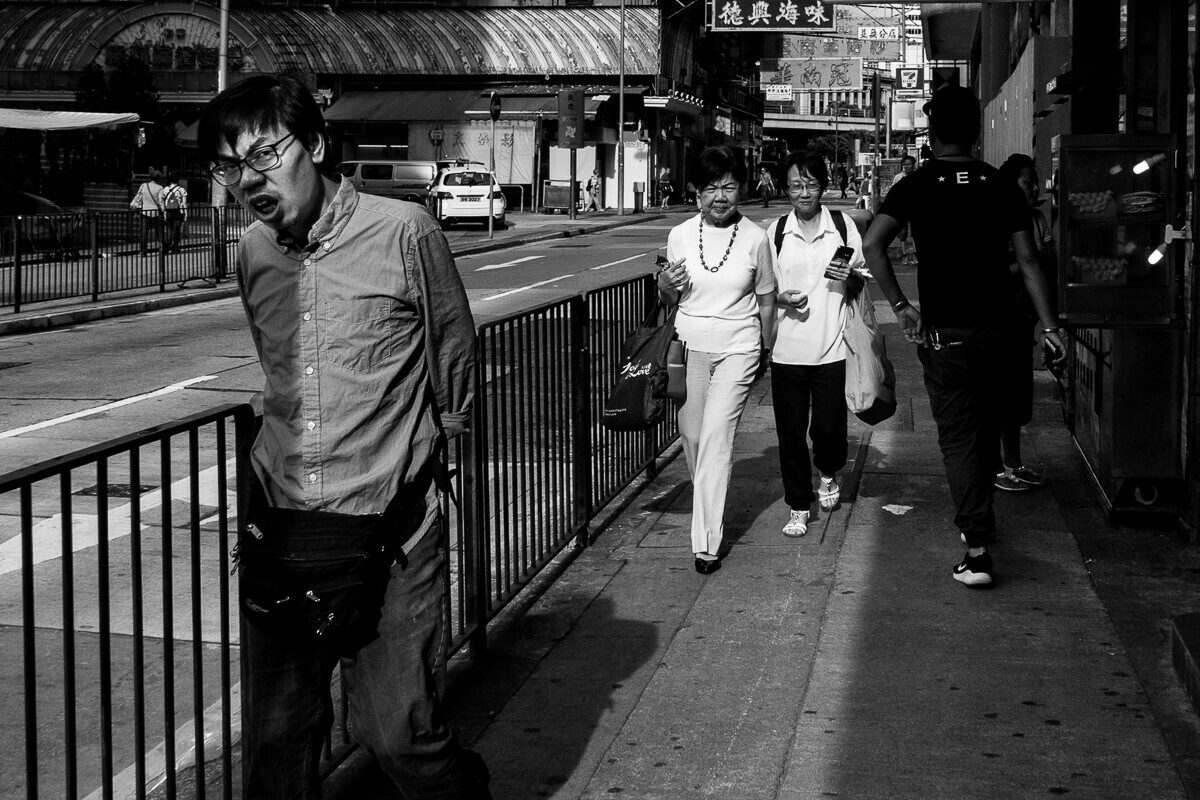
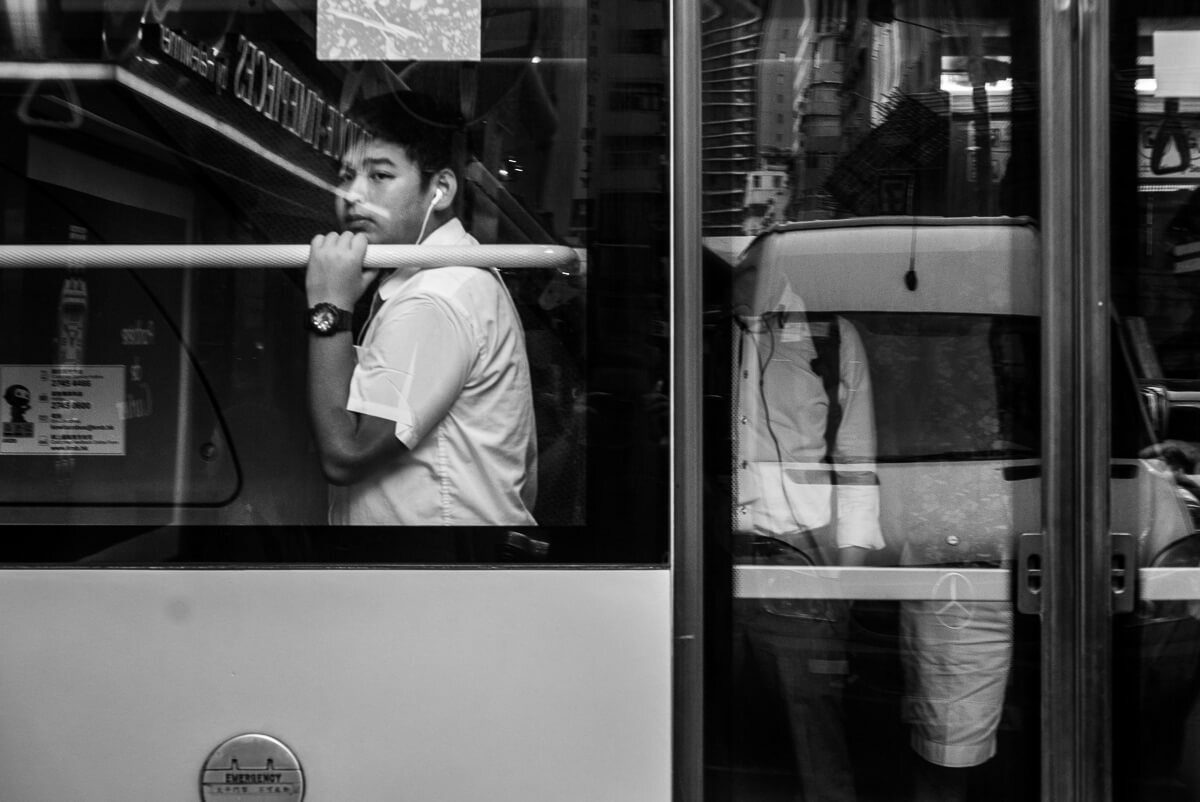
Photos by Olivier Duong in Hong Kong.
Frequently asked questions
Is street photography legal in Hong Kong?
Permissive. Photography in public is legal; the Personal Data (Privacy) Ordinance is aimed at data collection, not street photography. Avoid protests and police operations.
Where are the best street photography spots in Hong Kong?
Start with Nathan Road, Mong Kok markets, Sham Shui Po, Central & Mid-Levels escalator. Inspired Eye's must-do; walk it end to end.
When is the best time for street photography in Hong Kong?
October to December for clear, comfortable weather. Mornings in Sham Shui Po, nights in Mong Kok and Temple Street.
What lens should I bring to Hong Kong?
28mm or 35mm; Inspired Eye switched to a telephoto in the alleys. Fast lens for night.
Is Hong Kong safe for street photographers?
Very safe.
More street photography cities
Further reading: the Inspired Eye guide to Hong Kong.