
Street Photography in Guangzhou
Guangzhou keeps old Cantonese street life, from herbal markets and arcaded shophouses to riverside evenings, right next to a skyline of glass towers, and few foreign photographers work it.
- Spots
- 8
- Best time
- October to December is dry and clear
- Lens
- 35mm
- Photographing people
- Strict: ask first
Guangzhou is good for street photography because it keeps the texture of old Cantonese life, arcaded shophouses and herbal markets, alongside some of the most striking skylines in China, and very few foreign photographers come to shoot it. A local guide who has photographed the city since 2016 calls Guangzhou one of the most photogenic cities in China that gets too little attention from photographers. That makes it a good place for photo spots you won't see everywhere.
The old city is in the west, in Liwan, around Shamian Island and Enning Road, where mornings are busy with markets and tea. The new city is in the east, around Canton Tower. I'd split the day that way: the old west by daylight, the river and Beijing Road after dark. China's rules on consent are strict, so read the people section first.
Best street photography spots in Guangzhou
Shamian Island
Shamian is a small island on the Pearl River that was once a foreign concession, with 19th century consulates and churches along tree lined streets. Into Travel China recommends 15:00 to 17:00, when the light filters through the banyan trees and throws soft shadows on the pastel facades. Couples often come for wedding photos, and residents walk dogs and practice dance under the trees. Frame a walker between two trunks with a colonial facade behind. It is free and quiet on weekdays.
Qingping Market
Qingping Market, across the canal from Shamian, is an old market for Chinese herbal medicines and dried goods. Travel China Guide describes it as the city's only licensed herbal medicine trading place in the center. Jess Rose found aisles of dried plants and sea creatures, with people on bikes hauling boxes through, and a glimpse of old China between the towers. Come in the morning, when trade is busiest. Many traders dislike cameras, so shoot the aisles wide and ask before close portraits.
Enning Road
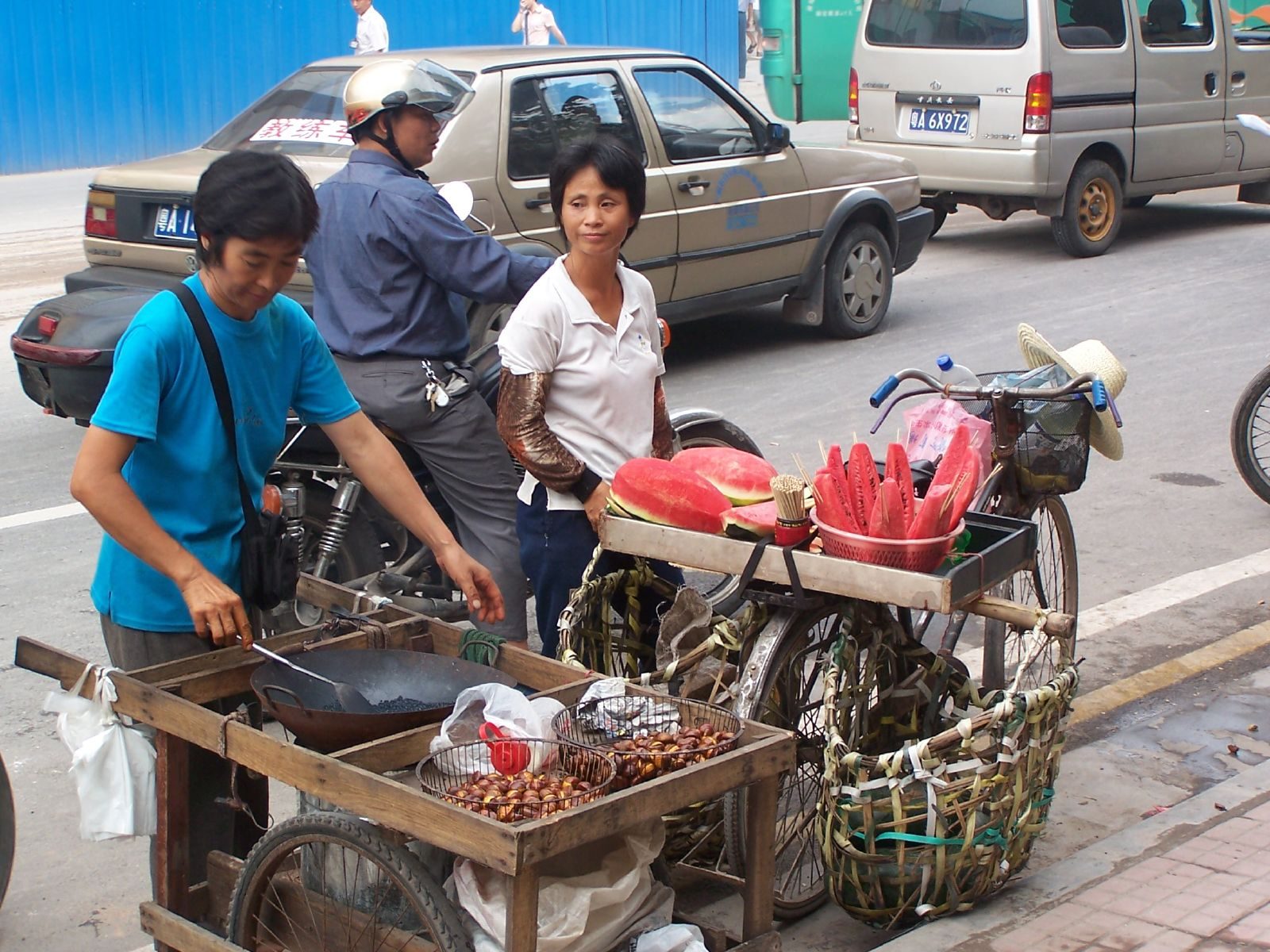
Enning Road runs through Liwan, lined with qilou, the arcaded shophouses of old Guangzhou, where ground floor shops open under covered walkways. It is residential and commercial at once, with older residents and small tea shops. Morning is best, when people shop and eat breakfast. Stand in the arcade and shoot along the columns, so their rhythm leads to a figure in the light at the end. Some sections have been restored and some are worn, which gives you contrast. Respect residents on their doorsteps.
Yongqing Fang
Yongqing Fang is a restored block of traditional Xiguan houses off Enning Road, now home to cafes and craft shops. Into Travel China recommends weekday mornings before 10:00, and says the best frames are in the side alleys, where residents still hang laundry and keep potted plants. Carved wooden doors and ironwork balconies make detailed backgrounds. The horsehead gable walls typical of the region top many of the houses. Shoot a resident passing a carved doorway in the side lanes, rather than the busy main street. Weekends are crowded.
Sacred Heart Cathedral
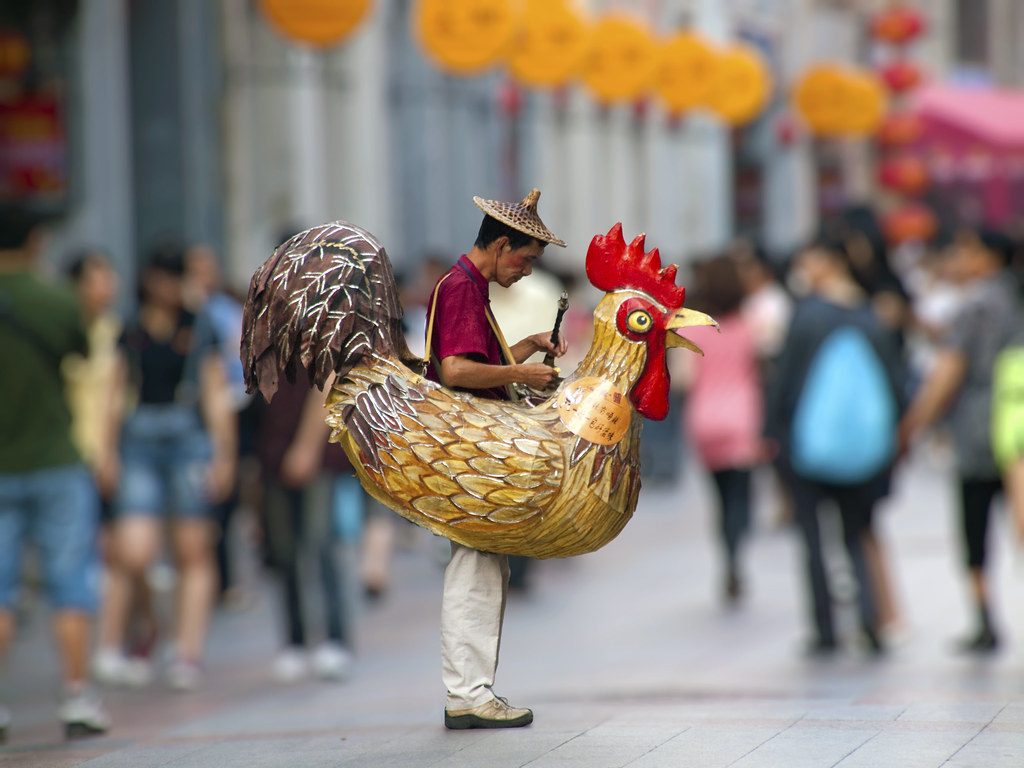
The Sacred Heart Cathedral, also called the Stone House, is a granite Gothic church built between 1863 and 1888. Into Travel China suggests the southwest corner for the contrast between the spires and the modern apartment blocks. The streets around it, along Yide Road, are dense with wholesalers of dried seafood and goods, with porters and trolleys. Come in the morning, when trade is busiest. Frame the spires above the traffic and trolleys. The cathedral is open during the day; be quiet inside.
Beijing Road
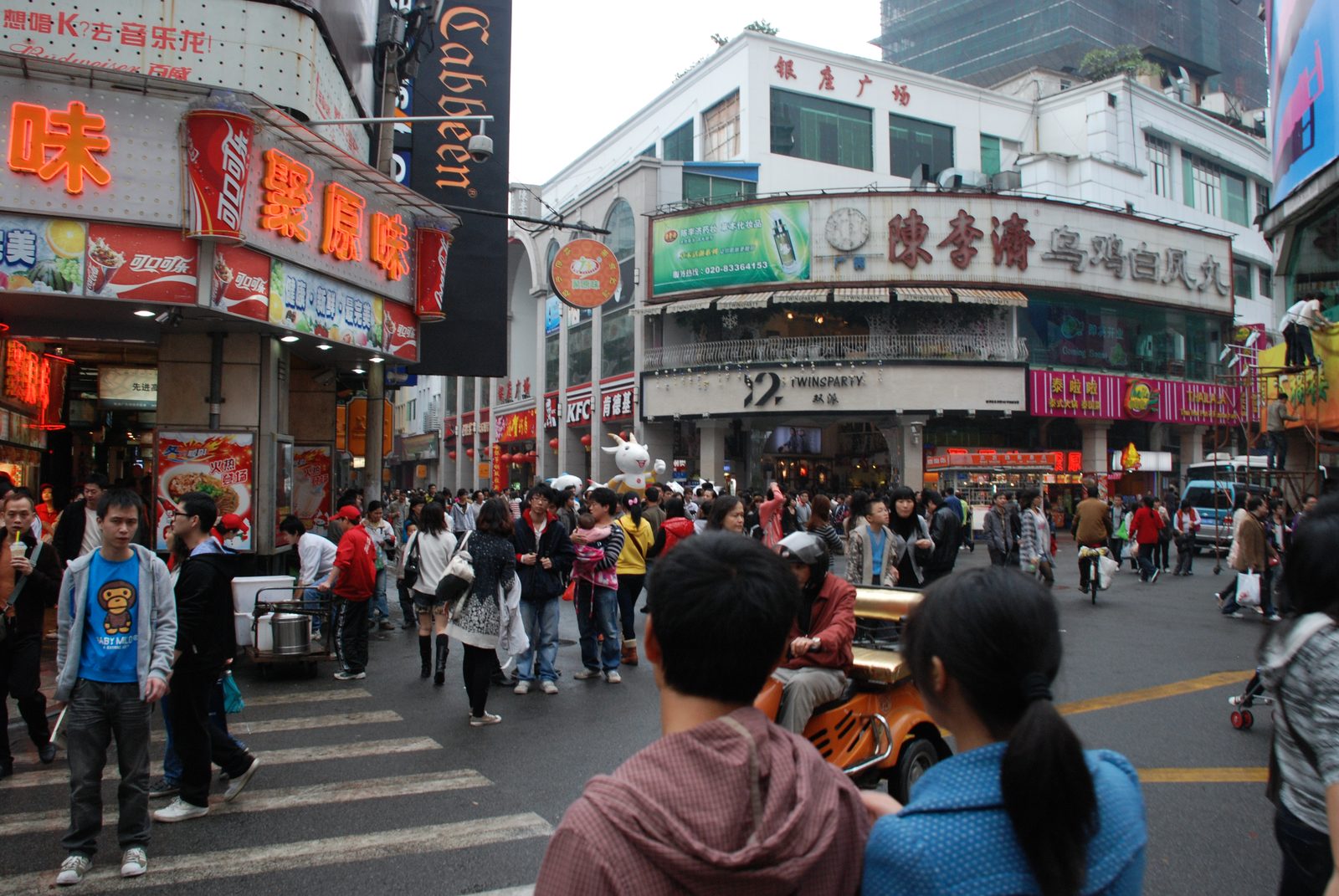
Beijing Road is one of Guangzhou's busiest pedestrian shopping streets. A glass floor section shows ancient road layers from the Song and Ming dynasties below. Into Travel China recommends 20:00 to 22:00, when the neon is fully on and the crowd flow gives you motion blur with longer exposures. Shoot people walking over the lit glass, or blur the crowd behind a still figure. The side streets off Beijing Road have food stalls and smaller crowds. It is crowded, so keep your bag in front.
Haizhu Bridge
Haizhu Bridge is one of the city's oldest bridges, first built in 1933. Into Travel China recommends blue hour, about 20 minutes after sunset, when the bridge and riverside buildings light up and their reflections spread across the Pearl River. The surrounding river walk is well lit and safe after dark. Evening walkers and anglers fill the banks. Shoot figures along the rail with the bridge behind, or use a slow shutter for boat trails. The south bank near the bridge foot gives the classic view.
Huacheng Square
Huacheng Square is the long central plaza of Zhujiang New Town, the modern business district, facing Canton Tower across the river. It fills with families and young people in the evening. The Canton Tower lights come on around 19:00, according to Into Travel China. Frame people on the plaza with the lit towers behind them. The Guangzhou Library nearby has a free rooftop view over the skyline. It is open, so use the lines of the plaza to lead to a single figure.
Photographing people in Guangzhou
Strict: local law or custom protects people's image. Ask first, or keep faces out of frame.
Street photography is common in China, but the law on images is stricter than many visitors think. China's Civil Code, article 1019, says a person's image may not be made or published without their consent, with exceptions in article 1020, such as images that show a public setting, as the Wikimedia Commons summary notes. The UK FCDO warns not to photograph security forces or altercations. This is general information, not legal advice.
In practice, people in Guangzhou are busy and mostly ignore cameras in public. Market traders are the exception: Jess Rose noticed people hiding from her camera in Qingping's narrow aisles. Shoot wide scenes and ask before close portraits. Keep away from police and disputes. More in how to photograph strangers.
General information, not legal advice. More in is street photography legal?
What to photograph in Guangzhou
- Arcaded shophouses (qilou) on the old streets.
- Dried goods in the markets, from herbs to seahorses.
- Morning tea in old teahouses, where older regulars read the paper over dim sum.
- Wedding shoots on Shamian, with photographers directing couples under the banyans.
- Square dancing in parks and plazas in the evening.
- Porters and trolleys around the wholesale streets.
- Neon and glass floors on Beijing Road.
- The Pearl River at night, with boats and lit bridges.
- Cantonese opera fans and amateur singers in the old neighborhoods.
- Old and new: laundry in the alleys with glass towers behind.
A one-day photo walk
- 8:00, Enning Road. Breakfast at a local restaurant, then the arcades as shops open.
- 9:30, Yongqing Fang. Next door. Side alleys before 10:00.
- 11:00, Qingping Market. About 15 minutes on foot. Herbs and dried goods.
- 13:00, lunch and rest. Try dim sum, then wait out the midday heat.
- 15:00, Shamian Island. A short walk over the bridge. Afternoon light under the banyans.
- 18:30, Haizhu Bridge. About 15 minutes by metro or taxi. Blue hour on the river.
- 20:00, Beijing Road. About 15 minutes on foot north. Neon and crowds.
When to shoot
October to December is dry and clear. Summer is hot and humid, with typhoons possible from about July to September. The old west (Liwan) is best in the morning; Beijing Road and the river after dark. The Canton Tower lights come on around 19:00.
The light
Humid, often hazy light, with clear days after rain and in autumn. Banyan trees filter the sun on Shamian. Arcades give even shade on the old streets. At night the river and towers light up.
What to bring
A 35mm prime for the old streets and a wide lens for the cathedral and bridge. A fast lens for Beijing Road at night.
Safety
Very low street crime. Watch for pickpockets in crowds and e-bikes on pavements. The UK FCDO warns not to film security forces or altercations. Set up Alipay or WeChat Pay before you go.
Tips for Guangzhou
- Season: October to December is dry and clear. Summer is hot and stormy.
- Payments: set up Alipay or WeChat Pay before you arrive.
- Metro: fast and cheap. Liwan and the river are well connected.
- Mornings: the old west is busiest early, with breakfast and markets.
- Night: Beijing Road and the river are well lit. Try ISO 1600 to 3200. See street photography settings.
- Lens: a 35mm for the arcades and a wide lens for the cathedral. See best lens for street photography.
- Nearby: Shenzhen and Hong Kong are a short high speed train ride away.
Frequently asked questions
Is street photography legal in Guangzhou?
STRICT on consent. Street photography is common, but China's Civil Code (article 1019) says a person's image may not be made or published without consent, with exceptions such as showing a public setting (article 1020). Do not photograph police, security forces, protests or military sites. Traders in wholesale markets often dislike cameras. General information, not legal advice.
Where are the best street photography spots in Guangzhou?
Start with Shamian Island, Qingping Market, Enning Road, Yongqing Fang. Former foreign concession on the Pearl River. Colonial facades under banyan trees; best from 15:00 to 17:00.
When is the best time for street photography in Guangzhou?
October to December is dry and clear. Summer is hot and humid, with typhoons possible from about July to September. The old west (Liwan) is best in the morning; Beijing Road and the river after dark. The Canton Tower lights come on around 19:00.
What lens should I bring to Guangzhou?
A 35mm prime for the old streets and a wide lens for the cathedral and bridge. A fast lens for Beijing Road at night.
Is Guangzhou safe for street photographers?
Very low street crime. Watch for pickpockets in crowds and e-bikes on pavements. The UK FCDO warns not to film security forces or altercations. Set up Alipay or WeChat Pay before you go.