
Street Photography in Macau
Macau mixes Portuguese tiled squares and pastel lanes with Chinese temples and casino towers, all within walking distance.
- Spots
- 8
- Best time
- October to December for clear, dry weather
- Lens
- 28mm or 35mm
- Photographing people
- Strict: ask first
Macau is good for street photography because two cultures share a very small space. Portuguese churches and tiled squares sit next to Chinese temples and wet markets, with casino towers rising behind them. The Macau Trip guide sums it up as a collision of scales: 17th century church walls with casino towers behind them, and neon signs over tiled townhouses. The peninsula is compact enough to walk in a morning.
The catch is crowds. Tour groups pack the famous center by mid-morning, so the heritage shots belong to early risers. I'd spend the rest of the day in the working neighborhoods, like the Red Market and the Inner Harbour, where the Macau Trip guide notes locals are used to cameras. Macau also has one of the stricter image rights laws in Asia, so ask before close portraits. Hong Kong is about an hour away by ferry.
Best street photography spots in Macau
Ruins of St. Paul's
The stone facade of St. Paul's is all that remains of a 17th century church, and it is the most photographed spot in Macau. By 10am the plaza is dense with tour groups. The Macau Trip guide recommends 7 to 8:30am, when the facade takes soft morning light and the square is nearly empty. For street work, turn to the stairs. People climbing toward the facade give you scale and a clear line. The Wandering Lens suggests the view from Travessa da Paixão, a small lane with colored buildings. It is a crowded spot, so hold your gear close.
Senado Square
Senado Square is known for its black and white wave pattern paving, surrounded by pastel colonial buildings and St. Dominic's Church. Chasing Hippoz says it is jammed after 8am, so shoot the square early or at blue hour. The Macau Trip guide argues that the real street photography is in the lanes running north toward St. Paul's, such as Rua dos Cules and Rua da Palha, where Portuguese tiles meet Chinese signs. Stand on the wave paving and wait for a walker to cross the curves. Midday light is flat and the crowd is solid.
Red Market
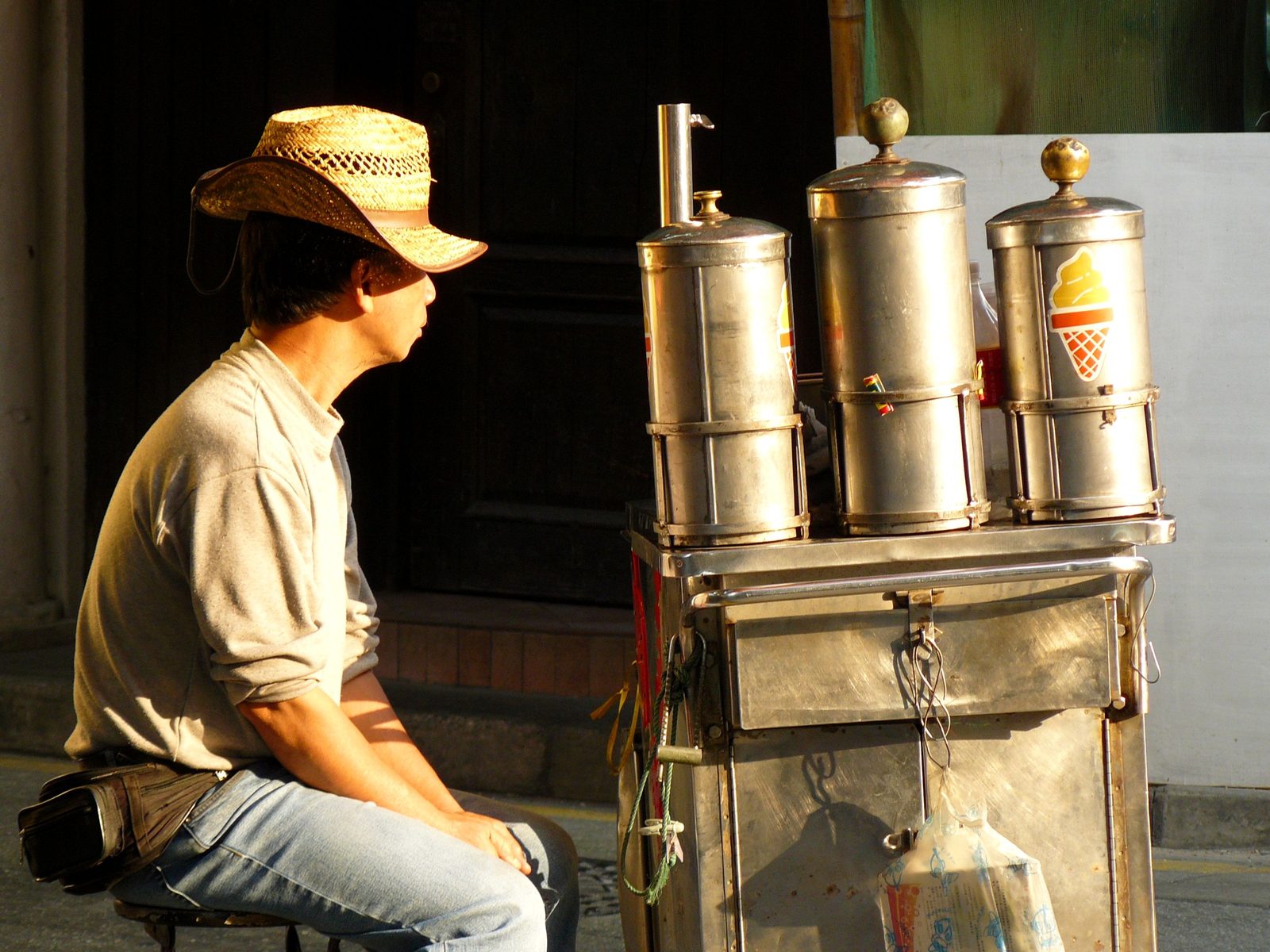
The Red Market is an art deco wet market in the north of the peninsula. The Wandering Lens found vegetables and dried goods on the ground floor and butchers on the second, and warns that the red light can throw off your white balance. The streets around it, Rua de Tomé Pires and Rua de Fernão Mendes Pinto, are lined with food stalls and are best mid-morning. This is everyday Macau with few tourists. Stand at the edge of the stalls and wait for a hand reaching into frame. Vendors are busy, so step aside and ask for portraits.
Inner Harbour
The Inner Harbour along the west side of the peninsula faces Zhuhai across a narrow channel. The Macau Trip guide calls it street photography territory, with old fishing boats and dried seafood shops, and locals used to cameras. The Wandering Lens found the streets good for motion blur, pairing a passing motorbike with colored shopfronts. Come between 8 and 11am, when the markets are active. Don't point your camera at the border or at mainland China across the water in a way that could look like surveillance.
Lilau Square & Rua da Barra
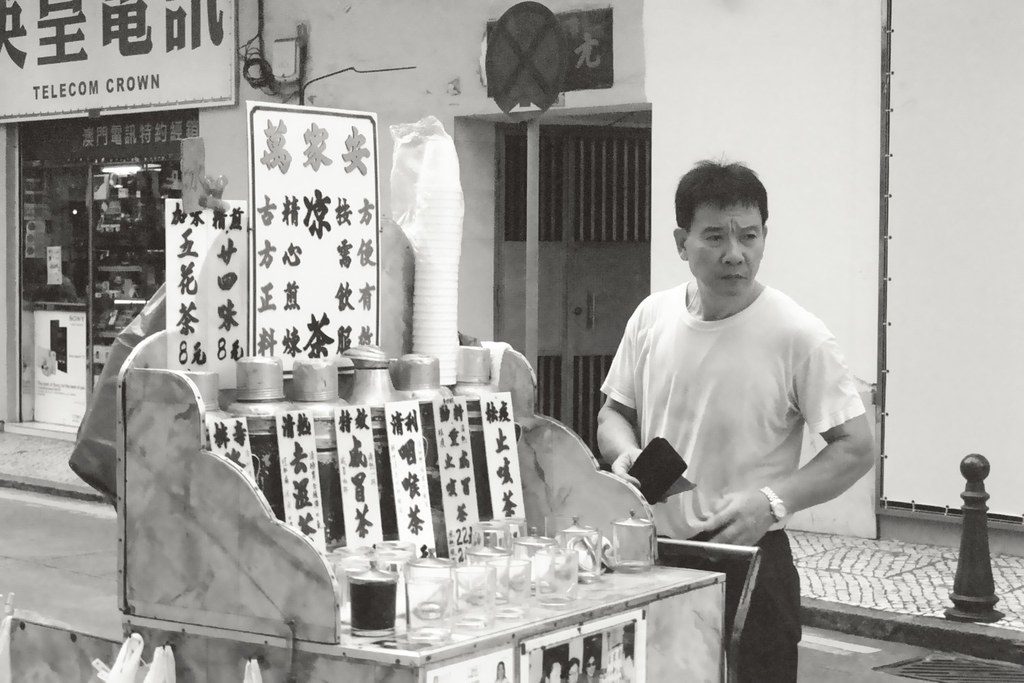
Lilau Square is a small, quiet square in one of Macau's oldest residential areas. The Wandering Lens calls it a favorite, with murals and pastel facades as you walk down Rua da Barra toward the A-Ma Temple. There is street art near the square. This is a good place for figure and ground. Choose a bright wall and wait for a passerby to cross it. Late afternoon light works well on the colors. It is residential and quiet, so keep a low profile.
A-Ma Temple
A-Ma Temple is dedicated to the goddess of seafarers and is one of the oldest temples in Macau. Its halls climb the hillside under trees. The Macau Trip guide points to red lanterns and incense smoke catching the light, with fewer crowds than the northern heritage sites. Chasing Hippoz suggests looking for moments like hands lighting incense. Go in the morning, when worshippers are there and the smoke is backlit. Keep your distance from anyone praying and don't use flash.
Taipa Village
Taipa Village is the old center of Taipa island, next to the casinos of Cotai. Rua do Cunha, the main lane, is packed with snack shops and visitors. The Macau Trip guide says decisive moments happen fast here and recommends a 35mm or 50mm. The Wandering Lens rates Taipa as the best neighborhood for photos, including the view from the Taipa Houses toward the casinos. I'd work Rua do Cunha in the afternoon, then drift into the quieter lanes toward the Pak Tai Temple. Weekends are very crowded.
Coloane Village
Coloane is Macau's slowest corner, a village by the water at the southern tip. The Wandering Lens describes quiet tree lined streets with a gentle old world feel. The yellow Chapel of St. Francis Xavier on its small square is the center, with cafes and old shops around it. There is less action, so this is about patience. Sit near the square and wait for a cyclist or a local dog walker to pass the yellow walls. Late afternoon is best. Bus or taxi from Taipa takes about 20 minutes.
Photographing people in Macau
Strict: local law or custom protects people's image. Ask first, or keep faces out of frame.
Macau's law is strict on paper. Article 80 of the Civil Code protects a person's image: nobody should be photographed, or have their photo shown or reproduced, without consent. Exceptions cover news reporting, public safety, scientific, educational and artistic purposes, and well known people at public events. The Penal Code covers illicit photographs. A crowd scene where no one is singled out carries less risk than a tight portrait. This is general information, not legal advice.
In practice, locals in the markets and the Inner Harbour are used to cameras, and tourists are everywhere with phones. Close portraits are where to be careful. Ask first, and a smile and a gesture are usually enough. Many older residents prefer not to be photographed. Avoid border crossings and security staff, and follow posted rules in casinos, which usually restrict cameras on gaming floors.
General information, not legal advice. More in is street photography legal?
What to photograph in Macau
- East meets West. Portuguese tiles and Chinese shop signs in the same frame.
- Temples. Incense coils and worshippers at A-Ma and smaller shrines.
- Wet markets. Red Market vendors and stalls on the streets around it.
- Casino contrast. Old lanes with the towers of Cotai rising behind them.
- Harbour work. Fishing boats and seafood drying in the sun.
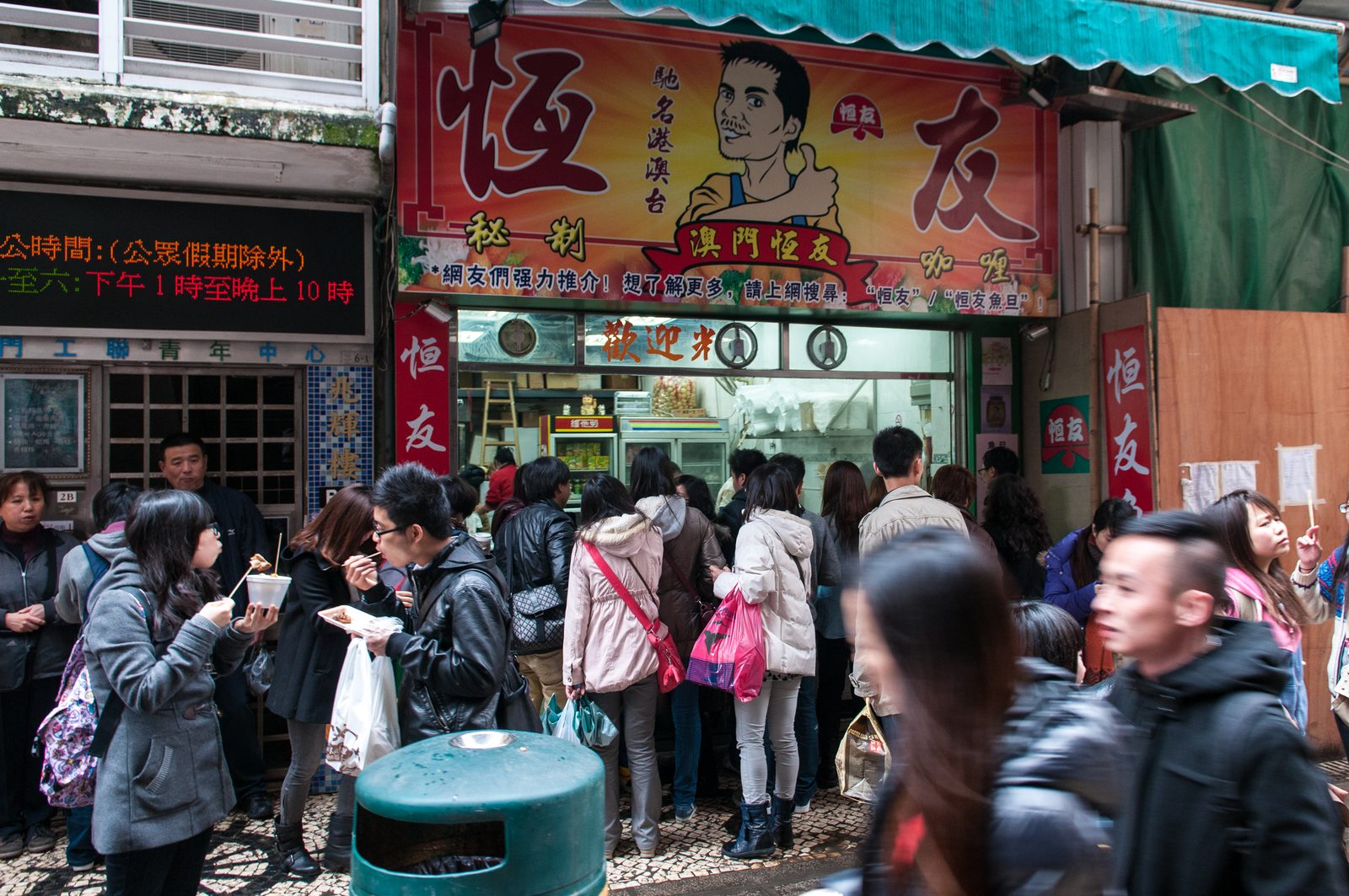
- Tourist crowds. Selfie sticks at St. Paul's and queues for egg tarts.
- Morning exercise. Tai chi and sword dancing in the public gardens, as The Wandering Lens found. Be discreet and ask first.
- Pastel walls. Colored facades for figure and ground frames.
A one-day photo walk
- 7:00, Ruins of St. Paul's. Beat the crowds. One hour.
- 8:00, Senado Square. A 5 minute walk downhill through the lanes. Work it before 9.
- 9:30, Red Market. About 10 minutes by bus or taxi. Market and street stalls.
- 11:30, Inner Harbour. About 15 minutes by taxi. Walk south along the harbor.
- 14:00, Lilau Square and Rua da Barra. A 5 minute walk. Then on to A-Ma Temple, 5 minutes more.
- 16:30, Taipa Village. About 20 minutes by taxi or light rail. Stay into the evening, when the lanes light up.
When to shoot
October to December for clear, dry weather. Early morning before 8:30 for the heritage center. April to September is humid and often overcast.
The light
Humid and often overcast, which suits facades and faces. Winter gives low, golden light by late afternoon.
What to bring
A 28mm or 35mm for the lanes. A short telephoto for facade details and compressed crowds.
Safety
Very safe. Crowds in the heritage center and at ferry terminals are the main nuisance.
Tips for Macau
- Season: October to December is clear and dry. Summer is humid, with typhoon risk.
- Dawn: St. Paul's and Senado Square are only quiet before about 8:30.
- Overcast: cloud cover is often better than harsh sun for facades and faces. See street photography settings.
- Casinos: phones are usually fine, but big cameras and tripods on gaming floors are not.
- Getting around: the peninsula is walkable. Buses and taxis are cheap for Taipa and Coloane.
- Golden hour: in December the sun sets before 18:00, in summer around 19:00 to 19:30.
- Grand Prix: the Macau Grand Prix fills the city in November. Check dates each year.
Frequently asked questions
Is street photography legal in Macau?
STRICT. Macau's Civil Code (article 80) protects the right to one's image: an identifiable person generally should not be photographed or published without consent, with exceptions such as news reporting and artistic use. The Penal Code covers illicit photographs. Ask before close portraits. Don't photograph border facilities.
Where are the best street photography spots in Macau?
Start with Ruins of St. Paul's, Senado Square, Red Market, Inner Harbour. The famous facade and its stairs. Empty at dawn, packed by 10am.
When is the best time for street photography in Macau?
October to December for clear, dry weather. Early morning before 8:30 for the heritage center. April to September is humid and often overcast.
What lens should I bring to Macau?
A 28mm or 35mm for the lanes. A short telephoto for facade details and compressed crowds.
Is Macau safe for street photographers?
Very safe. Crowds in the heritage center and at ferry terminals are the main nuisance.