
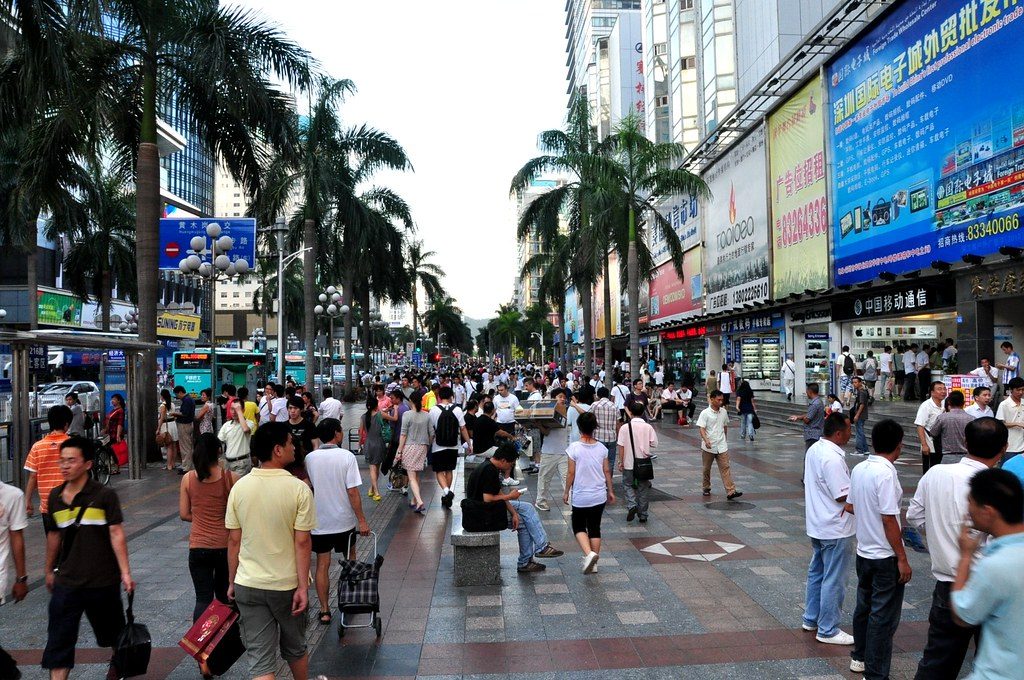
Street Photography in Shenzhen
Shenzhen grew from a small town into a megacity in four decades, so its photo spots set neon food streets and painting villages against towers and light shows, and the city even marks official viewpoints for photographers.
- Spots
- 8
- Best time
- October to December is dry and mild
- Lens
- 35mm or 50mm
- Photographing people
- Strict: ask first
Shenzhen is good for street photography because it is a city of contrasts: old food streets and a village where artists copy masterpieces by the thousand sit a few metro stops from some of the most futuristic skylines in Asia. The city even runs an official photo spots program. China Daily reports that 17 viewpoints have been marked with blue lines on the ground and a plaque, from the neon of Wenheyou to the skyline at Houhai Bridge.
The metro reaches almost every spot, which makes Shenzhen easy to work in a day or two. The street life is concentrated in the older eastern districts around Dongmen and Laojie, while the western waterfront is about skyline and evening crowds. I'd spend the afternoon in the old east, then take the metro west for the light show at blue hour. China's rules on consent and on photographing security are strict, so read the people section first.
Best street photography spots in Shenzhen
Dongmen Pedestrian Street
Dongmen is one of Shenzhen's oldest commercial neighborhoods, a grid of pedestrian shopping streets and food lanes. Yuko, a street photographer based in China, describes grilled kebabs and roasted chestnuts from morning until late at night, and shot the interaction between vendors and customers with a 56mm lens. Evening is best, when the lights come on and the crowds peak. Stand at a food stall and wait for the moment of handing over. Keep a short lens and watch your bag in the crowds.
Wenheyou
Wenheyou on Jiefang Road recreates the streets of 1990s Shenzhen inside an old building, with diners and video halls under period neon. China Daily lists it among the official photo spots, and points to the contrast between the nostalgic neon and the ultra-modern towers beyond. It is a staged setting, but the diners and queues are real. Come after dark. Shoot people under the old signs, or step outside for the flyover. Take Metro Line 1 to Laojie, exit G.
Huaqiangbei
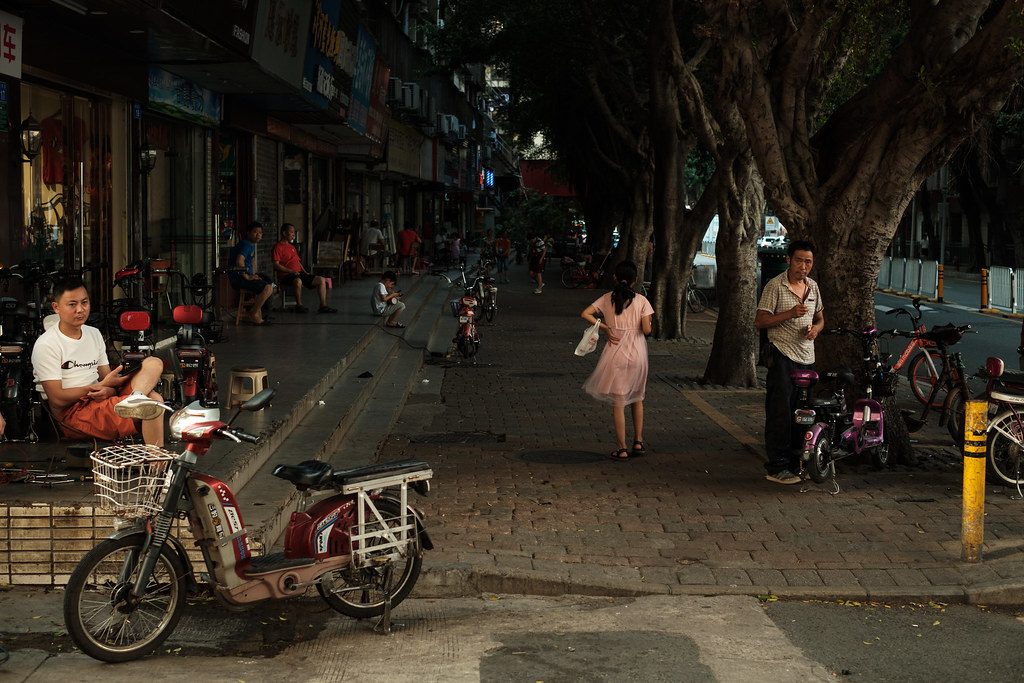
Huaqiangbei is the electronics market district in Futian, where multi-storey malls sell every component you can imagine. The pedestrian street outside is full of couriers pushing carts stacked with boxes. Weekday late mornings are busiest. Stand at a mall entrance and shoot the flow of carts across the street. Delivery riders on e-bikes weave through constantly, which suits a slow shutter pan. Inside the malls, traders often dislike cameras pointed at their stalls, so work outside. Street photography inside malls may be stopped by security.
Dafen Oil Painting Village
Dafen, in Longgang, is a village of alleys lined with galleries where painters produce copies of famous works. Palate & Palette notes the village began in 1989, and that by 2014 about 7,000 artists worked there, turning out millions of paintings a year. Painters work at easels in doorways and in the lanes, surrounded by canvases. Come in the late morning or afternoon. Frame a painter at work beside a half finished Van Gogh. The metro ride from the center takes about an hour. Ask before photographing inside studios.
Nantou Ancient City
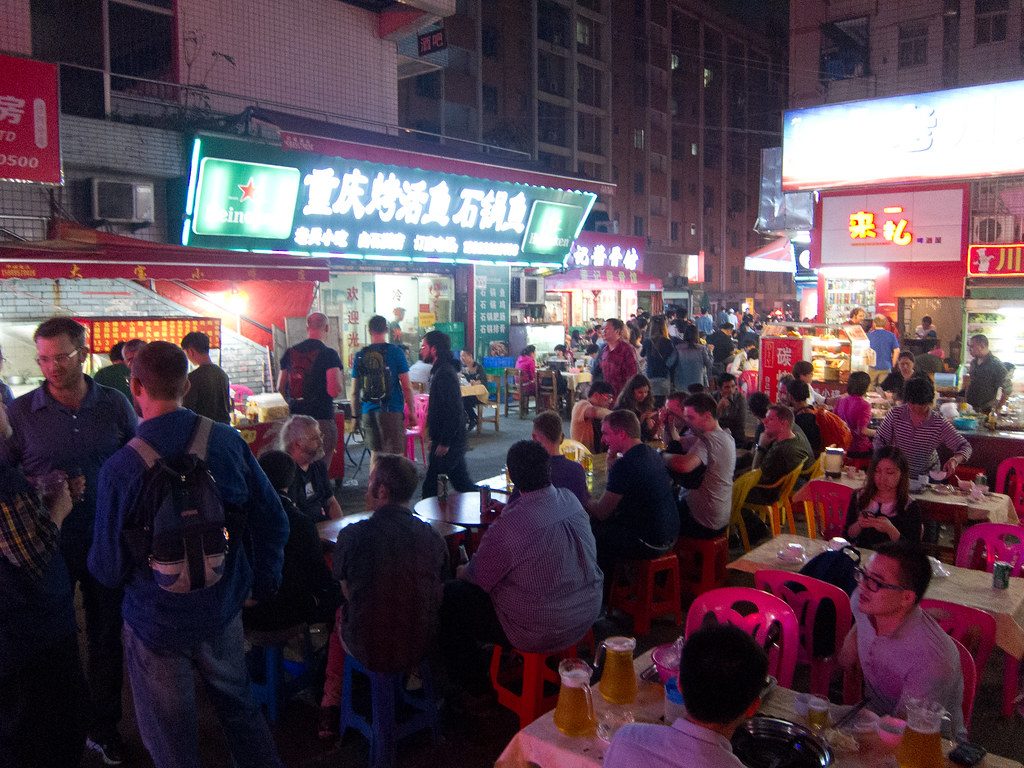
Nantou is an old walled town in Nanshan district, restored in recent years, with narrow lanes, old houses, small cafes and shops. It mixes older residents with young visitors. Late afternoon light is soft in the lanes. Stand at a lane junction and wait for a resident on a bicycle or a grandparent with a child to pass a restored doorway. It is quieter on weekdays, and the old gate and wall sections make good frames. People still live here, so keep your distance from doorways and homes.
Talent Park
Talent Park runs along Shenzhen Bay next to the Houhai Bridge, one of the official photo spots. China Daily describes seaside skyscrapers set against the bay, with the coordinated light show on the towers turning the area into a cyber city at night. Come for blue hour. Use the park's walkers and cyclists as silhouettes against the lit skyline, or frame people photographing the view. Take Metro Line 2 or 11 to Houhai, exit M. It is busy on weekend evenings.
Lianhuashan Park
Lianhuashan Park is a hill park in Futian, with a statue of Deng Xiaoping at the top and a view over the civic center and the CBD. Locals fly kites on the lawns below and exercise on the paths in the morning. Come in the late afternoon and climb to the top for the view. Work the kite flyers on the way down. Frame kite strings against the towers. Weekends are busiest. It is a relaxed place where people are used to cameras.
Shenzhen Bay Park
Shenzhen Bay Park is a long waterfront park looking across the bay toward Hong Kong's New Territories. Cyclists and anglers use the promenade, and families come for the sunset. Late afternoon is best, when the sun drops over the water. Shoot figures along the sea wall against the low sun, or the anglers with the bridge behind. The park is long, so pick a section near a metro station. The promenade is well lit, so you can stay past sunset for the city lights on the water.
Photographing people in Shenzhen
Strict: local law or custom protects people's image. Ask first, or keep faces out of frame.
Street photography is common in China, and people are used to phones pointed in every direction. The law on images is stricter than many visitors realize. China's Civil Code, article 1019, says a person's image may not be made or published without their consent, with exceptions in article 1020, including images that show a public setting, as the Wikimedia Commons summary notes. The UK FCDO warns not to film or photograph security forces or altercations. This is general information, not legal advice.
In practice, wider scenes of people in public places cause little trouble. Close portraits go better if you ask first with a smile and a gesture. Some traders and older residents will wave you off; respect it. Keep your camera away from police and anything that looks like a dispute. More in how to photograph strangers.
General information, not legal advice. More in is street photography legal?
What to photograph in Shenzhen
- Neon in the old districts, set against glass towers.
- Street food at Dongmen, with steam and bright stall lights.
- Delivery riders on e-bikes, everywhere.
- Painters at easels in Dafen's lanes.
- Skyline light shows at night, seen from the bay.
- Kite flyers in the parks, with strings running up toward the towers.
- Couriers and carts in Huaqiangbei.
- People photographing each other at the official photo spots.
- Old and new: village houses squeezed between towers in the urban villages.
- Metro crowds at rush hour, in stations that are clean and bright.
- Morning exercise in the parks, from tai chi to dancing.
A one-day photo walk
- 9:00, Dafen Oil Painting Village. Metro to Dafen, about an hour from the center. Painters opening their studios.
- 11:00, Huaqiangbei. Metro to Huaqiang Road. Traders and carts.
- 13:00, Lianhuashan Park. About 15 minutes by metro. Kites and the view over the CBD, best on a clear day.
- 15:30, Dongmen Pedestrian Street. About 20 minutes by metro. Shopping streets and food lanes.
- 18:00, Wenheyou. A short walk. Neon after dark.
- 19:30, Talent Park. About 40 minutes by metro west to Houhai. The skyline light show, with walkers in silhouette along the bay.
When to shoot
October to December is dry and mild. Spring is humid and often hazy, and summer is hot, with typhoons possible from about July to September. Dongmen and Wenheyou are best in the evening; the skyline spots at blue hour, when the building light shows start. Chinese New Year empties the city for a week or more as workers go home.
The light
Humid, often hazy light that softens the skyline. Clear days come after rain or in autumn. At night the city is lit in coordinated light shows, and old districts glow with neon and shop signs.
What to bring
A 35mm prime for the food streets and a 50mm for isolating figures in crowds. Keep any tripod for the parks.
Safety
Very low street crime. The main risks are legal: the UK FCDO warns not to film security forces or altercations, and notes that foreigners can face exit bans in business or civil disputes. Most payments are by Alipay or WeChat Pay, so set them up before you go. Watch for e-bikes on the pavements.
Tips for Shenzhen
- Season: October to December is clear and mild. Summer brings heat and possible typhoons.
- Photo spots: look for blue lines on the ground and a "Shenzhen photo spot" plaque at the official viewpoints.
- Payments: set up Alipay or WeChat Pay before you arrive. Many vendors do not take cash easily.
- Internet: many Western apps are blocked, and VPNs need a government license under Chinese law, as the FCDO notes.
- Metro: fast and cheap, and it reaches almost every spot.
- Night: the light shows usually start after dark. Shoot at ISO 1600 to 3200. See street photography settings.
- Hong Kong: Shenzhen sits across the border from Hong Kong, so it pairs well with a Hong Kong trip.
Frequently asked questions
Is street photography legal in Shenzhen?
STRICT on consent. Street photography is common and phones are everywhere, but China's Civil Code (article 1019) says a person's image may not be made or published without consent, with exceptions such as showing a public setting (article 1020). Do not photograph police, security forces, protests or military sites. Drones are strictly regulated. General information, not legal advice.
Where are the best street photography spots in Shenzhen?
Start with Dongmen Pedestrian Street, Wenheyou, Huaqiangbei, Dafen Oil Painting Village. One of Shenzhen's oldest shopping districts. Street food stalls and dense crowds from morning to late night.
When is the best time for street photography in Shenzhen?
October to December is dry and mild. Spring is humid and often hazy, and summer is hot, with typhoons possible from about July to September. Dongmen and Wenheyou are best in the evening; the skyline spots at blue hour, when the building light shows start. Chinese New Year empties the city for a week or more as workers go home.
What lens should I bring to Shenzhen?
A 35mm prime for the food streets and a 50mm for isolating figures in crowds. Keep any tripod for the parks.
Is Shenzhen safe for street photographers?
Very low street crime. The main risks are legal: the UK FCDO warns not to film security forces or altercations, and notes that foreigners can face exit bans in business or civil disputes. Most payments are by Alipay or WeChat Pay, so set them up before you go. Watch for e-bikes on the pavements.