
Street Photography in Phnom Penh
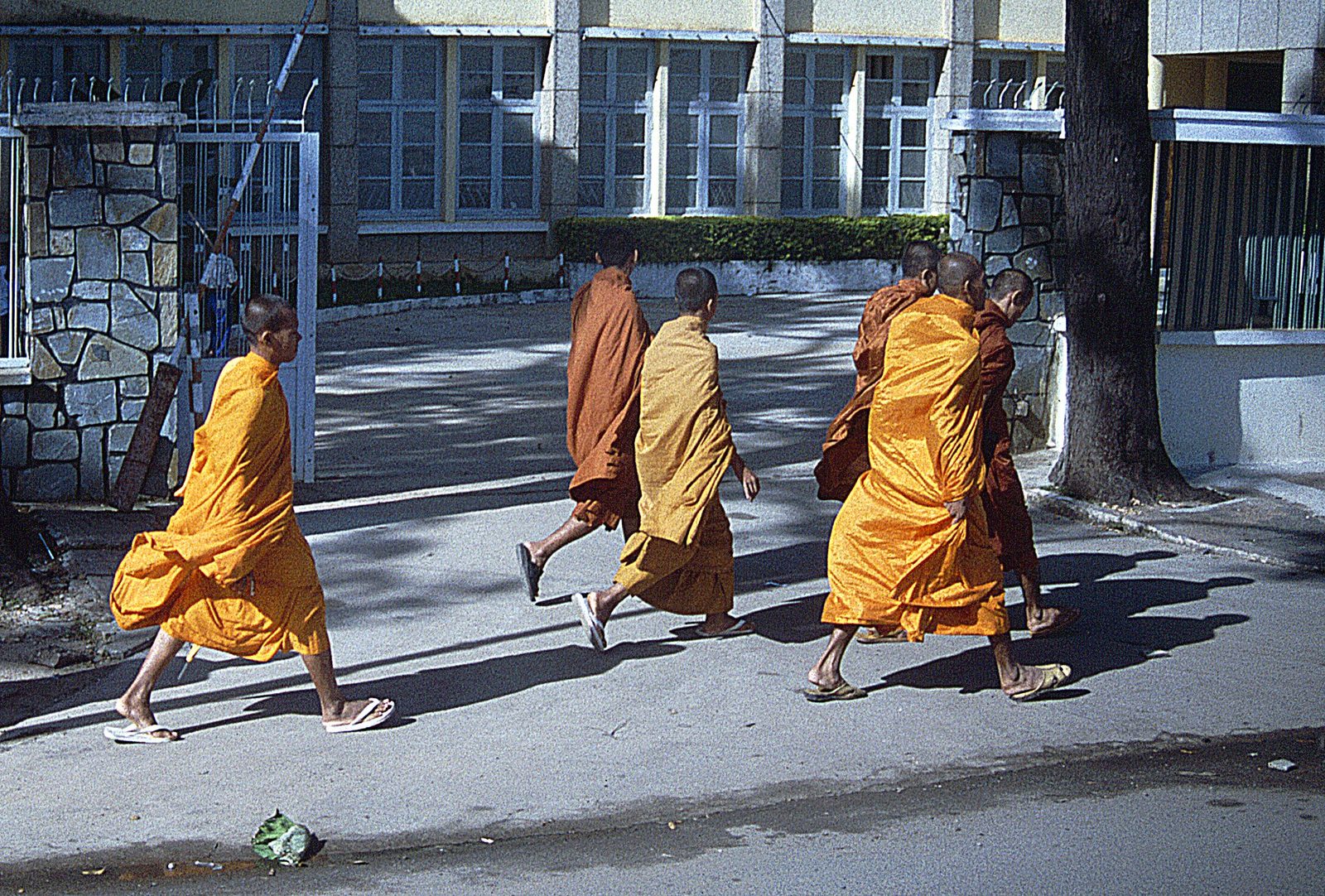
Phnom Penh lives on its pavements, with noodle stalls and monks on alms rounds among old shophouses and new towers, and most people respond to a polite camera with a smile.
- Spots
- 8
- Best time
- November to February is the dry, cooler season
- Lens
- 35mm or 50mm
- Photographing people
- Generally allowed
Phnom Penh is good for street photography because daily life happens in the open, on the pavements and along the river, and most Cambodians respond to a polite camera with a smile. Photographer Gerhard Klinkhamer, who has led photo walks in the city since 2013, describes people cooking and socializing in cool dark alleys while old rickshaws pass new Lexus and Rolls Royces. The contrast between old and new is the city's subject.
The old shophouses are disappearing fast under new towers, so the streets you photograph today may not be there in a few years. The city works on a rhythm: busy at dawn and again from late afternoon, with a hot, slow midday in between. Ian Kydd Miller's guide lays out those same windows. I'd base myself near the riverside, work the markets in the morning and the quay at sunset. Watch your bag: snatch theft from motorbikes is the main risk.
Best street photography spots in Phnom Penh
Sisowath Quay
Sisowath Quay is the riverside promenade along the Tonle Sap, facing the water where it meets the Mekong. At dawn and again around sunset, groups do aerobics to loud music on the promenade, which a TripAdvisor reviewer times from about 5:15. Evenings bring families and snack vendors. Face east at dawn to backlight the dancers against the river. In the evening, find a food cart lit by a single bulb and shoot the customers around it. The FCDO names the riverfront as a bag snatching hotspot, so keep your camera strap wrapped and away from the road.
Royal Palace Park
The open square in front of the Royal Palace is where Phnom Penh comes for air. A local photo tour starts here at 6:00 for golden hour, with pigeons and early walkers. The palace walls and golden spires make a background you will not find elsewhere. Crouch low and use a flock of pigeons lifting off as the foreground, with the spires behind. At sunset families picnic on the grass and vendors sell snacks and balloons. Dress respectfully near the palace, and do not photograph guards up close.
Central Market
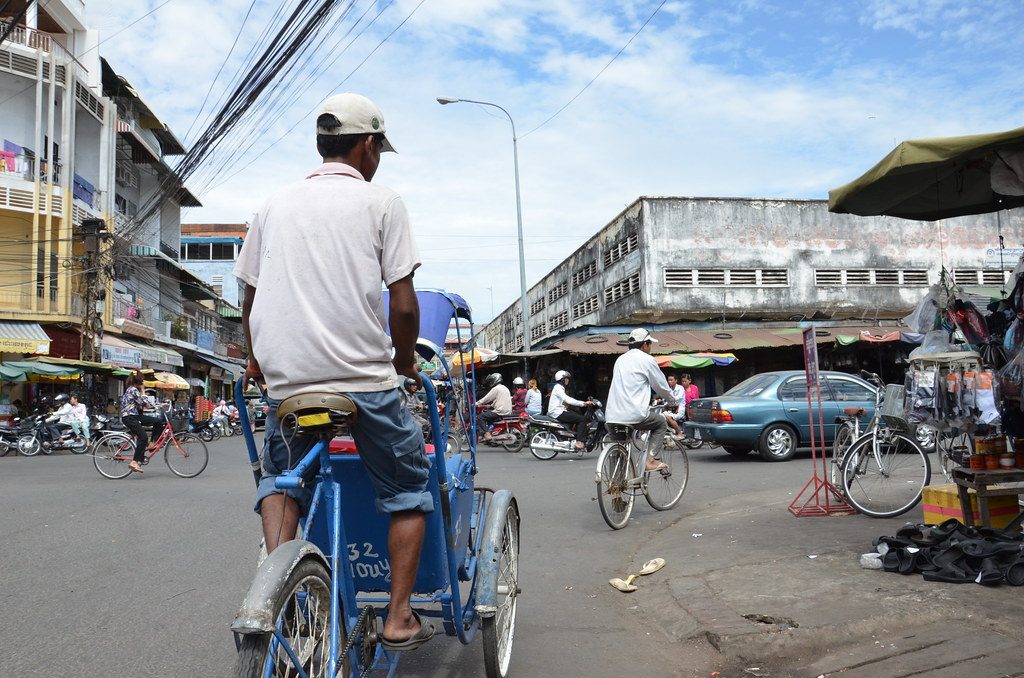
The Central Market, Phsar Thmei, is a yellow art deco building from the 1930s with a huge central dome and four wings. Inside, jewellery and watch stalls sit under the dome. The better street photography is outside, where stalls selling fruit and food spill into the surrounding streets. Come in the morning or from about 14:30, when a local photo tour works the area. Stand in the shade of a wing and shoot out into the bright street, so vendors appear as shapes against the light. Watch your pockets in the tight aisles.
Orussey Market
Orussey is a big, dark local market west of the center where you can find literally everything, as one local photographer put it. It is less touristy than the Central Market, and much of the trade is wholesale, so porters haul sacks and crates through the lanes from early morning. The interior is dim, lit by gaps in the roof and bare bulbs. Find a patch of daylight falling across a lane and wait for someone to walk into it. Raise the ISO and accept grain. Stay out of the path of the porters.
Russian Market
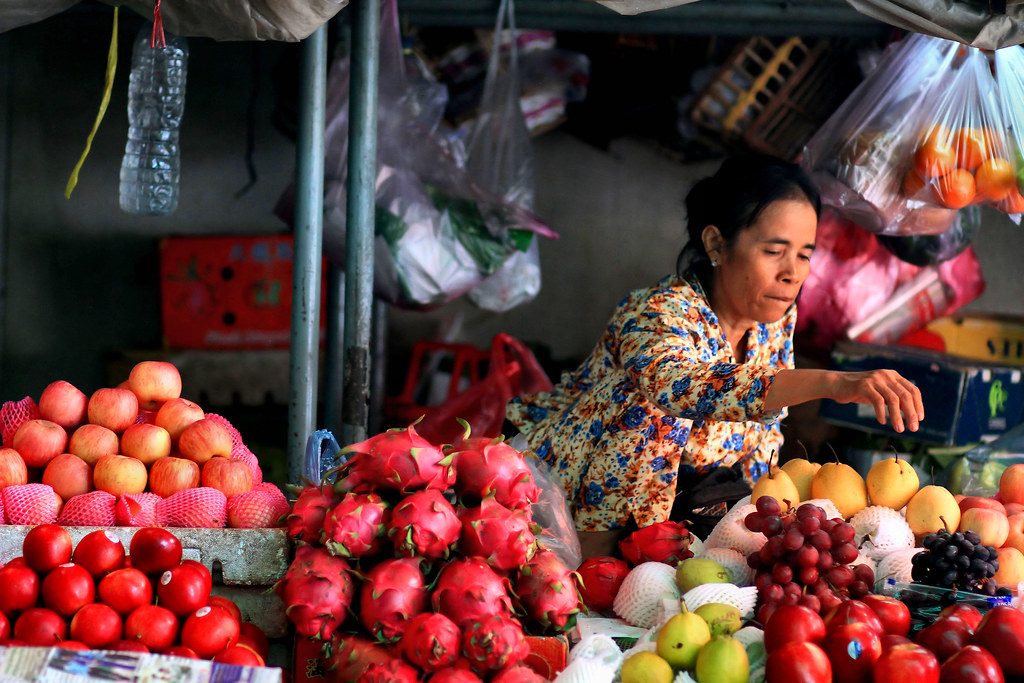
The Russian Market, Tuol Tom Poung, is a low roofed maze of narrow covered alleys south of the center, named for the Russian expats who shopped there in the 1980s. Ian Kydd Miller likes it for its food stalls and its mix of locals and expats. The food section is the place to be, with cooks working over steam and charcoal from breakfast onward. Frame a cook through the steam with light from an alley entrance behind. It is hot and airless by midday. The streets around the market have cafes for a break.
Wat Phnom
Wat Phnom stands on a small wooded hill in the north of the center and is tied to the legend of Lady Penh, who gave the city its name. Worshippers climb the steps with incense and offerings, especially on holy days and before exams. Come in the morning, when the smoke from incense catches the low light. Shoot from the steps looking up at the stupa, with worshippers in silhouette. There is a small entry fee for foreigners. Remove your hat and keep a respectful distance while people pray.
Olympic Market
Olympic Market sits next to the Olympic Stadium, a 1960s landmark. Ian Kydd Miller recommends the area for everyday Cambodian life, and few tourists come. The market has the usual wet and dry sections, and the stadium grounds nearby are used by locals for exercise, mostly early and late in the day. Combine the two: market scenes in the morning, then the stadium's concrete lines as backgrounds. Frame a runner against the long stepped seating. Parts of the stadium area may be closed or under redevelopment, so check on the day.
Kandal Market
Kandal Market is a neighborhood wet market a few blocks back from the riverside, with fish and breakfast stalls in tight lanes. It is busiest early, from about 6:00, when locals shop before work. The lanes are narrow and covered, so you get strips of light between the awnings. Stand at one end of a lane and shoot along it with a wider lens so the stalls stack up. Porridge and noodle vendors make good subjects if you eat first. The floors are wet, and the fish section is slippery.
Photographing people in Phnom Penh
Photographing people in public places is generally tolerated in Cambodia. The firm rules from the UK FCDO: never take photographs on or near military bases, and ask permission in advance for extensive photography or filming that authorities might see as out of the ordinary. This is general information, not legal advice.
In practice, Cambodians are among the easiest people in Asia to photograph. Ian Kydd Miller notes that many are open to portraits if approached politely, and that smiles go a long way. Gerhard Klinkhamer shoots close portraits with a 50mm and finds people genuinely friendly. Always ask before photographing children or people in hardship, and buy a coffee or snack from vendors you shoot. With monks, keep a respectful distance; women should not touch them or hand things to them directly. More in how to photograph strangers.
General information, not legal advice. More in is street photography legal?
What to photograph in Phnom Penh
- Monks on alms rounds in the morning, stopping at shopfronts.
- Noodle soup breakfasts at pavement stalls, with steam and plastic stools.
- Cyclo and tuk-tuk drivers waiting at markets, often with lived in faces made for portraits.
- Old shophouses in the shadow of new towers.
- Riverside aerobics at dawn and dusk.
- Motorbikes carrying everything, from whole families to stacks of crates. Pan with them at a slow shutter.
- Street food carts lit by one bulb after dark.
- Hand painted signs and faded shop lettering in Khmer script on the older streets.
- Vendors resting in dark, cool alleys during the midday heat.
A one-day photo walk
- 5:30, Sisowath Quay. Dawn aerobics and river light, facing east toward the water.
- 6:30, Royal Palace Park. A 5 minute walk. Pigeons and golden hour.
- 7:30, Kandal Market. About 10 minutes north on foot. Breakfast in the lanes.
- 9:00, Central Market. A 10 minute walk west. Street life around the dome.
- 11:00, rest. The midday heat is punishing from March to May.
- 15:00, Russian Market. About 15 minutes by tuk-tuk south. Food stalls and alleys.
- 17:30, Sisowath Quay. Tuk-tuk back to the river for sunset. Stay for the evening crowd and the food carts.
When to shoot
November to February is the dry, cooler season. March to May is very hot, and the rains run from about May to October. Mornings from 5:30 to 8:00 bring alms rounds and markets; late afternoon to 19:00 brings the riverside crowds. Khmer New Year in mid April empties the city. The Water Festival boat races were cancelled in Phnom Penh in 2025 and reported suspended for 2026.
The light
Hard tropical light most of the day. Market interiors are dim, with bright gaps where daylight gets in. The riverside faces east over the water for backlit dawn scenes, and the palace catches warm light at sunset. After dark, neon and street food lamps.
What to bring
A 35mm or 50mm prime for portraits, and a fast lens or high ISO for dim market interiors. Wrist strap and a bag worn across the body.
Safety
The UK FCDO says most theft is bag snatching by thieves on motorbikes, who cut straps and grab bags and phones, and names the riverfront and BKK as hotspots in Phnom Penh. Carry the camera on the side away from traffic, and hold it tight in tuk-tuks. The FCDO advises against all but essential travel within 20 km of the Thai border, far from the capital.
Tips for Phnom Penh
- Season: November to February is dry and cooler. April is the hottest month.
- Bag snatching: the FCDO warns thieves on motorbikes cut straps. Use a wrist strap and keep the camera on the side away from traffic, including in tuk-tuks.
- Water Festival: the boat races on the river were called off in Phnom Penh in 2025 and reported suspended for 2026. Check before planning around them.
- Khmer New Year: mid April. Many residents go back to their provinces and the city goes quiet.
- Settings: in market interiors, shoot wide open at ISO 3200 or more. See street photography settings.
- Lens: a 50mm gives a respectful distance for portraits. See best lens for street photography.
- Money: US dollars and riel both circulate. Carry small notes to buy from the vendors you photograph.
Frequently asked questions
Is street photography legal in Phnom Penh?
Photographing people in public is generally tolerated in Cambodia. Never photograph on or near military bases. Ask before photographing children or vulnerable people, and be respectful at temples: cover shoulders and knees, and women should not touch monks. Extensive photography projects may need official permission. General information, not legal advice.
Where are the best street photography spots in Phnom Penh?
Start with Sisowath Quay, Royal Palace Park, Central Market, Orussey Market. Riverside promenade on the Tonle Sap. Group aerobics at dawn and dusk, families and vendors in the evening.
When is the best time for street photography in Phnom Penh?
November to February is the dry, cooler season. March to May is very hot, and the rains run from about May to October. Mornings from 5:30 to 8:00 bring alms rounds and markets; late afternoon to 19:00 brings the riverside crowds. Khmer New Year in mid April empties the city. The Water Festival boat races were cancelled in Phnom Penh in 2025 and reported suspended for 2026.
What lens should I bring to Phnom Penh?
A 35mm or 50mm prime for portraits, and a fast lens or high ISO for dim market interiors. Wrist strap and a bag worn across the body.
Is Phnom Penh safe for street photographers?
The UK FCDO says most theft is bag snatching by thieves on motorbikes, who cut straps and grab bags and phones, and names the riverfront and BKK as hotspots in Phnom Penh. Carry the camera on the side away from traffic, and hold it tight in tuk-tuks. The FCDO advises against all but essential travel within 20 km of the Thai border, far from the capital.
More street photography cities
- Ho Chi Minh CityVietnam
- BangkokThailand
- Hoi AnVietnam
- Kuala LumpurMalaysia