
To get over the fear of street photography, don't wait for the fear to leave. Make each step smaller, and stay put after the shot instead of walking away fast.
I'm Olivier Duong, and I'll be honest: the fear doesn't vanish for most of us. You get better at managing it. A Reddit beginner described it better than I could: "My thumb kept hovering over the shutter but my feet just wouldn't move." If that's you, start with the reframe below. It works on the spot. Then use the free 7 day exposure plan to build your nerve one small step at a time.
Why street photography feels so scary
Street photography feels scary because your brain treats a stranger's look as a threat. The anxiety is real, but the danger mostly isn't. What you imagine (anger, a scene, being called a creep) is far worse than what usually happens (nothing).
Think of someone frozen in front of a tiger on the road. Where is the fear? You can't point at it. It isn't on the road. It's in their head. The fear of photographing strangers works the same way, which is good news, because it means the work happens in your head, not in the street.
Street photography is also hard because it asks for two things at once. You need the nerve to raise the camera and the eye to see a picture worth taking. Fear eats the second one. When you're tense, you shoot backs of people from far away, and those photos are boring. So managing fear also gets you better street shots.
Fear beats fear: the reframe I use to overcome it
The fastest way to push through the fear on the spot is to focus on a bigger fear: losing the shot forever. The moment in front of you will never come back. For most people, the fear of that loss is stronger than the fear of a stranger's reaction.
I put it this way to myself: don't fear shooting strangers, fear losing the chance to do so forever. People are often more motivated by the fear of loss than by the pleasure of gain. When I feel tense, I stop thinking about the person's reaction and think about the picture I'll never get.
It doesn't make you fearless. It makes the step feel worth taking, and it's the one tip I'd give anyone who freezes at the shutter. That's the kind of reframing I mean: you change what the moment means to you, instead of pretending you're not nervous.
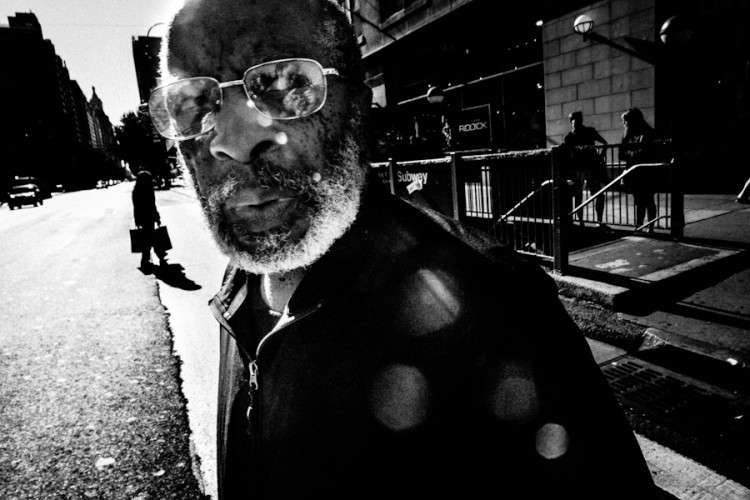
The streets mirror you: keep your camera visible and look confident
People react to your body language more than to your camera. If you look nervous and sneaky, people get suspicious. If you look calm and friendly, most people ignore you or smile back.
I call this the karma principle. Adverts are full of smiling faces for a reason: we tend to mirror what we see. Put out friendly vibes and they come back to you. Nothing magical, just human nature. A Reddit comment put it bluntly: "If you act shy and nervous, it reads LOUD in public."
- Keep your camera visible. Holding it out in the open says you have nothing to hide.
- Stand still. Pick a spot with good light and let people come to you. Following someone looks like a threat. Standing still helps you blend in and stay anonymous in the crowd.
- Don't pretend. Faking a phone call or staring at your screen while you shoot makes you look shifty. Just be a photographer.
- Stay after the shot. Don't drop the camera and flee. Hold your ground for a few seconds and keep looking around.
- Relax your face. Make eye contact if someone looks at you, and smile. A smile defuses almost everything.
Know the law: taking pictures in public
In the US and the UK, taking pictures in public places is generally legal without consent, and you don't need permission to photograph people in public. Knowing that takes a lot of the fear away, because you stop feeling like you're doing something wrong.
A reader on Reddit said it "still feels like a crime to take pictures from strangers." In most of the US it simply isn't. Other countries, like France and Germany, give people more rights over their image, and some places in Asia do too. I'm not a lawyer and this isn't legal advice. My guide to whether street photography is legal covers the rules country by country, with sources.
Legal is not the same as welcome, though. Use your instinct. If a street or a person feels wrong, trust your gut and move on. Don't point your camera at people doing something shady, because they don't know how wide your lens is and may think you're photographing them. That's about safety, not about fear.
Am I a creep for photographing strangers?
No. Street photography itself isn't creepy. Some street photographers are, because of how they act. Photographing people in public is an old art form, and so is portrait photography on the street. Following someone to get the shot is creepy behaviour. So is shoving a lens in a stranger's face.
One Reddit beginner wrote: "I'm so afraid my subjects will catch me taking their photo that I only take creepy voyeuristic photos of people from behind." That's the trap. Hiding makes you look like a creep. Standing openly, close enough to be seen, does the opposite.
Culture matters too. In some countries a camera is seen as suspicious by default. In Japan and Korea, where secret photography of women on trains is a real problem, people are more wary, and it's easy to understand why. Respect that, and adjust. My guide on how to photograph strangers covers where I draw my own lines.
Street photography for introverts
Of all the types of photography, street photography seems the worst fit for shy people. It isn't. Introverts can be excellent street photographers, because the work rewards patience and observation more than chatter. You don't have to talk to anyone. You have to stay in one place long enough to see.
- Pick a stage, not a target. Find a spot with good light and a clean background and wait for people to walk into it. You're photographing a scene, not stalking a person.
- Shoot busy people. Street vendors and performers are focused on their work and rarely mind a camera.
- Use music. I go out with music in my ears. It gives my mind something to chew on besides my worries, until I forget the music and I'm in the zone.
- Go where cameras are normal. Markets, festivals, parades and tourist areas. Nobody looks twice at a camera there.
Some days will be bad. Your feet won't move and you'll come home with nothing. That's fine. Not every day is a good day, and a bad one doesn't mean you've lost your nerve for good.
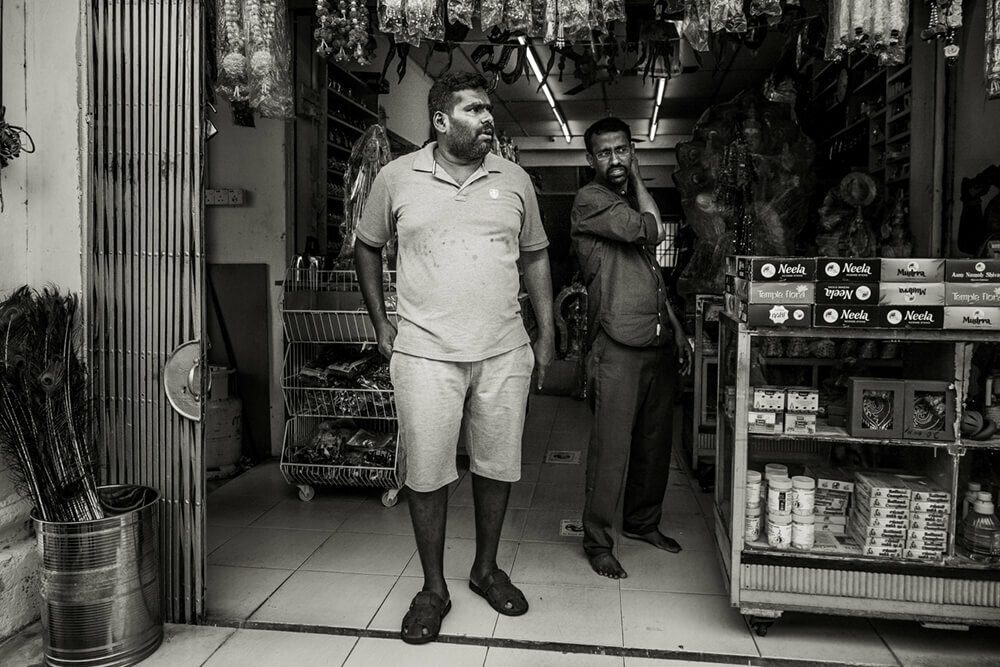
Should you shoot from the hip to avoid being noticed?
Shooting from the hip helps in crowds, but it's a poor fix for fear. You lose control of framing, and it can look sneakier than simply raising the camera. Use it as a stepping stone, not a habit.
If you do it, set up the camera first: zone focus at about 2 to 3 metres at f/8 with a fast shutter speed. Turn on the silent shutter if your camera has one. A small camera with a prime lens is easier to hold low and draws less attention. My street photography settings guide has the exact numbers.
The better goal is to raise the camera to your eye with less stress. Hip shots teach you that nobody really notices. Once you believe that, bring the camera up.
How to resolve the moment when someone notices your camera
When someone notices you, stay where you are and tell them what you're doing in one sentence, with a smile. Most reactions are curiosity, not anger, and an honest answer resolves most of them in seconds.
- "Hi! I'm a street photographer. The light on you was great."
- "Want to see it? I can email it to you."
- "If you'd rather I didn't keep it, I'll delete it now."
- "Thanks, have a good day."
A compliment works because it's true: you took the photo because something about them caught your eye. If you offer to email the photo, a tense moment turns into a conversation. If someone is still upset, delete it and walk on. Don't argue, even if you're legally in the right.
Most people will encourage you once they see you're friendly. A few business cards help. They show people you're a photographer at work, not a random weirdo.
A 7 day exposure plan for street photography anxiety
Exposure is the technique that will help you overcome the fear, and it works better than waiting to feel ready. Each day below is one small step past yesterday's. This is a free plan from this site, not part of the course. Do one day per outing, and repeat a day if it felt too hard.
| Day | Task | Goal |
|---|---|---|
| 1 | Walk a busy street with your camera out for 30 minutes. Shoot only buildings and signs. | Get used to being seen with a camera |
| 2 | Shoot crowds at a market or tourist spot from where you stand. | Include people without singling anyone out |
| 3 | Pick one spot with good light. Stay 20 minutes and shoot whoever walks through. | Learn that standing still feels normal |
| 4 | Photograph street vendors or performers at work. | Shoot people who are busy and expect cameras |
| 5 | Ask three strangers for a portrait using one short script. | Hear yes, and survive a no |
| 6 | Take ten candid shots from 2 to 3 metres with the camera at your eye. | Get closer than feels comfortable |
| 7 | Shoot one person candidly, then stay, smile, and talk if they look at you. | Practice the moment you fear most |
If you're a beginner, start with my street photography guide for beginners before day one. And once you're taking pictures of people, read my guide to candid photography so your street photos are worth the nerve it took. If you want to take photos with people's consent first, my guide on how to photograph strangers has scripts to ask and take their photo.
Real confidence comes from knowing why your photos work
Lasting confidence as a street photographer comes from knowing what you're looking for. If you can explain why an image works, you walk up to a scene with purpose instead of hoping nobody notices you.
Fear feeds on doubt, and doubt is what makes photographing people scare you so much. When you don't know what makes a good street photo, every shot feels like a gamble, and every look from a stranger feels like a verdict. When you know the patterns, you look like someone at work. People can tell.
That's why Don Springer and I built a module called fearless street photography into Phototactic, our online street photography course. It teaches you to deal with fear through reframing instead of faking it, plus a trick for getting close shots even if you fear shooting strangers. The rest of the course teaches the picture patterns that give you a reason to be there. It won't make you fearless forever. It gets you closer with less stress, so you capture more great shots instead of walking home with backs.
Frequently Asked Questions
How do I get over my fear of street photography?
Don't wait for the fear to go away. Make each step smaller, starting in busy places where cameras are normal, and stay put after the shot instead of leaving fast. Focus on the fear of losing the shot forever rather than the fear of a stranger's reaction. Repetition makes it manageable.
Why is street photography so difficult?
It asks you to do two hard things at once: find a picture worth taking and have the nerve to take it, often within a second. Fear makes the second part harder, and that pushes people to shoot from far away or from behind, which leads to boring photos. Learning what to look for makes both parts easier.
Is it normal to feel anxious doing street photography?
Yes. Almost every street photographer feels nervous at first, and many still do years later. As one Reddit comment put it, it doesn't stop being scary, you just get better at managing that fear. Anxiety tends to shrink with repetition, especially when you start in busy places and build up to closer shots.
Is street photography good for introverts?
Yes. Street photography rewards patience and observation, which many introverts are good at. You don't have to talk to anyone. Pick a spot with good light and wait for people to walk into it. If you want portraits, a short script removes the stress of deciding what to say.
What should I do if someone gets angry that I took their photo?
Stay calm and explain in one sentence that you're a street photographer. Offer to show them the photo, and offer to delete it if they're unhappy. Don't argue about your rights, even if you're in the right. Thank them and walk on. One bad reaction is rare, and it shouldn't end the hobby.