
A candid photo is an unposed picture of someone who is not performing for the camera, so the expression and gesture are real. Candid photography is the art of catching those moments without directing anyone, whether on the streets of New York or at a wedding.
I'm Olivier Duong, a street photographer and a professional photographer. Candid shots are what most people picture when they think of street photography, and they are also where most beginners get stuck. One Reddit user summed up the problem: "I'm so afraid my subjects will catch me taking their photo that I only take creepy voyeuristic photos of people from behind." These candid photography tips show you how to capture authentic moments with faces, not backs, with the settings I use and annotated examples from my own work.
What is a candid photo?
A candid photo is a photograph taken without creating a posed appearance. The person may or may not know the camera is there, but they are not arranging themselves for it. What you get is their real expression and body language.
Wikipedia's definition of a candid photograph makes a useful point: what makes it candid is unrelated to the subject's knowledge about, or consent to, being photographed, and unrelated to the subject's permission for further usage. In other words, candid describes the moment, not the paperwork. Someone can see you and still be candid, as long as they don't change what they're doing for your camera. At one end, the subject is absolutely unaware of being photographed. At the other, they're noticing the camera but carrying on anyway.
In street photography, candid is the biggest sub-genre and the style of photography most candid photographers start with. It's mostly about capturing unposed photos of people, slices of life as they unfold in the streets. The "point" of the image is usually inside it: something interesting happens, or someone pulls a face.
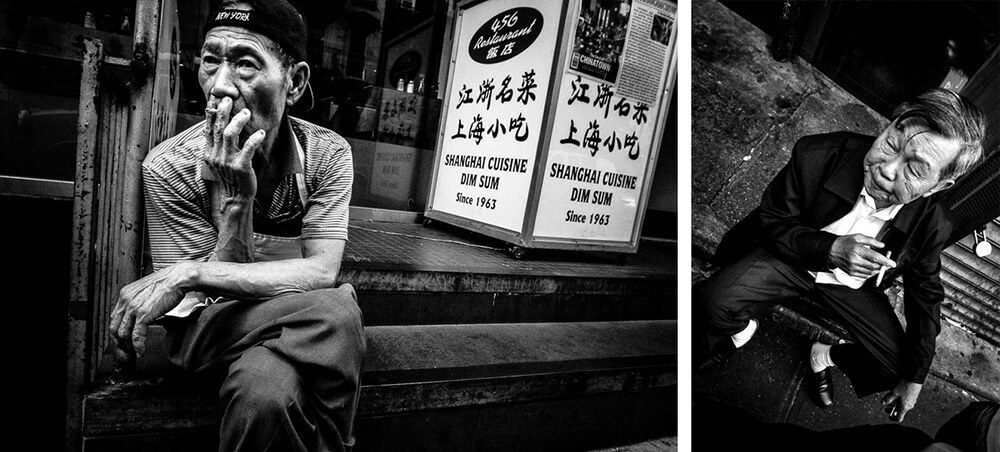
Candid vs posed photos: people change when they see a camera
In a posed photo the subject is looking at the camera and acts for it. In a candid photo they don't perform, so you see what they were really doing. People change when they see a lens. Ask any kid to smile for a photo and watch the cheesy grin appear.
The usual tell of a candid shot is that there's no eye contact between the photographer and the subject. That isn't always true. A person can notice you in the split second you press the shutter and still be completely candid, with surprise in their eyes instead of a pose.
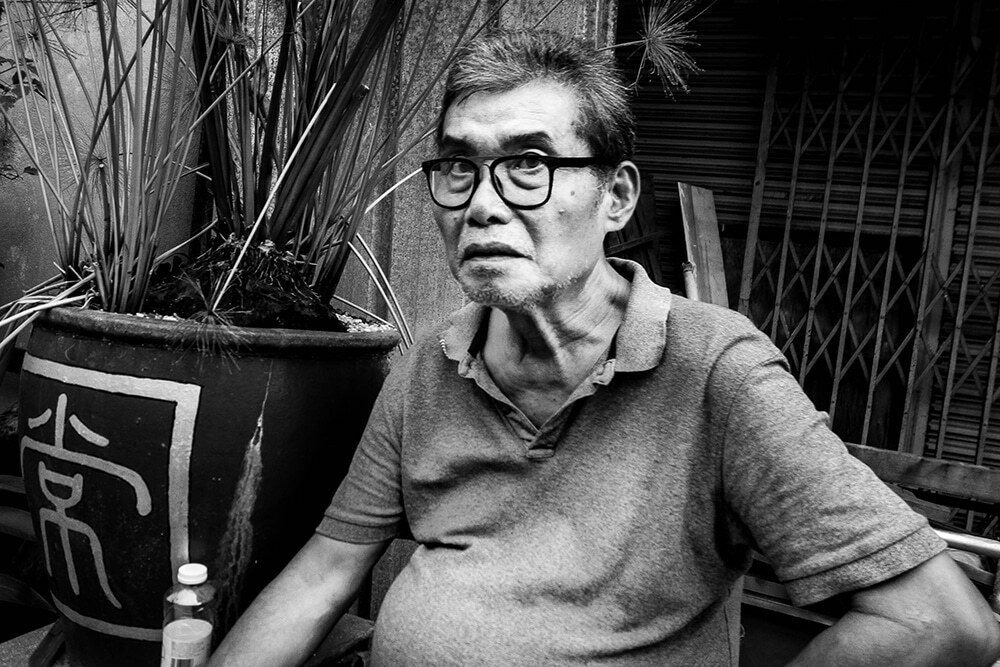
| Candid photography | Posed photography | |
|---|---|---|
| Subject's awareness | Unaware, or aware but not performing | Fully aware, acting for the camera |
| Expression | Unguarded, real | Controlled, often a smile |
| Your control | None over light, background or angle | You can move the person and yourself |
| What the viewer feels | "This really happened" | "This was arranged" |
| Best for | Street photography, photojournalism, storytelling, weddings | Portraits, fashion, family photos |
With a candid, the way you arrive is the way you shoot. You can't rearrange anyone in front of the camera. You can't ask anyone to step into better light. That's the price of real moments, and it's why candid photography takes more skill than it looks like.
A short history of candid photography
Candid photography, like portrait photography, depends on the tools of its time. It took off once cameras got small and fast enough to work without a tripod. Erich Salomon, a German photojournalist of the 1920s and 1930s, is often called a pioneer: he photographed politicians and diplomats in unguarded moments with a small Ermanox camera and later a Leica.
The Leica and 135 film made the style mainstream. Henri Cartier-Bresson built his whole approach on it and called the result "the decisive moment." His famous frame behind the Gare Saint-Lazare, the man leaping over a puddle, is often held up as the perfect candid. Yet he said he took it through a gap in a fence without being able to see through the viewfinder, and that it was luck. Happy accidents are part of candid photography. You still had to be there, camera ready.
Some famous "candids" were not candid at all. Robert Doisneau's The Kiss by the Hôtel de Ville was staged with actors. Photographers who worked with Steve McCurry have said some of his well known frames were arranged. Once a viewer learns a candid was set up, the picture loses something, even if it shouldn't. That's why I never pass off a posed shot as a candid one.
Techniques for candid street photography: how to capture candid moments
To take candid photos, set your camera up before the moment, choose a spot with good light and a clean background, and wait for people to walk into it. Stay calm and visible. You want to be so ordinary that people stop noticing you.
- Pre-set everything. Candid moments last a fraction of a second. You don't have time to change your settings and still get the shot, so decide them before you walk out.
- Find the stage first. Look for light and a background you like, then wait. I call this a trap shot. Very often the place and the light are right and only the subject is missing. Be patient and give the moments time to happen. Let the right person walk in.
- Watch, then anticipate. Candid moments repeat. A vendor hands over change the same way every time. A kid always runs to the same puddle. Watch for a minute and you can predict the moment instead of chasing it.
- Get close enough. Shooting from far away with a long lens looks like spying and gives you flat, distant photos. Get close enough that your subject is a real part of the frame.
- Shoot a short burst. Keep taking shots as the moment unfolds. Gestures change fast, and the in-between moments are often the best ones.
- Keep your camera up after the shot. Don't drop it and walk off. Keep your posture and keep looking around. If someone catches your eye, smile.
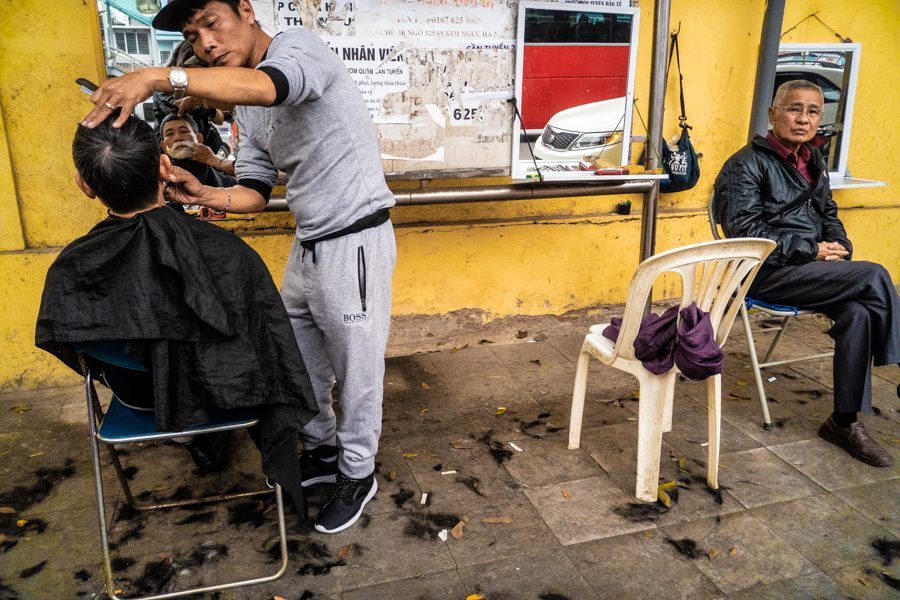
Getting close is not the same as getting good pictures. Plenty of photographers shove a camera in someone's face and come home with a bigger version of a bad photo. Get close enough, then spend your energy on the light and the composition.
What about shooting from the hip? It lets you work without anyone seeing a camera at your eye, but you lose control of the frame. Treat it as a stepping stone while you're developing your skills, not as your main way of taking photos.
Best camera settings for candids: fast shutter and depth of field
For candid street photography, use aperture or shutter priority, f/8, a shutter speed of at least 1/500 s and auto ISO. Zone focus at 2 to 3 metres so you never wait for autofocus. For candid portraits with a blurry background, open up to f/1.8 to f/2.8 and use eye autofocus.
| Situation | Aperture | Shutter speed | ISO | Focus |
|---|---|---|---|---|
| Candid street, daylight | f/8 | 1/500 s or faster | Auto | Zone focus at 2 to 3 m |
| Candid portrait, shallow depth of field | f/1.8 to f/2.8 | 1/250 s or faster | Auto | Eye AF |
| Night photography | f/2 to f/4 | 1/125 s or faster | Auto, up to 6400 | Zone focus at 2 m |
| Events and candid wedding photos | f/2.8 to f/4 | 1/250 s or faster | Auto | Continuous AF with face detection |
ISO is the old film speed setting, and auto ISO lets the camera handle it while you think about the moment. A fast shutter freezes gesture, which is the whole point of a candid. Is your shutter speed right? If a walking hand is blurred at 1/125 s, go faster. Depth of field is the other lever: f/8 keeps more of the scene sharp and forgives small focus errors. My street photography settings guide explains zone focusing step by step.
Best camera and lens for candid photography
Gear matters less than habit, but the right camera lens and body help. The best camera for candid photography is a small, quiet one you always carry. A mirrorless camera or a compact with a silent shutter and a 28mm or 35mm lens draws far less attention than a large DSLR with a zoom lens.
I only use small cameras, partly because people dismiss me. A big black body with a huge lens tells everyone you're serious, and it changes how they act. A small camera lets you slip into situations unnoticed. People act differently when they see a camera that looks professional.
- Prime over zoom. A fixed focal length teaches you to see one frame and to move your feet. A zoom lens tempts you to stand back.
- Wide over telephoto for the street. A telephoto lens compresses the scene and keeps you far away, which looks like spying. A 28mm or 35mm lens keeps you close and honest.
- Telephoto has its place. At a wedding or a family event, an 85mm lets you catch candid expressions across a room without breaking the moment.
- Your phone counts. A phone is the least threatening camera there is. Use burst mode, or Live Photos on an iPhone, and pick the best frame later.
For specific models, see my picks for the best camera for street photography and the best lens for street photography. Flash can work for candid portraits too: it darkens the background and lights the face, so you keep some control without asking.
Candid wedding photography and family photos
On a wedding day, candid wedding photography uses the same skills as candid street photography. You anticipate and stay out of the way, so you catch real moments instead of arranging them. Couples ask for candids because posed photos rarely show how the day felt.
Most great candid wedding photos happen in the in-between moments, like the laugh after the vows or the kids hiding under a table. Between the many formal group shots, a wedding photographer who works like a photojournalist watches for those instead of directing the crowd. Ask the planner or coordinator for the schedule so you know where the moments of life will happen before they do. The same goes for family photos at home. Stop asking people to look at the camera. Wait for them to forget it.
Light still matters more than anything. Put yourself where the light is good and let the moments come to you.
Is candid photography legal and ethical?
In the United States, candid photography of people in public places is generally legal without consent, because there's no reasonable expectation of privacy on a public street. Commercial usage and distribution of someone's likeness, like an advertisement, needs a release. Other countries protect a person's image more strongly.
I'm not a lawyer and this isn't legal advice. My guide to whether street photography is legal covers the US, the UK, France, Germany and the rest of the EU with sources.
Legal and right are not the same thing. My own lines: no candid portraits of other people's kids, and I delete a photo if someone asks. Candid photography is not secret photography. You simply don't direct anyone.
What makes great candid images worth keeping
A candid shot is only as good as what's in it. Most candid photos fail because they show a person doing nothing in a messy frame, not because the person noticed the camera. If that sounds familiar, read why your street photos look boring.
Professional photographers don't take more great photos because they're braver. The fix is learning to see the picture before it happens: light, composition, gesture and emotion working together. Look at the photo below. It works because of the layers and the low angle, not because of whether anyone saw me.
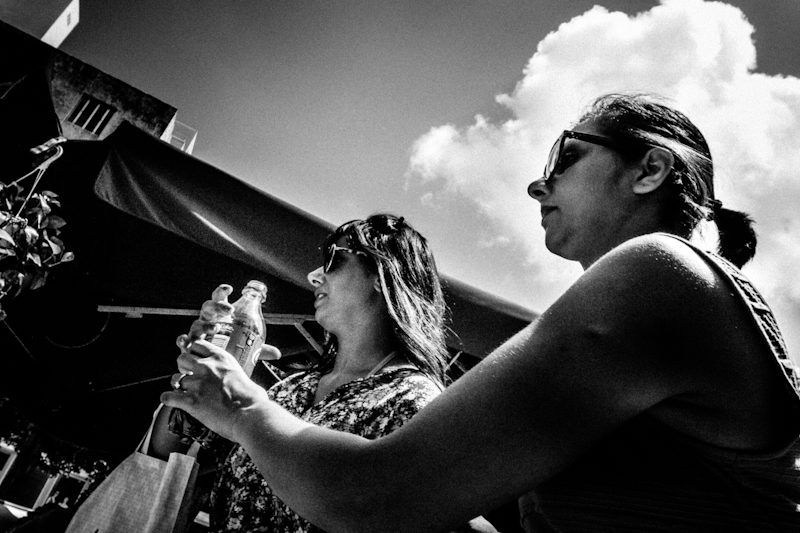
Editing helps a little. A quick pass in Lightroom or Adobe Photoshop to darken distractions can help you capture the essence of the moment. But editing can't add a moment that isn't there.
That's what Don Springer and I teach in Phototactic, our street photography course. It covers the picture patterns and composition keys behind strong images, plus a module on fearless street photography with a sneaky trick for getting close shots even if you fear shooting strangers. If fear is what keeps you shooting backs, start with my guide to overcoming the fear of street photography, then the full guide on how to photograph strangers. New to all of this? Try my street photography guide for beginners.
Frequently Asked Questions
What does candid photography mean?
Candid photography means taking pictures of people without posing them. The subject isn't performing for the camera, so their expression and gesture are real. They may notice you or not. What makes a photo candid is that they don't change what they're doing for your lens. It's the heart of street photography and photojournalism, and couples ask for it in wedding photography too.
Is candid photography legal?
In the United States, taking candid photos of people in public places is generally legal without their consent, because there's no expectation of privacy on a public street. Using someone's photo in an advertisement needs a release. Countries like France and Germany give people more control over their image. This isn't legal advice, so check the rules where you shoot.
How do you take candid photos without being noticed?
Pre-set your camera, then pick a spot with good light and wait for people to walk into it. Standing still makes you part of the scenery, while following someone draws attention. Use a small camera with a 28mm or 35mm lens and zone focus. Don't hide or sneak, because hiding looks suspicious. Being relaxed and ordinary works better.
What is the best lens for candid photography?
For candid street photography, a 28mm or 35mm prime lens is best because it keeps you close and shows people in context. For candid moments at weddings or events, an 85mm lets you work from across a room. Avoid shooting strangers with a long telephoto lens on the street, since it looks like spying.
What is the best app for taking candid photos?
Your phone's built in camera app is usually best because it opens fastest. Use burst mode to catch a moment as it unfolds, or turn on Live Photos on an iPhone and choose the best frame afterwards. The app matters less than being ready: keep the phone in your hand, not in your pocket.