
The decisive moment is the split second when a gesture and the geometry of the frame line up, so the photograph could not have been taken a moment earlier or later. Henri Cartier-Bresson made the phrase famous with his 1952 book The Decisive Moment, and it is still the idea most street photographers measure themselves against.
I'm Olivier Duong. I teach it as something you prepare for, not something you get lucky with. You pick the stage and get your settings right. Then you wait for the actor.
What is the decisive moment in photography?
In his own words, Cartier-Bresson described photography as "the simultaneous recognition, in a fraction of a second, of the significance of an event as well as of a precise organization of forms which give that event its proper expression." That sentence holds two things at once:
- The significance of an event. Something is happening: a jump or a sideways glance. The photograph is about a verb, not a noun.
- A precise organization of forms. The shapes in the frame click into place around that event. Everything sits exactly where it should.
Most people remember the first half and forget the second. A man mid-stride is only a moment. A man mid-stride whose shape rhymes with a poster behind him, framed by a doorway, is a decisive moment. The event and the composition peak together.
My own definition is simpler. The decisive moment, or what I like to call the inspired moment, is when the photographer's eye, heart and mind line up in one photograph. The eye gives you composition. The heart gives you emotion. The mind gives you the thought or the story. When all of them are present in the same fraction of a second, the world seems to slow down and you press the shutter.
Where the phrase comes from: Cardinal de Retz and the 1952 book
The idea is older than photography. Cartier-Bresson opened his book with an epigraph from the 17th century memoirs of the Cardinal de Retz, Jean-François Paul de Gondi: "Il n'y a rien dans ce monde qui n'ait un moment décisif." There is nothing in this world that does not have a decisive moment.
The book itself came out in 1952. The French edition was called Images à la sauvette, roughly "images on the run", published in Paris by the publisher Tériade under his Éditions Verve imprint. The American version from Simon and Schuster used the title The Decisive Moment, and that English title is the one that stuck. Henri Matisse drew the cover. It was a large format photography book with 126 photographs, printed in France in gravure, the first half of the plates from the West and the second half from the East.
The original book was a collaboration between Tériade and Cartier-Bresson, with a Matisse cover, and it became one of the most influential photographic publications of the twentieth century. Robert Capa, who co-founded Magnum Photos with Cartier-Bresson in 1947, reportedly called the book a bible for photographers. In 2014 Steidl published a facsimile of the original 1952 edition with a booklet by the curator Clément Chéroux, so you can hold the same book today without paying collector prices for an original. The Fondation Henri Cartier-Bresson in Paris looks after his archive and runs exhibitions of his work.
Henri Cartier-Bresson's photography style in one paragraph
Cartier-Bresson trained as a painter under André Lhote before he picked up a Leica, and it shows. His street photography is built on geometry, with figures placed where a painter would place them. He mostly used a 50mm lens, worked quietly, and did not crop. He said that a composition which was poor when the picture was taken can seldom be improved by reshaping it in the darkroom. More of his lines are in my collection of photography quotes. Reportage and photojournalism paid the bills, and he covered events like Gandhi's funeral in 1948 as a documentary photographer, but his reputation rests on the way he turned ordinary street scenes into composed pictures. He also made portraits of artists and writers, including Jean-Paul Sartre and Truman Capote. HCB, as he is often called, belongs to the modernist generation that treated the small camera as a serious art tool.
Decisive moment examples: the photographs to study
You can't learn this from a definition. You learn it from looking. These photographs from Cartier-Bresson's work show the idea best. Look them up on the Fondation or Magnum Photos site and study where every shape sits.
- Behind the Gare Saint-Lazare, Paris, 1932. The famous man jumping over a flooded yard, his heel just above the water. His leap is echoed by a leaping dancer on a poster behind him. Event and form, in one frame.
- Hyères, France, 1932. A spiral staircase leads the eye down to a cyclist blurring through the street. The staircase was there all along. The cyclist is the moment he waited for.
- Seville, Spain, 1933. Children playing in a ruined wall, framed by a broken hole in the foreground. The frame within a frame holds a scene full of gesture.
- Sunday on the banks of the Seine, 1938. A family picnic by the river, one man pouring wine. No jump, no drama, just a relaxed gesture caught at its best.
- Rue Mouffetard, Paris, 1954. A boy carrying two wine bottles, grinning with pride. Here the moment is mostly emotion. The geometry is quieter.
Notice the pattern. In most of them the stage was fixed and the person moved into it. That is the most useful thing you can steal from Cartier-Bresson.
Kairos: the Greek way to understand the decisive moment
The Greeks had two words for time. Chronos is clock time, the linear kind. Kairos is the opportune time, the right moment. Kairos was also pictured as a figure, and the depiction is perfect for photographers: he has a lock of hair in front and is bald at the back. You can grab him by the hair as he runs toward you. Once he passes, there is nothing to hold on to.
That is the idea in one picture. The moment comes toward you, and if you are not ready, it is gone for good. Readiness is the part you control.
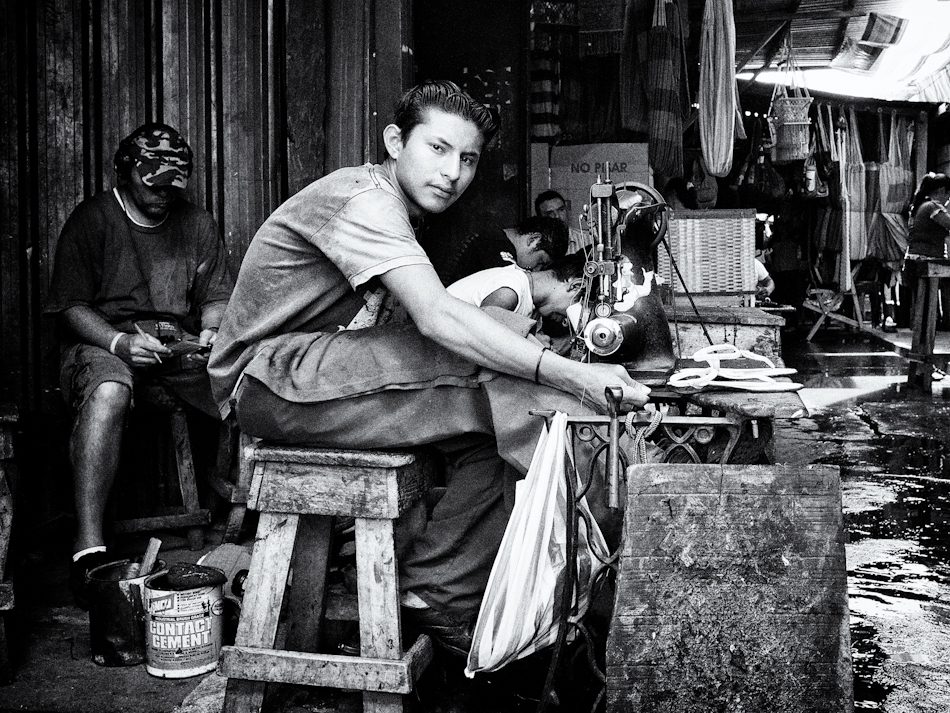
When I made the photo above, I didn't even need to check my screen afterwards. I knew I had it. But I only had it because my settings were already right and I was paying attention. If either one had been off, the moment would have passed me by.
How to catch the decisive moment in street photography
It feels like magic, but most of it is preparation. Here is how to put the odds on your side.
1. Find the stage first, then wait for the actor
This is the method behind the Gare Saint-Lazare and Hyères pictures. Find a background with strong composition: a patch of light, a clean wall, a doorway, leading lines that point somewhere. Frame it. Then wait for a person to walk into the right spot. I call this setting a trap. You are no longer hunting the whole street. You are waiting for one thing to happen in one place.
2. Look for verbs, not nouns
A person standing still is a noun. A person jumping, pointing, laughing or turning is a verb. Great moments live in verbs. Watch hands and heads, because that is where gesture shows up first.
3. Predict the peak of the action
Every action has a peak: the top of a jump, the widest step, the moment a head turns fully. Shutter lag and your own reaction time are real, so press slightly before the peak, not when you see it. If you wait until you see it, you have already missed it.
4. Set your camera so it never gets in the way
Use a fast enough shutter speed to freeze a gesture, around 1/500s for walking people and faster for jumps. Zone focus so you are not waiting on autofocus. My street photography settings guide has the exact numbers. The point is to take the camera out of the equation so your attention stays on the scene.
5. Work the scene
Take more than one frame. Cartier-Bresson shot more than his books suggest, and his contact sheets show him making several exposures of a scene before and after the one we know. Stay, shoot, adjust your position, shoot again. Your hit rate will stay low, and that is normal.
6. Be ready all the time
Kairos doesn't make appointments. Carry the camera switched on, with your settings already dialed. The moments that matter most usually show up when you are not expecting anything.
How the decisive moment relates to composition
A decisive moment is a composition that only exists for a fraction of a second. That is why I push people to learn photography composition first. If you can't see a strong frame when nothing is moving, you won't see one when everything is.
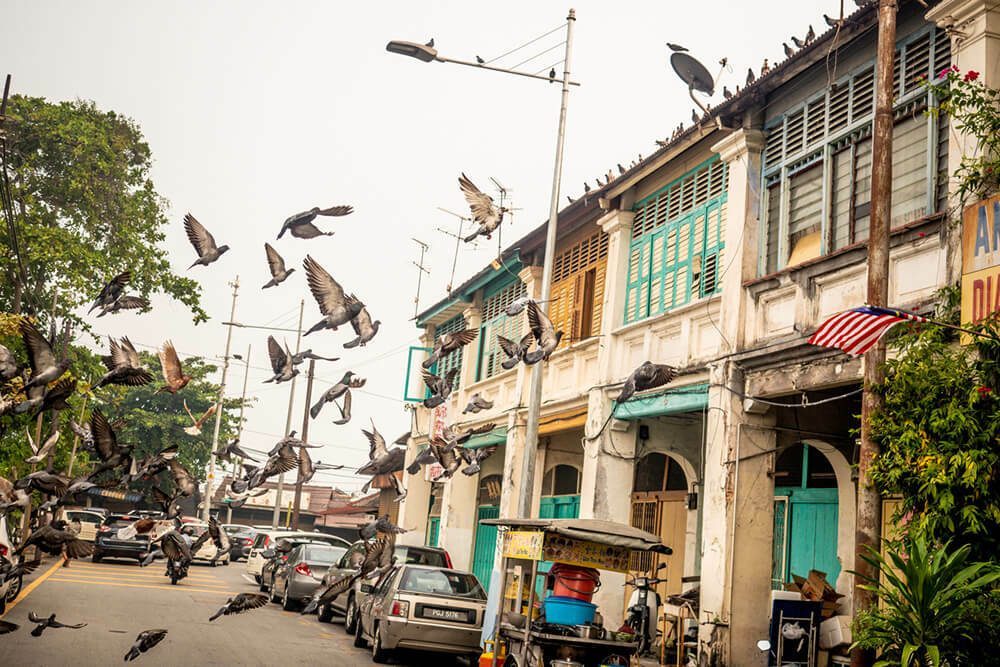
Composition gives you the stage. Timing gives you the actor. When you know what a strong frame looks like, you stop waiting for something to happen anywhere and start waiting for it to happen here. That shift is what turns random snapshots into pictures. It is also the answer to most of the problems in why your street photos feel boring: they have a subject but no moment, or a moment but no frame.
Is the decisive moment still relevant?
Some photographers argue the idea is outdated. Garry Winogrand and the photographers who followed him in the 1960s and 1970s often made looser, tilted, crowded frames that feel less resolved than a Cartier-Bresson picture. Some contemporary street photographers prefer quiet, in-between moments where nothing much happens.
I think the idea still holds, as long as you read it broadly. The decisive moment does not have to be a jump over a puddle. It can be the second a face softens, or the instant a shadow touches someone's foot. What stays the same is that the photograph depends on its timing. Move it one second in either direction and it stops working. That is worth chasing with any camera, in any style.
If you want to see how other masters of the genre handled timing, my guide to famous street photographers gives one lesson from each of them.
Train your eye to see the moment before it happens
You can't force it, but you can train the part of your brain that recognizes one. That is the idea behind picture patterns in my online street photography course, Phototactic. Once your mind has stored the patterns that make a strong image, it flags them for you in the street, and you react earlier. The course also includes a recorded shooting demonstration where you follow along in the viewfinder and see how I set up traps to secure a shot. It is a video course with no personal feedback on your photos, so it suits people who like to practise on their own.
Frequently Asked Questions
What did Henri Cartier-Bresson say about the decisive moment?
He described photography as "the simultaneous recognition, in a fraction of a second, of the significance of an event as well as of a precise organization of forms which give that event its proper expression." In other words, the meaning of what is happening and the composition around it have to peak at the same instant. He opened his 1952 book with a line from the Cardinal de Retz about everything having a decisive moment.
What is Henri Cartier-Bresson's most famous photo?
Behind the Gare Saint-Lazare, taken in Paris in 1932, is the best known. It shows a man leaping over a flooded yard, his heel just above the water, with a poster of a leaping dancer echoing his shape behind him. It is often used as the textbook example of the decisive moment, even though it predates the 1952 book by twenty years.
When was The Decisive Moment book published?
It was published in 1952. The French edition, Images à la sauvette, came out from Tériade's Éditions Verve in Paris, and Simon & Schuster published the American edition as The Decisive Moment. Henri Matisse designed the cover. Steidl released a facsimile edition in 2014, which is the easiest way to own a copy today.
How do you capture the decisive moment?
Find a strong background first, frame it, and wait for a person to move into the right spot. Watch for gestures rather than people standing still, press the shutter slightly before the peak of the action, and use a fast shutter speed with zone focusing so the camera never slows you down. Take several frames and accept that most will miss.
Is the decisive moment the same as street photography?
No. The decisive moment is one approach within street photography, closely tied to Henri Cartier-Bresson. Many street photographers work differently, with looser frames, quieter moments, colour or long projects. But timing matters in almost every street photograph, so the idea is useful whatever your style.