
To photograph in the rain, shoot reflections and people under cover, and use 1/250s or faster to freeze the drops. Protect the camera with a lens hood and a cloth, and go out when everyone else stays home.
I'm Olivier Duong. Bad weather is one of the easiest excuses not to shoot. A photographer on Reddit put it honestly: "I constantly get stuck in the excuses." Rain is the one excuse worth flipping, because a rainy day gives you things a sunny day never will: puddles that act as mirrors and a mood you can't fake in editing.
Why photograph in the rain? The creative case for a rainy day
Rain photography is worth it because rain simplifies the street and adds a moody feel to every photo you capture. The weather does half the composition for you.
- Reflections everywhere. Wet pavement shines and puddles mirror the city.
- Umbrellas. They hide faces and add a spot of color to a gray scene.
- Soft light. Cloud cover acts as a giant diffuser. Skin looks good for a street portrait and colour stays rich.
- Fewer people, different behavior. People hurry and look down. They notice you less.
- Atmosphere. Mist and spray soften the background, so the subject stands out.
The course I teach promises to show you how to make the most out of any time of day. Weather is part of that. A photographer who only shoots on sunny afternoons gets the same photos as everyone else.
Rain photography ideas: reflection, umbrella and raindrop shots
1. Puddle reflections
Compose from low down and put the lens close to the water. The closer you are, the bigger the reflection. Wait for someone to walk past the puddle so their upside down figure appears in it. Reflections repeat part of the picture, which makes the frame graphic almost by default. Upside down puddle shots are common, so look for a reflection that adds something, like a sign or a second figure.
2. Umbrellas as shapes and color
From above or at a distance, umbrellas become circles. One red umbrella in a street of black ones is a ready-made subject, the same idea as a color accent in color photography.
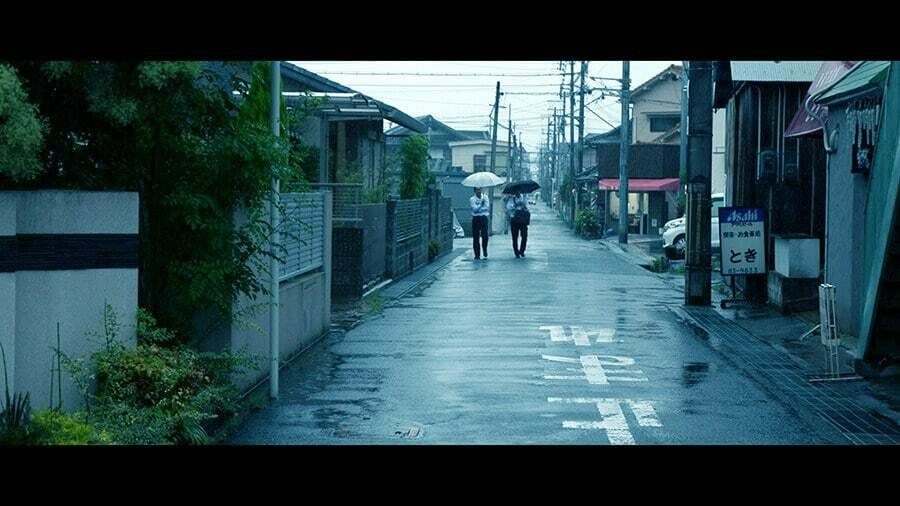
3. Shoot through wet glass
Café windows and bus windows covered in raindrops turn the street into a painting. Focus on the water droplets for an abstract image, or on the people outside for soft layers. Saul Leiter made this his signature in New York. See my notes on Saul Leiter, and my guide to layering for how to stack the planes.
4. Backlit rain
Rain is hard to see in most photos. It shows up best with backlight: a streetlamp or low sun behind the falling drops, against a dark background. Stand so the light comes toward you and the drops will sparkle.
5. People sheltering
Doorways, bus stops, awnings, station entrances. People wait and watch the sky, which gives you time. It's one of the easier ways to practise candid photography, because everyone is focused on the weather.
6. Wet streets at night
Neon and headlights on wet asphalt double every light source. A rainy night is when a plain street looks like a film set.
7. After the storm
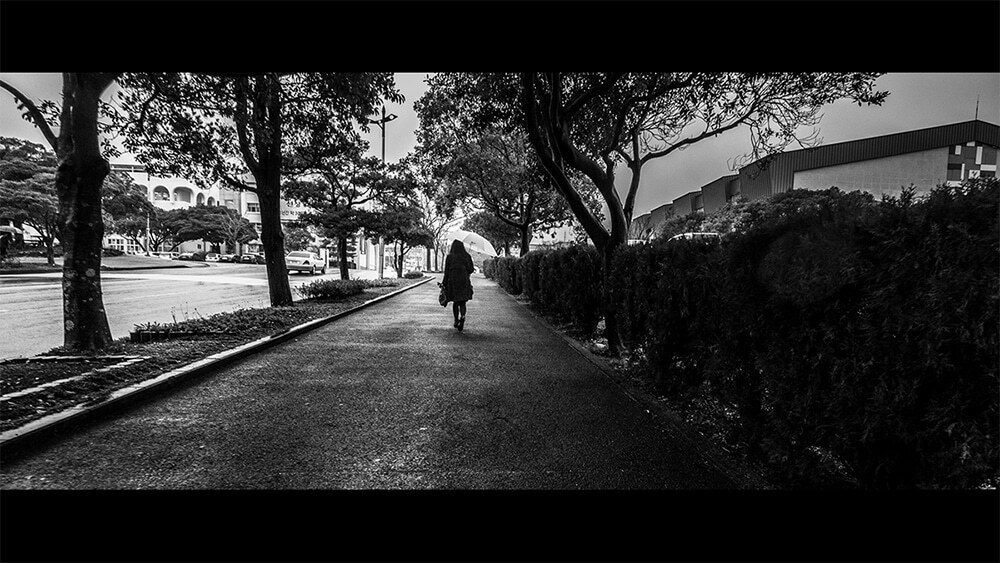
Some of the best rain photos are made just after it stops. Puddles go still. As the rain clouds roll away, the sky may break and a rainbow can show up, while the last storm clouds give you drama over the rooftops.
Rain photography settings: shutter speed, aperture and ISO
Use 1/250s or faster to freeze raindrops, and around 1/30s to 1/60s if you want drops to show as streaks. Set the shutter speed first, then let aperture and ISO follow.
| Goal | Shutter speed | Aperture and ISO |
|---|---|---|
| Freeze drops and walkers | 1/250s to 1/500s or faster | f/4 to f/5.6, auto ISO |
| Rain as streaks | 1/30s to 1/60s | f/8, lower ISO, steady hands or a ledge |
| Puddle reflections | 1/250s | f/8 to f/11 so the reflection and the edge of the puddle are sharp |
| Wet streets at night | 1/60s to 1/125s | Wide open, ISO 1600 to 6400 |
Autofocus can hunt on raindrops between you and the subject. Switch to manual focus or zone focus at a set distance, the same way many street photographers work in any weather. Overcast light is dim, so check that your ISO isn't pushing your shutter speed too low. Shoot RAW so you can fix the white balance later, since rainy light tends to be blue. My full street photography settings guide covers zone focusing step by step.
How to protect your camera and lens in the rain: gear tips
Here is my main tip: most cameras survive light rain if you keep water off the lens and wipe them dry after. A downpour that would soak you in a minute needs protective gear. Water in the wrong place can kill a camera, so don't assume weather sealing makes it waterproof.
- Use a lens hood. It keeps drops off the front of the lens, which is the thing that ruins the most shots.
- Carry a microfiber cloth in a dry pocket of your jacket and wipe the lens often.
- Rain cover or a plastic bag. A cheap rain cover, or a bag with a hole for the lens held by a rubber band, protects the whole camera in a downpour.
- Small camera under the coat. A compact like a Ricoh GR fits in a pocket between shots. See my best camera for street photography guide.
- Hold an umbrella. Shooting one-handed under an umbrella is easier than it sounds and keeps you and the gear dry.
- Watch for condensation. Going from cold rain into a warm room fogs the lens. Leave the camera in your bag for a while to warm up.
A polarising filter can reduce glare on wet surfaces, but it also removes reflections you might want. Try it both ways. Stay inside during a thunderstorm. No photo of lightning over a street is worth the risk.
Foggy photography: moody images in mist and fog
Fog works like rain without the drops. It hides the background and creates layers of depth, with near things dark and far things fading into gray.
Your camera meter will try to turn bright fog into medium gray, so dial in +0.7 to +1 stop of exposure compensation to keep it light. Put a dark subject close to the lens, like a person or a lamppost, so something in the frame is sharp and contrasty. Fog also flatters black and white, since the whole picture becomes a range of soft grey tones. The same approach works in landscape photography, where fog separates hills into layers. My black and white photography guide explains how to handle those tones.
Editing rain photos: contrast, white balance and presets
Rainy photos straight out of the camera often look flat and blue. That's normal. A few adjustments bring back the mood:
- Set the white balance: warmer for cozy, cooler for lonely.
- Add contrast and a little clarity to make the drops and reflections show.
- Use the Dehaze slider carefully. A small positive amount adds punch, a negative amount adds mist.
- Darken the edges so the eye stays on the lit areas.
A Lightroom preset can give a set of rainy photos a consistent tone, but set exposure per image. My editing guide walks through the full workflow.
Rain in art and photography
Painters loved rain long before cameras could handle it. Gustave Caillebotte's Paris Street; Rainy Day (1877), at the Art Institute of Chicago, shows umbrellas and wet cobblestones with the soft light of a gray day. Look at how he spaces the umbrellas across the frame. The same design problem faces you on a rainy corner.
In photography, Saul Leiter's New York color work through wet glass is the reference most people know. For the light side of the same ideas, read my guide to light and shadow photography, which covers reflections in more depth.
Some cities are made for rain. Tokyo has its rainy season in early summer, and London's gray days are famous. Find more places to shoot in my guide to the best street photography locations, including Tokyo and London.
Stop waiting for good weather to take photos
There is no bad weather for street photography, only light you haven't learned to use yet. When it starts to pour, that is your cue to take photos, not to go home. My street photography course teaches how to make the most out of any time of day, and how to handle the fear and excuses that keep you home. If you're just starting, read street photography for beginners first.
Frequently Asked Questions
What shutter speed should I use for rain?
Use 1/250s or faster to freeze raindrops and people walking. Go to 1/500s or more for heavy rain close to the lens. If you want rain to appear as streaks, slow down to around 1/30s to 1/60s and keep the camera steady. Backlight makes the drops much more visible at any speed.
Is it bad to use a camera in the rain?
Light rain is usually fine for a short time, especially with a weather-sealed camera and lens, but weather sealing is not waterproofing. Use a lens hood and a cloth in light rain, and a rain cover or plastic bag in heavy rain. Dry everything at home before putting it away, and let the camera warm up slowly to avoid condensation.
What do photographers do when it rains?
Many go out on purpose. Rain gives reflections in puddles and people under umbrellas. Street photographers shoot from doorways or through wet windows until the rain stops. Others work indoors in stations and covered markets until it eases.
How do you make rain visible in photos?
Put a light source behind the rain and a dark background behind the drops. Streetlights or low sun behind falling rain make each drop catch the light. Use a fast shutter speed to freeze them as dots or a slower one around 1/60s for streaks. Rain in front of a bright sky usually disappears.
How do you photograph fog?
Add about +0.7 to +1 stop of exposure compensation so the fog stays light instead of turning gray. Place a dark subject close to you so the frame has some contrast, and let the background fade into layers. Early mornings near water or in valleys give the most fog. Black and white suits it well.