
Street Photography in Tokyo
Neon, crowds and order: the safest big city for walking with a camera day and night, with a new scene on every train line.
- Spots
- 7
- Best time
- Early morning for markets and Asakusa
- Lens
- 28mm or 35mm
- Photographing people
- Strict: ask first
Tokyo is one of the best cities in the world for street photography because it pairs huge crowds and strong night light with a very low crime rate, all on one rail network you can learn in a day. You can shoot a temple at sunrise and a neon alley at midnight without ever feeling unsafe with a camera out.
The catch is manners, not danger. Japanese people are polite and used to cameras, but many are shy about being photographed, and Japan takes privacy seriously. Publishing a clear photo of a stranger can lead to a civil claim, and more bars and alleys now post no-photo signs. So I treat Tokyo as a city for crowds and reflections, with people as part of a bigger frame. Work that way and you will come home with more keepers here than almost anywhere else.
Daido Moriyama has photographed Shinjuku for decades, and Bruce Gilden spent years in Japan for his book Go (2000).
Best street photography spots in Tokyo
Shibuya Crossing
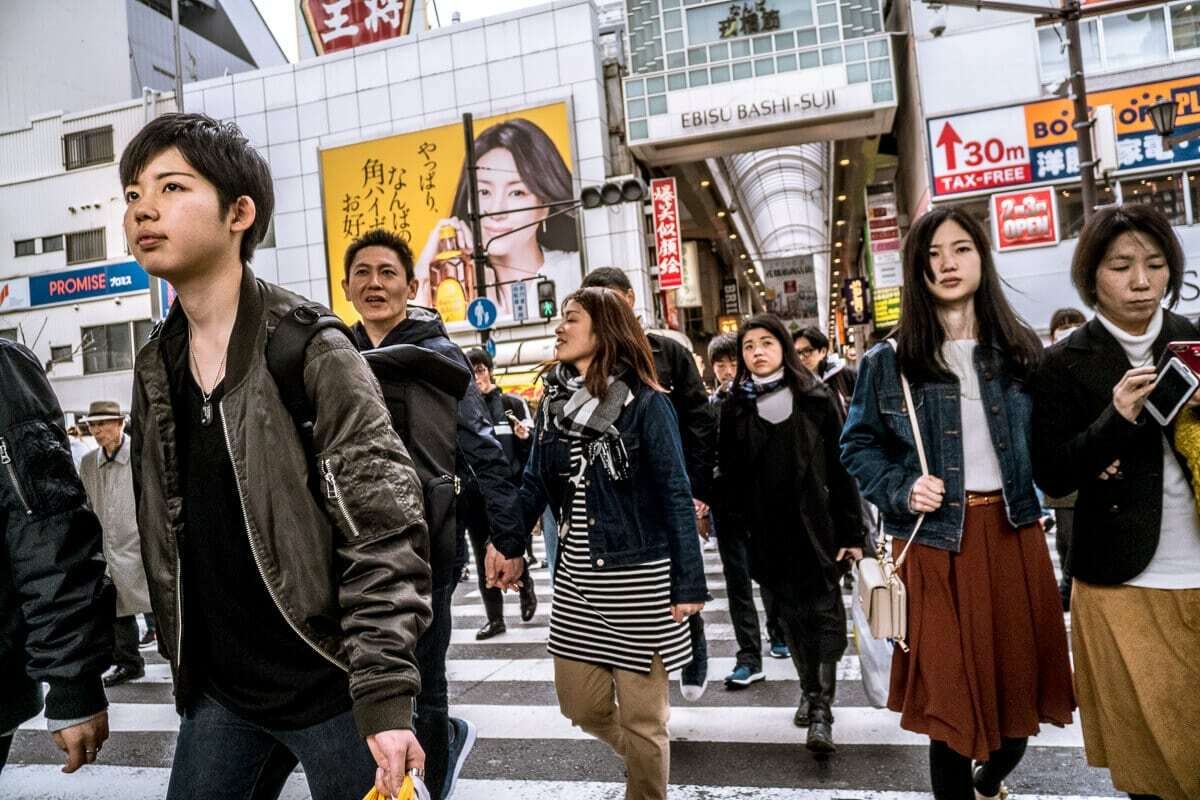
Thousands of people cross in every direction on each green light, under giant screens. The area pulls a young crowd, so fashion is part of the picture all day. Shoot at dusk and after dark, when the screens light faces. Stand at the corner by the station for eye-level chaos, or find a raised walkway to look down on the flow. Composition idea: one person walking against the crowd, isolated in a clean gap. Caution: a tripod blocks a very busy crossing, so stay handheld and move with the lights.
Shinjuku (Omoide Yokocho, Golden Gai)
Next to the busiest station in the world sit two old alley networks. Omoide Yokocho is a strip of tiny yakitori bars full of smoke and lanterns. Golden Gai is a grid of lanes lined with bars that seat five or six people. Go after 8 pm, ideally on a rainy night when the wet ground doubles every sign. Stand at the mouth of an alley and let people walk into the light. Caution: Golden Gai's bar association asks visitors not to photograph without permission, and many doors say no photos. Read the signs and ask before shooting interiors or customers.
Harajuku & Takeshita Street
Takeshita Street is a narrow lane of youth fashion shops and crepe stands. Sunday afternoon is the busiest and best for bold outfits, though cosplay is rarer than a decade ago. The lane is dense, so a 28mm lets you work close. For cleaner frames walk down to Omotesando, where tree shadows and glass shop fronts give you space. Composition idea: one strong outfit against a busy shop wall, letting the colors fight. Caution: many people here are teenagers, so skip close shots of minors and ask when you want a portrait.
Ginza
Ginza is Tokyo's upscale shopping district. Chuo-dori closes to cars on weekends and holidays from noon to 6 pm, or to 5 pm from October to March, and shoppers walk down the middle of the road. Come then. Stand at a crossing and use the long straight road as a leading line, or work the big shop windows for reflections. After dark the facades become light boxes and well-dressed shoppers read well in silhouette. Composition idea: a figure in a dark coat against a glowing window. Caution: store security may stop you inside shops, so keep it on the street.
Asakusa & Senso-ji
Senso-ji is Tokyo's oldest temple, reached through the Nakamise shopping street. By mid-morning it is full of tour groups. At sunrise it is quiet, with early worshippers and shopkeepers opening shutters, and that is when I would go. Stand inside the Kaminarimon gate looking up Nakamise and wait for one person to cross the empty lane. Later, drift into the side streets where daily life carries on. Composition idea: a giant lantern as the frame edge with a small figure below. Caution: people praying are not props, so stay back and keep it quiet.
Tsukiji Outer Market
The wholesale market and tuna auction moved to Toyosu in 2018, but the Outer Market stayed: a few blocks of seafood stalls and tiny restaurants that open early and wind down by early afternoon. Most shops close on Sundays and holidays, and many on some Wednesdays, so go on a weekday or Saturday morning. Professional buyers have priority until about 9 am. Stand where a narrow lane meets the street and shoot cooks behind steam and counters. Composition idea: hands and knives sharp, a face soft behind. Caution: lanes are tight, so never block a stall.
Yanaka
Yanaka largely escaped the 1923 earthquake and the war bombing, so it keeps wooden houses and small temples around a big cemetery. Life is slower. You get shopkeepers, cyclists, cats and older residents instead of crowds. The Yanaka Ginza shopping street is the center, and the steps at its west end are a known sunset spot. Come late afternoon when low sun runs down the street. Stand at the top of the steps and shoot people walking up into the light. Composition idea: a cyclist crossing a patch of sun between shadowed houses. Caution: this is residential, so keep your distance from homes.
Photographing people in Tokyo
Strict: local law or custom protects people's image. Ask first, or keep faces out of frame.
Photographing people in public is not a crime in Japan. Portrait rights are a civil matter, and courts weigh them against freedom of expression. Lukasz Palka, who teaches workshops in Tokyo, cites a 2005 case where a woman shot on the street and posted on a fashion site without consent won 350,000 yen after being bullied online. Commercial use of a stranger's face without a release is the real risk. Since July 2023 Japan also has a specific crime for secretly photographing bodies in a sexual way, with up to three years in jail. Low angles on women or close shots on trains can look like that, so avoid them. People rarely say no to your face, and that politeness is not consent. If someone covers their face or turns away, let it go and delete if asked. For portraits, a smile and a nod at the camera usually gets an answer. This is general information, not legal advice. See is street photography legal.
General information, not legal advice. More in is street photography legal?
What to photograph in Tokyo
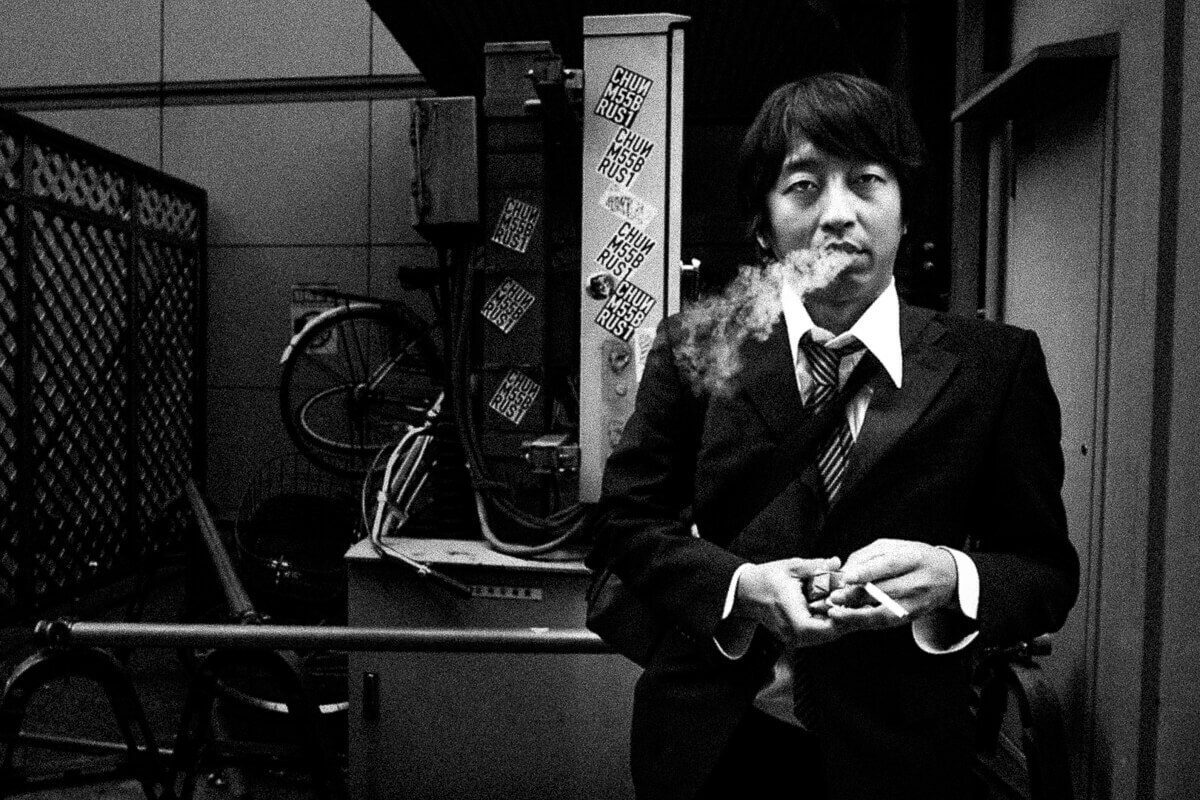
- Salarymen in dark suits, heading to work early and in bars late at night, especially around Shinjuku and Marunouchi.
- Street fashion in Harajuku and Shimokitazawa, from vintage to extreme.
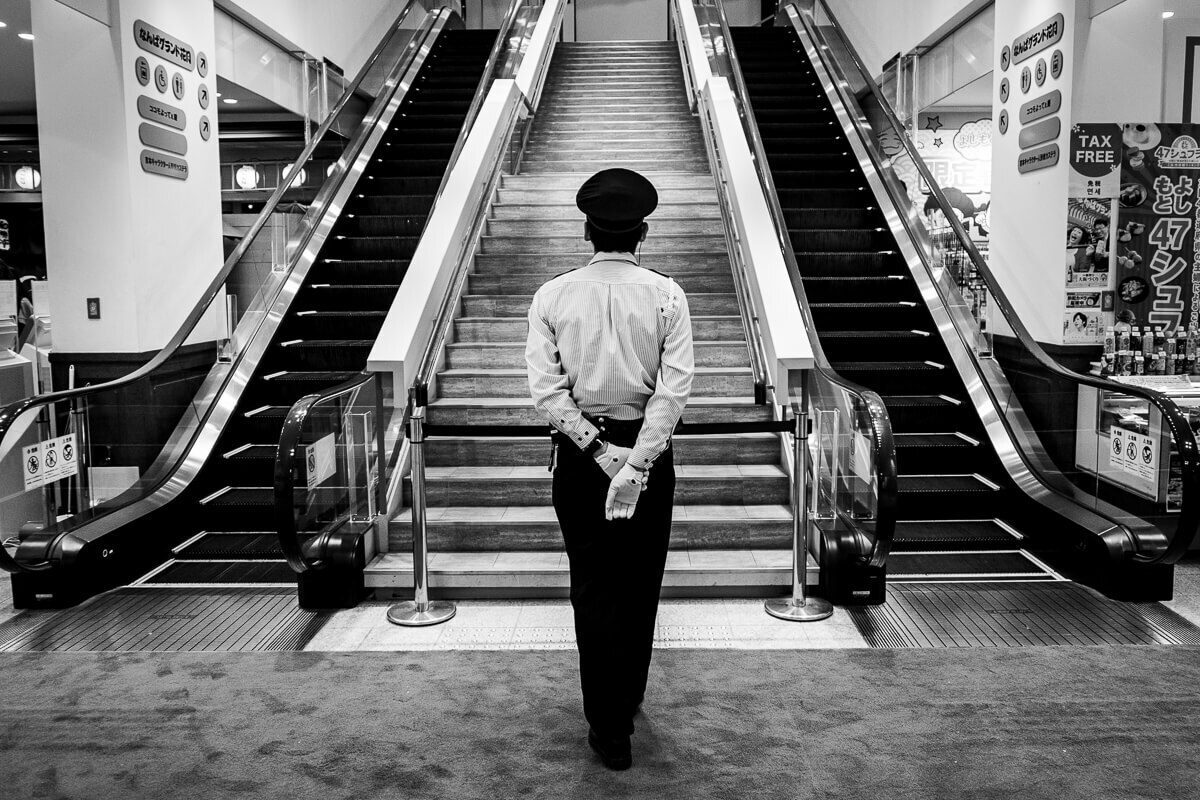
- Uniforms everywhere: station staff, taxi drivers, security guards, delivery riders. Pair them with hard angles for a formal feel.
- Clear umbrellas on rainy days, which show faces and neon through the plastic.
- Alley bars and yakitori smoke in Shinjuku and under the train tracks at Yurakucho.
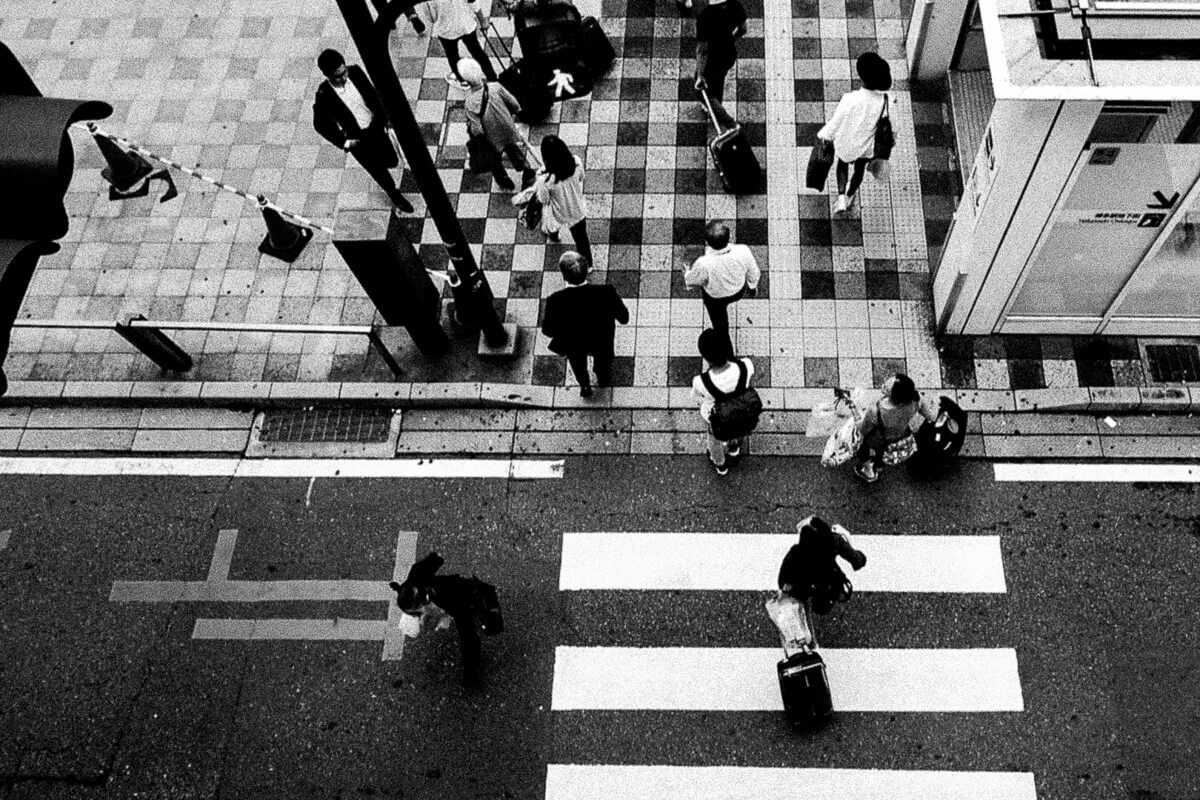
- Crowds as one subject, shot from above at crossings, or one person moving against the flow.
- Vending machines glowing on dark residential streets.
- Small rituals at shrines: washing hands, ringing bells, tying fortunes.
A one-day photo walk
- 6:00 Asakusa and Senso-ji. Shoot the empty Nakamise lane and early worshippers for about 90 minutes.
- 8:00 Tsukiji Outer Market. Take the Toei Asakusa Line to Higashi-ginza, about 20 minutes. Go on a Saturday so both the market and the Ginza pedestrian zone are on. Eat breakfast here.
- 12:00 Ginza. Walk 10 to 15 minutes to Chuo-dori as it closes to cars. Work the crossings and window reflections for an hour.
- 14:30 Harajuku and Omotesando. Tokyo Metro Ginza Line from Ginza to Omotesando, about 15 minutes. Walk Omotesando, then Takeshita Street.
- 17:00 Shibuya Crossing. Walk 20 minutes down from Harajuku, or take the Yamanote Line one stop. Stay through dusk as the screens take over.
- 20:00 Shinjuku. Yamanote Line to Shinjuku, about 7 minutes. Finish in Omoide Yokocho and the edges of Golden Gai, following the signs.
When to shoot
Early morning for markets and Asakusa; after dark for Shinjuku and Shibuya. Rainy nights turn the streets into mirrors. Spring and autumn are most comfortable.
The light
Flat daylight between towers, so many photographers work the night: neon, vending machines and shop fronts give plenty of light.
What to bring
28mm or 35mm prime, fast aperture for night. A compact like a Ricoh GR draws less attention.
Safety
Very safe (Shooter Files safety score 9/10). Some seedy corners in Kabukicho, Shinjuku.
Tips for Tokyo
- Bring a 28mm or 35mm fast prime. Neon and shop lights let you stay around ISO 800 to 3200 at f/2 at night. See best lens for street photography.
- A small, quiet camera like a Ricoh GR draws less attention than a big zoom and fits in crowded trains.
- Get a Suica or PASMO card on day one. Tapping through gates saves real time between spots.
- Go out on the first rainy night and shoot reflections in Shinjuku and Shibuya.
- Go out at 5 am at least once. Empty streets under skyscrapers make a very different set.
- Late March to early April brings cherry blossoms and crowds in Ueno Park. November is cooler with clear light. July and August are hot and humid.
- Sanja Matsuri in Asakusa, on a weekend in mid-May, fills the streets with portable shrines.
- Stay out of the way at station gates during rush hour. Blocking commuters annoys people fast.
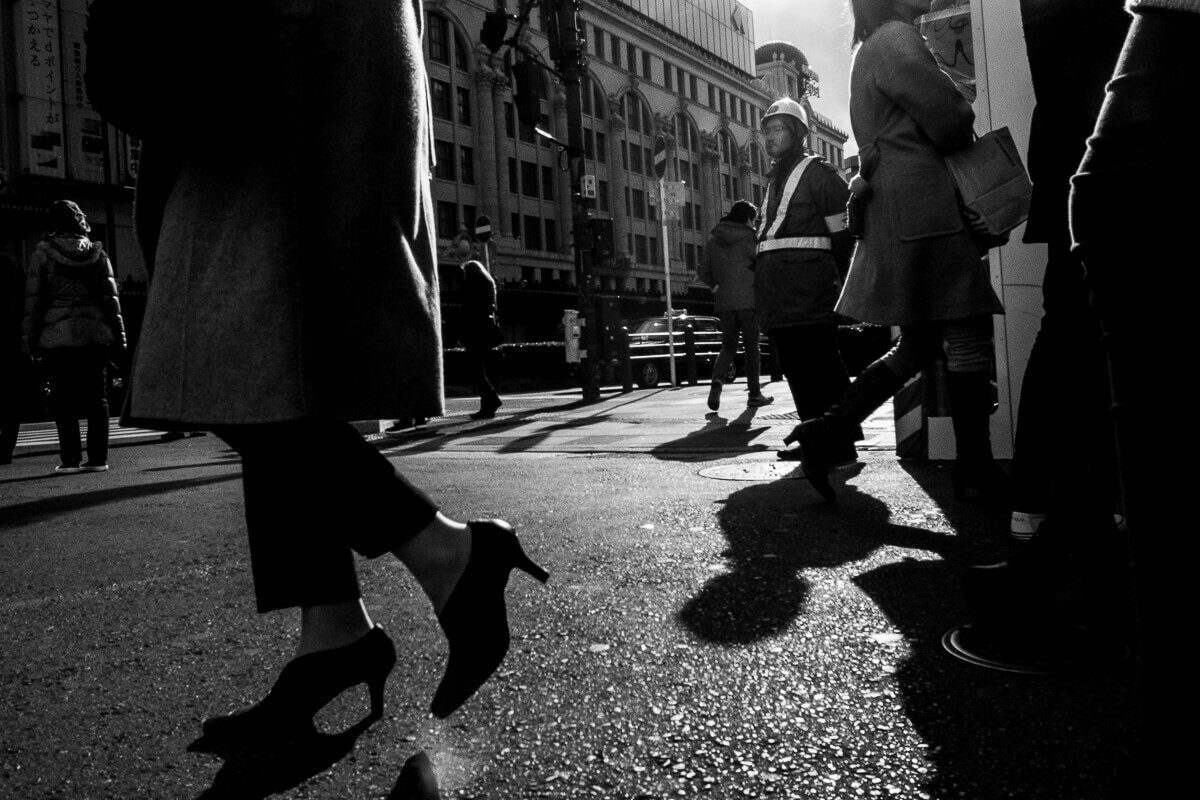
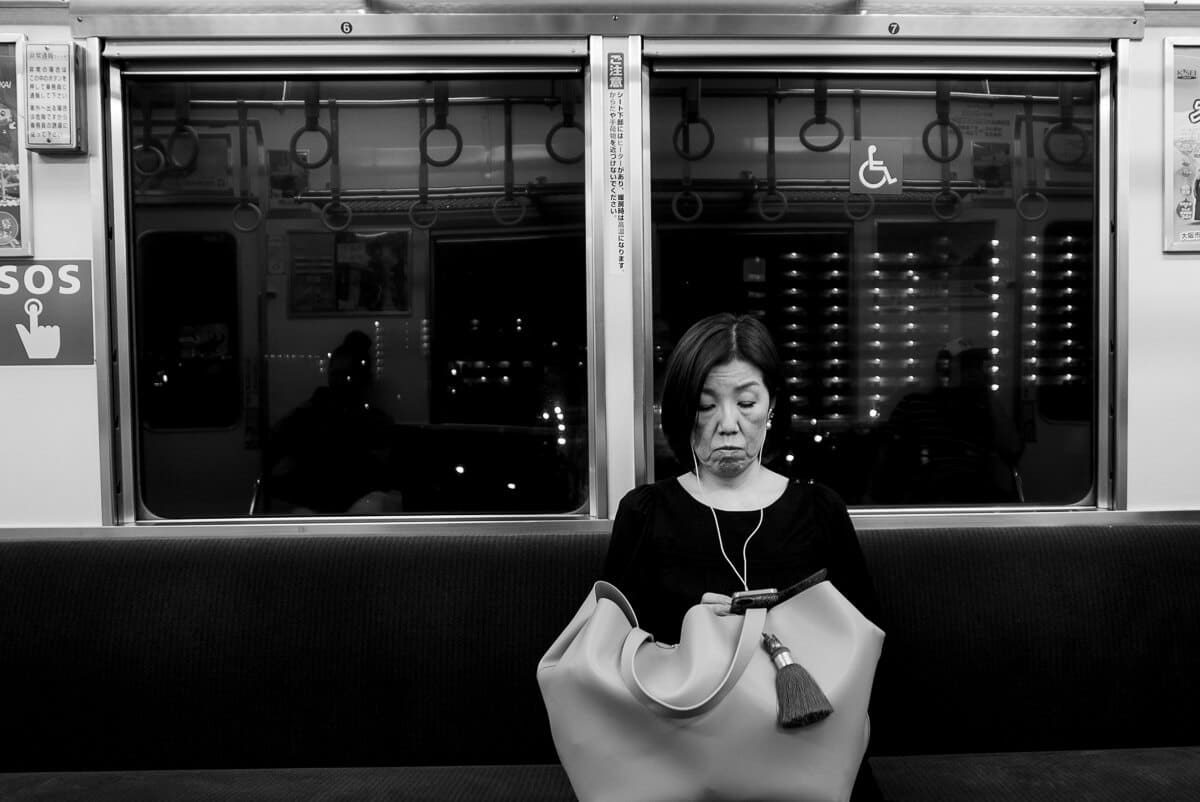
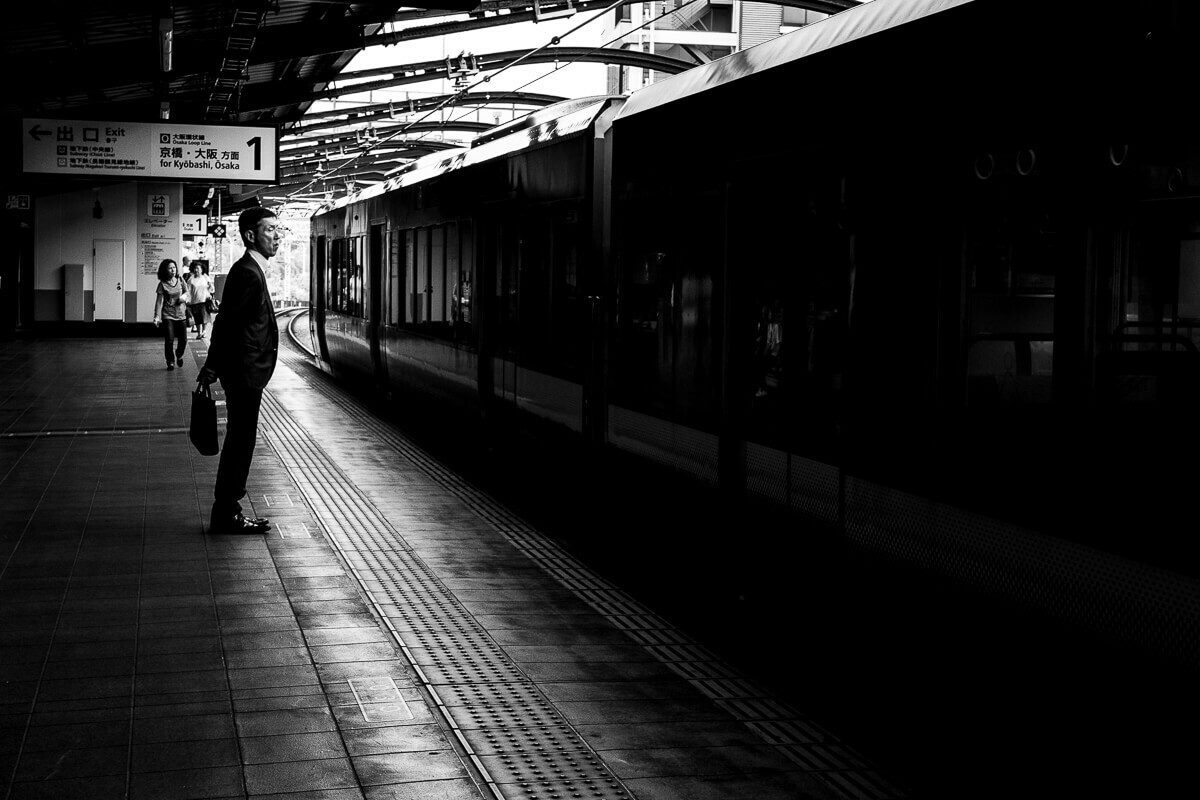
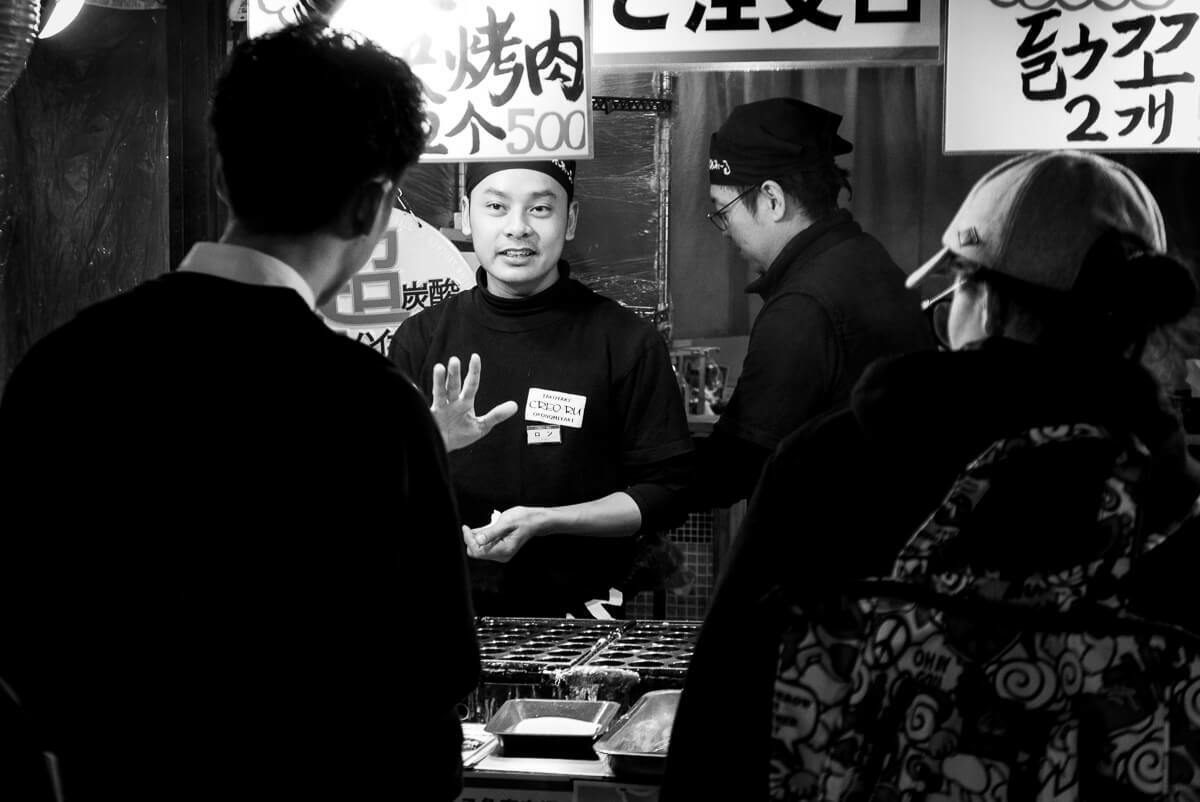
Photos by Olivier Duong in Tokyo.
Frequently asked questions
Is street photography legal in Tokyo?
STRICT (civil). No criminal ban on street photography, but portrait rights and privacy are protected in civil law, and publishing identifiable strangers can draw complaints. Many shops and bars forbid photos. Never shoot on trains in a way that could be read as voyeurism.
Where are the best street photography spots in Tokyo?
Start with Shibuya Crossing, Shinjuku (Omoide Yokocho, Golden Gai), Harajuku & Takeshita Street, Ginza. The classic crowd shot; youth fashion and nightlife around it.
When is the best time for street photography in Tokyo?
Early morning for markets and Asakusa; after dark for Shinjuku and Shibuya. Rainy nights turn the streets into mirrors. Spring and autumn are most comfortable.
What lens should I bring to Tokyo?
28mm or 35mm prime, fast aperture for night. A compact like a Ricoh GR draws less attention.
Is Tokyo safe for street photographers?
Very safe (Shooter Files safety score 9/10). Some seedy corners in Kabukicho, Shinjuku.
More street photography in Japan
Start with the Japan street photography guide, then pick a city.
More street photography cities
Further reading: the Inspired Eye guide to Tokyo.