
Street Photography in Kyoto
Old-town lanes and retro-modern downtown, with a quieter pace than Tokyo and a strict culture of respect.
- Spots
- 7
- Best time
- Late March to early April and November
- Lens
- 35mm
- Photographing people
- Strict: ask first
Kyoto is very good for street photography if you want tradition and slow daily life instead of Tokyo's scale: wooden lanes and lantern-lit alleys sit a short walk from a modern downtown with neon crossings and a giant glass station. The city is small and flat enough to cover on foot, and it is very safe at any hour.
It is also the strictest place in Japan for photographers, and for good reason. Years of tourists chasing geiko and maiko with phones led Gion's residents to ban photography on private lanes in 2019, then to close those lanes to visitors in 2024, with a 10,000 yen fine. Many market stalls and restaurants ask for no photos. I would plan Kyoto around early mornings, when the famous places are empty, and the river and downtown, where ordinary Kyoto life happens in public and nobody minds a quiet camera.
Best street photography spots in Kyoto
Gion (public streets north of Shijo-dori)
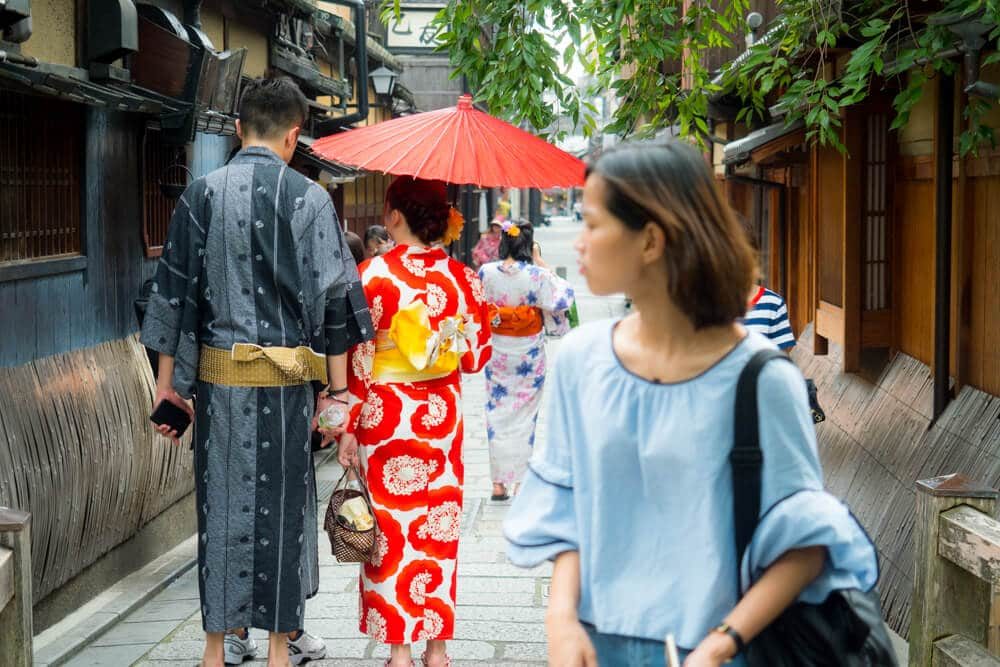
North of Shijo-dori, the Shirakawa canal and Shinbashi-dori give you willow trees and wooden teahouses on public streets. Go at 7 am, before tour groups, when you get shop owners sweeping and locals crossing the little bridges. Stand on a bridge and use the canal as a line into the frame. South of Shijo, Hanamikoji is public, but its side lanes are private: no entry and no photos, with a 10,000 yen fine. Composition idea: a figure walking under a lantern with the canal in front. Caution: if a maiko passes, step aside and let her go. Never block or follow her.
Kamo River banks
Eric Kim rates Kyoto near the Kamo River as one of his favorite places for street photography, and it is easy to see why. The banks are Kyoto's living room: joggers, students, couples, musicians and people eating on the grass. In the evening couples famously sit at even spacing along the western bank, which makes a ready-made repeating pattern. Shoot from the Shijo or Sanjo bridges looking down, or walk the path at golden hour with the sun low behind you. Composition idea: one figure between two gaps in the row of couples. Caution: cyclists use the path, so watch your back.
Nishiki Market
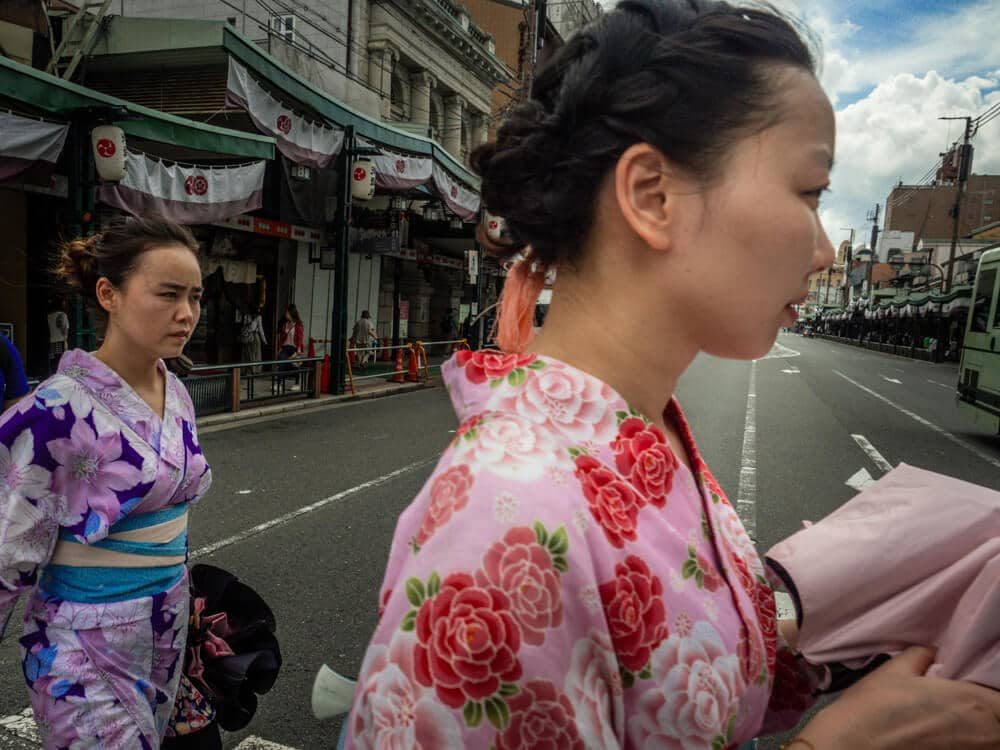
Nishiki is a covered market about 400 meters long, known as Kyoto's Kitchen. Cooks grill skewers while shoppers squeeze past. Many stalls open around 10 am, and mid-morning is when locals still outnumber tourists. The roof gives even, soft light, so it works on rainy days. Stand at a stall corner and shoot along the lane for depth. Composition idea: a cook's hands sharp in front, the crowd soft behind. Caution: many stalls post no-photo signs and the market asks people not to eat while walking. Respect the signs, and buy something before you ask for a close shot.
Pontocho
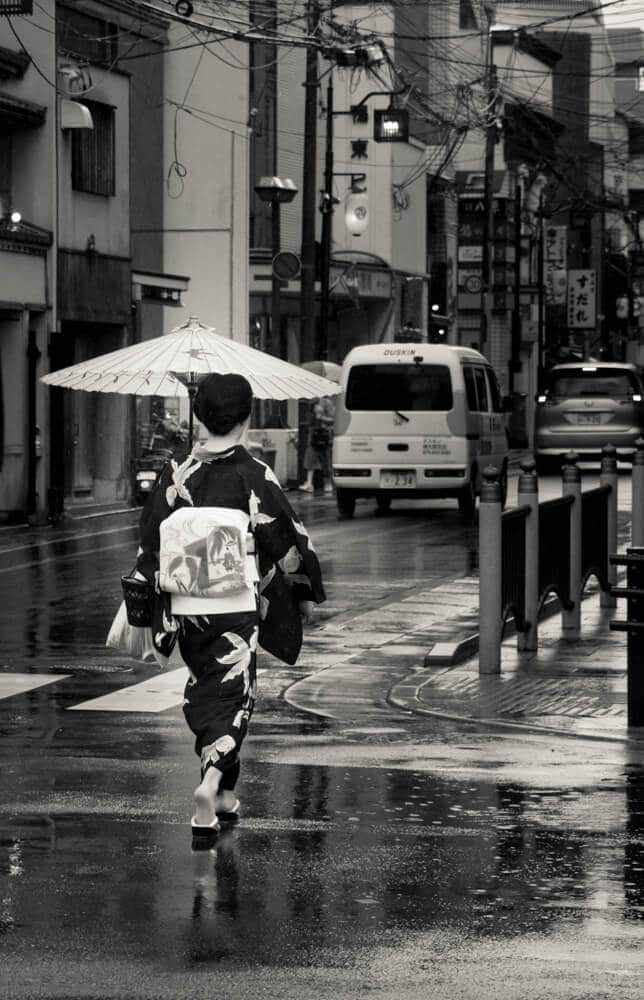
Pontocho is a narrow stone alley between Shijo and Sanjo, lined with restaurants and lanterns. It is most photogenic at blue hour and after dark, and even better after rain. The alley is dim, so work at f/1.4 to f/2 and ISO 1600 or more. Stand at one end and shoot down its length, or step into one of the small side passages that open onto the river and frame the alley through it. Composition idea: a passerby blurred at a slow shutter against sharp lanterns. Caution: some restaurants post no-photo signs, and the alley is too narrow to stop in, so keep moving.
Kyoto Station
Kyoto Station is a huge steel and glass building, and a strong antidote to temple fatigue. The long staircase inside rises up to a rooftop and gives you a high view down on commuters crossing the concourse. Morning light comes through the glass roof in hard beams, and evening turns the glass into reflections. Stand high on the staircase and look down for shapes and shadows. Composition idea: one commuter crossing a single beam of light. Caution: stay off station platforms with a tripod and keep clear of gates at rush hour.
Fushimi Inari
Fushimi Inari is the shrine with thousands of red torii gates running up Mount Inari. By mid-morning the lower gates are a queue of people posing. Come at sunrise or earlier, as The Wandering Lens advises, and you get the tunnels almost to yourself. The higher you climb, the fewer people there are. Stand inside a tunnel and wait for one walker to enter the far end. Composition idea: a figure small at the vanishing point of the gates. Caution: it is a working shrine, so let worshippers pass and do not climb on anything. It is 5 minutes from Kyoto Station on the JR Nara Line.
Shijo-Kawaramachi
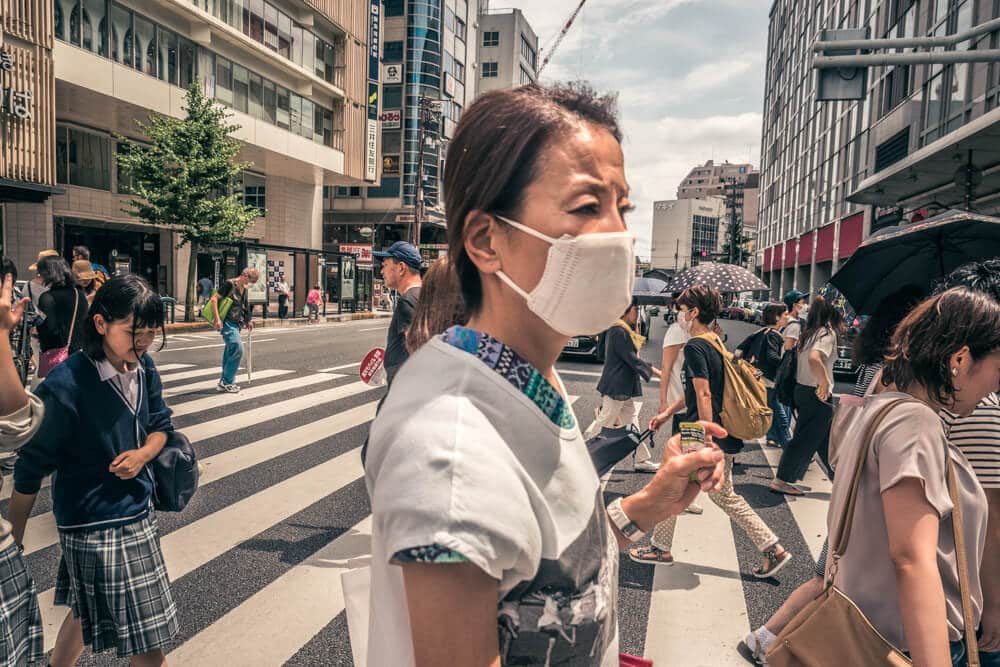
Shijo-Kawaramachi is the main downtown crossing, with department stores and heavy foot traffic day and night. Kimono renters and office workers mix at the lights. After rain the neon reflects off the road. Stand at the corner and use the crosswalk stripes as leading lines, or head into the Teramachi and Shinkyogoku arcades for even overhead light. Composition idea: a pan at 1/30 s on a cyclist crossing the stripes. Caution: this is a busy crossing, so shoot from the curb and never step into traffic for a frame.
Photographing people in Kyoto
Strict: local law or custom protects people's image. Ask first, or keep faces out of frame.
Kyoto follows Japanese law. Photographing people in public is not a crime, but portrait rights are protected in civil law and publishing an identifiable person can lead to a claim if it causes them harm. Commercial use needs a release. Kyoto adds local rules. Gion's private lanes are closed to visitors and have banned photography since 2019, with a 10,000 yen fine. Geiko and maiko are working professionals, and many maiko are teenagers. Do not stop them or stand in their path, and never use flash. Many temples forbid photos inside halls, and shops and market stalls often post signs. Locals are polite and will rarely confront you, but residents are tired of cameras in their neighborhoods. Shoot wider scenes on public streets, and ask with a gesture for anything close. Delete if asked. This is general information, not legal advice. More in is street photography legal.
General information, not legal advice. More in is street photography legal?
What to photograph in Kyoto
- People in kimono, mostly visitors in rented outfits around Gion and Higashiyama. Real geiko and maiko are rare and at work, so never chase them.
- Cyclists everywhere, many holding umbrellas in the rain.
- Visitors posing for phones at the famous sights, which makes a subject of its own.
- Couples and loners on the Kamo River in the evening.
- Shop owners opening up: sweeping, hanging noren curtains, watering plants in the early morning.
- Taxi drivers in white gloves and station staff in uniform.
- Rituals at shrines: washing hands, bowing, ringing the bell, tying fortunes.
- Lanterns and wooden lattices as textures and frames.
- Downtown arcades with students and shoppers under even overhead light.
A one-day photo walk
- 6:00 Fushimi Inari. JR Nara Line to Inari Station. Climb through the gates for 90 minutes before the groups arrive.
- 8:00 Gion. Keihan Line from Fushimi-Inari to Gion-Shijo, about 10 minutes. Walk the Shirakawa canal and Shinbashi-dori while shops open.
- 10:30 Nishiki Market. Walk 15 minutes west along Shijo-dori. Shoot the stalls and eat lunch.
- 13:00 Shijo-Kawaramachi. Two blocks east. Work the arcades during the harsh midday light.
- 16:30 Kamo River. Walk down to the banks from the Shijo bridge and follow the river north to Sanjo through golden hour.
- 19:00 Pontocho. Cut back into the alley from Sanjo and shoot it south to Shijo at blue hour and after dark.
When to shoot
Late March to early April and November. Early morning to avoid crowds.
The light
Soft light in the narrow streets; lanterns at dusk.
What to bring
35mm; small, quiet camera.
Safety
Very safe.
Tips for Kyoto
- A 35mm prime on a small, quiet camera suits Kyoto's narrow streets. A fast aperture helps in Pontocho and Gion after dark. See best lens for street photography.
- Start at sunrise every day you can. Fushimi Inari and Gion are full by 9 am.
- Late March to early April and November are the peak seasons for blossom and leaves, and the most crowded. Winter is quiet and occasionally snowy.
- Gion Matsuri runs all of July. The big float processions are on July 17 and 24, and the evenings before them fill downtown streets.
- Aoi Matsuri on May 15 and Jidai Matsuri on October 22 bring costumed processions through the city.
- Rain helps. Pontocho and the stone lanes of Higashiyama look best wet.
- Use buses and walking. The center is compact, and bus windows give their own frames.
- Never use flash on geiko or maiko, and read every sign before raising the camera. See street photography settings for low light.
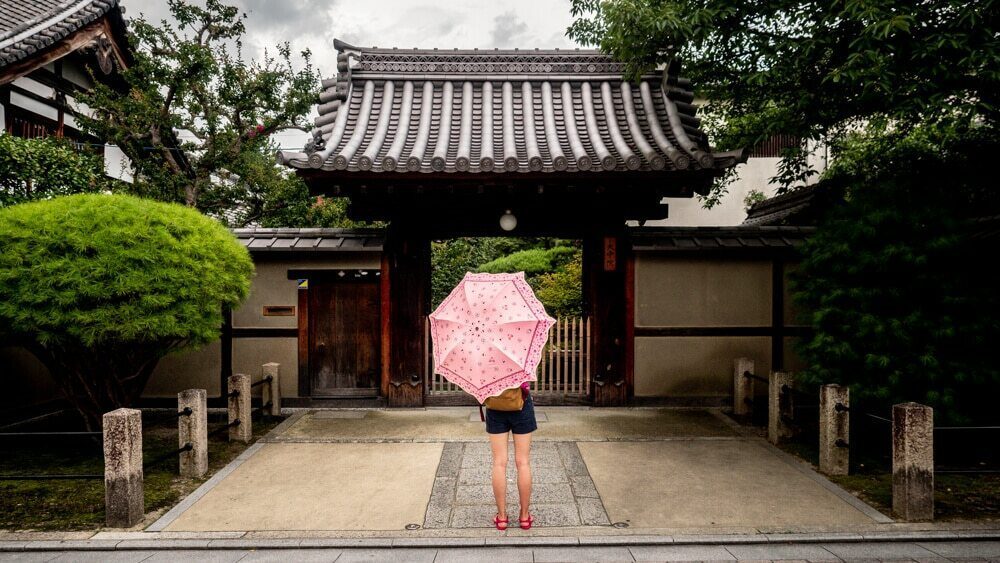
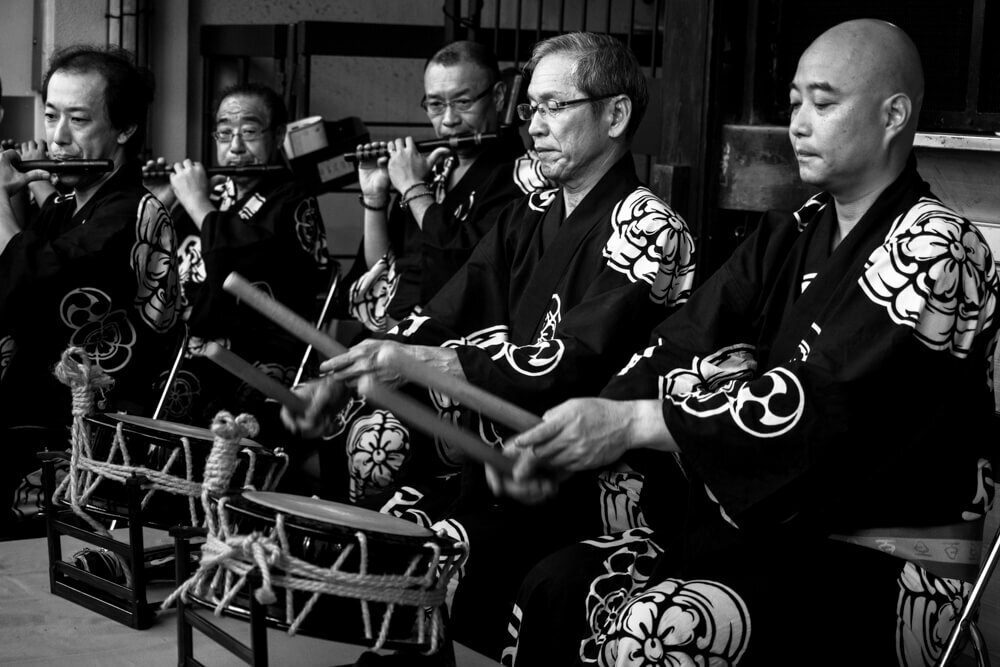
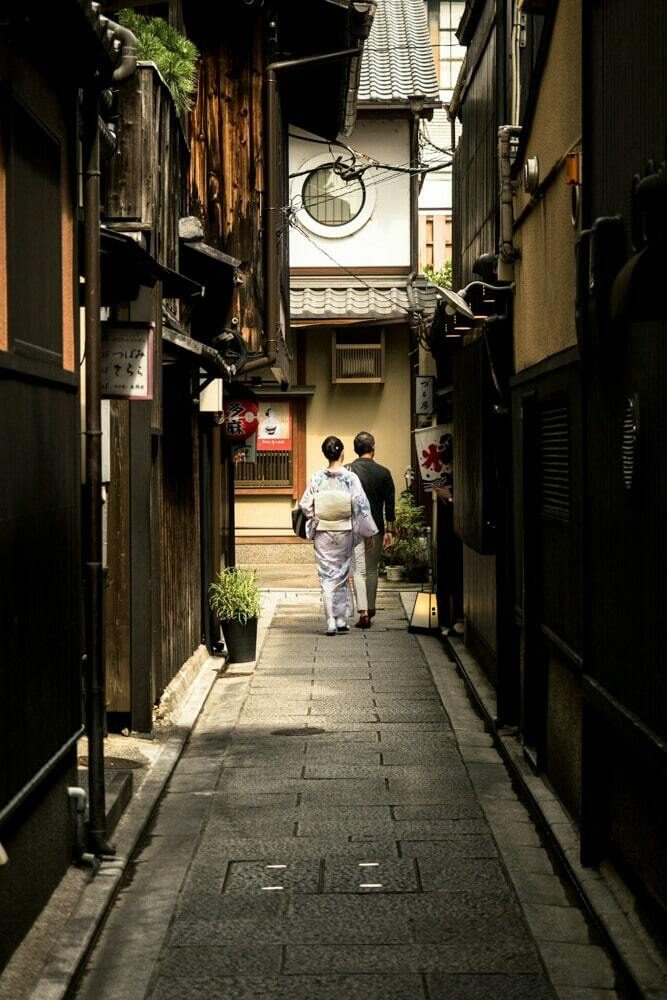
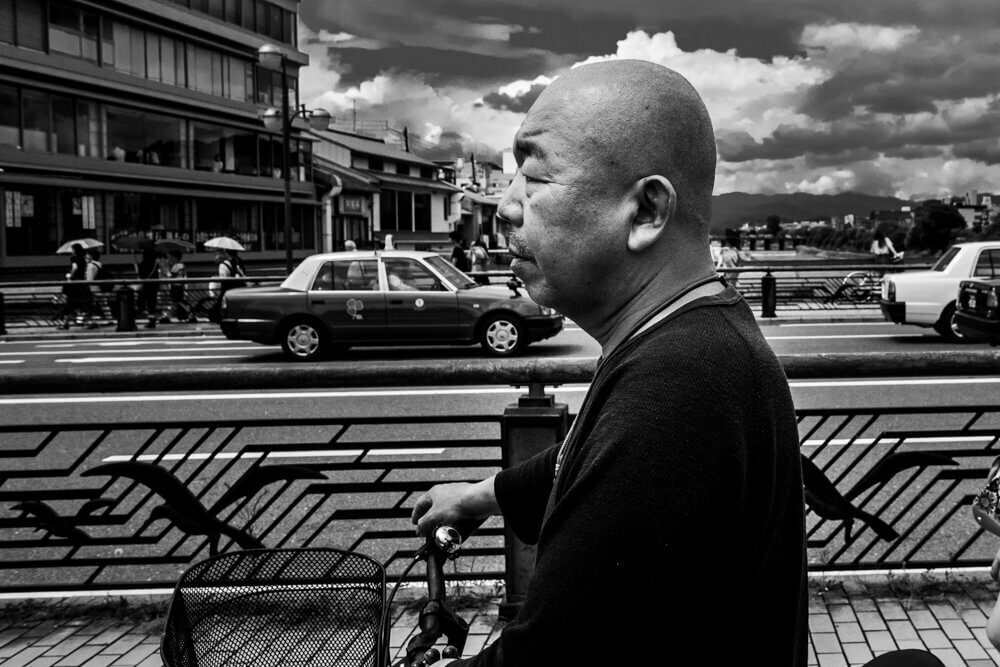
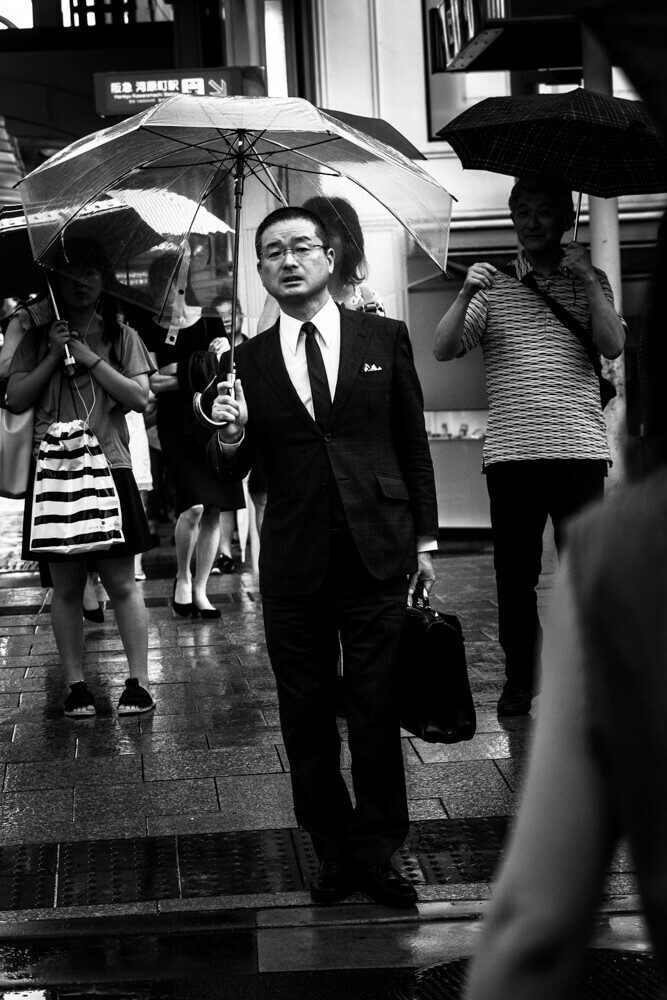
Photos by Olivier Duong in Kyoto.
Frequently asked questions
Is street photography legal in Kyoto?
STRICT. Same Japanese privacy and portrait rules as Tokyo, plus Gion private lanes ban photography (fines up to 10,000 yen). Do not chase geiko or maiko; many are minors. No photos inside temple halls.
Where are the best street photography spots in Kyoto?
Start with Gion (public streets north of Shijo-dori), Kamo River banks, Nishiki Market, Pontocho. Walk early morning; private lanes ban photos.
When is the best time for street photography in Kyoto?
Late March to early April and November. Early morning to avoid crowds.
What lens should I bring to Kyoto?
35mm; small, quiet camera.
Is Kyoto safe for street photographers?
Very safe.
More street photography in Japan
Start with the Japan street photography guide, then pick a city.