
Street Photography in Busan
Busan is a working port city on steep hills, with a huge fish market and crowded beaches, and it feels looser and grittier than Seoul.
- Spots
- 8
- Best time
- April to June and September to November
- Lens
- 35mm
- Photographing people
- Strict: ask first
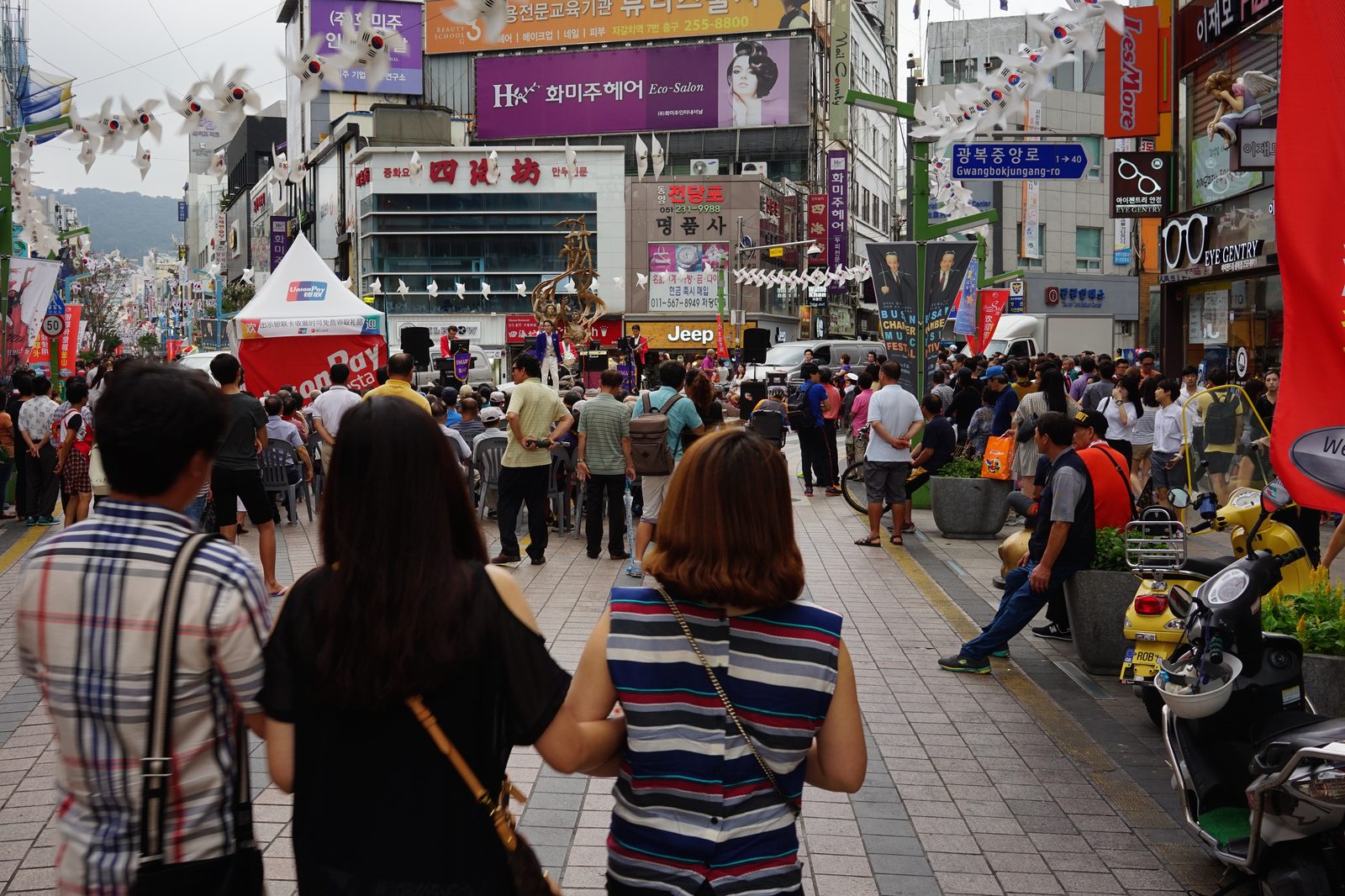
Busan is good for street photography because it is a working port city built on hills, where a huge fish market and old shipyards sit a short walk apart, and the mood is more relaxed than Seoul. Roy Cruz, a photographer based in Korea, calls it one of his favorite cities in the world, and found his best frames at night in the gritty market streets of Nampo-dong. Across the bridge, Yeongdo's decades old shipyards felt to him like another era.
Know one thing before you start: Korea is strict about portrait rights. People can object to identifiable photos, and many do, so wider scenes and asking first go a long way here. I'd split Busan into two halves. The old downtown around Nampo and the harbor is where the street life is. The beaches of Haeundae and Gwangalli are where the crowds go on summer evenings. Gamcheon is worth one early morning, before the tour buses.
Best street photography spots in Busan
Jagalchi Market
Jagalchi is Korea's best known fish market, on the harbor in Nampo-dong, with tanks and stalls spilling onto the street outside the main building. Many vendors are older women in rubber aprons and boots who have worked here for decades. Roy Cruz called it his favorite part of the trip: shooting after dark, in light rain, when umbrellas and neon made the streets glow. Stand at the end of a street stall row and shoot along the tanks toward a vendor. The ground is always wet, so watch your footing, and ask before a close portrait.
BIFF Square
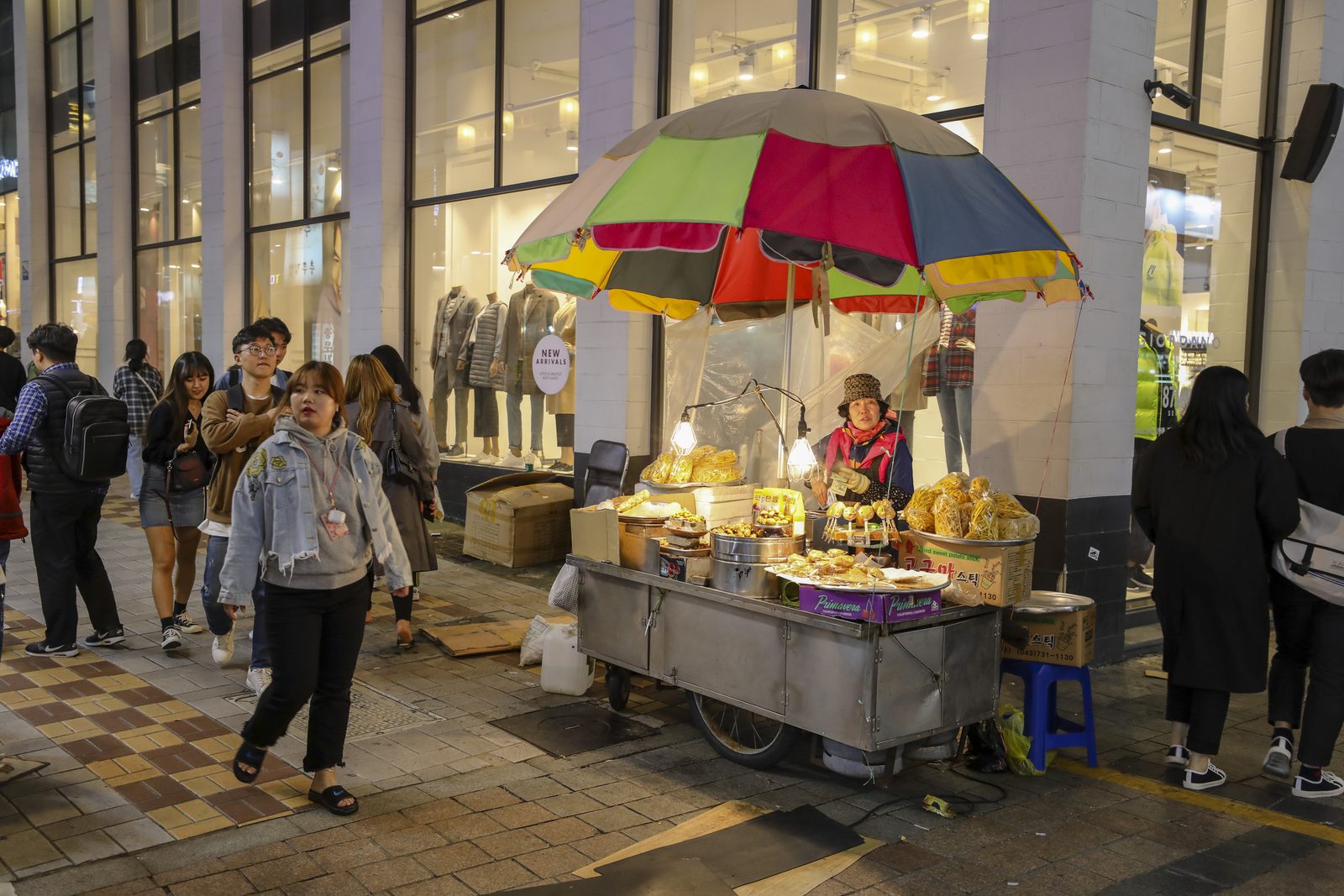
BIFF Square in Nampo-dong is named for the Busan International Film Festival and is best known now for its street food carts. From late afternoon, crowds queue for hotteok, sweet filled pancakes, and fish cake skewers. The carts are lit by bare bulbs after dark, which gives you warm light on faces. Stand near a busy cart and wait for the moment a vendor hands food across. The square links to the lanes of Gukje Market, so you can work both in one evening. It is crowded, so keep your bag in front.
Gukje Market
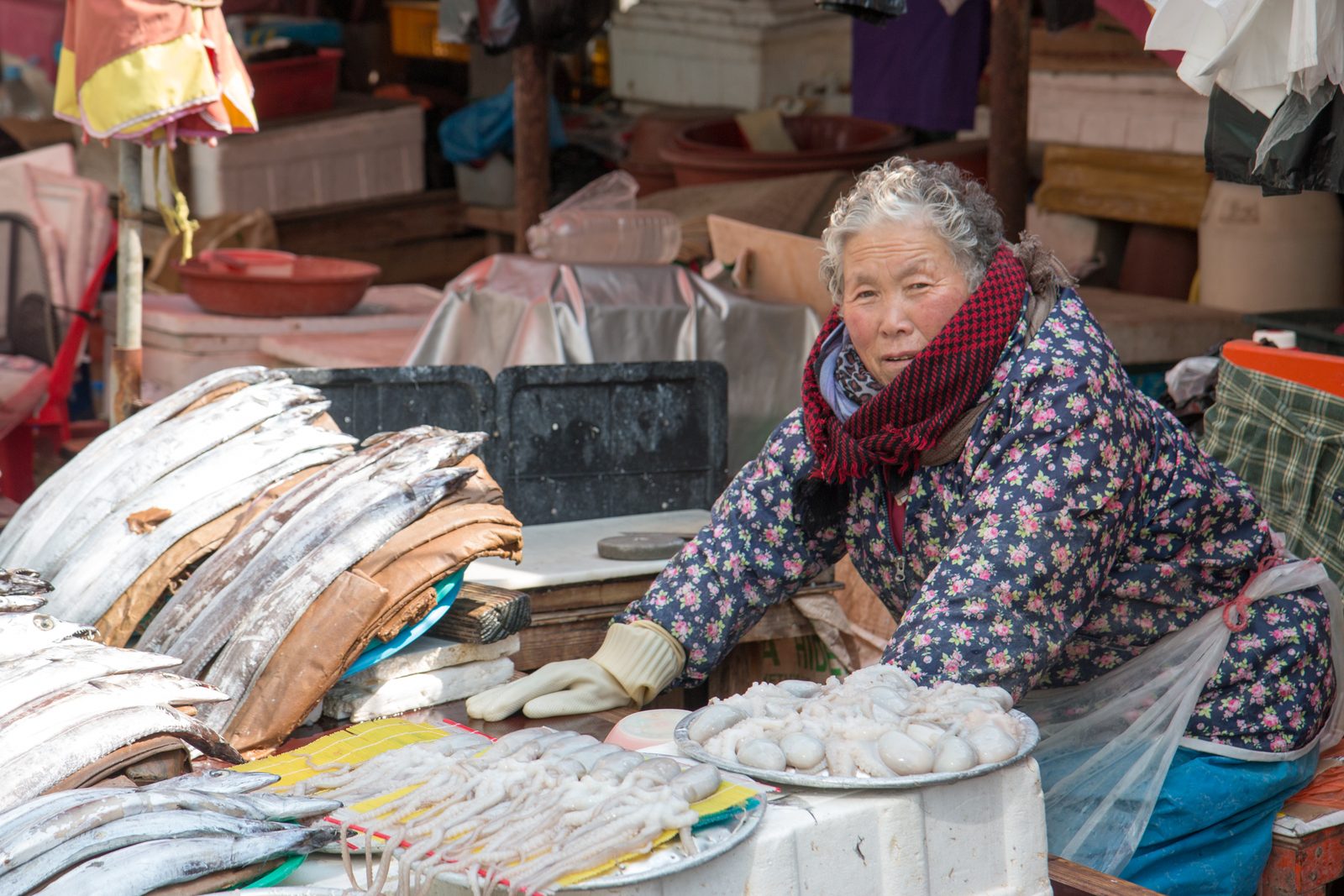
Gukje Market is a sprawling grid of narrow lanes behind Nampo-dong, with sections for clothes, tools, kitchenware and secondhand goods. It grew up around the Korean War, when refugees traded in the port. Many traders are older and have worked here for years. The lanes are narrow and partly covered, so the light is uneven: find a stall lit from the side and wait for a customer. Late morning is good, when trade picks up. Some traders do not want photos, so ask with a gesture first.
Gamcheon Culture Village
Gamcheon is a hillside of pastel houses and stairways, painted as part of a regeneration project from around 2009. Busan Trip, whose writer has visited four times, says the sweet spot is 8:00 to 9:30 on a weekday, before the tour groups arrive. Avoid weekends between 10:00 and 15:00. The best frames come from the dead end alleys off the stamp map route, with laundry lines and potted plants. Use a telephoto from the viewpoint near the square to compress the houses. A few thousand residents still live here, so keep your voice down and stay out of doorways.
Yeongdo Bridge
Yeongdo Bridge connects Nampo-dong to Yeongdo island and is Korea's first drawbridge, according to Roy Cruz. Visit Busan lists a 15 minute lifting ceremony at 14:00 on Saturdays, and crowds gather on both ends to watch. Stand on the Nampo side and frame the spectators with the raised deck behind. The bridge is also a meeting place with a long history for families separated in the Korean War. Check the lifting schedule locally before planning around it, as sources differ on how often it runs.
Daepyeong-dong
Daepyeong-dong is the old shipyard quarter on Yeongdo, just across the bridge. Roy Cruz spent a day exploring the harbor, where decades old shipyards and the workshops around them still work. You will see welders at work and rusting hulls pulled up on slipways. Come on a weekday morning, when the yards are busy. Shoot through workshop doorways into the light, or frame a worker against a hull. These are workplaces: stay out of the yards unless invited, and do not photograph workers who wave you away.
Haeundae Beach
Haeundae is Busan's most famous beach, a wide curve of sand backed by hotels and towers. In July and August it fills with rows of umbrellas and huge crowds. Out of season it is quieter, with walkers and couples on the sand. Late afternoon is best, when the sun is lower and the crowd is at its peak. Stand on the promenade and look down on the umbrellas, or walk the waterline with a wide lens for layered scenes. Avoid close shots of people in swimwear.
Gwangalli Beach
Gwangalli faces the Gwangan Bridge, which is lit up at night. The promenade is lined with bars and cafes, and evenings bring couples and street performers. Blue hour is the time to come, when the bridge lights come on while there is still color in the sky. Frame people on the sand in silhouette against the bridge, or shoot a performer's audience lit by phone screens. The Busan fireworks festival is held here, usually in autumn, and brings enormous crowds.
Photographing people in Busan
Strict: local law or custom protects people's image. Ask first, or keep faces out of frame.
Korea is one of the stricter places in Asia for street photography. A Korean law office explains the right to one's own face, chosanggwon, which covers both privacy and publicity: people who are identifiable in a photo taken without permission can complain to the authorities or take action, even when the photo was taken in public. Hidden camera crimes have also made people, and especially women, sensitive to cameras pointed at them. This is general information, not legal advice.
In practice, Busan people are often friendly and direct. Market vendors may shoo you away, or pose once you have bought something. Ask with a gesture before close portraits, and delete if someone asks. Wide scenes where no single person is the subject cause the least trouble. Be most careful on beaches and in the subway. More in how to photograph strangers.
General information, not legal advice. More in is street photography legal?
What to photograph in Busan
- Market vendors in rubber aprons and boots at Jagalchi.
- Steep stairways in the hill villages, with laundry and potted plants.
- Shipyard workers and rust on Yeongdo.
- Neon on wet streets in Nampo-dong on rainy nights.
- Street food carts selling hotteok and fish cakes.
- Delivery scooters weaving through the market lanes with stacked trays.
- Beach crowds under rows of umbrellas in summer.
- Lanterns in temples around Buddha's Birthday in spring.
- Ferries and fishing boats in the harbor.
- Hiking crowds on weekend mornings, in bright jackets on the subway and at trailheads.
- Couples in matching outfits posing at the beaches and in Gamcheon.
A one-day photo walk
- 8:00, Gamcheon Culture Village. Subway to Toseong, then a local bus up the hill. Alleys before the crowds.
- 10:30, Gukje Market. About 20 minutes by bus and on foot. Traders opening up.
- 13:00, Yeongdo Bridge. A short walk. On Saturdays, the 14:00 lifting.
- 14:30, Daepyeong-dong. Walk across the bridge to the shipyards.
- 17:30, Jagalchi Market. Back across the bridge on foot. Vendors at dusk, and the street stalls after dark.
- 19:00, BIFF Square. A 5 minute walk. Street food under bare bulbs.
- 21:00, Gwangalli Beach. Optional: subway line 2, about 30 minutes, for the lit bridge.
When to shoot
April to June and September to November. July and August are hot and humid, with the monsoon in early summer and typhoon risk in late summer, but the beaches are at their busiest. Nampo-dong and Jagalchi are best from late afternoon into the evening. Gamcheon is best before 9:30 on weekdays.
The light
Clear coastal light with hard sun in summer. Hillside villages go into shadow early in autumn and winter. At night, market neon and bridge lights on the water. Overcast days suit Gamcheon's colors.
What to bring
A 35mm prime for the markets, plus a longer lens for Gamcheon's overview and the beach crowds. A fast lens or high ISO for Nampo at night.
Safety
Very safe, including at night. Watch your footing on steep stairways in the hill villages and on wet market floors. Typhoons can bring storm surges to the beaches in late summer.
Tips for Busan
- Season: April to June and September to November. Summer is hot and humid but the beaches are at their liveliest.
- Rain: go out anyway. Roy Cruz found light rain perfect in Nampo, with umbrellas and reflections.
- Gamcheon: the official map costs about 2,000 won at the entrance, and its stamp trail funds resident programs.
- Lens: a 35mm for markets and a 70mm or longer for Gamcheon's overview. See best lens for street photography.
- Night: Nampo is well lit. Shoot at ISO 1600 to 3200 and let the neon do the work. See street photography settings.
- Ferry: boats run from Busan to Fukuoka in Japan, a trip Jason Teale made many times.
- Etiquette: when someone crosses their arms in an X, it means no. Lower the camera.
Frequently asked questions
Is street photography legal in Busan?
STRICT. Korea recognizes portrait rights (chosanggwon): people can object to being photographed and can bring claims over identifiable images taken or published without consent, even in public. Hidden camera crimes have made people especially sensitive about women being photographed. Ask, or shoot wider scenes where no one is singled out. General information, not legal advice.
Where are the best street photography spots in Busan?
Start with Jagalchi Market, BIFF Square, Gukje Market, Gamcheon Culture Village. Korea's best known fish market, on the harbor in Nampo-dong. Vendors in rubber aprons, best at dusk and in light rain.
When is the best time for street photography in Busan?
April to June and September to November. July and August are hot and humid, with the monsoon in early summer and typhoon risk in late summer, but the beaches are at their busiest. Nampo-dong and Jagalchi are best from late afternoon into the evening. Gamcheon is best before 9:30 on weekdays.
What lens should I bring to Busan?
A 35mm prime for the markets, plus a longer lens for Gamcheon's overview and the beach crowds. A fast lens or high ISO for Nampo at night.
Is Busan safe for street photographers?
Very safe, including at night. Watch your footing on steep stairways in the hill villages and on wet market floors. Typhoons can bring storm surges to the beaches in late summer.