
Street Photography in Japan
Japan is safe and dense, so the odd human moment stands out, and you can walk with a camera out at midnight without a second thought.
Japan street photography works because the country runs on order, and order makes the odd moment stand out. A salaryman asleep on the last train, a clear umbrella glowing in neon rain. Scenes like these repeat every day, so you can plan for them. I've been to Japan half a dozen times, and I'd put it near the top of any list for a first trip abroad with a camera.
You can shoot Tokyo at 2am and worry more about missing the train than about your camera.
The hard part is manners and privacy, not danger. Taking a photo in public is legal, but Japan protects portrait rights in civil law. Some neighborhoods now post no-photo signs, and people rarely tell you no to your face. So the work here is about crowds and light, with people as part of a bigger frame. This guide covers which city fits your style, how to move between them, when to go and how to photograph people without causing trouble.
City guides for Japan
- Tokyo
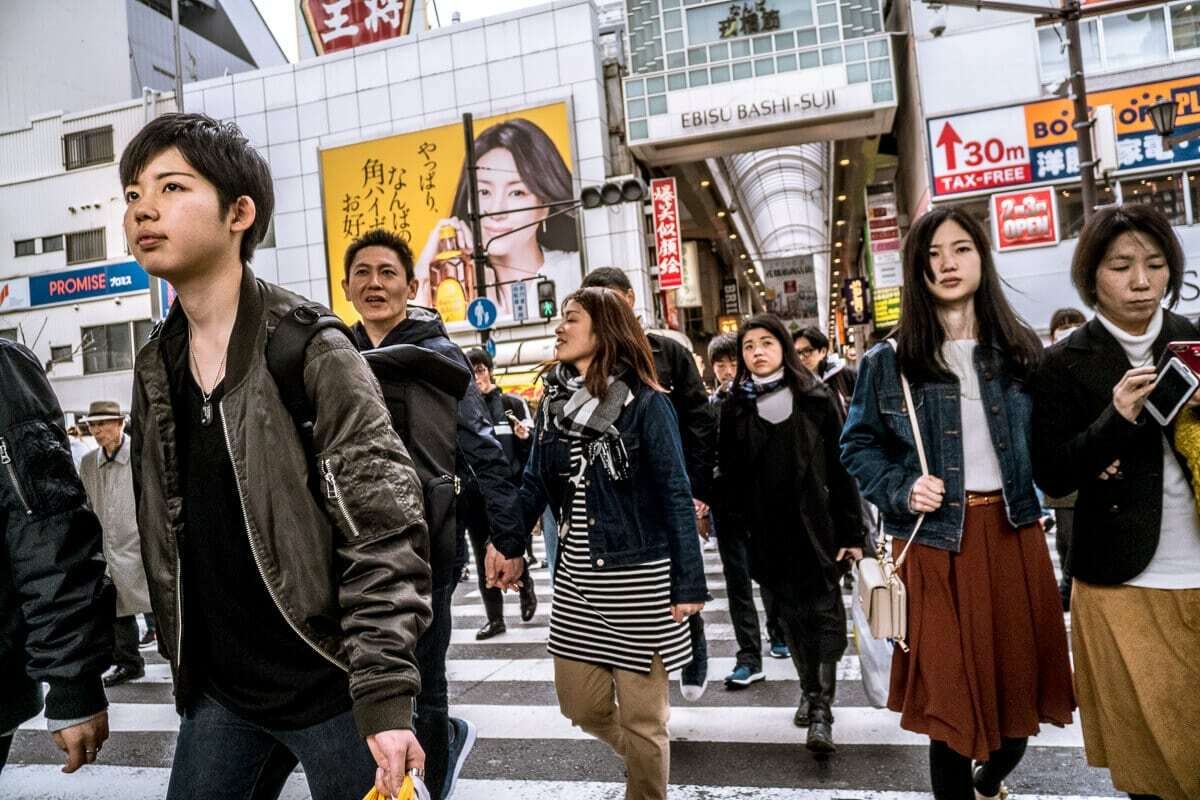
Neon, crowds and order: the safest big city for walking with a camera day and night, with a new scene on every train line.
 Kyoto
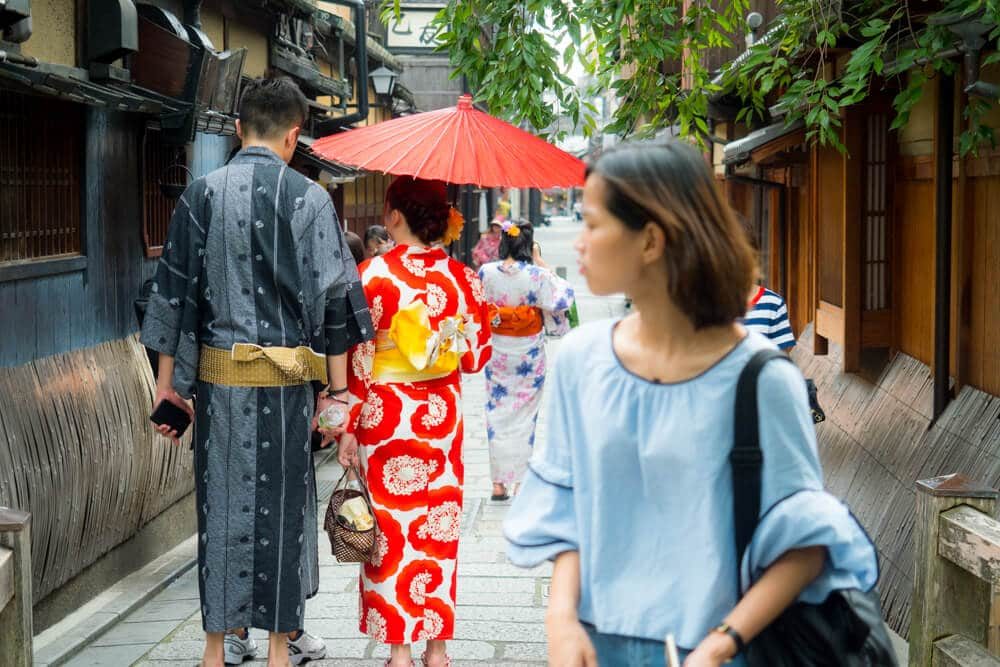
KyotoOld-town lanes and retro-modern downtown, with a quieter pace than Tokyo and a strict culture of respect.
 Osaka
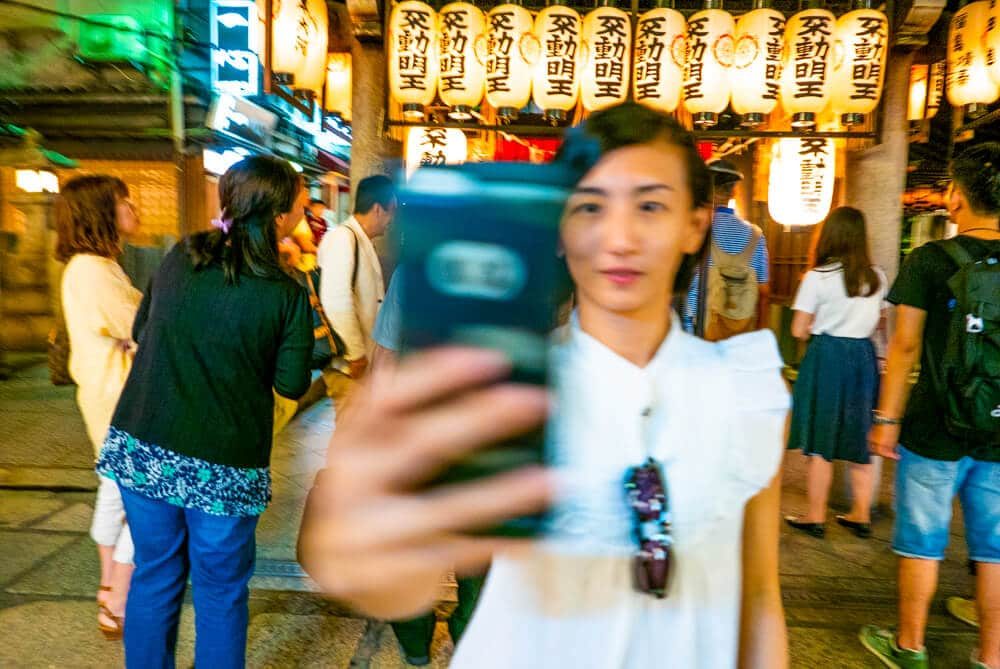
OsakaOsaka mixes the neon of Dotonbori and Shinsekai with busy markets and quiet suburbs a few train stops away, and Olivier Duong rates it above Fukuoka for street work.
 Sapporo
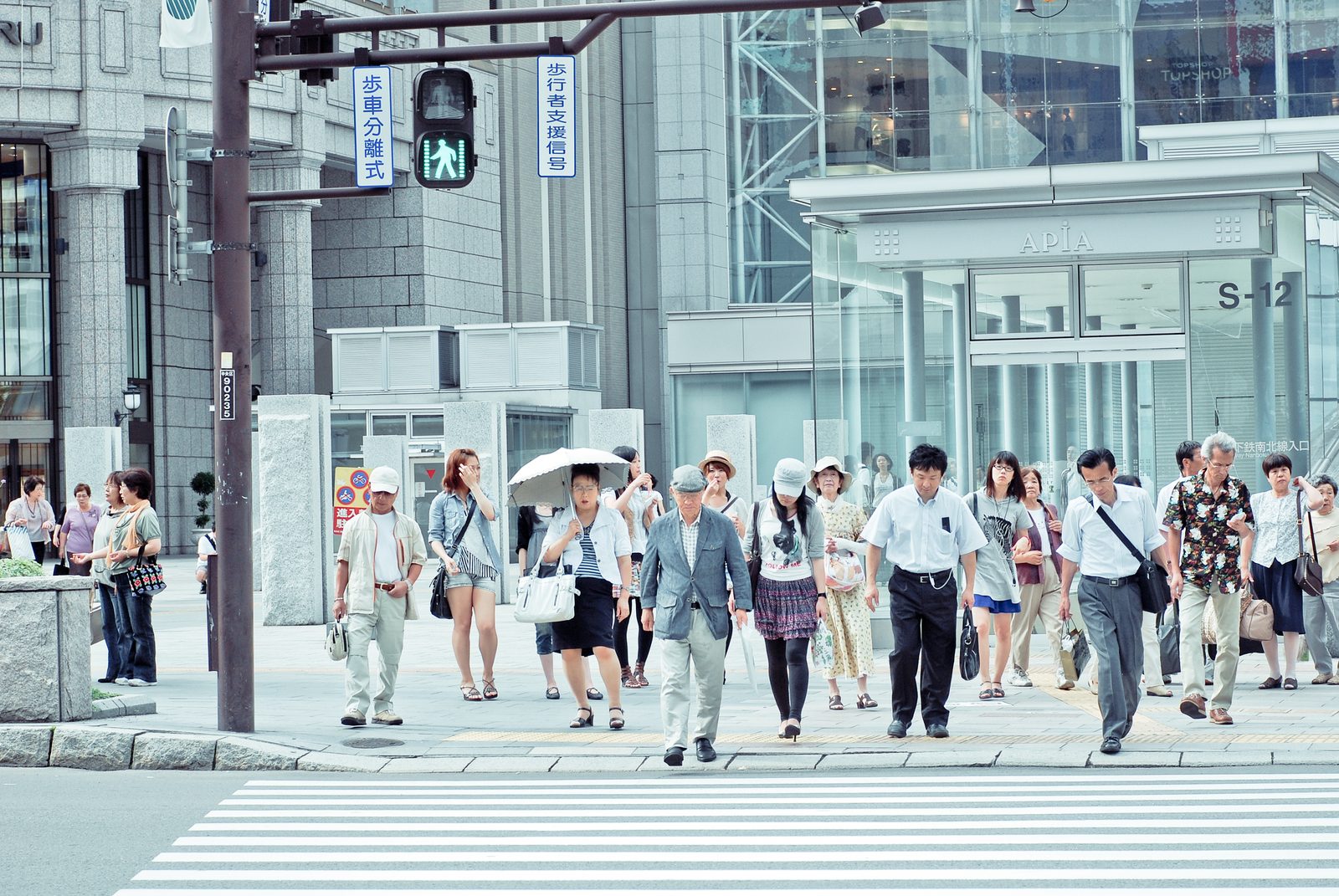
Sapporo gives you heavy snow and neon nightlife in a compact grid, and it is quieter and less touristy than Tokyo.
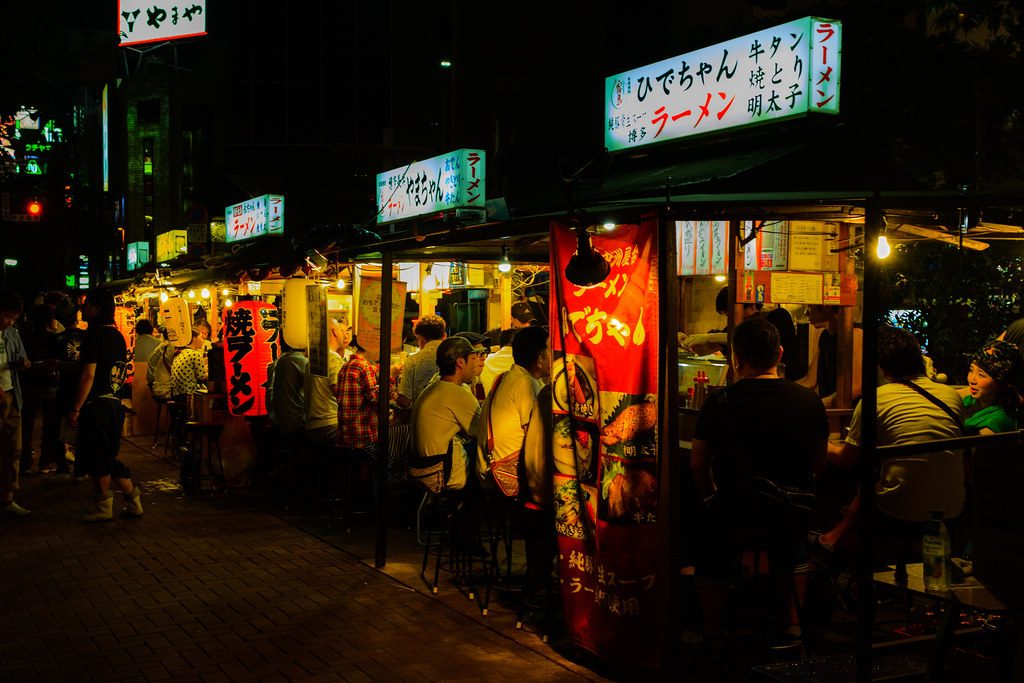 Fukuoka
Fukuoka is a compact, walkable Japanese city where people eat at open air yatai stalls by the river every night, so the street life you usually find indoors in Japan happens in the open.
What makes Japan different to shoot
Crowds are the subject. In Shinjuku or Shibuya you can make a frame where nobody stands out, or one where a single person breaks the pattern. The strongest version is often one person walking against the flow of everyone else.
Go up. Japan is full of pedestrian bridges and station stairs. Stand on one and wait for people to fill the shapes below. A higher angle also shows the sheer number of people in a way eye level can't.
Uniforms are everywhere: station staff, taxi drivers, security guards, delivery riders. Put them against hard angles and straight lines and the photo feels formal, which is the point. Salarymen are easy subjects early in the morning and late at night, when many stop at a bar instead of going home.
Night is generous. Food stalls and vending machines throw so much light that ISO 800 is often enough. Rain makes it better. See our guides to night street photography and rain photography.
Japan also has its own street tradition. Daido Moriyama shot Shinjuku rough and grainy for decades, and his work is worth a look before you go. Crowds reward an eye trained for shapes and layers, which is what our online street photography course drills in short daily lessons.
Which city for which photographer
Tokyo is the obvious start. It has the biggest crowds and a rail network you learn in a day. Shinjuku alone can fill a week. Go there if you like density and night work.
Osaka has a more relaxed, louder vibe. People are more expressive, and Dotonbori and the Nipponbashi area give you neon without Tokyo's scale. Shinsekai has an older, rougher look.
Kyoto is where kimonos end up in your frames. It suits slower, quieter work in old lanes and along the Kamo River. It is also the strictest city on this list about photos, so read the rules below first.
Fukuoka is compact and friendly. Its yatai food stalls line the river every night, so street life that usually happens indoors in Japan happens in the open.
Sapporo is on our list for a future page. It is the city for snow, and its Snow Festival runs in early February.
A two week route by train
Most first trips follow one line along the main Shinkansen route, and it happens to be a good order for photography.
- Tokyo, five or six days. Start with mornings in Asakusa and nights in Shinjuku to learn the rhythm.
- Kyoto, three days. The Shinkansen takes a little over two hours. Shoot the old lanes at dawn, before the tour groups.
- Osaka, three days. It is about 15 minutes from Kyoto by Shinkansen, or around half an hour on a JR local rapid. Many people base in one and day trip to the other.
- Fukuoka, two days. Roughly two and a half hours from Shin-Osaka to Hakata on the fastest trains. Time your evenings for the yatai.
Load a rechargeable IC card like Suica or ICOCA on your phone for local trains and buses. The national JR Pass rose sharply in price in 2023, so compare it with single tickets for a one-way route like this before you buy.
Seasons and festivals
Cherry blossom season runs from about late March to early April in Tokyo and Kyoto. It brings crowds under the trees, which is good for layered frames, and full hotels, which is not. November brings autumn color and clear, low light.
The rainy season covers most of the country from about June to mid July. Many photographers avoid it. I'd go anyway for the umbrellas and wet streets. July and August are hot and humid, so shoot early and late.
Summer is also festival season. Kyoto's Gion Matsuri takes up all of July, with its big float parades on the 17th and 24th. Fukuoka's Hakata Gion Yamakasa runs from July 1 to 15 and ends with a dawn race. Osaka's Tenjin Matsuri is on July 24 and 25. In winter, Sapporo's Snow Festival fills the city in early February. Check each year's dates before you book.
Etiquette that keeps you out of trouble
- Know what a camera can look like. Japan has a real problem with men secretly photographing women. A low angle or a long lens on a train can be read that way. Don't shoot anything that could be misunderstood.
- Trains are quiet places. Phone scenes on the subway are a great theme, but keep your distance and a quiet shutter. Rush hour is too packed to shoot anyway.
- Ask before shooting inside. Many bars and restaurants ban photos, and many temples ban them inside halls. Look for signs.
- Leave geiko and maiko alone. Many maiko are teenagers. Never follow them or block their path.
- Accept a no. A raised hand or a small cross made with the arms means no. Let it go and delete if asked.
Photographing people in Japan
Strict: local law or custom protects people's image. Ask first, or keep faces out of frame.
Photographing people in public is not a crime in Japan. What protects them is a portrait right built by the courts, not a written statute. In a 2005 ruling, the Supreme Court said people have a legally protected interest in not being photographed without good reason, and that a photo becomes a civil wrong when it harms that interest beyond the tolerable limit in social life. Judges weigh the place, the purpose, the manner and the need for the photo. Wikimedia Commons summarizes it as: taking a photo in public needs no consent, publishing one generally does, with exceptions.
Commercial use of a recognizable stranger without a release is the clear risk. Lukasz Palka, who teaches workshops in Tokyo, cites a 2005 Tokyo case where a woman photographed on the street and posted on a fashion site won damages after she was bullied online. Since 2023, Japan also has a specific crime for secretly photographing people in a sexual way, with up to three years in prison, as PetaPixel reported.
In Kyoto's Gion, local residents banned photos on private lanes in 2019 and posted signs warning of a fine of up to 10,000 yen. Hyperallergic reported that the fine was not legally enforceable at the time. Main streets like Hanamikoji are public roads, but the signs and rules there keep changing, so follow what is posted.
People rarely object to your face, and that politeness is not consent. Work wide in busy scenes. When you want a portrait, ask with a nod. This is general information, not legal advice. See is street photography legal and how to photograph strangers.
General information, not legal advice. More in is street photography legal?
When to go
Late March to early April and October to November are the most comfortable. The June rainy season is worth it if you like umbrellas and wet reflections.
Frequently asked questions
Is street photography legal in Japan?
Yes. Taking photos of people in public is not a crime. Japan protects portrait rights in civil law, so publishing a clear, recognizable photo of a stranger can lead to a damages claim, and commercial use needs a release. Secretly taking sexual photos is a crime since 2023. This is general information, not legal advice.
Do I need permission to photograph people in Japan?
Not to take the photo in a public place. Consent matters when you publish a close, identifiable portrait, and it is required for ads or other commercial use. In practice, work wide in crowds and ask with a smile and a nod when you want a portrait.
Can I photograph geisha in Kyoto?
On public streets you can, but be very careful. Residents in Gion banned photos on private lanes and posted signs warning of a fine of up to 10,000 yen. Never follow geiko or maiko or block their path. Many maiko are teenagers.
Is Tokyo or Osaka better for street photography?
Tokyo has bigger crowds and more variety. Osaka is more relaxed and people are more expressive. If you have two weeks, do both: they are about two and a half hours apart by Shinkansen.
What camera and lens should I bring to Japan?
A small, quiet camera with a 28mm or 35mm lens is ideal. It draws less attention on trains and in narrow lanes, and night light in the big cities is bright enough that you rarely need fast lenses or flash.