
Framing in photography means using part of the scene, like a doorway or a patch of shadow, to surround the subject and hold the viewer's eye on it. It is often called a frame within a frame, and it makes the subject stand out without cropping or blurring the background.
I'm Olivier Duong. When a street scene has too much going on, framing is the first composition technique I reach for. It shrinks the chaos down to one small window, and whatever sits inside that window pops.
What is framing in photography?
The word framing has two meanings in photography, and they often get mixed up.
The first meaning is simply choosing what goes inside the edges of your photograph. Every photographer frames every shot. When people say "good framing," they usually mean the edges are clean and the subject has the right amount of space around it.
The second meaning, and the subject of this guide, is the frame within a frame. Here you frame the subject using natural or man-made elements within the scene, which create a smaller frame around the subject: an arch, a doorway, a window, a gap in a crowd, a tree branch or a block of shadow.
A quick note if you landed here looking for picture frames for your wall: that is a different kind of framing, and the cost depends mostly on size and glazing. This page is about composition.
Why a frame within a frame works
Say there is too much going on in the frame. How do you make the frame smaller without cropping? You place your subject within a frame.
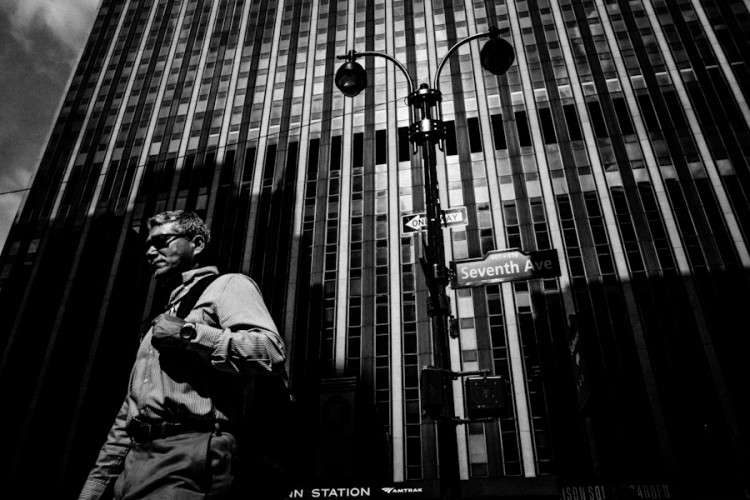
There are two frames in the photo above. One is the boundary of the image. The other is formed by the black shadow on the background. Whatever sits inside the second frame pops.
The reason is the law of similarity. The brain groups things that look alike, so it reads the frame as one unit and treats what is inside it as separate and special. The frame draws the viewer's eye inward and keeps the viewer's attention on the main subject of the image.
A good frame does more than point. It can:
- Direct attention to your subject when you cannot blur the background.
- Add depth by putting a layer in the foreground and the subject behind it, which gives a strong sense of depth.
- Give context about where the subject is, like a shop or a train.
- Hide distracting elements by covering the edges of the scene with something dark or simple.
Types of frames and examples of framing
Once you start looking, frames are everywhere. These are the different frames I look for.
Doorways, windows and storefronts
A doorway is the classic frame. Windows and storefronts work the same way. In Hanoi, many sellers sit inside small rectangles of shop, so you can use the storefront as a frame within a frame and compose from across the street.

Newsstands and hot dog carts do the same in New York. The vendor's window gives you a ready-made frame within a frame, so those shots are much easier to compose.
Arches, archways and stairways
An arch gives a rounded frame that feels old and formal. Archways, bridges, tunnels and a stairway seen from below all make strong frames, especially in black and white or any monochrome style, where the arch turns into a dark shape against a light subject.
Natural frames
A natural frame comes from natural elements: a tree branch hanging over the top of the frame, leaves along the sides, a gap between rocks, a patch of sky between buildings. Landscape photographers use this all the time. On the street, park trees are the easiest natural frames to find.
Light and shadow
This is my favorite. A shaft of light on a dark street, or a dark shadow on a bright wall, frames a person the moment they step into it. You do not need any architecture at all.
People as frames
Two shoulders in the foreground, or a gap in a crowd. People can frame other people, and it adds life to the photograph.
Glass, mirrors and car windows
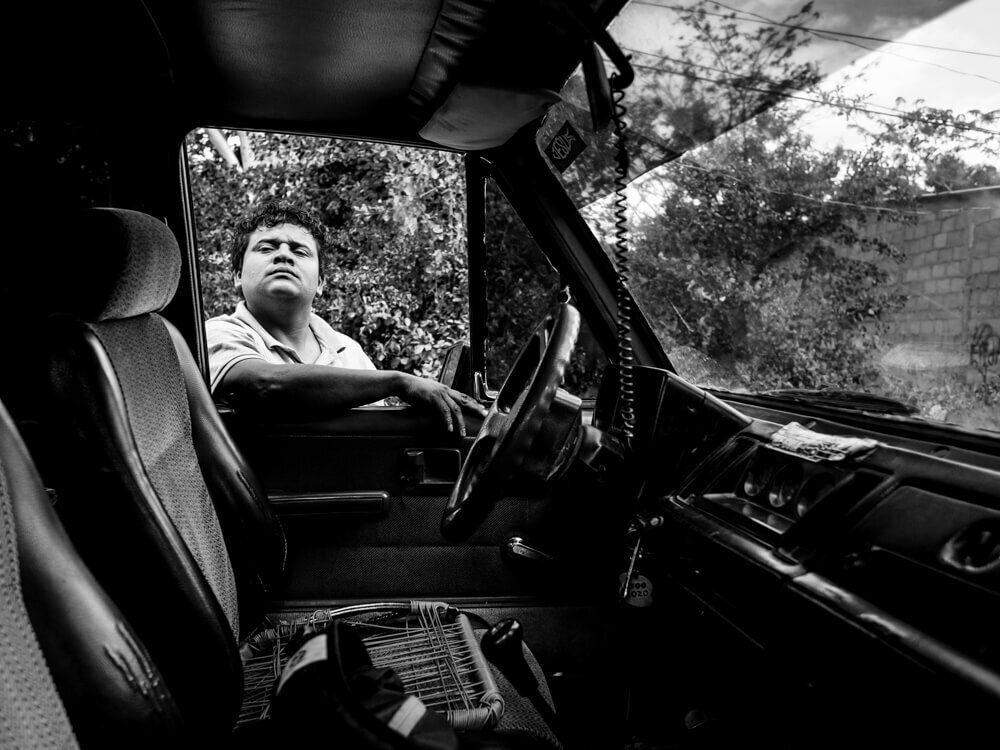
Reflections, shop glass, side mirrors and car windows give you frames with a twist. Lee Friedlander built a whole book, America by Car, around frames made by the inside of a car. Saul Leiter often shot through rain-covered windows and around objects, so the subject sits in a small clear gap.
Foreground blur
Shoot through something close to the lens with a wide aperture and a shallow depth of field. The blurred foreground forms a soft frame around a sharp subject. This is common in portrait photography and works on the street when you are shooting from behind a pole or a plant.
How to frame your subject: 7 framing techniques
1. Find the frame first, then wait
Frames do not move. People do. Spot the doorway or the shadow, frame the shot and wait for someone to walk into it. Patience is most of the technique.
2. The frame does not need all four sides
A frame around your subject can be open. A branch across the top, or a wall down one side, is enough. Two or three sides often look more natural than a perfect box.
3. Keep the frame simpler than the subject
The frame should be darker or plainer than what is inside it. A contrasting background inside the frame, like a bright subject in a dark doorway, is ideal. If the frame is as busy as the subject, it competes instead of helping.
4. Expose for the subject
Storefronts are usually in shade while the street outside is sunny. Your camera will guess wrong. Set exposure for the person inside the frame and let the frame go dark. You can deepen it later in Lightroom with a little dodge and burn around the subject. My street photography settings page shows how to set the shutter and aperture for this kind of mixed light.
5. Choose your aperture on purpose
At f/8 the frame and the subject are both sharp, which feels documentary and gives context. At f/2 the frame melts into blur and the subject pops. Both work. Decide which one helps the photo tell a story.
6. Move, don't only zoom
Zoom changes how much of the frame you include. Moving changes how the frame lines up with the subject. Step closer to a doorway and it fills more of the photo. Step back and it becomes a small window in a big scene.
7. Combine frames with other composition techniques
Frames work well with leading lines: the lines lead the eye in, and the frame holds it. They also pair with layering, since the frame is itself a layer, and with negative space, like a small figure framed by a window on a blank wall.
What Lee Friedlander teaches about frames
I have written about Friedlander for Inspired Eye, and the lesson I keep coming back to is controlled chaos. What is in front of the lens is chaos. What should come out of the camera is order.
Some of his photographs fill the frame with signs, poles, windows and reflections. They still work because there is a thread holding everything together. He uses poles and mirrors as frames that split one scene into several smaller pictures, then lets them talk to each other. America by Car is the extreme version: the same frame, the inside of a car, on every photograph, and it never gets boring.
When it comes to framing, that is the advanced use of the technique. The beginner uses one frame to isolate one subject. The master uses different frames to organize a whole busy scene.
Common framing mistakes
- The frame steals the show. A beautiful arch with a tiny, unclear subject is a picture of an arch. The subject must be the focal point.
- Subject cut by the frame. If the edge of the doorway slices through a head or a hand, move a step or wait.
- Nothing inside. An empty window is only a window. Wait for the person.
- Frame and subject at the same brightness. Without contrast, the frame does not separate. Look for a dark frame around a light subject, or the reverse.
- Forcing a frame on every shot. Frames are one tool. A blank wall and one person can be stronger than any doorway.
Framing vs composition
Framing is part of photography composition, not a replacement for it. Composition is the whole arrangement of shapes, lines, space and light in the frame. A frame within a frame is one of many composition techniques, next to leading lines, symmetry, negative space and the rule of thirds.
Ansel Adams is often quoted as saying there are no rules for good photographs, only good photographs. That applies here too. Use a frame when it makes the subject clearer or adds meaning. Skip it when it only adds decoration. A pleasing composition that says nothing will not hold anyone for long, whether it is fine art or a quick street shot.
For the full set of tools, start at the photography composition hub. If you are just starting, read street photography for beginners first.
Learn the principles behind the frame
A frame within a frame works because of the law of similarity and frame dynamics. In Phototactic, our street photography course, Module 3 teaches these laws along with the elements and arrangement principles behind composition, so you can see a frame before the person walks into it. The videos are short, and you get cheat sheets to keep on your phone.
Frequently Asked Questions
What is framing in photography?
Framing in photography is using elements in the scene, like a doorway, window, arch, tree branch or shadow, to surround the main subject and draw the viewer's eye to it. It is also called a frame within a frame. The word framing can also mean simply choosing what goes inside the edges of the photo, which every photographer does on every shot.
What are the types of framing in photography?
Common types are architectural frames such as doorways, windows, arches and stairways, natural frames such as tree branches and leaves, light and shadow frames, frames made by people in the foreground, frames made by glass, mirrors and car windows, and soft frames made by blurring something close to the lens with a shallow depth of field.
What are the basic rules for framing in photography?
Make sure the subject is the focal point, not the frame. Keep the frame simpler or darker than the subject. Avoid cutting the subject with the edge of the frame. Expose for the subject, not the frame. The frame does not need to cover all four sides. Most importantly, only use a frame when it makes the subject clearer or adds meaning.
Does a frame have to surround the subject on all four sides?
No. A frame on two or three sides often looks more natural than a perfect box. A tree branch across the top, a wall down one side or a dark foreground shape at the bottom can be enough to guide the viewer's eye. What matters is that the frame points inward and separates the subject from the rest of the scene.
How is framing different from composition?
Composition is the whole arrangement of every element in the photograph. Framing is one composition technique inside it. A frame within a frame isolates the subject, while other techniques like leading lines and negative space do other jobs. Most strong photographs combine a frame with at least one other technique, for example lines that lead into a doorway.
What is natural framing in photography?
Natural framing uses elements from nature, like tree branches, leaves, rocks, caves or gaps in the clouds, to surround the subject. It is common in landscape photography and works in city parks too. The frame is usually in the foreground and slightly darker than the subject, which adds a sense of depth and keeps the eye inside the photo.