
Negative space in photography is the empty area around the main subject: sky, a plain wall, shadow, water. Used on purpose, it isolates the subject and tells the viewer exactly where to look.
I'm Olivier Duong. I came to photography from graphic design, where white space is half the job. One of the lines I repeat most is simple: what you put in a frame is as important as what you don't put in it. Negative space is how you control the second part.
What is negative space in photography? Positive space vs negative space
Every photograph has two kinds of space. Positive space is the subject, the thing you want people to see. Negative space is everything around the subject that is empty or close to empty. It has little detail and no competing focal point.
Negative space isn't always white or blank. It can be a blue sky, a dark doorway, a foggy street, a smooth wall or a field of grass. What matters is that it stays quiet so the subject can speak. Negative space is the area that simplifies the frame and gives it a sense of airiness.
The two work together. Positive and negative space are like figure and ground: the empty area gives the subject its shape. Change the amount of negative space and you change the mood and feeling of the whole image. It works because it shifts visual weight: a small subject surrounded by emptiness can carry more visual weight than a big one lost in clutter.
Why negative space makes your photos stronger
A common complaint on Reddit threads about street photography is "too much going on." The frame is full of people and signs, and nothing stands out. There is no focal point, so the eye wanders and leaves.
Negative space fixes that. It helps in four ways:
- It directs the viewer's attention. With nothing else to look at, the viewer's eye goes straight to the subject.
- It gives the subject room to breathe. Breathing room makes a frame feel calm and deliberate instead of crowded.
- It creates a sense of scale. A tiny figure in a large empty space feels small, and the space feels vast.
- It sets the mood. Lots of negative space can suggest loneliness or tension, depending on light and colour.
Your background is as important as your subject. Once you know what you want to capture, the background is what decides whether it reads. Negative space is the cleanest background there is. An empty background draws attention to the subject and can emphasise a gesture that would disappear in a busy scene.
Unique ways to use negative space in street photography
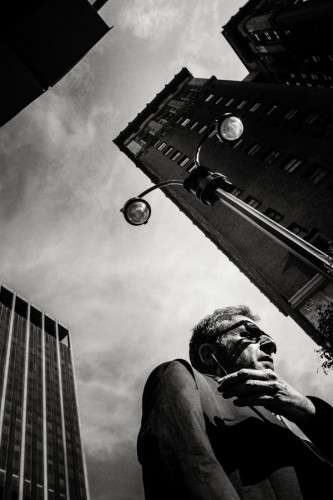
The street is rarely empty, so you have to create negative space with your position and your timing.
- Shoot up against the sky. Crouch and aim the camera up. The sky becomes a clean backdrop. I once wanted a portrait of a busy man, but behind him was a lamppost and a pile of buildings. So I waited for him to reach a spot where only the sky sat behind him, then I shot.
- Find a plain wall and wait. A smooth, single-colour wall is a stage. Frame it and let someone walk in. If you see empty space in your frame, that is often the right place for your subject.
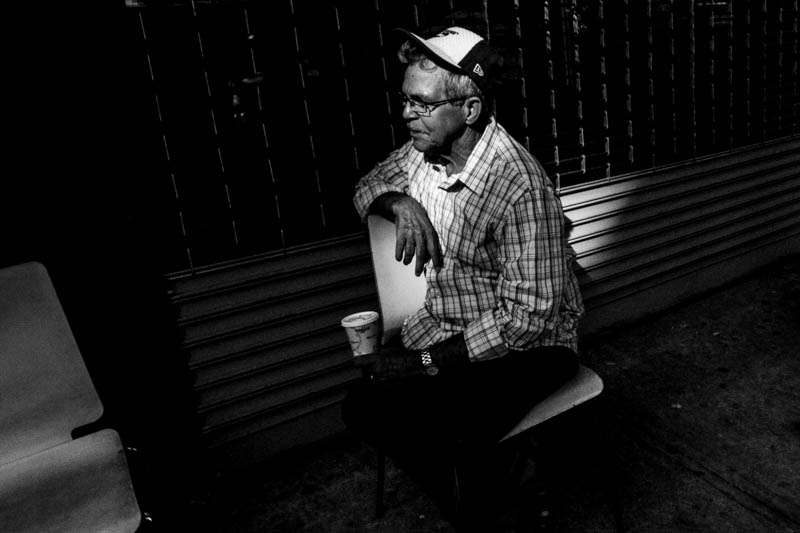
- Expose for the light. Meter for a bright patch and let the shadows fall to black. The dark area becomes negative space and the lit subject pops. Hard light works best for this play of light and shadow. Painters call it chiaroscuro.
- Use the weather. Fog, snow, rain and night all erase detail. A foggy morning turns a busy street into a minimalist one.
- Use water and ground. Shoot down on a plaza or a beach. From above, the ground becomes a clean field around small figures.
- Blur the background. A wide aperture and a shallow depth of field turn a busy scene into soft bokeh. It works, but on wide street lenses it only goes so far, so position matters more.
On a 28mm lens you can't blur your way out of a messy background. That limit is useful. It forces you to look for real empty space instead of relying on bokeh.
Where to place your subject in the empty space
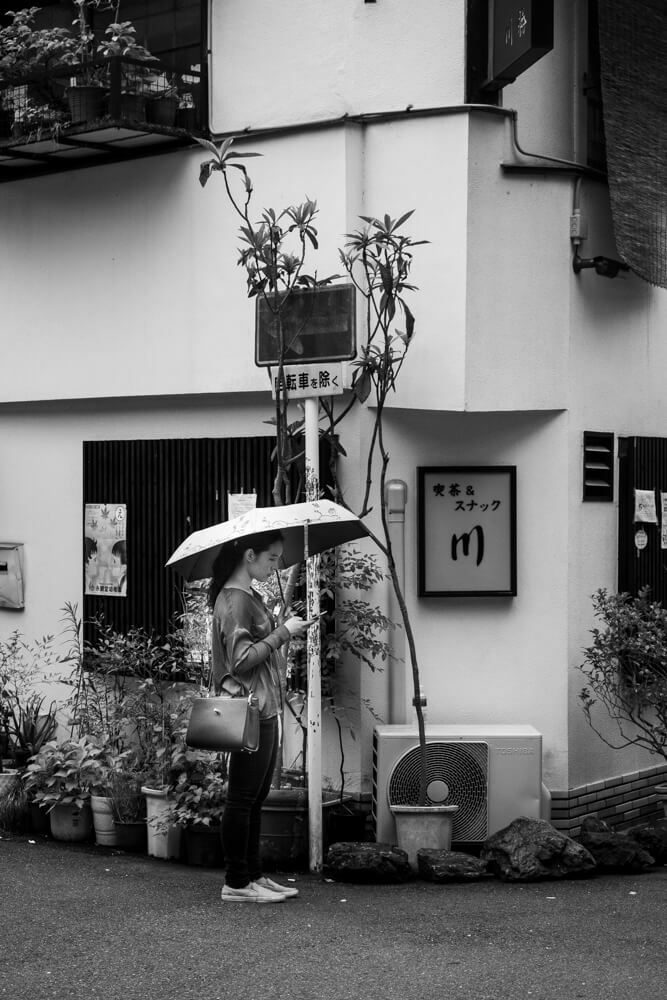
Negative space works best when the subject sits in a deliberate spot, not dead center by habit.
- Use the rule of thirds as a start. Put the subject on a third and let the empty area fill the other two thirds. It is a good rule of thumb to achieve balance between subject and space.
- Give room in the direction of movement. If a person walks or looks to the right, leave the space on the right. Space behind them feels like the past. Space in front feels like where they are going.
- Try the edge of the frame. A subject pushed near the edge, with a huge empty area beside it, creates tension. Use it when you want the viewer to feel uneasy.
- Go tiny. A small figure in a big space is one of the most striking images in street photography. The smaller the subject, the cleaner the space must be.
A lone figure in a clean space can speak volumes about emotion and mood. Keep the subject simple too. People see broad shapes first and details later. A clear silhouette against empty space reads in a split second.
Negative space images in portrait photography, landscape and minimalism
The idea is not limited to the street. In portrait photography, negative space around a face adds calm or isolation, and it leaves room for text on a magazine cover. In landscape and nature photography, a lone tree in a desert or a boat on still water is almost all negative space, and the emptiness is the subject.
Minimalist photography takes it furthest. A minimalist image may be 90 percent empty, with one small shape to anchor it. Minimalism is a genre in itself, but for street photographers it is a tool you pick up when a scene calls for it.
You can also create negative space in editing. In Adobe Lightroom, darken a distracting corner or crop away an element that fights the subject. Editing should support what you saw, not invent it.
Negative space photography: photographers who master it
- André Kertész. A master of shapes and empty space. His views looking down on city squares and snow turn people into small marks on a clean page.
- Fan Ho. His Hong Kong pictures use huge areas of shadow and light, with one small figure placed exactly where the light falls.
- Michael Kenna. Long exposure landscapes, often in fog or over water, where most of the frame is soft gray space.
- Hiroshi Sugimoto. His seascapes are almost pure negative space: sea and sky split by a horizon line.
Look at their work and notice how much of each frame is "nothing". Then notice how that nothing makes you look harder at the something.
When negative space doesn't work
Empty space is not good on its own. Walter Rothwell, who shoots street photography on a panoramic Hasselblad Xpan, described the risk well in an Inspired Eye interview: "huge swathes of negative space that don't add anything or work in harmony with the focal point."
A quick test: cover the empty area with your hand. If the photo gets better, the space was dead weight. If the subject suddenly feels cramped or ordinary, the negative space was doing its job.
Negative space also fails when the subject is weak. An empty frame around a boring moment is still boring. You still need a gesture or a light worth isolating. For the other side of the coin, see how layering fills a frame with depth, and how framing and leading lines guide the eye.
Make negative space a habit
Next time you shoot, spend 20 minutes looking only for clean backgrounds. Sky, walls, shadows, fog. Find the space first, then wait for the subject to arrive. It trains you to see the frame before the person, which is the opposite of how most beginners shoot.
That shift is what my online street photography course, Phototactic, is about: installing picture patterns so your eye spots them without effort. The composition keys module covers the 5 laws, 6 elements and 8 arrangement principles, including how empty space and contrast pull the eye. It is self-paced video with cheat sheets. It does not include critique of your own photos.
For the full toolkit, read my guide to photography composition.
Frequently Asked Questions
What is negative space in photography?
Negative space is the empty or quiet area around the main subject of a photograph, like sky or a plain wall. Positive space is the subject itself. Used on purpose, negative space isolates the subject and directs the viewer's attention to the focal point.
What is the golden rule of negative space?
There is no single official rule, but the guideline most photographers follow is that negative space must support the subject, not compete with it. Keep the empty area clean and give the subject room in the direction it faces or moves. The subject also has to be strong enough to stand alone.
What is an example of negative space?
A lone person walking across a large empty plaza, shot from above, is a classic example. The plaza is the negative space and the person is the positive space. Other examples are a face against a clear sky, or a figure in a single patch of light surrounded by shadow.
How do you create negative space in a photo?
Change your position so a clean background sits behind the subject. Shoot up against the sky, find a plain wall, expose for highlights so shadows go black, or use fog and snow. A wide aperture can blur a busy background, and in editing you can darken or crop distractions.
Which is better, positive or negative space?
Neither. They depend on each other. A photo with no negative space feels crowded, and one with no strong positive space feels empty. The skill is balancing the two so the subject stands out and the space around it adds mood or scale.