
Street Photography in New York
The densest mix of people, light and architecture in the Western world, and the city where street photography as a genre grew up.
- Spots
- 8
- Best time
- Year round
- Lens
- 35mm or 50mm
- Photographing people
- Generally allowed
New York is one of the best cities on earth for street photography because millions of people share narrow sidewalks every day and almost nobody stops to look at a camera. It is also where the genre grew up. Garry Winogrand and Helen Levitt worked these streets long before Instagram. Robert Frank, Vivian Maier, Joel Meyerowitz, Elliott Erwitt and Bruce Gilden all shot here too, and Alex Webb spent years photographing Brooklyn.
The light is the other reason. Tall buildings split each street into sun and shade, so, as lifelong New Yorker James Maher puts it, you rarely shoot a scene in just one kind of light. Neighborhoods change fast too. A ten minute walk takes you from cast-iron SoHo to the fish stalls of Chinatown.
It is an easy city for beginners. People are busy and used to cameras, and photographing in public is legal. That leaves your attention free for composition and timing. I recommend one neighborhood per session. Walk slowly and stop at good corners so people come to you.
Best street photography spots in New York
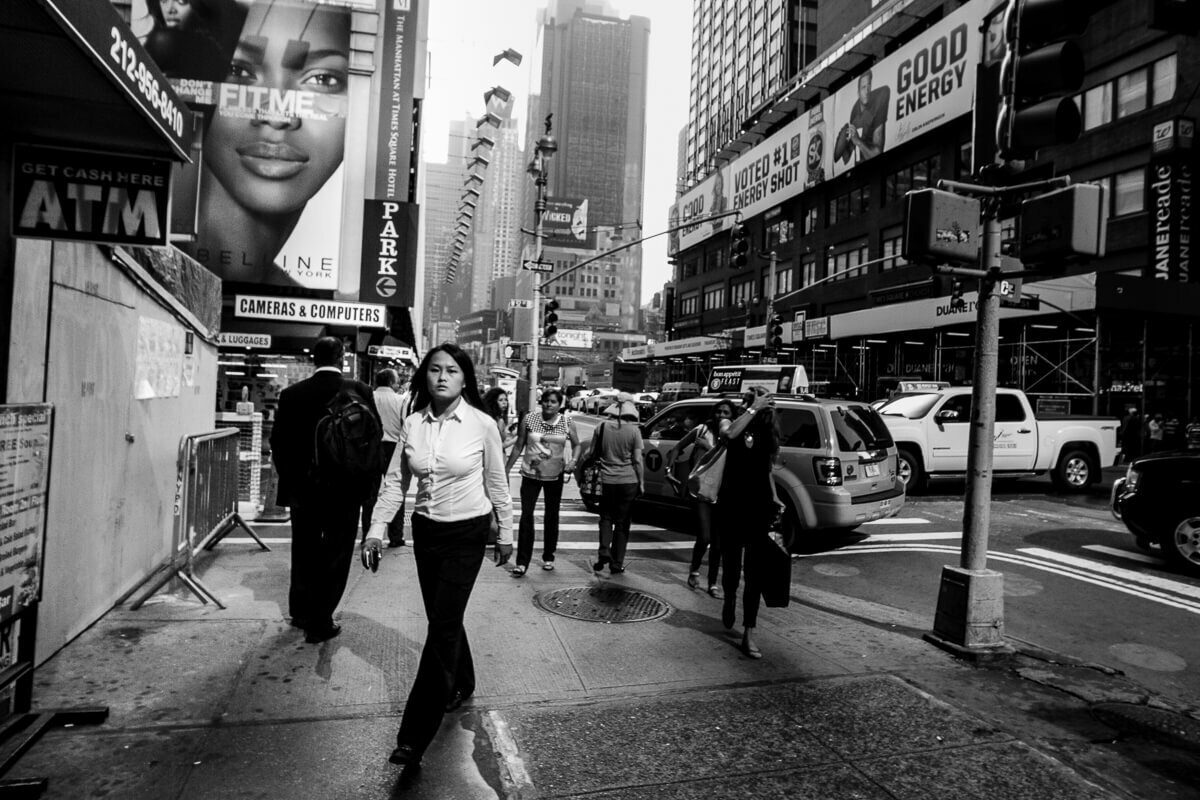
Midtown & Times Square
Midtown has the most light after dark, so it is the best area for night work. After sunset, find a bright shop window or sign and wait for someone to walk into it. Maher walks on the inside of the sidewalk so he stands between the light and his subject and catches the lit side of the face. By day, stand at 5th Avenue and 42nd Street, one of the busiest corners in town, and fill the frame edge to edge with walkers. Caution: costumed characters in Times Square often ask for money if you pose them, and December crowds can make it hard to move.
Chinatown & Lower East Side
Chinatown is gritty and friendly to cameras. Start in Columbus Park, where older men play Chinese chess and cards, with music on warm weekend afternoons. Then walk two blocks to the curved Doyers Street. Stand at the bend and let people appear from around the corner. Matej Sefcik likes the streets under the Manhattan Bridge, such as East Broadway and Division, plus the small market by Forsyth Plaza. The Lower East Side next door is empty on weekday mornings but fills up on warm weekends and evenings. Caution: watch the card games for a while before you raise the camera, and bring cash for food.
Financial District
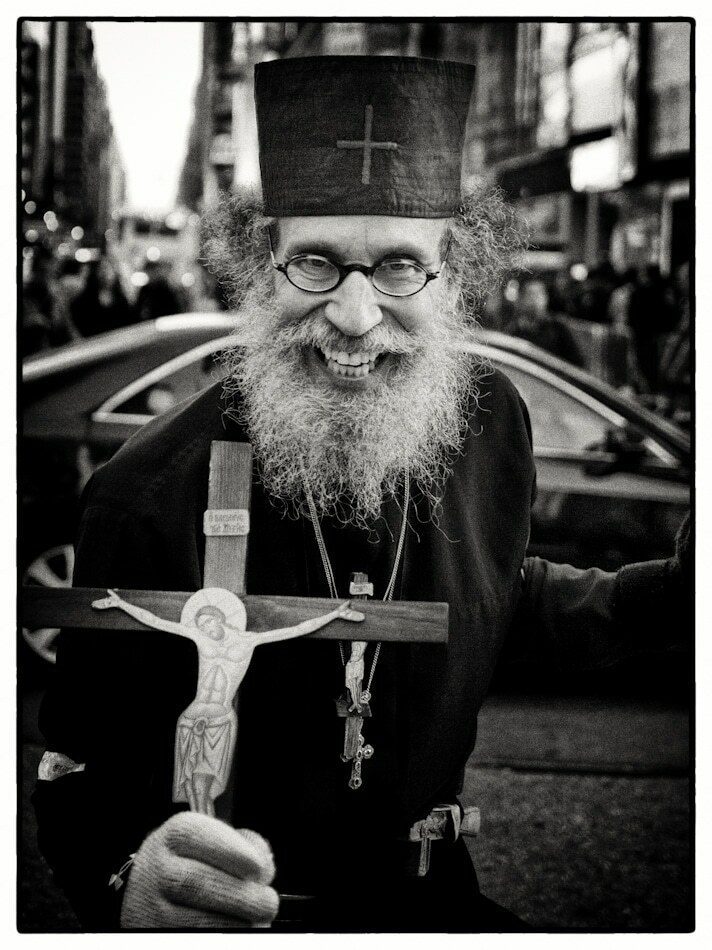
FiDi is the place for people in business clothes and for clean, graphic frames. Narrow streets and tall towers turn harsh midday sun into thin slices of light with deep shade around them. Expose for the bright patch and wait for a walker to step into it. You get a lit figure on a black background. In summer, Sefcik recommends 4 to 6 pm, when office workers pour out. Look for steam vents on cold mornings and use them as a backdrop. Caution: police presence is heavy around Wall Street, and the district goes quiet on weekends, so come on a weekday.
Staten Island Ferry
The ferry is free and runs 24 hours a day. The crossing from Whitehall Terminal to St. George takes about 25 minutes. Sefcik rides it on clear days, one to two hours before sunset, when the light is low and still above the skyline. Weekday commuters sit inside the cabin. Tourists crowd the outside decks. Loop the decks until you find a railing in good light, then wait there for people to enter the frame. Try a passenger in silhouette at the rail with the harbor behind. He prefers 35mm here but says a zoom helps. Caution: everyone must get off at St. George, so walk back through the terminal for the return boat.
Domino Park & Williamsburg piers
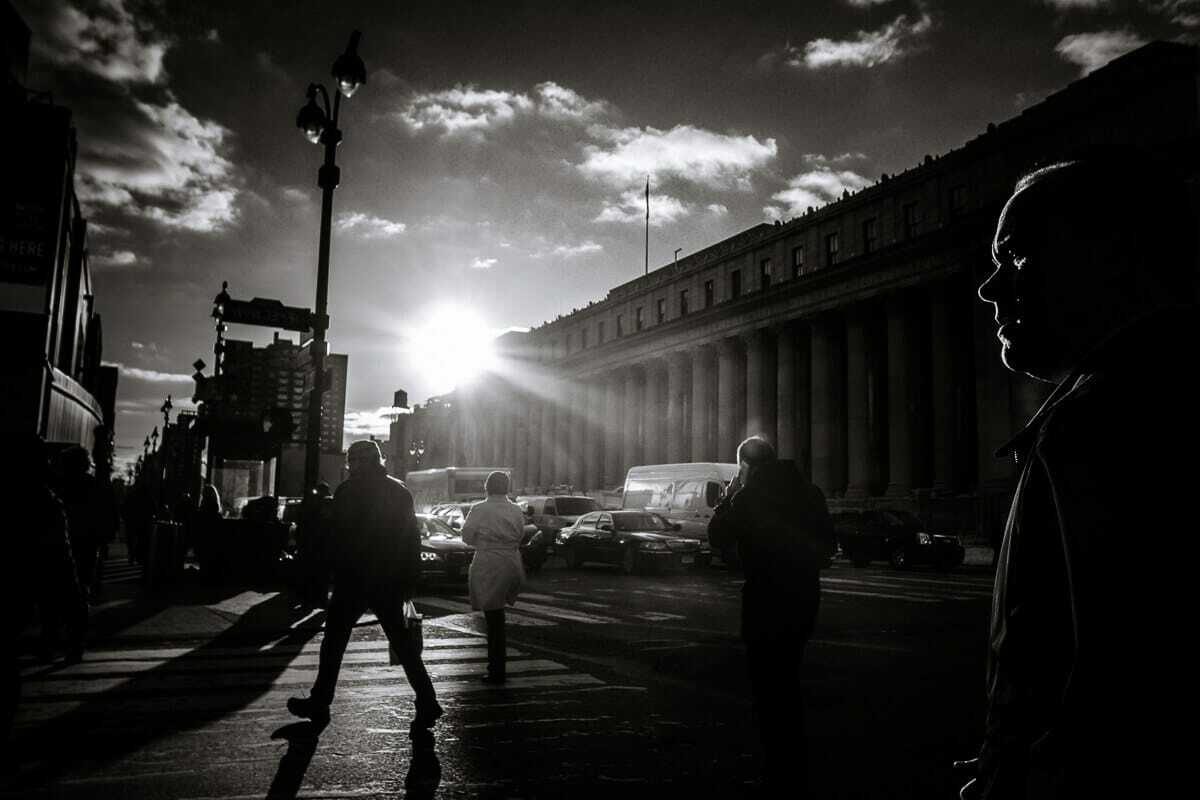
Just north of Domino Park, a few piers face Manhattan across the East River. At golden hour the sun sits behind the skyline and throws long shadows of people toward you. Expose for the sky and treat people as silhouettes against the water. Summer evenings are busiest, but snow days work too. If you arrive on the J or M train, spend a few minutes on the elevated Marcy Avenue platform, which looks down onto the street. Caution: South Williamsburg is home to a large Hasidic community. Sefcik notes that people there do not love being photographed, so keep your distance and never push.
High Line
The High Line is a park on an old elevated rail line on the west side, running from Gansevoort Street to 34th Street. It puts people at third floor height with buildings around them. Go early on a weekday for space, or late afternoon when the sun drops toward New Jersey and sidelights walkers heading north. Use the old tracks as leading lines and place one figure where they converge. The stepped seating over 10th Avenue lets you frame people against the traffic below. Caution: the path is narrow and packed on weekends. Stand to the side, and check opening hours, which change by season.
SoHo
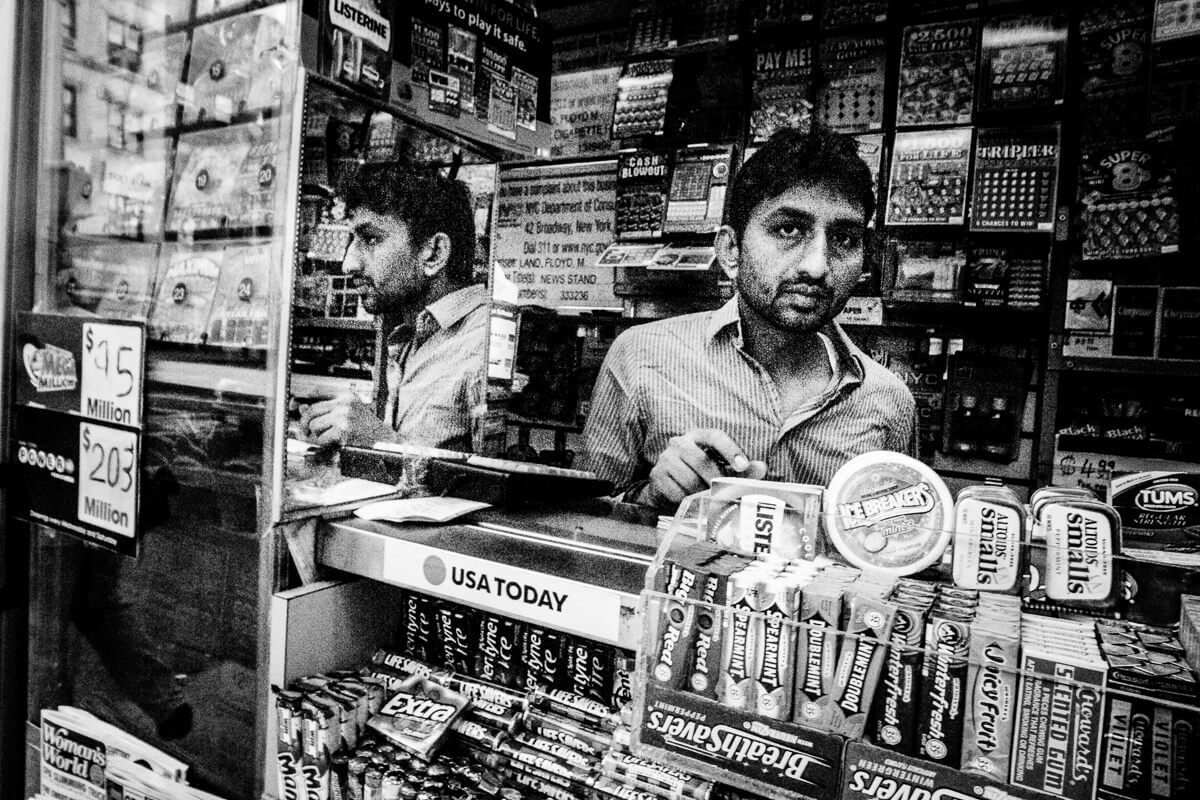
SoHo is the fashion district. Stylish locals and shoppers walk past cast-iron facades and designer windows, so your backgrounds change every few steps. Maher's favorite people-watching corner is Broadway and Prince Street. He calls Greene Street one of the most beautiful architectural stretches in the city. Come in the afternoon when both are busy, or early morning for long shadows and empty streets. Try shooting through a shop window so the reflection of the street overlaps the people inside. Caution: Broadway sidewalks are packed on weekends, so stand against a wall instead of stopping mid-stream.
Penn Station to Herald Square
This stretch of 34th Street is commuter land. Trains from New Jersey and Long Island empty into Penn Station, and the crowds flow east past Macy's to Herald Square. Come for the morning rush. Stand near a subway stair and let the stream of people walk toward you. Early and late in the day the sun runs along 34th Street, so faces get raking light against darker buildings. The small plazas at Herald Square are good for quieter frames of people waiting. Caution: MTA rules allow photography in the subway but ban tripods and lights, so stay handheld.
Photographing people in New York
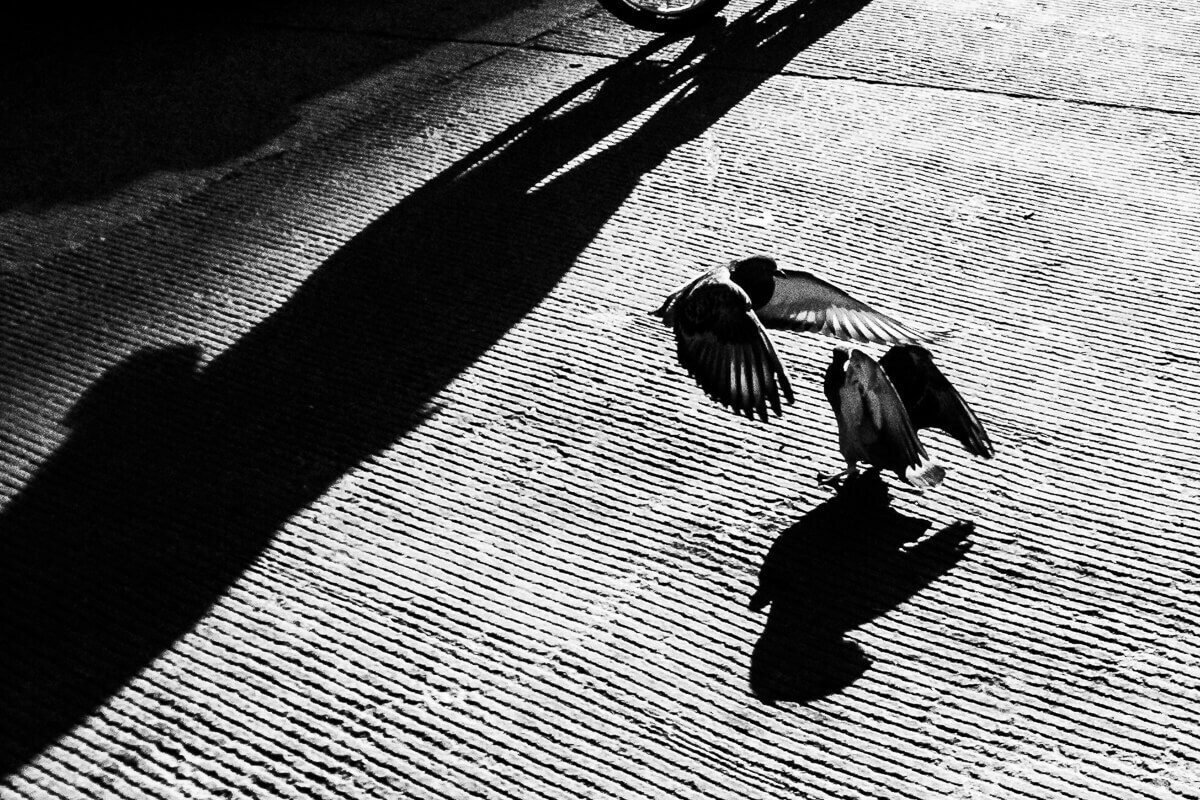
Photographing people in public is legal in the United States. New York law restricts using someone's likeness for advertising or trade without written consent, so commercial use needs a release. Editorial and artistic use is generally fine. See is street photography legal for more. This is general information, not legal advice.
New Yorkers mostly ignore cameras, and Maher says people rarely stop you. If someone does, be honest and offer to send the photo. If they are still unhappy, offer to delete it. You do not have to, but it defuses the moment. Skip people who look angry or unwell. Respect communities that prefer not to be photographed, such as the Hasidic blocks of Williamsburg.
General information, not legal advice. More in is street photography legal?
What to photograph in New York
- Commuters in business clothes in FiDi and around Penn Station.
- Fashion on 5th Avenue between 53rd and 58th Streets, the corners Bill Cunningham made famous.
- Subway riders and their reflections. The S shuttle between Grand Central and Times Square empties a full train toward you every few minutes.
- Older men at chess and cards in Columbus Park.
- Steam from street vents on cold mornings.
- Jewelers and dealers in the Diamond District on 47th Street.
- Beach crowds at Coney Island in summer.
- Tourists at the rails of the Staten Island Ferry at sunset.
- Musicians and skaters in Washington Square Park, which Tripp Berini calls a full spectrum of city life.
A one-day photo walk
- 8:00 am, Penn Station to Herald Square. Catch the commuter rush on 34th Street.
- 10:30 am, Chinatown. Take the N or Q train from 34th Street to Canal Street (about 10 minutes). Work Columbus Park and Doyers Street, then the blocks under the Manhattan Bridge. Eat lunch here.
- 1:30 pm, SoHo. Walk 15 minutes north along Broadway to Prince Street.
- 4:00 pm, Financial District. Take the R or W from Prince Street to Rector Street (about 10 minutes) and catch office workers leaving.
- About 90 minutes before sunset, Staten Island Ferry. Walk five minutes to Whitehall Terminal and ride a round trip of about one hour.
- After dark, Times Square. Take the 1 train from South Ferry to Times Square (about 20 minutes) and shoot under the signs.
When to shoot
Year round. Golden hour in the Financial District and on the waterfront; nights in Midtown. Autumn and snow days add texture.
The light
Tall buildings create light canyons and hard shadows, strongest on east-west streets near sunrise and sunset.
What to bring
35mm or 50mm prime (James Maher uses both). 28mm for crowds. ISO 800 on sunny days, 1600 to 6400 at dusk and night.
Safety
Generally safe in the areas above, day and night. Keep gear close on crowded subways and stay aware at night in unfamiliar blocks.
Tips for New York
- Maher's ISO ladder: 800 on sunny days, 1600 when overcast, 1600 to 3200 at dusk and 3200 to 6400 at night. Use aperture priority from f/8 and keep 1/250 or faster in daylight. More in our settings guide.
- A 35mm or 50mm prime covers almost everything. Go 28mm in dense crowds. See the lens guide.
- At night, set minus one stop of exposure compensation so scenes still look like night.
- Use a small camera with a silent shutter on the subway.
- Lunar New Year brings parades to Chinatown in late January or February.
- The Village Halloween Parade on October 31 and summer weekends at Coney Island draw the best crowds of the year.
- Go out on snow days while it is still falling.
- Pick one busy corner and wait 20 minutes. People walk into your space and you get closer with less effort.
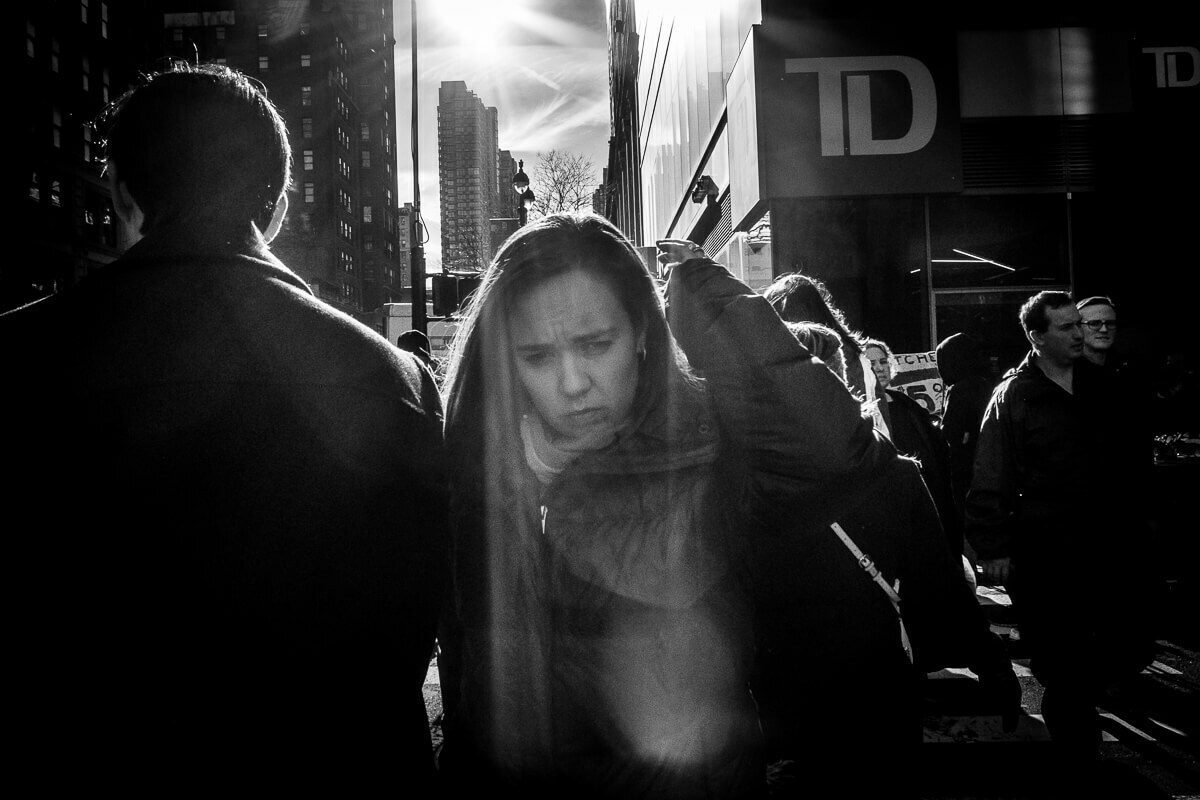
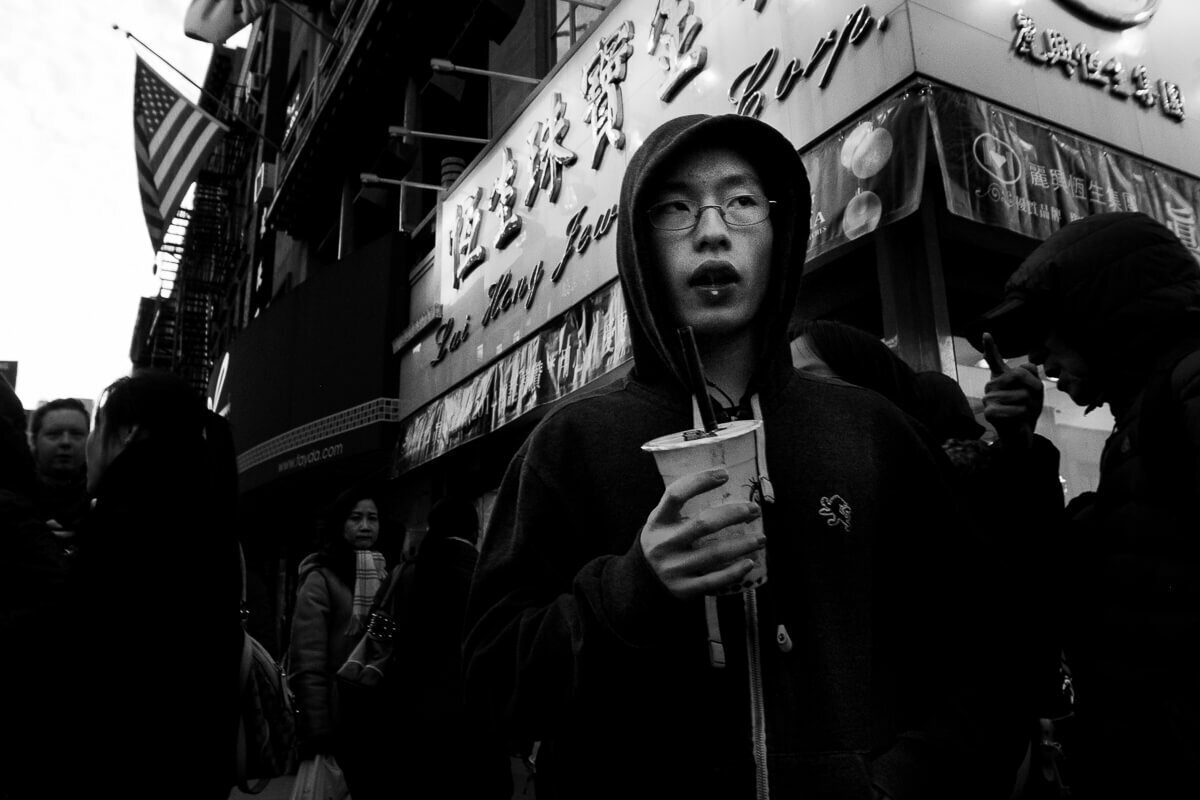
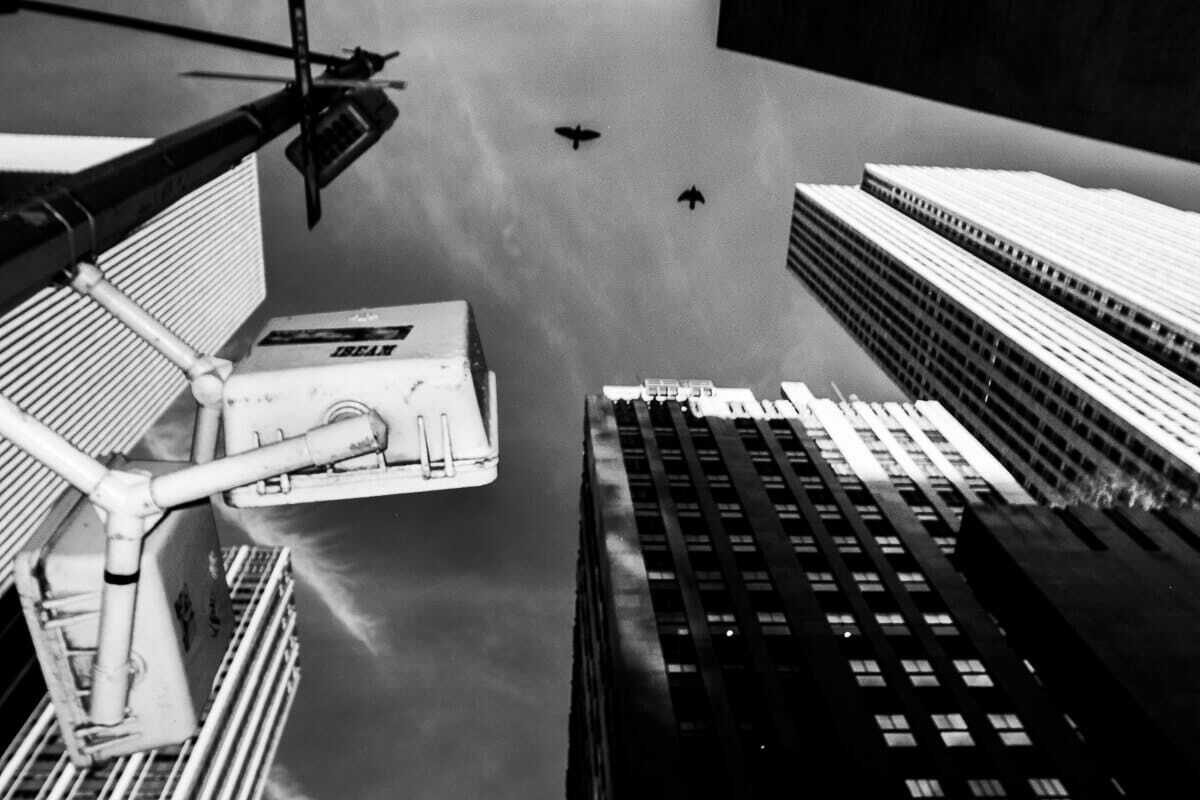
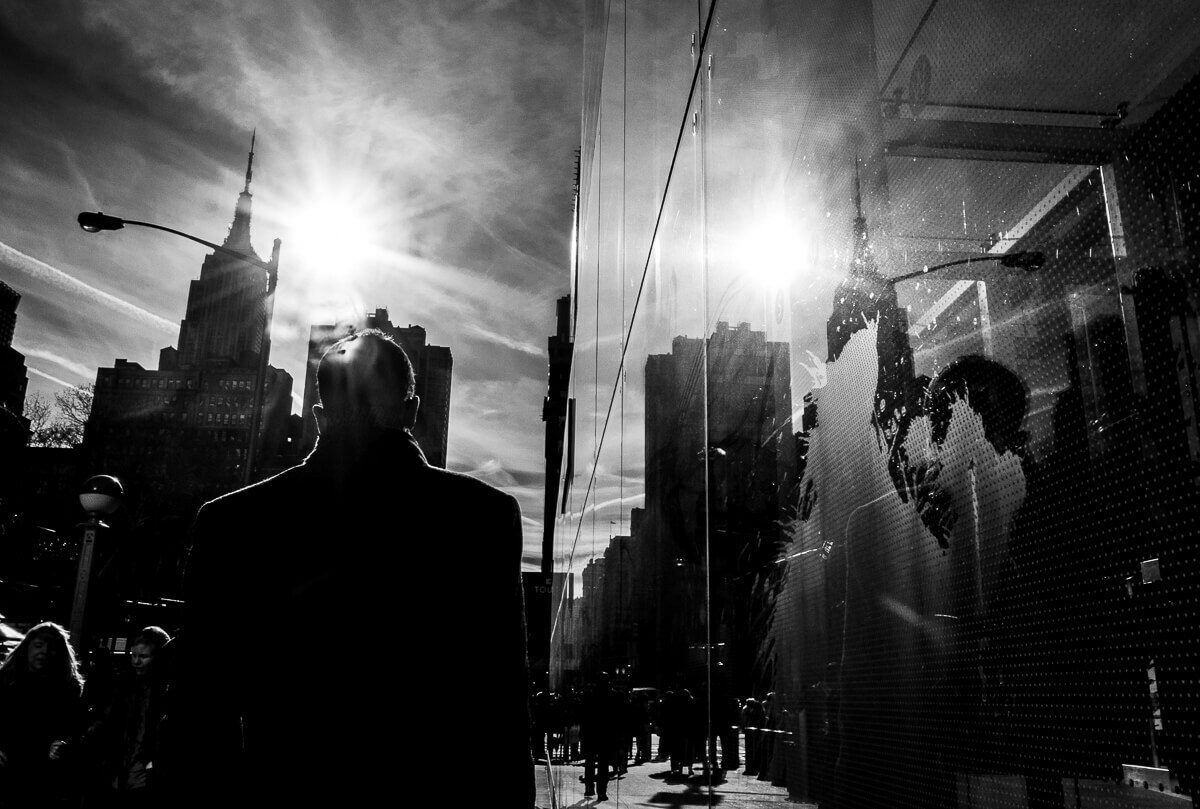
Photos by Olivier Duong in New York.
Frequently asked questions
Is street photography legal in New York?
Permissive. Photographing people in public is legal in the US; commercial use of a likeness needs a release. Delete or talk it through if someone objects.
Where are the best street photography spots in New York?
Start with Midtown & Times Square, Chinatown & Lower East Side, Financial District, Staten Island Ferry. Most light after dark; best area for night work.
When is the best time for street photography in New York?
Year round. Golden hour in the Financial District and on the waterfront; nights in Midtown. Autumn and snow days add texture.
What lens should I bring to New York?
35mm or 50mm prime (James Maher uses both). 28mm for crowds. ISO 800 on sunny days, 1600 to 6400 at dusk and night.
Is New York safe for street photographers?
Generally safe in the areas above, day and night. Keep gear close on crowded subways and stay aware at night in unfamiliar blocks.
More street photography cities
- PhiladelphiaUnited States
- BaltimoreUnited States
- BostonUnited States
- Washington DCUnited States
Further reading: the Inspired Eye guide to New York.