
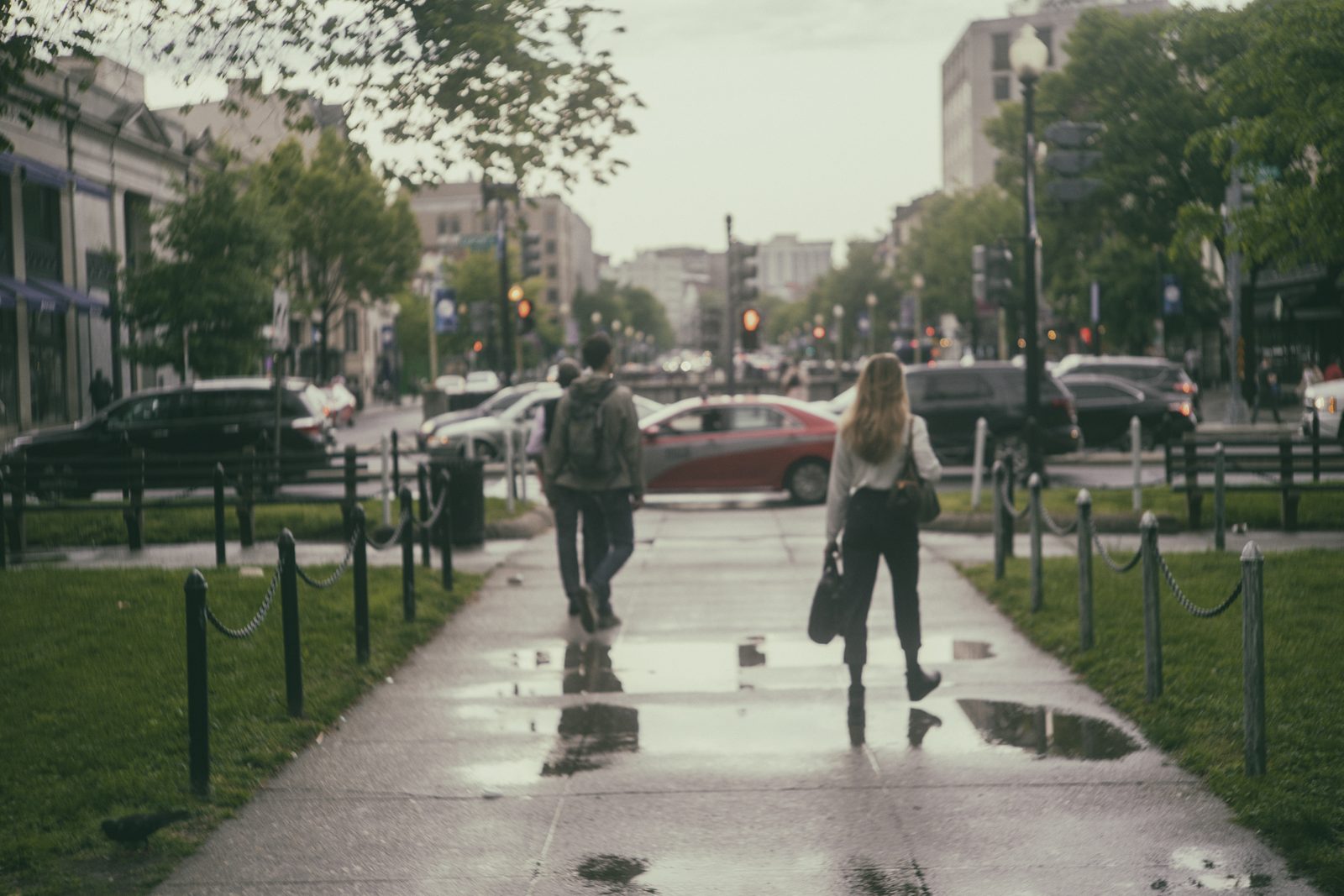
Street Photography in Washington DC
A city of monuments where the best street work happens around them: commuters, tourists, protesters and neighborhood life on a walkable grid.
- Spots
- 8
- Best time
- Spring for cherry blossoms (late March to early April) and autumn for mild weather
- Lens
- 35mm or 50mm
- Photographing people
- Generally allowed
Washington DC is good for street photography because of its constant activity: commuters, tourists, protesters and school groups share a compact, walkable grid. Robert Trejo, a DC street photographer, writes that the city is easy to overlook because the politics and monuments overshadow it, and that this is exactly what makes it worth shooting.
The trick is to turn around. The monuments are the backdrop, and the people around them are the pictures. Downtown gives you office crowds at lunch. The neighborhoods, from Chinatown up to U Street, give you daily life and night crowds. I'd pick a spot and stay for an hour rather than rushing between landmarks.
Best street photography spots in Washington DC
Union Station
Union Station connects Washington to Baltimore, Philadelphia, New York and Boston, and local street photographer Robert Trejo calls it the perfect place to combine busy travelers with architecture. He suggests working both the entrances and the hall inside. The vaulted hall throws big shapes of light on sunny mornings. Stand at the edge of a light patch and wait for a traveler with a bag to cross it. Outside, the plaza faces the Capitol dome. The building is private property with security, so keep a tripod folded and move on if asked.
Gallery Place & Chinatown
The blocks around the Friendship Archway at 7th and H Streets hold the Gallery Place Metro, the arena, the National Portrait Gallery and a lot of restaurants. Trejo calls it heavily congested with foot traffic and recommends the latter part of the day, when you get more variety of people and better shadows. Event nights at the arena bring crowds in team jerseys. Use the arch as a frame, or stand at the Metro escalators on 7th Street and catch people rising into the light. It is loud and busy after dark, so keep your bag closed.
Farragut Square & K Street
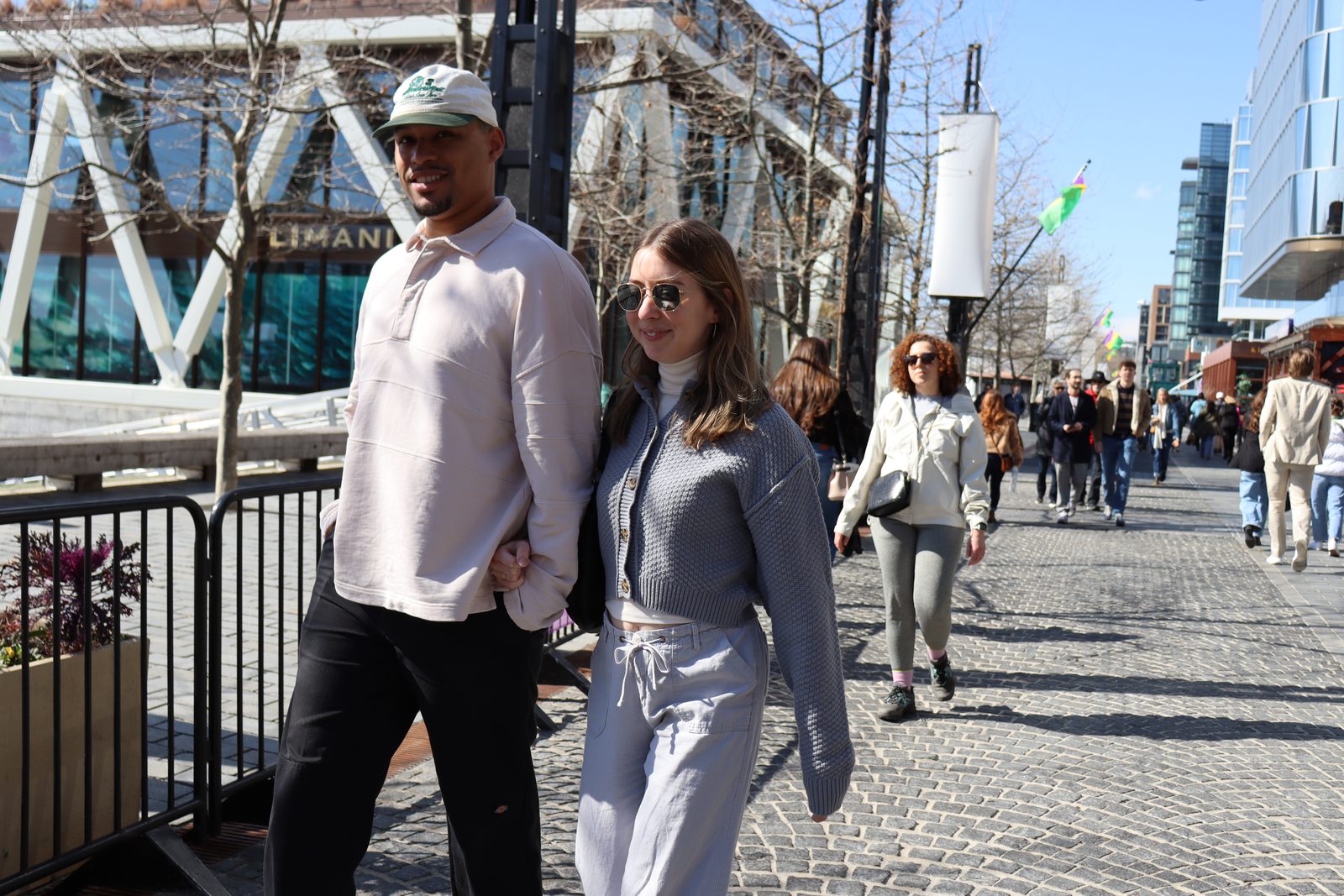
This is the office core of downtown, and Trejo's pick for a spot without tourists. He suggests walking a two or three block radius around International Square at 19th and K, near Farragut Square, and working it around noon when the lunch crowd pours out. The office towers create hard shadows and narrow lanes of light across the sidewalks. Look for one person in a suit crossing a bright gap between buildings. Farragut Square itself fills with people eating at lunch on warm days. Guards may approach you near building entrances. You can photograph from the public sidewalk.
Lincoln Memorial & the National Mall
The National Mall runs from the Capitol to the Lincoln Memorial, and the monuments pull tourists and protesters all year. Skip the postcard. Photograph the groups posing on the Lincoln steps, or joggers passing the Reflecting Pool. Sunrise is quieter and the light comes from behind the Capitol end. At sunset the steps fill up and figures silhouette against the sky. Late March to early April brings the cherry blossoms around the Tidal Basin, and huge crowds with them. Expect a long walk between monuments and little shade in summer.
Dupont Circle
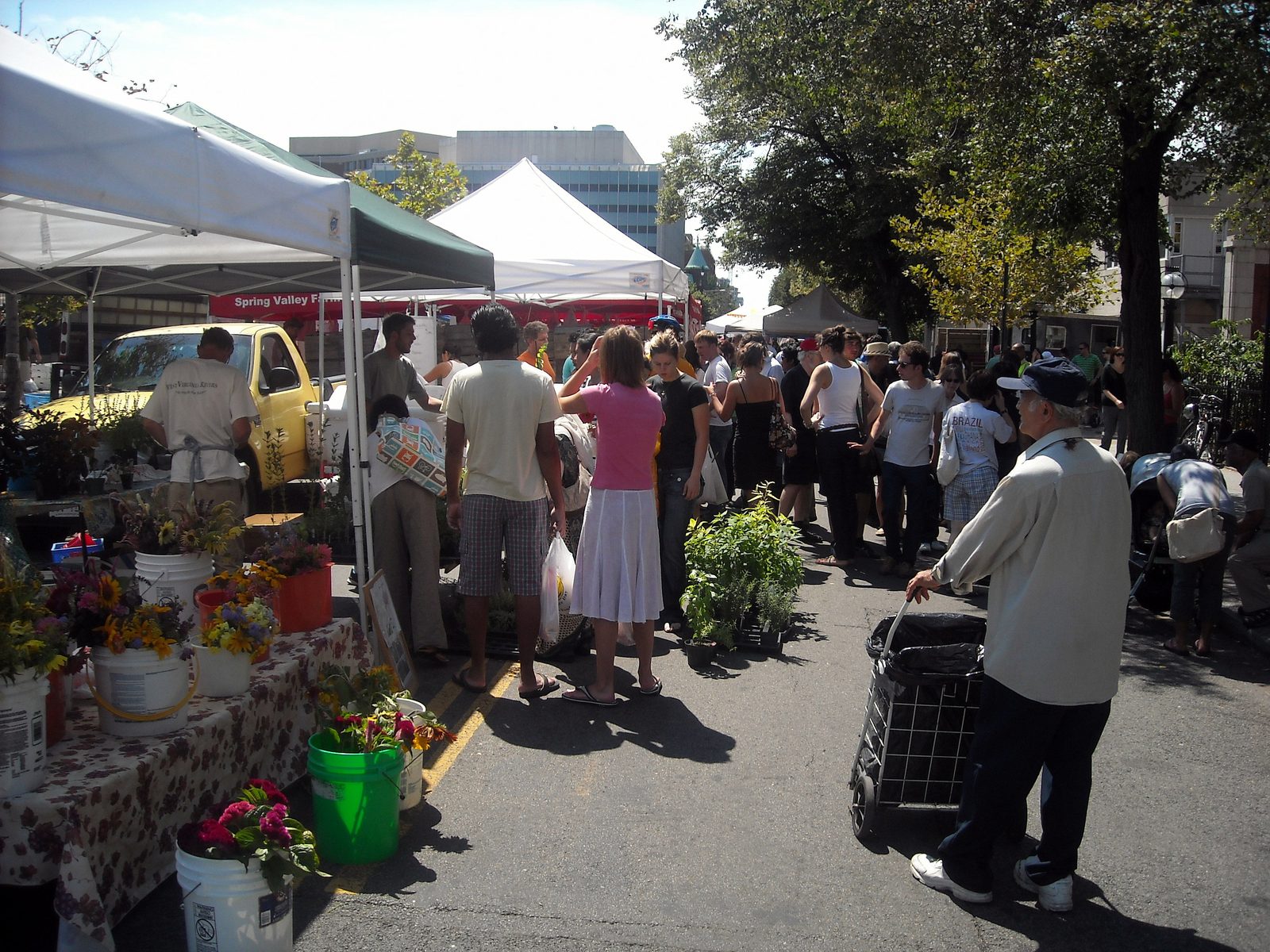
Improve Photography calls the area around Dupont Circle ripe with photo possibilities and great people watching. The circle is a small park with a marble fountain in the middle, ringed by traffic, with bookstores and cafes on the streets around it. People sit on the fountain rim and cut across on their way to the Metro. Sit a while and let people forget you. Late afternoon light filters through the trees. Embassy Row runs up Massachusetts Avenue nearby; photographing embassies from the sidewalk is generally fine, but guards may watch you closely.
U Street & 14th Street
U Street was once called Black Broadway, and it still has the Lincoln Theatre and Ben's Chili Bowl among a long run of clubs. Improve Photography describes it as a vibrant area with lots of colorful people and buildings. 14th Street crosses it with more bars and sidewalk cafes. Murals of cultural icons cover the walls around both streets. Come in the evening, when the neon comes on and the sidewalks fill. Put a mural behind a passerby and wait for a gesture. Weekend nights get crowded and rowdy late, so shoot early in the night.
Meridian Hill Park
Meridian Hill Park, also called Malcolm X Park, is a 12 acre terraced park between 15th and 16th Streets with a 13 step cascading fountain. On Sunday afternoons in warm weather a drum circle gathers on the upper level, with dancers and families around it. Arrive mid afternoon and the circle gives you gesture and faces lit by low sun through the trees. Photograph the dancers, not just the drummers. Some regulars know they are being watched and some don't want to be. Ask before a close shot.
Georgetown Waterfront
Georgetown's waterfront park runs along the Potomac below K Street, with wide steps and views of the Key Bridge. M Street above it is a busy shopping strip with brick row houses. Evenings bring couples and dog walkers to the river, and rowers pass in the morning. Bruce Stambaugh photographed here during Georgetown Glow, a winter lighting festival. I'd come at sunset, when the light comes straight up the river, and frame people on the steps against the water. The waterfront can flood after heavy rain, so check before you go.
Photographing people in Washington DC
In the US, photographing people in public places is generally legal. The ACLU of DC says this includes the outside of federal buildings, and police and federal agents doing their jobs in public. Officers can't make you delete photos. Security guards at federal buildings still question photographers, so stay calm and polite. The Metro is stricter than the street: WMATA allows handheld personal photos of stations and trains but asks you not to photograph other riders, and bans tripods. This is general information, not legal advice.
Most people downtown are in a hurry and ignore cameras. Residents in the neighborhoods notice more. A nod and a smile go a long way.
General information, not legal advice. More in is street photography legal?
What to photograph in Washington DC
- Protest and politics. Demonstrations on the Mall and near the White House, with hand painted signs and police lines.
- Tourists and school groups in matching T shirts on monument steps.
- Office workers in suits at lunch on K Street.
- Architecture as stage. Columns and marble steps that frame a single figure.
- Neighborhood life around Dupont Circle and U Street.
- Metro stations. Coffered concrete vaults and long escalators, best shot as empty space.
- Seasonal crowds under the cherry blossoms in spring and holiday lights in Georgetown in winter.
A one-day photo walk
- 8:00, Union Station. Morning light in the hall and commuters at the Metro exit.
- 9:30, the National Mall. A 20 minute walk west past the Capitol, or the Metro. Work the monuments and end at the Lincoln Memorial.
- 12:00, Farragut Square and K Street. A 25 minute walk north. Lunch crowds among the office towers.
- 14:00, Dupont Circle. Ten minutes up Connecticut Avenue. Sit and watch.
- 17:00, Gallery Place and Chinatown. Metro from Dupont. Late light and evening crowds.
- 19:30, U Street. Metro two stops north. Murals and neon as the night begins. On a Sunday, go to Meridian Hill Park at 15:00 instead of Dupont.
When to shoot
Spring for cherry blossoms (late March to early April) and autumn for mild weather. Weekday lunch hour downtown and Sunday afternoons at Meridian Hill.
The light
Wide avenues and pale stone buildings bounce light. Low sun cuts long shadows along the diagonal avenues. Summers are hazy and humid.
What to bring
A 35mm prime for neighborhoods, a 50mm for crowds on the Mall. Comfortable shoes; the distances are longer than they look.
Safety
The Mall and the areas listed are generally safe by day and heavily policed. Use normal big city awareness at night around Chinatown and U Street.
Tips for Washington DC
- Cherry blossoms: peak bloom usually falls between late March and early April. Go at sunrise or accept the crowds.
- Summer: hot and humid, with afternoon storms. Shoot early and late.
- Lens: a 35mm for neighborhoods, a 50mm to isolate people on the Mall. See best lens for street photography.
- Metro: great architecture, but point the camera at the space, not the riders.
- Protests: they are public events and good material. Keep a clear exit and stay out of police lines.
- Security: if a guard stops you near a federal building, you may keep shooting from the public sidewalk. Read up on whether street photography is legal.
- Sundays: the Meridian Hill drum circle runs in warm weather, in the afternoon.
Frequently asked questions
Is street photography legal in Washington DC?
Permissive. Photographing people and the outside of federal buildings from public space is legal in the US. Metro allows personal photos but asks you not to photograph other riders and bans tripods. Private stations and office lobbies set their own rules.
Where are the best street photography spots in Washington DC?
Start with Union Station, Gallery Place & Chinatown, Farragut Square & K Street, Lincoln Memorial & the National Mall. Grand rail hub by the Capitol. Travelers under arched light.
When is the best time for street photography in Washington DC?
Spring for cherry blossoms (late March to early April) and autumn for mild weather. Weekday lunch hour downtown and Sunday afternoons at Meridian Hill.
What lens should I bring to Washington DC?
A 35mm prime for neighborhoods, a 50mm for crowds on the Mall. Comfortable shoes; the distances are longer than they look.
Is Washington DC safe for street photographers?
The Mall and the areas listed are generally safe by day and heavily policed. Use normal big city awareness at night around Chinatown and U Street.
More street photography cities
- BaltimoreUnited States
- PhiladelphiaUnited States
- PittsburghUnited States
- New YorkUnited States