
Documentary photography is photography that records real people and real events truthfully, usually over a long period, to tell a story or bear witness. Where a street photograph stands alone, a documentary photograph is usually one part of a larger body of work.
I'm Olivier Duong. People have labeled me a street photographer for years, but I have always thought of myself as a documentary photographer who works in the streets. Studying how documentary differs from street photography will change the way you shoot both.
What is documentary photography?
Documentary photography is a form of photography that uses the camera as a tool to record the world as it is. It covers social issues and everyday life alike, and it is driven by one aim: to show people something true that they would not otherwise see.
A documentary project is about something real and unstaged, made over weeks or years. It is shown as a series, often with text, so the pictures tell a story together. The documentary photographer is part witness, part storyteller.
The type of photography has roots in the 19th century. Photographers working for Mathew Brady's studio recorded the American Civil War. In the 1930s the term "documentary" spread to photography from documentary film, and Walker Evans later described his own approach as "documentary style": pictures with the look of a record, made as art.
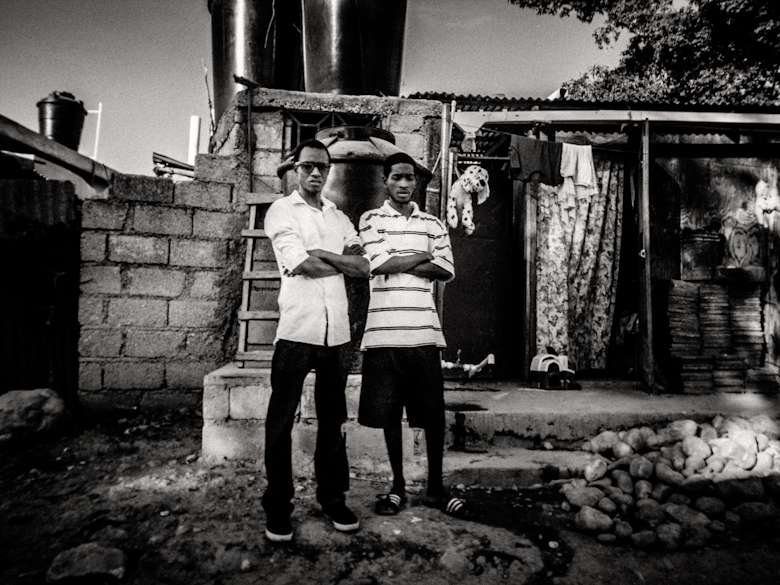
Documentary photography vs street photography
Street photography is concerned with the instant. Documentary photography is concerned with the sequence. That is the difference in one line.
In street photography you care about the one frame. It has to work on its own, with no caption and no neighbors. In documentary you care about how a sequence tells a story. One picture can hold a story inside it, but the point of documentary is the story across pictures. That changes how you shoot. You stop hunting only for the killer frame and start collecting establishing shots, details, portraits and action that let a viewer understand a place.
There is also a difference in intent. Documentary has a report or witness side to it. Street photography's concern is mostly art. That's why I have trouble calling my own work street. When I am in the street I am documenting it, photographing people in their natural habitat, knowing every stranger has a story.
Don't let the labels slow you down, though. Documentary can happen in the street and street photography can be documentary. What matters is that what you capture is what you saw. For the other side of this split, read what is street photography.
| Street photography | Documentary photography | |
|---|---|---|
| Unit | The single frame | The series |
| Aim | Mostly art | Witness and story |
| Time | An instant, often by chance | Weeks to decades on one subject |
| Text | Rarely needed | Often essential |
| Access | Strangers in public | Often inside homes and groups |
Documentary photography vs photojournalism
Photojournalism reports the news: an event, on deadline, for a publication. Documentary photography explores a subject or a social issue over time, usually on the photographer's own schedule.
The overlap is large. Many photojournalists make long documentary projects, and reportage sits somewhere between the two. A simple test: if the picture would be out of date next week, it's probably photojournalism. If it would still matter in ten years, it's probably documentary. Photojournalism also follows stricter rules about editing and staging, and documentary photographers are expected to hold to the same standard of truth.
Social documentary and humanist photography
Social documentary photography is documentary made to change something. It puts a light on injustice and on neglected people, hoping that seeing them will push the public toward social change. Jacob Riis and Lewis Hine invented the form in New York City at the turn of the 20th century.
The biggest social documentary project in history was the Farm Security Administration (FSA) photography program in the United States. From 1935 into the 1940s, under Roy Stryker, it hired photographers including Dorothea Lange and Walker Evans to record rural poverty during the Great Depression. The result is one of the great public archives of photography, now held by the Library of Congress.
Humanist photography is the gentler European cousin. It grew in France after World War II with photographers such as Robert Doisneau, Willy Ronis, Izis and Sabine Weiss, who photographed ordinary Parisians with warmth and humor. Edward Steichen's 1955 exhibition The Family of Man at the Museum of Modern Art is the high point of that humanist spirit.
25 documentary photographers to study
These are the documentary photographers I would send anyone to first, in rough chronological order. Look at the books or the museum and archive collections, not just single images. Documentary lives in the sequence.
- Jacob Riis. A Danish-American reporter whose How the Other Half Lives (1890) showed the tenements of New York's Lower East Side and helped drive housing reform.
- Lewis Hine. Worked for the National Child Labor Committee from 1908, photographing children in mills and mines. His pictures fed the push for child labor laws.
- Eugène Atget. Spent decades photographing old Paris before it disappeared. A record made for painters that became a foundation of both street and documentary photography.
- August Sander. A German photographer whose lifelong project, People of the 20th Century, set out to portray every type of person in German society.
- Dorothea Lange. The FSA photographer behind Migrant Mother (1936), probably the most famous image of the Great Depression.
- Walker Evans. FSA photographer and author, with James Agee, of Let Us Now Praise Famous Men (1941) about Alabama tenant farmers.
- Berenice Abbott. Her Changing New York project in the 1930s recorded a city being rebuilt. She also rescued Atget's archive.
- Gordon Parks. Joined the FSA and made American Gothic, Washington, D.C. (1942), then became Life magazine's first Black staff photographer.
- Henri Cartier-Bresson. Co-founded Magnum Photos, the photographic co-operative founded in 1947, and moved easily between street and reportage. See the decisive moment.
- Robert Capa. The war photographer who co-founded Magnum with Cartier-Bresson and others. Known for his Spanish Civil War and D-Day pictures.
- W. Eugene Smith. His Life photo essay "Country Doctor" (1948) set the standard for the form. His later Minamata work documented mercury poisoning in Japan.
- Roy DeCarava. Photographed Harlem from the inside. The Sweet Flypaper of Life (1955), made with Langston Hughes, is a quiet masterpiece.
- Robert Frank. The Americans (1958) turned a road trip into a hard look at the country. It sits right on the line between street and documentary.
- Diane Arbus. The American photographer known for direct portraits of people on the margins of society. Controversial then and now.
- Bruce Davidson. Spent two years on one Harlem block for East 100th Street (1970), then photographed the New York subway.
- Danny Lyon. Rode with a Chicago motorcycle club for The Bikeriders (1968). A model of documentary from inside a group.
- Ernest Cole. His House of Bondage (1967) exposed apartheid in South Africa and was banned there.
- Josef Koudelka. His Gypsies series and his pictures of the 1968 Soviet invasion of Prague are landmarks. Read our Josef Koudelka profile.
- Jill Freedman. Lived in the protest camp Resurrection City in 1968, then spent years with New York firefighters and police for Firehouse and Street Cops.
- Mary Ellen Mark. Her work on homeless teenagers in Seattle became Streetwise, a book and a documentary film made with Martin Bell.
- Susan Meiselas. A Magnum photographer known for Carnival Strippers (1976) and her coverage of the revolution in Nicaragua.
- Chris Killip. A British photographer whose In Flagrante (1988) recorded deindustrialisation in the North East of England.
- Nan Goldin. The Ballad of Sexual Dependency is a diary of her friends, including New York's LGBTQ community, shot from inside her own life.
- Sebastião Salgado. The Brazilian photographer behind Workers and Genesis, huge black and white projects that took years each.
- Jim Mortram. His Small Town Inertia follows people living within a few miles of his home in Dereham, Norfolk. Proof you don't need to travel. See street photography in a small town.
For the wider list across every genre, see famous photographers, and for street photographers specifically, our street photographers hub.
Documentary photography today
The great era of the picture magazine ended with the rise of television. Life stopped weekly publication in 1972, and documentarians lost their biggest outlet. The form survived in books and gallery shows, and digital technology has since made it cheaper to shoot and publish a long project than ever before.
Color photography also changed documentary. In the 1970s William Christenberry began photographing the same buildings in Hale County, Alabama, that Walker Evans had recorded in black and white, returning year after year in color. Today most examples of documentary photography are in color, and many deal with economic inequality and migration, the same way earlier photographers used the camera to tell stories about child labour and tenements.
Photography is often called the most democratic art, and documentary proves it. A phone and patience are enough to start a project on your own street.
How to start shooting documentary photography
Pick a subject you can go back to. That's the whole secret. Many documentary photographers make their best work within walking distance of home, because access and repetition beat exotic locations.
- Choose something you care about. A neighborhood, a market, a club, a family business, a changing street. You will be at it for months.
- Think in shot types. An establishing shot that shows the place, medium shots of people doing things, close details, and portraits. A story needs all of them.
- Talk to people. Documentary usually means access. Tell people what you are doing. See how to photograph strangers for what to say.
- Come back at different times. Different seasons and light give you the variety a sequence needs.
- Write things down. Names and what happened. Captions are part of documentary.
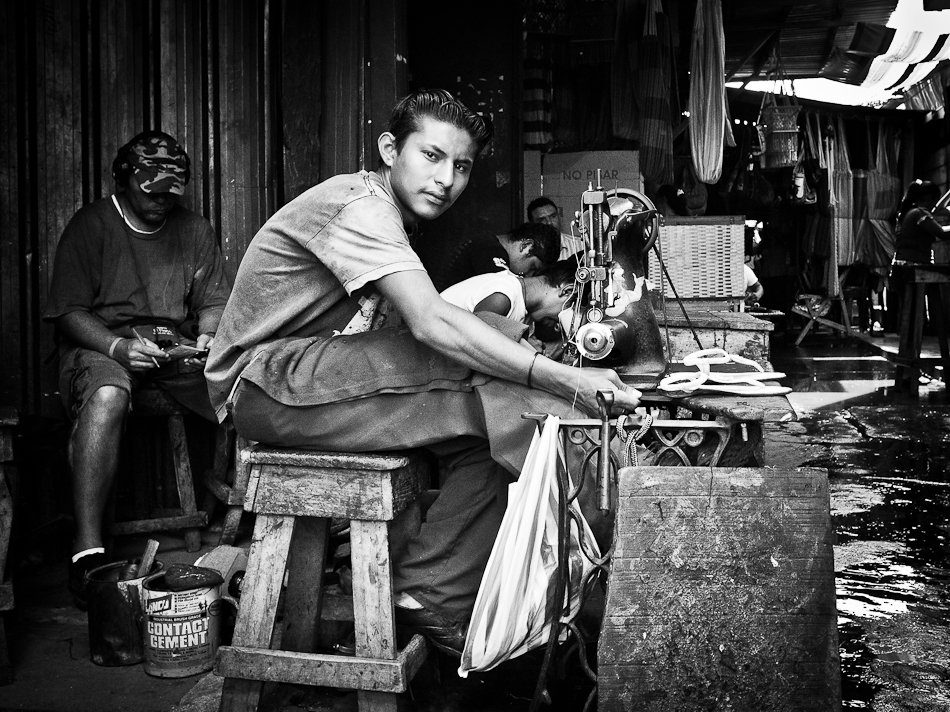
How to edit and sequence a documentary series
Editing is where documentary is made. When I edited photographers for Inspired Eye, I started by picking the strongest images for the beginning and the end. The opener grabs attention, and the closer is what people remember. Then I placed strong frames in the middle, where attention drops, to pick the energy back up.
Right after the opener I place a scene-setting image, because the viewer has no idea where you are. You take your own town for granted. They don't. Then I cut near-duplicates and group the rest by links between them: the same location, the same time of day, a similar color, a similar composition, or a subject that grows or shrinks from frame to frame.
Keep your intent in mind the whole time. Two images can both be good, but only one says what the series is about. The full method is in how to make a photo essay.
Documentary photography and composition
A documentary picture still has to be a good picture. A true story told with weak frames loses the viewer by image three. The photographers above were all strong composers: Koudelka's graphic blacks and Frank's off-balance frames are as deliberate as any painting.
That is the part I teach in my street photography course. It covers the picture patterns behind strong frames, like frame dynamics and mid-point tension, plus how intent shapes what you shoot. It does not cover how to run a long documentary project, so pair it with the editing method above. For the basics of composition now, start with photography composition and layering.
Frequently Asked Questions
What is documentary photography in simple terms?
Documentary photography is taking truthful, unstaged pictures of real people and events to tell a story or record what is happening. It is usually done over a long time and shown as a series, often with captions or text. Famous examples include Dorothea Lange's Great Depression work and Lewis Hine's photographs of child labor.
Is street photography a type of documentary photography?
They overlap but are not the same. Street photography is about the single instant and a frame that stands on its own, mostly as art. Documentary photography is about a sequence that tells a story and bears witness. Street photographs can be part of a documentary project, and many photographers, like Robert Frank, work on the line between the two.
What is the difference between documentary photography and photojournalism?
Photojournalism reports news events for publication, usually on a deadline, and the pictures are tied to that moment. Documentary photography explores a subject or social issue over months or years, on the photographer's own schedule. Both follow the same standard of truth, and many photographers do both, but documentary is slower and more personal.
What is social documentary photography?
Social documentary photography records social issues such as poverty or child labor in order to raise awareness and push for change. Jacob Riis and Lewis Hine pioneered it in New York around 1900, and the Farm Security Administration program of the 1930s, with Dorothea Lange and Walker Evans, is its best-known example.
What is documentary style wedding photography?
Documentary style wedding photography means the photographer records the day as it happens instead of directing posed shots. It borrows the candid, unobtrusive approach of documentary and street photography. Most documentary wedding photographers still do a short set of formal group portraits, but the bulk of the coverage is unposed.