
When you don't know what to photograph on the street, pick one constraint before you leave, like one color or one corner, and shoot only that. A limit gives your brain a problem to solve, and a problem is where ideas come from.
I'm Olivier Duong. I've had long stretches where I went out and came home with nothing, and I know the question a Reddit beginner asked: "What if I can't come up with photo ideas and get frustrated?" These 50 street photography ideas are the ones that got me going again. Most come from one principle I call limitation creativity. Pick one, write it on your hand if you have to, and go.
Why constraints beat inspiration
You'd think creativity grows when you remove limits. It's the opposite. Too many options cause choice paralysis. Ten lenses and ten places to shoot means you spend your energy choosing. One lens and one place means all of your attention goes into seeing.
I grew up in Haiti, where you couldn't order gym equipment. So people made dumbbells from paint cans filled with cement. The limit made them inventive. The same thing happens with a camera. Tell yourself "only reflections today" and your brain starts hunting for reflections everywhere.
So treat each idea below as a rule for one outing, not a suggestion.
Constraint exercises (ideas 1 to 7)
- One camera, one lens for a month. Put the zoom lens away. Use one prime lens, ideally a 35mm or 28mm equivalent focal length. You'll stop preparing for every situation and start trusting yourself. See best lens for street photography.
- One street only. Shoot the same block for a week. Novelty wears off fast, and that's the point. You start noticing how the light hits each building.
- Your own home. Photograph the inside of your house as if it were a foreign city. Limits on location force the brain to squeeze every frame out of a small space.
- One hour, one spot. Stand on one corner for an hour and let the scene come to you. This is how you learn to wait for the decisive moment, the idea Henri Cartier-Bresson made famous. It also keeps you present in the moment instead of rushing to the next block. More on it in the decisive moment.
- Morning only. People do different things at different times. At 7am you get commuters and shop shutters going up. Then try night only.
- 36 frames. Set a limit as if you had a roll of film in a film camera. Every press of the shutter has to count.
- Mix and match. Combine two limits: night with natural light and a 90mm lens, or your house with flash and a 35mm. The odder the mix, the fresher the photos.
Light and shadow ideas (8 to 14)
- Make light your subject. Forget people. Photograph only the way light falls on things.
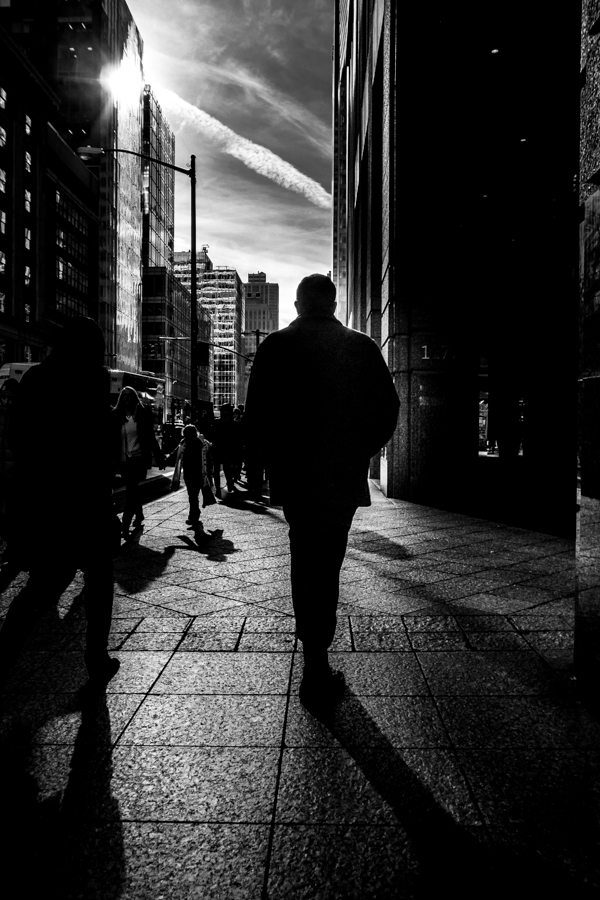
- Backlight only. Shoot into the sun and turn people into silhouettes.
- Pools of light. Find one patch of sun in a shaded street and wait for someone to step into it.
- Shadows as subjects. Photograph shadows of people instead of people. It's also an easy start if you're nervous.
- Golden hour versus noon. Shoot the same place at both times. Plain color in the middle of the day on a sunny day is almost always boring, because it's what everyone sees all day.
- Beams of light. Look for light cutting through gaps between buildings or trees.
- Contrasting light at night. Look for one bright shop window in a dark street.
More on this in light and shadow photography.
Color ideas (15 to 20)
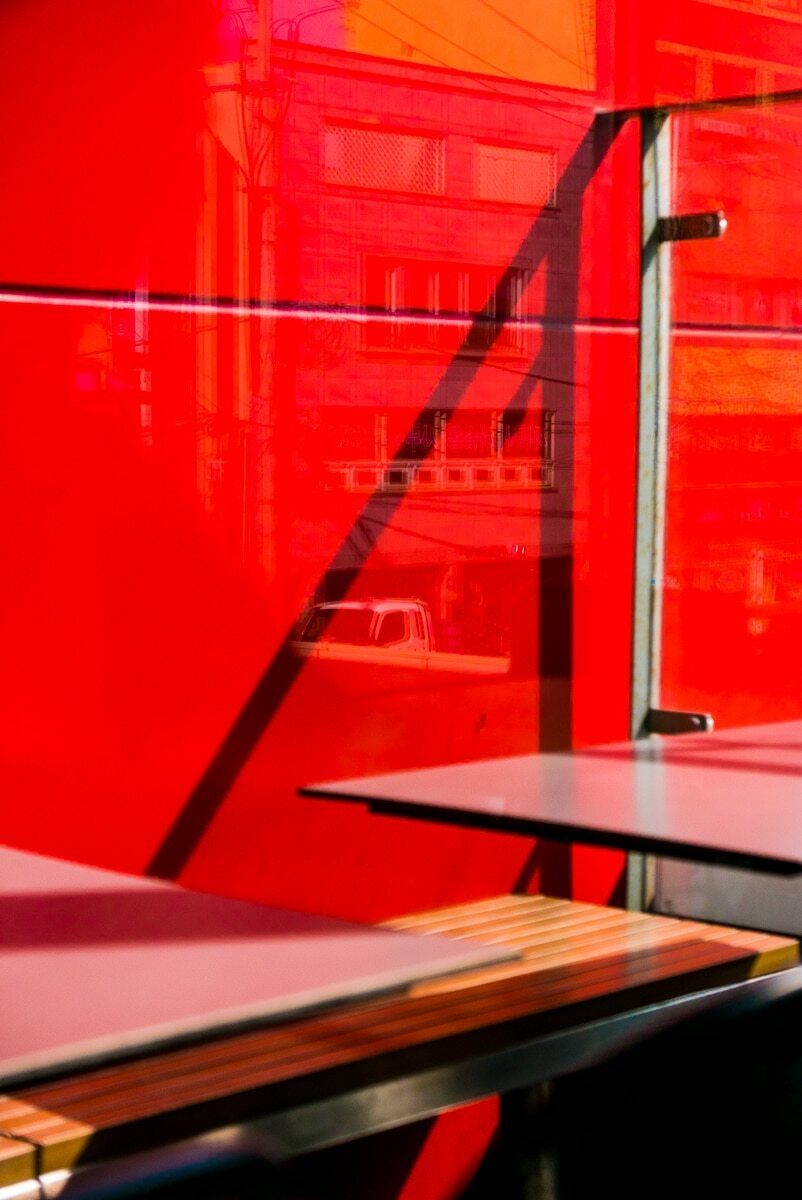
- Solo color. Find frames where one color fills almost the whole image.
- Like with like. Find a color that repeats across the frame, like a yellow dress next to a yellow taxi.
- Make the colors fight. Hunt for opposites side by side: red against blue, orange against teal.
- One color all day. Photograph only red things. By the afternoon you'll see red everywhere.
- Color as subject, no people. The color is the photo. People are optional.
- Non-local color. Edit a set with colors you didn't see, the way painters did. Reality doesn't have to be the final word.
Composition exercises (21 to 27)
- Frames within frames. This is one of the oldest ideas in photography composition. Doorways, windows, arches, gaps between people. Nest your subject inside a second frame. See framing in photography.
- Lines only. Every frame must have a leading line pointing at the subject.
- Layers. Get something in the foreground and the background in every shot. See layering photography.
- Juxtaposition hunt. Look for two things that comment on each other, like an ad and the person walking past it. See juxtaposition photography.
- Change your angle. In Dead Poets Society, Robin Williams makes his students stand on their desks to see the room differently. Crouch down, shoot up, climb stairs and shoot down.
- Exaggerate the wide angle. Put something close to a corner and let perspective distortion pull on it.
- Small subject, big space. One person in a lot of empty space. See negative space photography.
People and portrait ideas (28 to 34)
- Hands only. Photograph hands doing things: holding, counting, pointing, gesturing.
- Gestures. Wait for the moment someone points, laughs, shrugs or throws up their arms.
- People walking, but with a reason. Photos of people walking are the classic boring street photo. Only shoot walkers when something else is going on, like a shadow or a sign.
- Ask for one street portrait. Pick one of the strangers on the street and try asking if you can take their portrait. Just one. It's the fastest way to shrink the fear of photographing strangers. Here's how to photograph strangers.
- Candid moments at a market. Busy public places let you blend in with the people in the crowd, which makes candid street photography easier. Stay for an hour until people stop noticing you. See candid photography.
- Street fashion. Look for clothing that stands out from the street behind it. Street fashion photography sits right between genres, close to lifestyle photography.
- Shooting from the hip. Try it for one outing to learn your lens without the viewfinder. See shoot from the hip.
Be decent about it when photographing people. If someone doesn't want their photo taken, move on. Whether it's legal to photograph people in public depends on the country: see is street photography legal. The ethics of this are covered in is street photography creepy.
Ideas without people (35 to 41)
Street photography without people is harder, because nothing pulls the eye like a human. So these subjects need something extra, like strong light or color.
- Architecture with drama. A building alone is not a photo. A building in dramatic light or reflection can be.
- Cityscape. Look at the street like a landscape photographer, wide lens and all.
- Discarded objects. Shoes, boxes, a mattress, a TV on the curb.
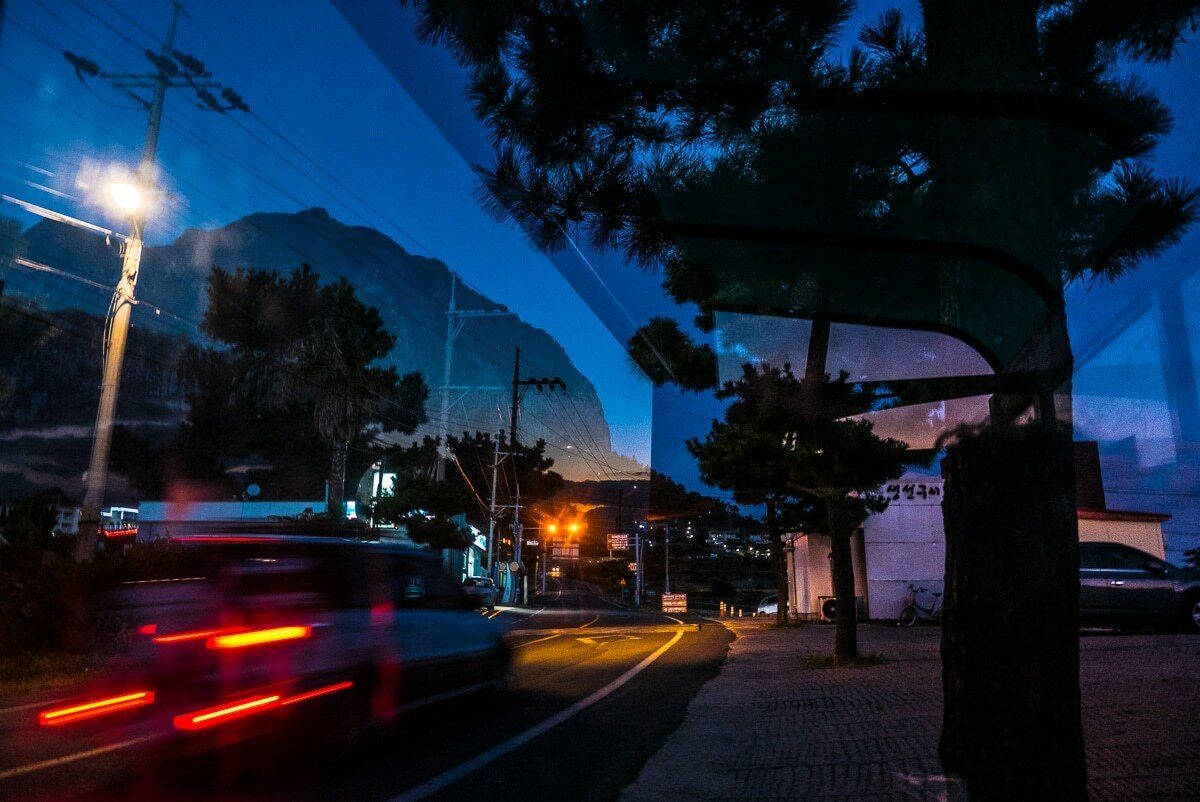
- Reflections. Windows, puddles, shop glass, car doors.
- Animals. Cats and dogs are street regulars. You could build a whole body of work on dogs.
- Traces of humans. Act like an archaeologist. Shoot the evidence people were there: a chair, a bicycle, a cup, tire tracks.
- Murals and billboards. Crop in tight on ads and painted walls.
Night, rain and motion ideas (42 to 46)
- Slow shutter speed. Drop to 1/15 and let people blur while buildings stay sharp. Motion blur shows the energy of a city.
- Long exposure. Put the camera on a ledge and try a second or longer. Long-exposure photography turns traffic into light trails.
- Rain. Umbrellas, wet reflections, fogged windows and people hurrying. Bad weather is good street weather.
- Night street photography. Night photography needs different camera settings: raise your ISO, open up for less depth of field if you must, embrace the grain and look for light sources. My settings are in street photography settings.
- Flash. Try direct flash for one night. It freezes motion and makes ordinary things look strange.
Street photography project ideas (47 to 50)
Single outings build skill. Projects build a body of work, and they give your photography journey a direction. You don't need a photo shoot or a big concept, just an interesting subject you can keep coming back to. I like to have a few projects going at once, so there's always something to look for. If you want a fixed schedule instead, my photography challenge gives you one street prompt a day for 30 days.
- A theme you can't photograph directly. Loneliness or strength, for example. Once you name a theme, ideas about how to show it start to pop up.
- A year on one corner. Same place, all four seasons. This is a photography project that turns into a photo book.
- A photo essay. Pick a community or a place you can return to and tell its story in 12 images. Here's how to make a photo essay.
- Your commute. The place you think is boring. Another photographer visiting your town would find photos there. They're right in front of your nose.

When the ideas still don't come
Sometimes the problem isn't ideas. It's energy. A few things help me.
- Draw a card. In 1975 the musician Brian Eno and the artist Peter Schmidt made Oblique Strategies, a deck of cards with short prompts for getting unstuck. Draw one and apply it to your next photo walk. It works as well for photography as for music.
- Keep a creative corner. A folder or board where you save every photo, quote and idea that excites you. Open it before you head out.
- Revisit your old work. You'll find good frames you missed, and you'll see progress you forgot about.
- Change one variable. If you always do what you always did, you'll get what you always got. Try a new lens or a new neighborhood.
- Sleep. A tired brain sees the mattress store, not the picture.
Looking at other photographers helps too, as long as you don't compare yourself into a slump. Start with the street photographers worth studying. Travel photography is fun, but you don't need a trip to London or New York City. Your town has enough.
Carry the ideas in your pocket
The hard part isn't the list, and no single street photography tip fixes it. It's remembering what to look for when you're standing on the street. That's why, in our online street photography course, every module comes with a cheat sheet, plus an "Image Quest" sheet you download to your phone. It lists picture patterns to look for, so you always have a next idea. The course is built on the same idea as this page: install the patterns first, and your eye finds them on its own.
If fear is the real reason you're stuck, read how to overcome fear of street photography. If you're out shooting but the photos feel flat, read why are my street photos boring.
Frequently Asked Questions
What should I photograph on the street?
Pick one constraint before you leave and shoot only that: one color, one street corner, only shadows or only reflections. A constraint gives your brain a clear problem to solve, and you'll notice far more than when you wander looking for anything. Change the constraint on your next outing.
Do all street photographs have to include people?
No. Street photography without people is possible: architecture in dramatic light, reflections, discarded objects, animals, murals and traces of human life all work. It is harder, because people attract the eye more than anything else, so photos without people need strong light or color to hold attention.
Can you do street photography with a phone?
Yes. A phone is small and always with you, which suits candid street work. The ideas on this page work with any camera. Use the main lens rather than the ultra wide, tap to lock focus and exposure, and treat the phone like a fixed prime lens rather than zooming in.
How do I find street photography project ideas?
Start with a place or theme you can return to many times, like your neighborhood, a market, your commute or an idea such as waiting. Shoot it over weeks or months, then edit the best frames into a set of 10 to 20. A project close to home is easier to finish than one tied to travel.
What are good street photography exercises for beginners?
Good beginner exercises are one lens for a month, one street for a week, shooting only shadows, only one color or only reflections, and standing on one corner for an hour. Each one limits your choices so you focus on seeing. Do one exercise per outing and review the results before the next.