
Street photography isn't creepy by itself, and in most public places it's legal. It becomes creepy through how the photographer behaves: hiding, stalking, targeting vulnerable people or refusing a request to delete.
I'm Olivier Duong, and I've photographed strangers for over a decade. I get the question. A Reddit beginner wrote: "But every time I go out with my camera, I feel like a total creep." The most upvoted comments in those threads often come from people who dislike the genre. The feeling is worth taking seriously. My answer is to decide your lines before you go out, and I've written mine as a short code you can print and keep in your camera bag.
Street photography can't be creepy. Street photographers can.
Street photography is an action, like looking. An action isn't creepy on its own. A knife can't hurt you; the person holding it can. The same goes for a camera.
What makes it creepy is the street photographer's behavior. These are real examples I've seen or heard about from other photographers:
- A photographer walks up to a car and pokes his lens through the window to photograph a kid inside.
- Someone follows a stranger around a mall to get the shot.
- A shooter gets into people's personal space and shoves the camera in their faces, all under the mantra "get closer".
- A man takes picture after picture of unsuspecting women and calls it a street photography project.
That last one is a common complaint on Reddit: "Too many pics of unsuspecting women. It's getting into creepy territory." The problem isn't photographing women. It's a pattern where one kind of person is hunted instead of photographed as part of life.
Getting close doesn't equal a good image, either. If your image is weak, getting closer only makes a weak image bigger.
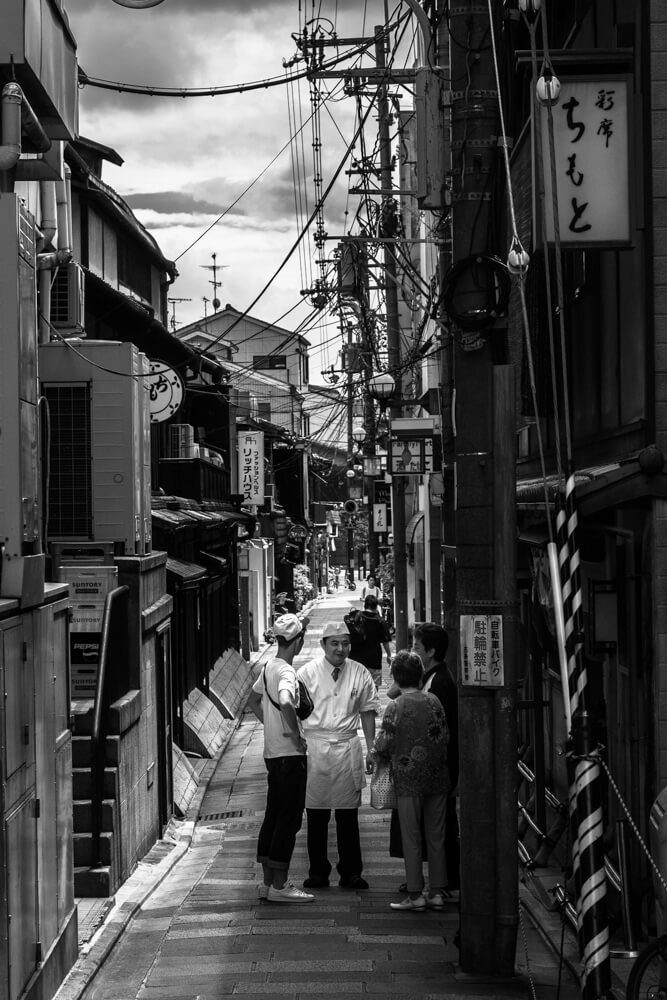
Is street photography ethical?
Yes, when you do it with respect. Street photography is ethical when you don't mock people or target vulnerable people, and when you honor a request to delete. That's the short version.
The long version is that legal and ethical are different questions. As one Reddit comment with over 300 votes put it: "just because something is legal, it does not mean it is right." I agree. The law in the US and many other countries gives you room to photograph people in a public space, since there's no reasonable expectation of privacy on a public street. Your personal ethics, your moral compass and plain common sense decide how you use that room. Some countries, like France, have strict laws on the right to privacy and image rights, and anything commercial needs model releases. For the legality itself, read is street photography legal? This page is about the ethics side.
Street photography has a long history of candid street photography of strangers. Henri Cartier-Bresson, Robert Frank, Vivian Maier and Garry Winogrand all photographed people without their consent, often without their knowledge, and those pictures are now in museums. Much of what we know about everyday life in the 20th century comes from photographers who didn't ask. That record has value. An unguarded moment lasts a fraction of a second, and no one can pose it. It doesn't excuse every photo, but it's why the genre isn't wrong by default. Today the argument is louder: Martin Parr's satirical color work and bloggers like Eric Kim, who pushed a close, in-your-face style, keep the debate going in the world of street photography.
Should you ask for permission?
I don't ask for permission most of the time. When you ask, people put on a face for the camera. The shot becomes one of those street portraits, not a candid moment. People love street photography because it's life unscripted.
But asking first is a perfectly good way to start. If you're a beginner and the idea of shooting strangers feels awful, ask. You'll learn that most people are open to it, and your nerves will settle. Later you can move to candid work. My guide to how to photograph strangers has scripts for asking.
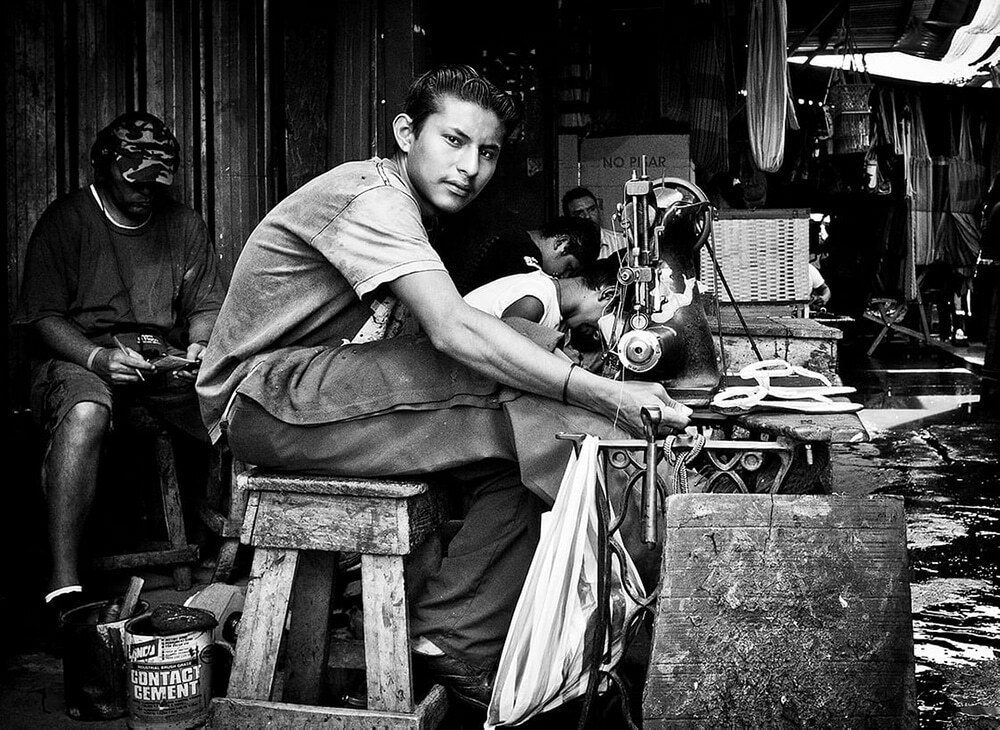
There's one thing I'd avoid: asking permission, posing someone, then presenting the result as candid. Steve McCurry's staged railway pictures and Robert Doisneau's famous kiss, which used actors, show how that feels once people find out. The photos are still good. But viewers expect street photography to be real, and a staged candid leaves a cloud of disappointment.
Why some photographers look creepy (and how not to)
Most of the time, people don't judge the photo. They judge the photographer they just saw. You look creepy when you look like you're hiding something. A few habits change that:
- Be visible. Keep the camera out. It sounds backwards, but hiding is what makes people uncomfortable. Don't shoot from behind pillars or with a long telephoto from across the street. That feels like surveillance, like a CCTV camera with legs.
- Be unobtrusive, not sneaky. A small point-and-shoot or a 28mm or 35mm lens lets you work close without drawing attention. It helps you not attract attention without hiding. That's the difference. See the best lens for street photography.
- Stay after the shot. Walking away fast looks guilty.
- Put out friendly energy. The streets mirror you. If you look nervous, people get suspicious. If you look calm and open, they leave you alone.
- Know the culture. In Japan and Korea, hidden photography of women on trains is a serious problem, so a low angle shot can be read the wrong way. Be extra careful there.
Flash deserves its own line. Bruce Gilden fires a flash in people's faces at close range as the shutter clicks. It's legal on a New York sidewalk, and many photographers think it crosses a line. When Fujifilm released a promo video of Tatsuo Suzuki shooting close to strangers in 2020, the backlash was big enough that the company pulled it. That tells you where many people's line sits. Ethical street photography doesn't take courage to shove a lens at someone. It takes courage to stay and talk when someone notices.
Photographing homeless people: yes or no?
You can legally photograph a homeless person in a public place in most countries. Whether you should is a harder question. A Reddit comment put the objection bluntly: "Homeless people cannot consent." They can, of course, but they often have no private space to retreat to, so every hard moment of their life happens in public.
My rule: I don't photograph people at their lowest moment for a dramatic picture. Homelessness is not a prop. If someone is part of a wider street scene, that's different from making them the subject of an unflattering close-up. If you want to document homelessness, do it like a documentary photographer: spend time, talk, ask, and give something back. Jill Freedman lived for weeks in Resurrection City, the 1968 Poor People's Campaign camp in Washington, to photograph it. Her pictures show empathy rather than pity.
Photographing children in public
In the US there's no law against photographing children in public. Parents react far more strongly than adults photographed alone, and they have good reason to be protective.
A portrait of someone's kid, even in a public place, isn't for me. I photograph kids only as part of a scene with family or a crowd. I never follow a child. A silhouette or an outline of kids running tells the story without making anyone identifiable. If a parent objects, I show them the photo and delete it.
I've been on the other side. At the Bangkok airport, a woman crouched down and photographed my kids running around, the same way I had a minute earlier. My wife asked if we should say something. It was an outline, not a portrait, so I told her it was fair game. Context decides.
A street photography code of ethics you can print
No law writes this for you, and no course module does either. This is my own personal code. Copy it and change it until it's yours. What matters is that you decide your lines before you're standing in front of someone.
- I photograph life, not victims. I don't mock anyone or exploit their worst moment.
- I don't follow or stalk one person.
- I don't make children the sole subject without a parent's okay.
- I don't photograph people who are hurt or grieving just for a "dramatic" shot.
- I don't hide. My camera is visible and I stay after the shot.
- If someone asks, I show them the photo. If they want it gone, I delete the photo in front of them.
- I don't pose people and pass it off as candid.
- Before I post, I ask: would I be okay if this person saw it online?
- I respect local culture, even where the law says I don't have to.
Rule 8 does most of the work. Ask yourself who benefits from the photograph. If the only answer is "my Instagram", and the person would be hurt to see it, don't post it.
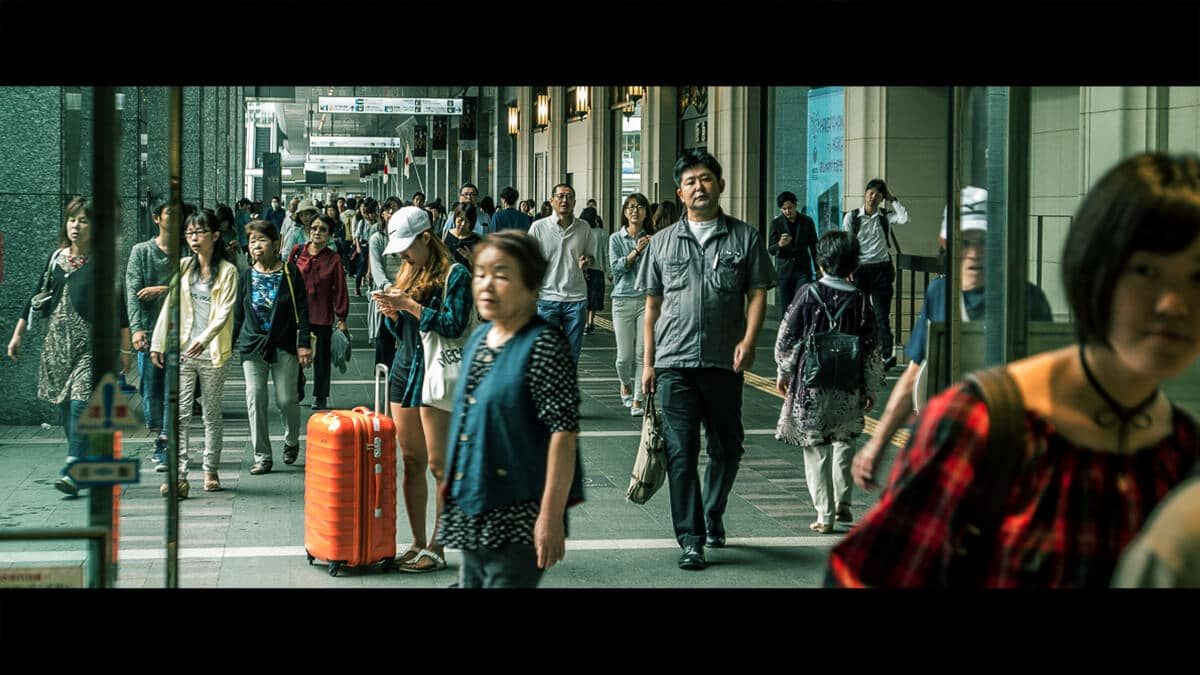
The feeling of being a creep usually means you care
If you feel like a creep, that's usually a sign you're not one. Creeps don't worry about it. The guilt comes from empathy, and empathy makes better pictures, because what you feel while shooting ends up in the frame.
The trick is to stop letting the feeling decide for you. Decide your code once, follow it, and then shoot with a clear conscience. When someone does push back, you'll know what to say. That's covered in what to say when someone confronts you, and the nerves are covered in how to overcome the fear of street photography.
In Phototactic, our street photography course, Don Springer and I include a fearless street photography module on the mindset side of fear, and a bonus recorded shooting demonstration on reframing fear instead of faking it. It doesn't teach an ethics code; the code on this page is this site's own. What the course does teach is how to see picture patterns, so you raise the camera for a reason. It's $297 as one payment with a 60 day money back guarantee.
Frequently Asked Questions
Is street photography ethical?
Street photography is legal in most public places. It's ethical when you respect the people in your photos: you don't mock them or target vulnerable people, and you honor a request to delete. Legal and ethical are different questions, so decide your own personal code before you go out.
Is it wrong to take photos of strangers without their permission?
Not by default. Some of the most valued photographs in history were taken without permission, and in many countries there's no expectation of privacy in public. It becomes wrong when the photo exploits or mocks someone, or when you ignore their request to delete it.
How do you do street photography without being creepy?
Keep your camera visible and work close with a small camera instead of hiding behind a telephoto. Stay put after the shot rather than rushing off. Don't follow people or single out children. Show or delete the photo if someone asks. Friendly body language does most of the work.
Is it okay to photograph homeless people?
It's legal in most public places, but think hard first. Homeless people often have no private space, so their hardest moments happen in public. Don't use someone's worst moment for a dramatic image. If you want to document homelessness, spend time with people and ask first.
Can you photograph children in public?
In the US, there's no law against photographing children in public places. Ethically, be careful. Photograph kids as part of a scene with family or a crowd, not as the sole subject, and never follow a child. If a parent objects, show them the photo and delete it.