
When someone confronts you for taking their photo, stay where you are, smile, and tell the truth in one sentence. Then offer to show them the picture, and delete it if they still want it gone.
Most of the time it ends there. For the times it doesn't, you need scripts ready and a plan for each kind of confrontation, so one bad moment doesn't end your street photography. I'm Olivier Duong. I've been photographing strangers for over a decade, and the conversations after the shot are where most beginners give up. One Reddit user put it plainly: "I had one very ugly encounter and i gave up." You don't have to.
Why street photography and confrontation go together
Shooting street photography means you take photos of people without asking, and without their permission. They didn't ask to be in your street photographs. Most never notice. Some notice and don't care. A small number get upset, and that's the part nobody warns you about.
People rarely react to the camera itself. They react to what they think you are. A stranger who sees a lens pointed their way fills in the blanks fast: journalist, creep, cop, someone who will post them online to mock them. Your job in a confrontation is to replace that story with the real one, quickly. Some people simply feel it's intrusive, a hit on their privacy, and that's a fair feeling. Legal or not, people may not like having their picture taken by a stranger.
Some places make this harder. In Japan and Korea, secret photography of women on trains is a real problem, so a camera can look suspicious before you do anything. I've had a woman in Osaka stare me down just for having a camera out. Knowing why people react helps you not take it personally.
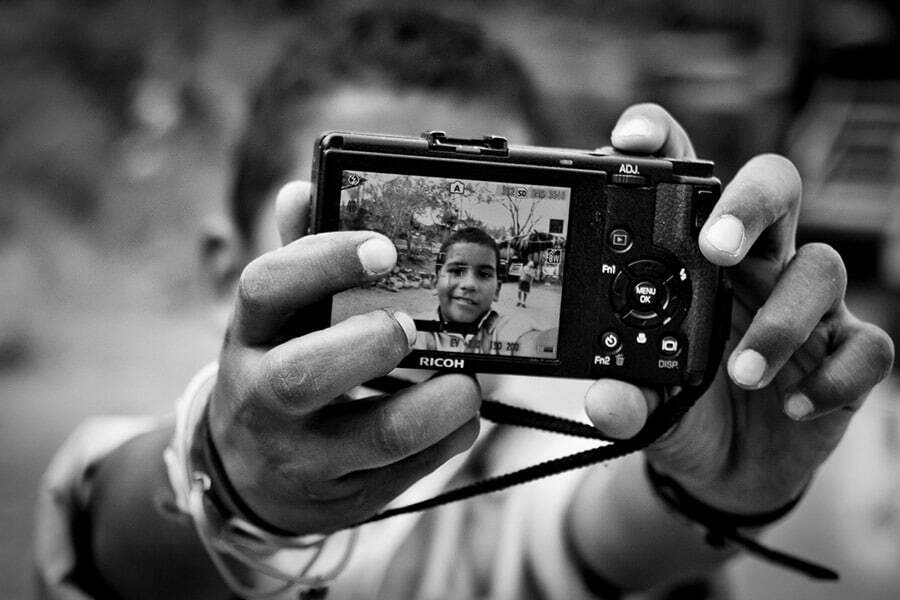
What to say when someone asks why you took their photo
The goal is to defuse, not to win. Remain calm, keep your voice low and your body language open. Stop holding the camera up to your eye. Lower it. Face them. Don't get defensive, and don't argue about your rights in the first ten seconds, even if you're legally allowed to take the picture. Winning the argument and keeping your peace are different goals.
These are the scripts I use. Say them in your own words, but keep them short:
- The honest one: smile and say "Sorry, I photograph everyday life around here. The light on you with that wall behind was great."
- The show: "Here, have a look." Turn the camera around and show them the LCD screen. Most people relax once they see a normal photo of themselves.
- The offer: offer to send it. "If you'd like, I can send it to you." Plenty of people end up happy to have it.
- The delete: "No problem, I'll delete it." Then do it in front of them.
- The exit: "Thanks, have a good day." Walk away at a normal pace, never fast.
Don't lecture them about the law or explain your art. The longer you talk, the more it sounds like you're hiding something.
A decision tree for any confrontation
Not every confrontation is the same. Match your answer to the person in front of you.
They look at you or make eye contact
Smile and nod. That's it. A glance isn't a confrontation. Most of the time they'll smile back or look away. Sometimes that look is the picture.
They ask what you're doing
Give the honest one-sentence answer and offer to show the photo. This is the most common case, and it's usually curiosity, not anger.
They ask you to delete the photo
Delete it, or better, beat them to it by offering to delete the photo before they ask twice. In most countries a private person can't force you to, but no single frame is worth a fight. I'd rather lose a photo than leave someone feeling violated. If it's a great frame and they're calm, you can ask once: "Are you sure? I think it's a lovely picture." If they say yes, delete it.
They're angry or shouting
Stay calm and don't escalate. Keep your hands and camera low. Say "I'm sorry, I'll delete it," do it, and leave. Don't defend yourself to a crowd. One Reddit user described being called a pedophile in the street and said "it was impossible to disarm her." Sometimes that's true. Your only job then is to calm the situation and get out safely.
They threaten you or touch your gear
Walk away. Your safety matters more than your camera or the image. If you feel in danger, go somewhere busy and call the police yourself.
Someone threatens to call the cops
Stay calm and polite. Explain what you were doing in one sentence. See the police section below.
Should you delete the photo if asked?
Legally, usually no. In the US, a member of the public has no power to make you delete a photo taken in a public place, and the ACLU says police may not delete your photos either. Laws differ by country, so read my guide on whether street photography is legal where you live. This page isn't legal advice.
In practice, I offer to delete the image almost every time someone asks. My reasons:
- A photo someone begged you to delete rarely feels good to look at later.
- Deleting ends the confrontation in seconds. Arguing can go on for minutes and draw a crowd.
- It keeps your nerve intact. You walk away calm instead of shaken, and you keep shooting.
- It's respect. You'd want the same courtesy.
I once watched a man with a DSLR photograph a child at an airport. The mother screamed at him, and he deleted the image before she even asked. He was on private property, so he had no right to it anyway. But even where you have the right, what you're capable of doing and what you should do are two different questions.
What to do if the police are called
It happens. One Reddit thread titled "I got the cops called on me for doing Street Photography" drew hundreds of comments. Usually someone reported a person with a camera, and the officer just needs to check you're not a threat.
- Stay calm and polite. You've done nothing wrong, and a friendly tone ends it fastest.
- Say what you do in one sentence: "I'm a street photographer, I shoot everyday life in public."
- Show a few frames if you want to. It's your choice. In the US, officers generally can't demand to see or delete your photos without a warrant.
- Give your name if the local law requires it. Some US states do when you're lawfully detained.
- Don't film the officer in a way that looks like provocation, and don't argue the law on the spot. If your rights were violated, deal with that later with a lawyer.
In the United Kingdom the picture is similar: taking photos in public is generally legal, and official police guidance says officers have no power to delete images. Other countries are stricter, so know the local rules before you travel.
How to avoid most confrontations in the first place
The best way to handle confrontation is to have less of it. Know the law, then work on behavior, because most potential confrontations start with how you look before the shutter ever clicks. A few habits make a big difference when someone notices you:
- Don't hide. Keep the camera visible. A person holding a camera openly looks like a photographer. Someone sneaking shots from behind a pillar looks like a creep.
- Stay put after the shot. Walking away fast looks guilty. Hold your spot for a few seconds, like you were shooting the scene.
- Put out calm, friendly energy. I call it the karma principle. The streets react to you. People tend to mirror what they see, so if you look nervous and shifty, they'll get suspicious. If you look relaxed and confident, they'll leave you alone.
- Use smaller gear. Compact and mirrorless cameras draw less attention than a big DSLR with a long camera lens. People who use cameras the size of a phone get far fewer looks. See my picks for the best camera for street photography.
- No chimping in their face. Checking your screen right after pointing the lens at someone reads as "I got you". Check later.
- Skip the flash up close. Flash is the most confrontational way to shoot. Bruce Gilden built a career on it, but it provokes the reaction you're trying to avoid.
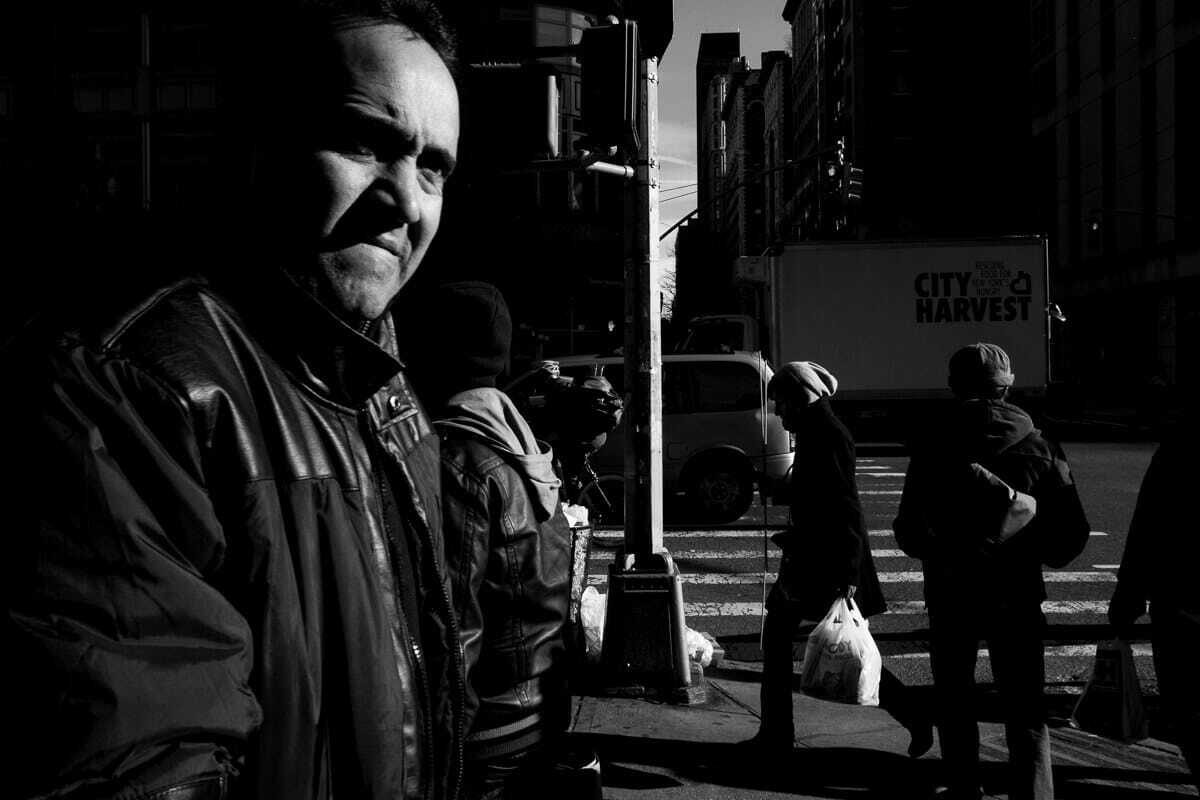
How close you get is your call. Garry Winogrand and Joel Meyerowitz shot side by side on the streets of New York in the 1960s, openly, with small cameras at close range. Close is fine. Close and sneaky is what gets people upset. Nick Turpin, who founded the In-Public street photography collective in 2000, is another who has built a long career shooting candid street photography in plain view.
Why one bad confrontation shouldn't end your street photography
This is what worries me most. Reddit is full of people who quit after one encounter: "When I did street photography I constantly got demeaned and people literally calling me a creep/perv. Literally why I stopped." Another said: "The confrontation stays with me longer than it probably should."
A confrontation feels huge because it's rare. Your brain files it as a threat and replays it. But count honestly. For every person who got upset, how many didn't notice at all? How many smiled? Most photographers who keep at it find that the angry reactions are a tiny share of the people they photograph.
Two things help me:
- Reframe it. A confrontation isn't proof you're doing something wrong. It's often a misunderstanding or a cultural difference. Sometimes it's a fair point, and then you adjust.
- Give yourself a photography project. A project gives you a reason to be there and a clear answer when members of the public ask what you're doing. Storytelling beats random snapping.
- Go out again soon. Don't let a week pass. Shoot a busy, easy place the next day, where cameras are normal. Rebuild the habit before the fear sets.
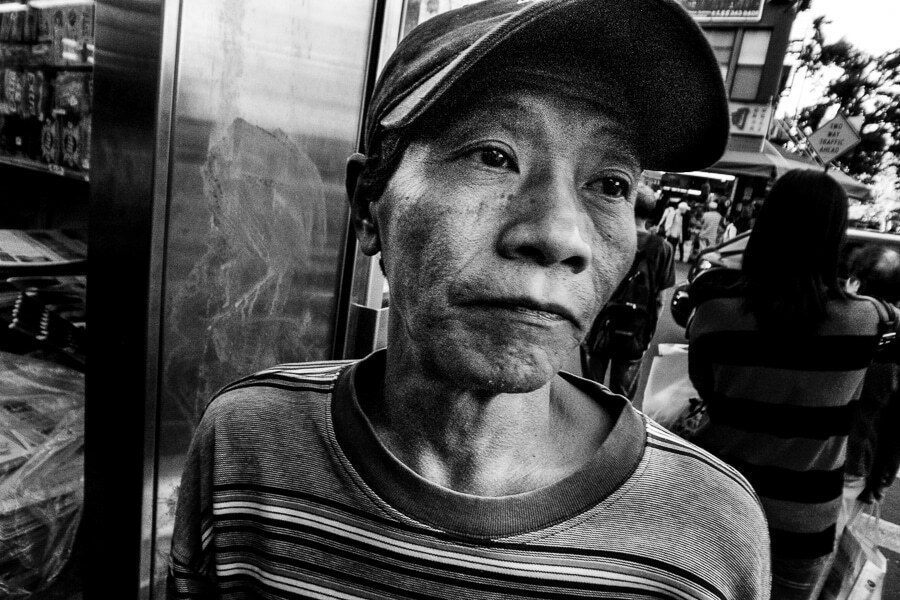
If the fear itself is the problem, my guide to overcoming the fear of street photography has a 7 day plan. If you're worried you're the creep, read is street photography creepy? For the full picture on candid versus asking first, see how to photograph strangers.
Confidence comes from knowing why you're there
The photographers who handle confrontation best aren't the toughest. They know why they took the picture. When you can say "the light on you with that wall behind" and mean it, you sound like a photographer, because you are one. When you're trying to capture something on autopilot and hoping for luck, you have nothing to say, and people sense it.
That's a big part of what Don Springer and I teach in Phototactic, our online street photography course. The fearless street photography module works on the mindset side, with a paradigm shift for fear and what we call street karma therapy. A bonus recorded shooting demonstration shows how to deal with fear through reframing instead of faking it. The rest of the course teaches the picture patterns and composition keys that give you a reason to raise the camera. The scripts on this page are my own advice, not a course module. The course is $297 as one payment, with a 60 day money back guarantee.
Frequently Asked Questions
What do I say if someone asks why I took their photo?
Tell the truth in one short sentence, such as "I photograph everyday life around here and the light on you was great." Then offer to show them the photo on your screen. Most people relax once they see it. If they still want it gone, delete it in front of them and thank them.
Do I have to delete a photo if someone asks?
In the US and many other countries, a private person can't legally force you to delete a photo taken in a public place, and police generally can't either. Still, I delete almost every time someone asks. It ends the confrontation fast and respects the person. Laws vary, so check your country's rules.
What should I do if someone gets angry at me for taking their photo?
Stay calm and lower your camera. Don't argue. Apologize, offer to delete the photo and do it in front of them. Then walk away at a normal pace. If someone threatens you or grabs your gear, leave and go somewhere busy. No photograph is worth your safety.
What happens if someone calls the police on a street photographer?
Usually an officer checks that you aren't a threat and leaves. Stay polite, explain in one sentence that you photograph everyday life in public, and give your name if local law requires it. In the US, officers generally can't demand to see or delete your photos without a warrant. This isn't legal advice.
How can I avoid confrontation in street photography?
Keep your camera visible instead of sneaking shots, and stay put after you shoot. Project calm, friendly body language. A small camera helps, and so does skipping flash at close range. Don't check your screen in someone's face. Most confrontations start because people think you're hiding something.