
The best street photography book to start with is Bystander: A History of Street Photography by Colin Westerbeck and Joel Meyerowitz, because it walks you through the whole tradition in one volume. After that, the books that will change your photos most are photobooks by the masters, such as Robert Frank's The Americans, plus a few books about seeing, like John Szarkowski's The Photographer's Eye.
I'm Olivier Duong. I teach street photography, and I've learned more from looking at great photographs in print than from any camera manual. This list is built for that. Each book comes with the one thing it teaches you, so you can pick by what you need, not by hype. There are no affiliate links and no prices here.
How I picked these photography books
A photography book earns a place here if it does one of two jobs. It either shows you great pictures you can study frame by frame, or it changes how you think about pictures. Coffee table books that just look nice didn't make it.
A lot of photographers spend years shooting without direction. The fastest fix I know is to look at the work of people who solved the same problems before you. Their books are the cheapest mentorship there is. Libraries carry many of these, so you don't need to buy them all.
The list has four parts: street photography books, photobooks by the masters, books about seeing and photography theory, and practical photography books for beginners.
Best street photography books
Start here if street photography is your main interest. These cover the history of the genre and how today's street photographers work.
1. Bystander: A History of Street Photography (Colin Westerbeck and Joel Meyerowitz, 1994)
The standard history of street photography, written by a curator and a working street photographer. It runs from the earliest Paris street scenes through Cartier-Bresson and the New York photographers. It teaches you: where every style you see online came from. Get the updated edition if you can.
2. Street Photography Now (Sophie Howarth and Stephen McLaren, 2010)
A survey of more than 40 contemporary street photographers from around the world, with short texts on how they work. It teaches you: how many different ways there are to do this, from color to black and white, from humor to mystery.
3. The Street Photographer's Manual (David Gibson, 2014)
A practical guide by a member of the In-Public collective, with projects and profiles of working photographers. It teaches you: concrete ideas to try on your next walk.
4. Think Like a Street Photographer (Matt Stuart)
London street photographer Matt Stuart is known for sharp, funny moments. The book mixes his pictures with plain advice on patience and position. It teaches you: how much waiting goes into a "lucky" frame.
5. Magnum Contact Sheets (edited by Kristen Lubben, 2011)
Contact sheets from Magnum photographers, with the famous frame marked among its neighbors. Cartier-Bresson said a contact sheet is where "you see how a photographer thinks." It teaches you: that great photographers work the scene and shoot many frames before the keeper.
6. Daido Moriyama: How I Take Photographs (Daido Moriyama and Takeshi Nakamoto, 2019 in English)
Moriyama walks through his methods and cameras. His first advice is to get outside and walk. It teaches you: that a pocket camera and a lot of walking are enough. More on him in my Daido Moriyama profile.
Photobooks by the masters of street photography
A photobook is a book where the photographs are the work, in a chosen order. Studying a good one teaches sequence as well as single frames. These are the ones I'd put on any street photographer's shelf.
7. The Americans (Robert Frank, 1958)
Published first in France in 1958 and in the US in 1959. Frank crossed the country and made a sad, sharp portrait of 1950s America. It teaches you: that mood and sequence matter more than technical perfection.
8. The Decisive Moment (Henri Cartier-Bresson, 1952)
The French title is Images à la sauvette. The preface gave street photography its most famous idea. Steidl reissued it as a facsimile in 2014. It teaches you: the link between a peak gesture and a precise composition. My guide to the decisive moment goes deeper.
9. Winogrand: Figments from the Real World (Garry Winogrand, 1988)
John Szarkowski's MoMA retrospective of Winogrand, published after his death. It teaches you: how to hold a crowded, tilted frame together. See my Garry Winogrand profile.
10. Early Color (Saul Leiter, 2006)
The Steidl book that made Leiter famous in his eighties. Soft color photographs of New York through wet glass and snow. It teaches you: one color note in a muted frame. More in my Saul Leiter profile.
11. Gypsies (Josef Koudelka, 1975)
Koudelka's black and white work with Roma communities, dramatic and graphic. It teaches you: strong shapes and deep blacks. See my Josef Koudelka profile.
12. Paris de nuit (Brassaï, 1933)
Paris by night in the 1930s: fog, lamps, wet cobbles and nightlife. It teaches you: how to make darkness the subject. My Brassaï profile covers his method.
13. Hong Kong Yesterday (Fan Ho, 2006)
Fan Ho's 1950s and 1960s Hong Kong, built from light beams and geometry. It teaches you: to find the light first and wait for the person. See my Fan Ho profile.
14. Life Is Good and Good for You in New York (William Klein, 1956)
Wide, grainy, in-your-face New York. Klein broke the polite rules of the time. It teaches you: that closeness and rough energy can be a style.
15. A Way of Seeing (Helen Levitt, 1965)
Children playing on the streets of New York, with an essay by James Agee. It teaches you: gesture and play, the small theater of ordinary streets.
16. Vivian Maier: Street Photographer (2011)
The first book of Vivian Maier, the nanny whose huge archive was found after her death. It teaches you: that you can do serious work for yourself, with no audience at all.
17. The Suffering of Light (Alex Webb, 2011)
Thirty years of Webb's dense, layered color. It teaches you: how to stack several planes of action. My guide to layering in photography breaks down his approach.
18. Shinjuku (Daido Moriyama, 2002)
Years of walking one Tokyo district. Grainy, blurred, restless. It teaches you: what happens when you return to the same place again and again.
19. Ernst Haas's color books
The Creation (1971) was a bestseller, and later collections gather his New York color work from the 1950s. It teaches you: color and motion blur as expression. See my Ernst Haas profile.
Books about seeing: photography theory worth reading
These books have few or no how-to tips. They change how you look at pictures, which changes what you shoot.
20. The Photographer's Eye (John Szarkowski, 1966)
The MoMA curator sorts photographs by what only photography does: the thing itself, the detail, the frame, time and vantage point. It teaches you: a vocabulary for why a picture works. Don't confuse it with Michael Freeman's book of the same name further down.
21. Looking at Photographs (John Szarkowski, 1973)
One hundred pictures from the MoMA collection, each with a one page essay. It teaches you: how to read a single photograph slowly.
22. On Photography (Susan Sontag, 1977)
Six essays that question what taking pictures does to us. "To photograph is to appropriate the thing photographed," she writes. It teaches you: to think about the ethics and power of the camera. It pairs well with my article is street photography creepy.
23. Camera Lucida (Roland Barthes, 1980)
A short, personal book about grief and photographs. Barthes names the studium, the general interest of a picture, and the punctum, the detail that pierces you. On the Inspired Eye podcast we called it one of the two greatest philosophical works on photography. It teaches you: to look for the detail that makes a frame personal.
24. Ways of Seeing (John Berger, 1972)
Based on a BBC series, it's about how images shape what we believe. It teaches you: that every frame is a point of view.
25. The Mind's Eye (Henri Cartier-Bresson, 1999)
His collected writings, including the famous essay on the decisive moment. It teaches you: his own words on why looking comes before shooting.
26. The Nature of Photographs (Stephen Shore, 1998)
A short primer on how a photograph works as a flat, framed object in time. It teaches you: to see the picture as a picture, not as the scene.
27. Zen in the Art of Archery (Eugen Herrigel)
Not a photography book at all. Cartier-Bresson told Le Monde in 1974 that it "seems to me fundamental to our profession as photographers." It teaches you: practice until the shot happens without effort. My guide to mindful photography builds on the same idea.
Best photography books for beginners
If you are new to cameras, pair one of these with the photobooks above. Technique without taste gives you sharp, boring pictures. Taste without technique gives you missed moments.
28. Understanding Exposure (Bryan Peterson, first published 1990)
The classic plain language guide to the exposure triangle. It teaches you: to control the camera instead of guessing. My exposure triangle guide covers the basics for free.
29. The Photographer's Eye: Composition and Design (Michael Freeman, 2007)
A well illustrated guide to balance, lines, shapes and framing. It teaches you: composition as a set of tools. Pair it with my guide to photography composition.
30. Read This If You Want to Take Great Photographs (Henry Carroll, 2014)
Short, punchy lessons, each illustrated by a famous photograph. It teaches you: ideas you can try the same day, and the names of photographers worth looking up.
Ansel Adams's technical trilogy, starting with The Camera, is also a classic for anyone who wants to master exposure and printing in depth.
How to study a photobook (and actually improve)
Buying books doesn't make you better. Studying them does. Here's the routine I use.
- First pass fast. Flip through the whole book in one sitting. Notice which pages stop you.
- Second pass slow. Pick the five pictures that stopped you. For each, ask what your eye hits first and where it goes next.
- Name the pattern. Is it a frame within a frame? Two things that rhyme? One color in a grey scene? Write it down in a few words.
- Go shoot that pattern. One pattern per walk. Don't try to copy the picture, copy the structure.
- Look at the sequence. Why does this photo sit next to that one? That's how you learn to edit your own zine or photo essay.
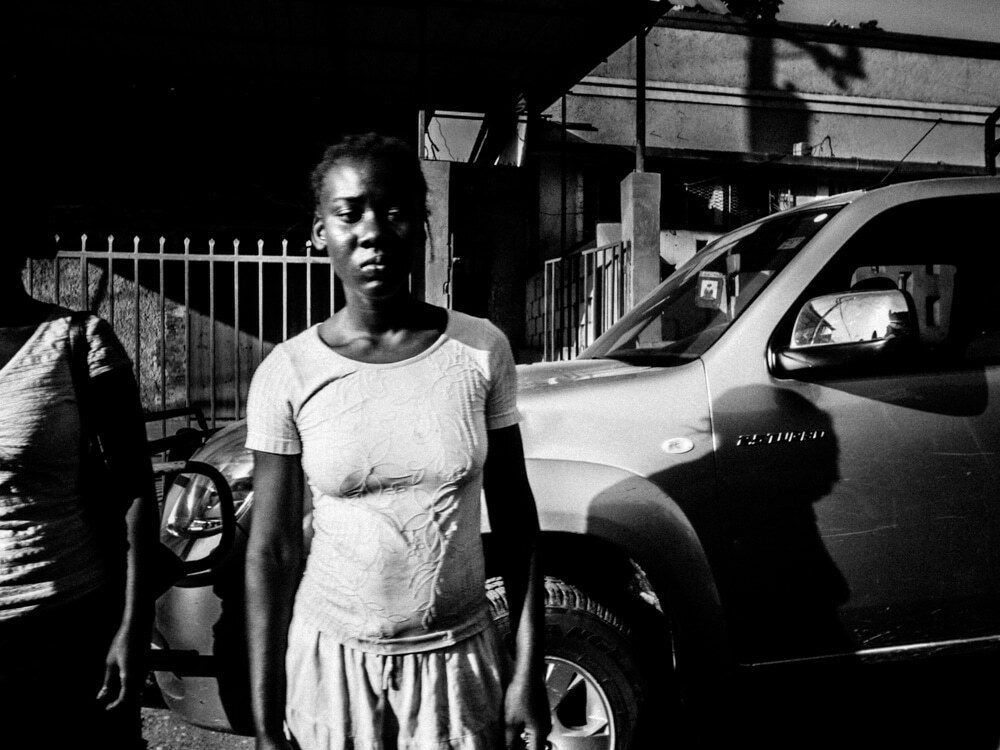
This is a pattern straight out of books like Fan Ho's: find a patch of light in a dark scene and let the person come to it. I would never have looked for it without seeing it done a hundred times in print.
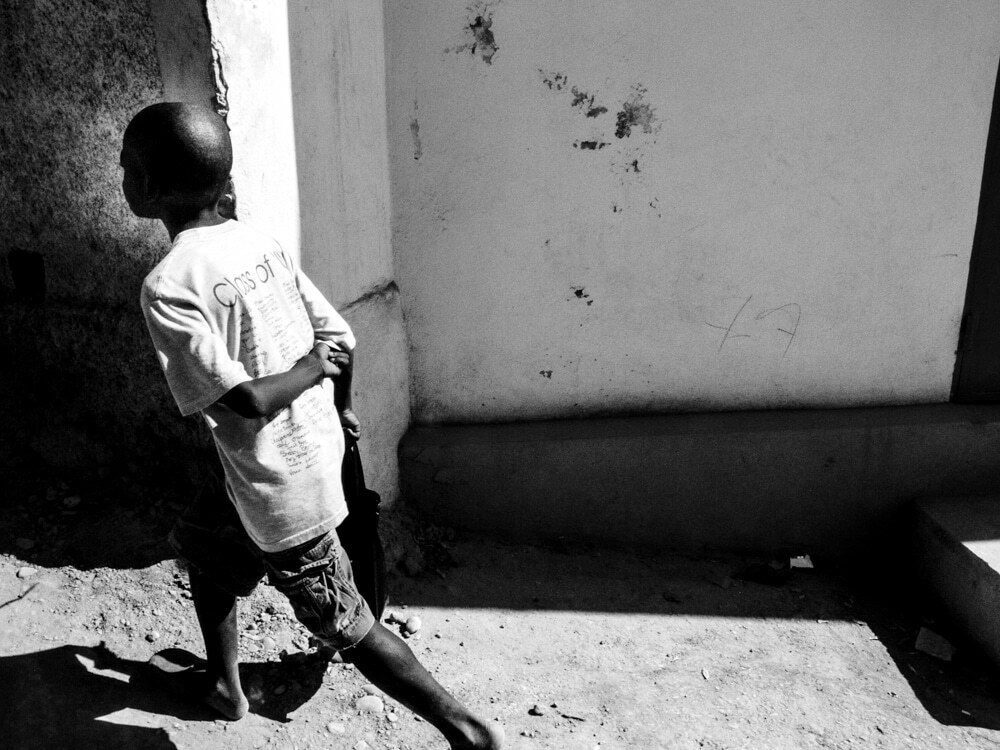
Levitt and Cartier-Bresson taught me the other half: a clean background makes a gesture read instantly. When I see a bright wall, I wait for someone to walk into it. In my online street photography course, Phototactic, we call these repeatable structures picture patterns, and a whole module is about installing them in your head. There's also a bonus where you watch 10 winning images critiqued, which works a lot like studying a photobook with a guide. The course has no feedback on your own pictures.
Which photography book should you read first?
| If you want to... | Start with |
|---|---|
| Understand street photography history | Bystander (Westerbeck and Meyerowitz) |
| See what contemporary street photographers do | Street Photography Now |
| Get practical street projects | The Street Photographer's Manual |
| Study one great photobook | The Americans (Robert Frank) |
| Learn to read photographs | The Photographer's Eye (Szarkowski) |
| Think about the ethics of the camera | On Photography (Sontag) |
| Learn camera basics | Understanding Exposure |
| Improve composition | The Photographer's Eye (Freeman) |
Want to go deeper into the people behind these books? My list of famous street photographers gives one lesson from each, and my collection of photography quotes sources what they said. Books also make good presents: see my gifts for photographers guide. If you are just starting out, read street photography for beginners alongside any of these.
Frequently Asked Questions
What is the best book on street photography?
Bystander: A History of Street Photography by Colin Westerbeck and Joel Meyerowitz is the standard history and the best single book to start with. For a photobook, most photographers name Robert Frank's The Americans or Henri Cartier-Bresson's The Decisive Moment. For practical advice, David Gibson's The Street Photographer's Manual is a good pick.
What photography books should every photographer read?
A good core shelf is John Szarkowski's The Photographer's Eye, Susan Sontag's On Photography, Roland Barthes's Camera Lucida, and one or two great photobooks such as The Americans by Robert Frank. The theory books teach you how photographs work. The photobook shows you what a strong body of work looks like.
What are the best photography books for beginners?
For technique, Understanding Exposure by Bryan Peterson explains exposure clearly. For composition, Michael Freeman's The Photographer's Eye is well illustrated. Henry Carroll's Read This If You Want to Take Great Photographs gives quick lessons. Pair any of them with a classic photobook so you learn taste as well as settings.
Is On Photography by Susan Sontag worth reading?
Yes, if you want to think about what photography does, not how to do it. On Photography, published in 1977, is six essays about the camera and how images shape the way we see the world. It has no practical tips, but it will make you more aware of the ethics of pointing a camera at strangers.
What is the difference between a photobook and a photography book?
A photobook is a book where the photographs, in their chosen order, are the artwork itself, such as The Americans or Shinjuku. A photography book is a wider term that also includes how-to guides and theory. Studying photobooks teaches you sequence and editing, while how-to books teach camera and composition skills.