
Mindful photography is taking pictures with your full attention on what's in front of you, instead of on your worries or the result. Many photographers find it calming because it turns attention outward, onto light and people; it is not a treatment for anxiety or depression, but it can be a good habit alongside one.
I'm Olivier Duong. For years I fitted street photography around a family and a magazine to run. The camera became the one part of the day where my head went quiet. I call it this: shooting time is your time. Here's how to practise it on purpose, with a walking exercise you can do today.
What is mindful photography?
Mindfulness is paying attention to the present moment on purpose, without judging it. Mindful photography applies that to the camera. You slow down and take pictures of what really holds your attention, rather than what you think you should photograph.
It goes by other names. Contemplative photography is the older term, often tied to Buddhist teaching. Slow photography is the newer one. The idea is the same: seeing comes first, the picture second.
Street photography is a natural fit. You can't make a good street photo while your mind is somewhere else. The gesture and the light are gone in a second. The genre trains you to be present whether you call it mindfulness or not.
Is photography good for mental health?
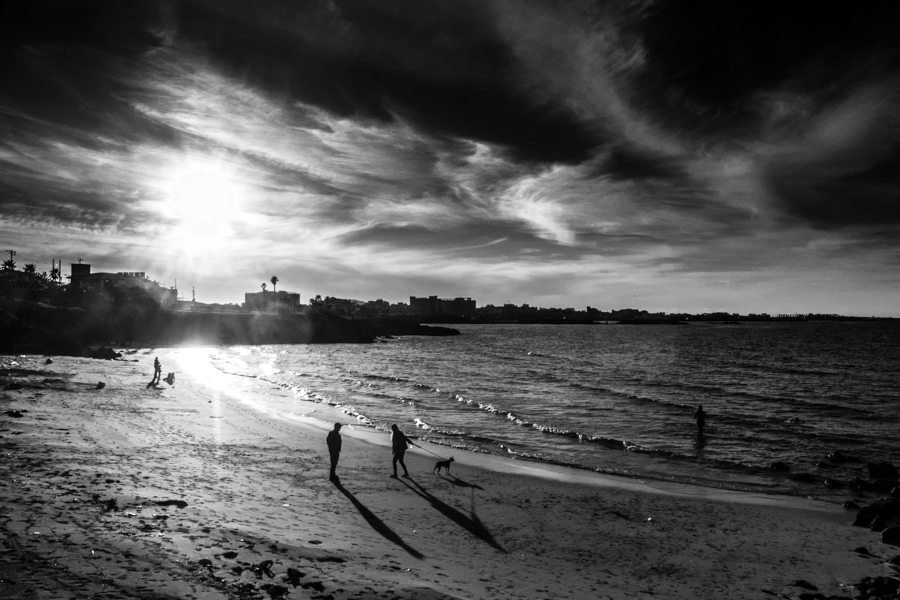
For many people, yes, as a support. Photography gets you outside and moving, and it gives your attention something to hold onto besides your own thoughts. It is not therapy and not a replacement for professional help. If you're struggling, talk to a doctor or a therapist, and let the camera be one of the things you do alongside that.
There is some research behind the good feeling, although the studies are small. In a 2015 experiment by psychologist Jaime Kurtz, 38 students took photos of their everyday surroundings. Those told to shoot in a mindful, creative way ended up in a better mood, more appreciative and more motivated than those told to shoot in a neutral, factual way. Mindful photography did about as well as a count-your-blessings writing exercise.
A 2024 study of university students found that even a five minute nature photography activity reduced mental stress. Neither study proves photography treats anything. They suggest that looking carefully at the world, with a camera as the excuse, lifts your mood.
Why a camera helps you slow down
Most of the day, we look without seeing. Being present is hard in everyday life. You walk the same street every morning and couldn't describe it. A camera gives you a reason to notice. You start asking where the light falls and what would happen if you waited ten more seconds.
Meditation teacher and photographer Jonathan Foust described this to National Geographic as the pursuit of "ecstatic appreciation." He takes fewer shots, not more. That's a good rule for mindful street photography too. Be fully there for the few moments that deserve a frame, and let the memory card stay half empty.
There's also the creative side. Minor White, the photographer and teacher who co-founded Aperture magazine in 1952, believed the heart of the photographer has to shine through. We all have the same cameras and the same streets. What's different is the attention you bring. A mind full of noise makes ordinary pictures.
What Minor White taught about meditation and seeing
Minor White is one of the photographers most associated with contemplative photography in the West. He studied Zen and taught his students to quiet the mind before picking up a camera. Don Springer, my partner at Inspired Eye, had long conversations with him. An interview White gave to Barnaby Conrad a few months before he died in 1976 changed how I think about shooting. Here's what I took from it.
- Meditate before you photograph. For White, meditation meant clearing the head before shooting. For me it means leaving my problems at home. We all carry stuff out the door, and it clouds the alignment of eye, heart and mind. It's like driving while thinking about something else: you're there without being there.
- Practise photography without a camera. Take mental pictures. I've done it all my life. A man reads a newspaper across from me in a café, glances up, the light hits his beard, and I see the black and white portrait in my head. That mental stretching prepares you for when you do have a camera in your hand.
- Accept happy accidents. Sometimes a picture turns out better than you planned. I used to feel like a cheat when that happened. Now I take it as a gift and say thank you.
- Plan the work, then work the plan. White set himself goals years ahead. Calm attention on the street and a clear intent at home go together.
Each of us gets into that zone differently. White liked to be absorbed in the environment. I put my headphones on. With music playing, things start to pop out at me. Without it, my mind races and I forget I'm holding a camera. Find what shuts off your inner chatter and use it.
Contemplative photography and Miksang
Miksang is a Tibetan word meaning "good eye." It's a form of contemplative photography based on the Dharma Art teachings of Chögyam Trungpa. Practitioners train to see with new eyes: to notice the first flash of perception, a colour or a shape, and photograph exactly that, before the mind starts labelling and judging it. Andy Karr and Michael Wood set the method out in their book The Practice of Contemplative Photography: Seeing the World with Fresh Eyes.
Henri Cartier-Bresson came at it from another direction. He is often quoted as saying that Eugen Herrigel's Zen in the Art of Archery, a short book about a German philosopher learning Japanese archery, was a deep influence on his photography. The idea he took from it was the archer who releases without straining for the target. For a street photographer, that's the decisive moment seen from the inside: you're so present that the shutter goes off almost by itself.
You don't need any of the philosophy to benefit. Still, it helps to know that photographers have been saying "slow down and see" for a long time.
A mindful photography walk: step by step
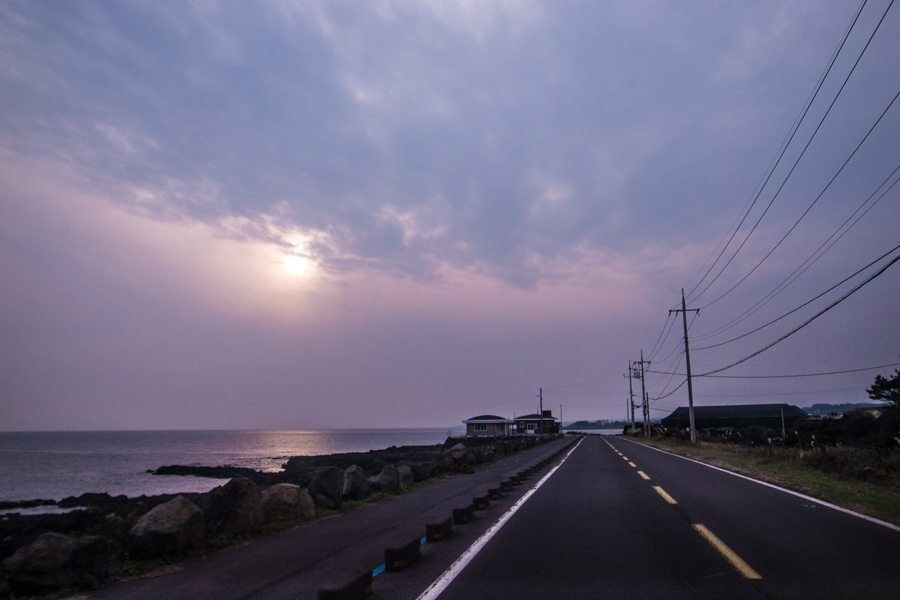
Try this once a week. It takes about an hour and works with any camera, including your phone.
- Leave the noise at home. Put your phone on airplane mode if it's not your camera. Tell yourself the next hour is shooting time and nothing else.
- Stand still for two minutes before you shoot. Breathe. Notice what you hear and where the light comes from. Don't raise the camera yet.
- Walk slower than usual. Half your normal pace. You'll see things you normally walk past: a reflection, a shadow on a wall, a gesture.
- Pick one thing to notice. Light on faces, the colour red, hands, shadows. One constraint keeps your attention from scattering. My list of street photography ideas has plenty of these.
- When something stops you, stay with it. Before you shoot, ask what exactly caught your eye. Then photograph that, not the whole scene. If the scene is still developing, work the scene patiently.
- Limit your frames. Give yourself 36 shots, like a roll of film. Every press of the shutter becomes a decision.
- Don't look at the screen. Chimping, checking the screen after every shot, pulls you out of the moment and into judging. Review later.
- Review without grading. At home, look at the pictures and notice what you were drawn to. Don't judge or score them yet. The patterns in what you noticed tell you more about your eye than any single frame.
Mindful photography at home
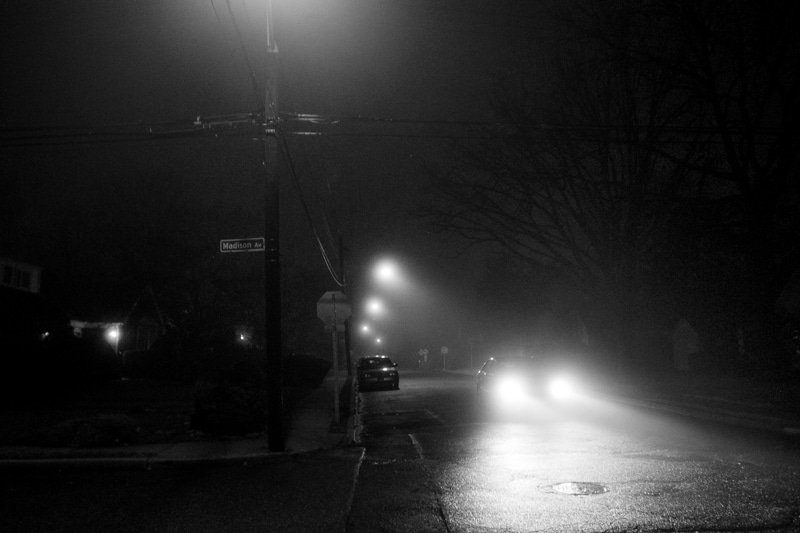
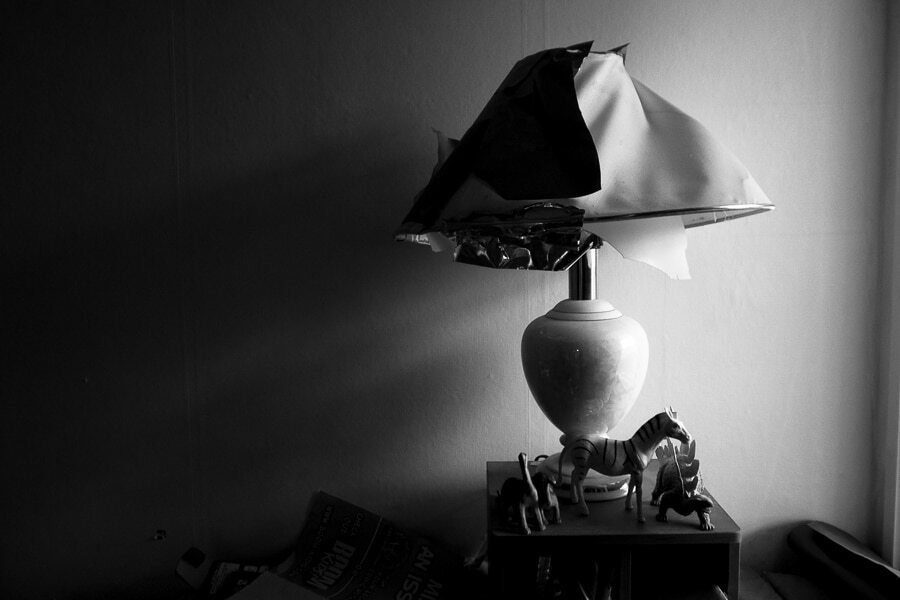
You don't need a city. Light moving across a table or a lamp at night deserves your full attention too. Treat your home as a location and watch how the light changes through the day.
If going out feels like too much on a given day, that's fine. Rest is part of it. Pick the camera up again when you feel refilled, not emptied.
When the passion fades
One Reddit thread was titled simply "My passion for Street Photography are starting to fade.." Most of us hit that wall. Often it's because photography turned into a performance, chasing likes and comparing yourself with masters. The mindful approach is a way back. You go out to see, not to produce.
Some practical resets:
- Stop comparing your everyday frames with someone else's greatest hits. Every famous photographer's book is a tiny selection from a huge pile of ordinary pictures.
- Look back at your own old work and notice how far you've come.
- Shoot a place you love rather than a place you think is photogenic.
- Take a break without guilt, then come back.
If you're stuck rather than tired, my guide to photography creative block goes deeper. If you're just starting out, photography as a hobby explains why street is the easiest way in.
Training your mind to see
Mindful seeing gets easier when your mind knows what to look for. Your brain filters out almost everything you see, and it lets through what it has been primed to notice. That's why photographers who study composition start seeing pictures everywhere.
That's the idea behind Phototactic, the street photography course I made with Don Springer. One module covers priming the mind, and the Image Quest cheat sheet on your phone reminds you which picture patterns to look for on a walk. The bonus interview with Don covers his conversations with Minor White. It's recorded video lessons, $297 as one payment with a 60 day money back guarantee. There's no feedback on your own photos and no community; it's a way to practise seeing on your own.
New to the street? Start with street photography for beginners and how to see like a photographer.
Frequently Asked Questions
What is mindful photography?
Mindful photography is taking pictures with full attention on the present moment, without rushing or judging. You slow down and photograph what really catches your eye. It's also called contemplative or slow photography. Any camera works, including a phone, and street photography is a natural fit because it demands attention to the moment.
Is photography good for mental health?
Many people find it calming because it gets them outside and turns attention outward. Small studies found mindful photography improved mood and appreciation, and a short photography activity reduced stress in students. It is not a treatment. If you're struggling, speak to a doctor or therapist and use photography alongside that support.
What is contemplative photography?
Contemplative photography is an approach that puts seeing before picture making. You notice a direct perception, like a colour or a shape, and photograph it as you saw it. Miksang, a Tibetan word meaning good eye, is one well known form, described in The Practice of Contemplative Photography by Andy Karr and Michael Wood.
How do I start practising mindful photography?
Take a one hour walk with one camera and no other distractions. Stand still for two minutes before shooting, walk at half your usual pace, pick one thing to notice, and limit yourself to 36 frames. Don't check the screen while you shoot. Review the pictures later, looking at what drew you rather than grading them.
Can you practise mindful photography with a phone?
Yes. The camera matters far less than your attention. Put the phone on airplane mode so notifications don't pull you away, and treat each tap of the shutter as a decision. A phone is also less intimidating on the street, which makes it easier to stay relaxed and present.