
The fastest way to take better photos is to simplify the background and make it obvious what the photo is about. That fixes more pictures than any camera or setting.
I'm Olivier Duong. I've shot street photography for well over a decade, and I've owned more cameras than I like to admit. A comment on Reddit sums up what I learned the expensive way: "Some of the people with the best gear produced the least interesting photos." Good photography skills are habits you build. These 15 made the biggest difference for me, and the first few pay off fastest. They work with a phone or a full frame camera.
1. Decide what the photo is about
Some photographs are taken, others are made. The difference is intent. Before you press the shutter, finish this sentence: "This photo is about..." A person, a shadow, a color, a gesture. If you can't finish it, the viewer won't be able to either.
Then ask one more question: why this image and not another one a few steps away? That pause alone will improve your photos.
2. Simplify the frame
Anything in the frame that doesn't bring attention to your subject takes attention away from it. Most weak photos have too much in them, not too little.
Your background matters as much as your subject. In the film The Magnificent Seven, Yul Brynner was the lead, but Steve McQueen stole scenes by fiddling with his hat and gun in the background. Your background does the same thing to your subject. Check the edges and the space behind the subject before you shoot. Move until nothing fights for attention.
3. Get close enough, not just close
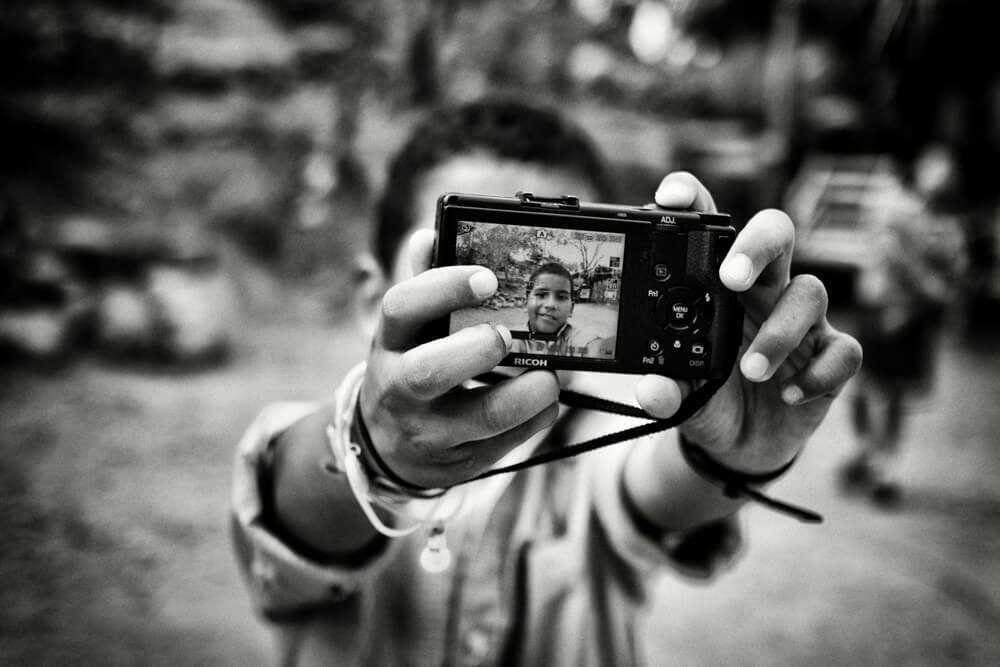
"Get closer" is the most repeated photography tip there is. It's half right. Get close enough that the subject is obvious and fills its part of the frame. But a bad picture taken from one meter away is still a bad picture. Closeness doesn't fix a weak idea.
The other kind of closeness matters more: get emotionally close to what you shoot. Photograph things you care about and you'll notice details a passer-by would miss.
4. Look at the light before the subject
Photography literally means painting with light. A painter knows paint; a photographer has to know light. Besides composition, nothing changes a photo more.
- Soft light (overcast sky or open shade) is kind to faces and shows detail.
- Hard light (direct sun) makes strong shadows. Great for drama and shapes, harsh on skin.
- Golden hour, the hour after sunrise and before sunset, gives low, warm light and long shadows.
- Blue hour and night give you color from street lights and signs. Brace against a wall or use a small tripod.
Make it a habit to notice light everywhere, even without a camera: how it falls on a wall at 8am versus 5pm. For more, read light and shadow photography.
5. Put your subject where the contrast is
The eye goes to the part of the frame with the most contrast. Usually that means the brightest area, or the spot where light meets dark. If that spot is your subject, the photo reads instantly. If it's a white car in the corner, the viewer looks at the car.
Squint at the scene before you shoot. The details blur and only the light and dark masses remain. Is your subject in the strongest one? If not, change your position or wait.
6. Change your angle
Most people take every photo from standing eye level, which is why most photos look alike. Crouch to knee height, or find a higher spot and look down. A new viewpoint turns an ordinary scene into one people haven't seen a thousand times.
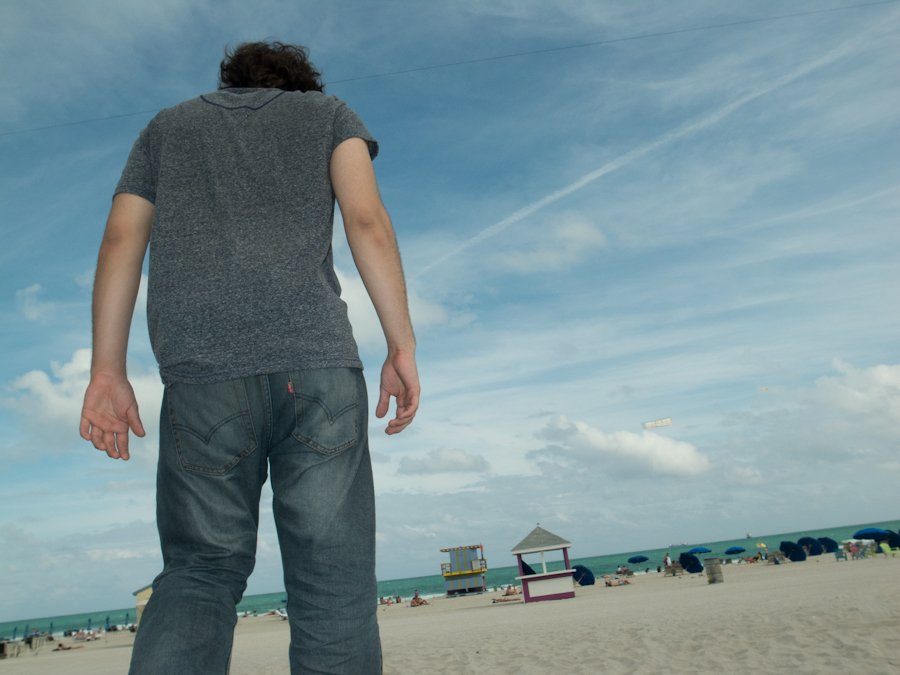
Your best shot might not even be in front of you. Look behind you and to the side before you move on.
7. Learn a few composition patterns
Composition is a fancy word for arrangement. You see the elements in a scene, then arrange them so the eye travels to your subject. A few patterns do most of the work:
- Rule of thirds. Place the subject off center, near one of the lines that split the frame into thirds. A starting point, not a law.
- Leading lines. Roads, rails, fences and shadows that point toward the subject.
- Framing. A doorway or window around the subject.
- Layers. Something in the foreground and something in the background, both adding to the story.
- Repetition. Repeated shapes the brain links together.
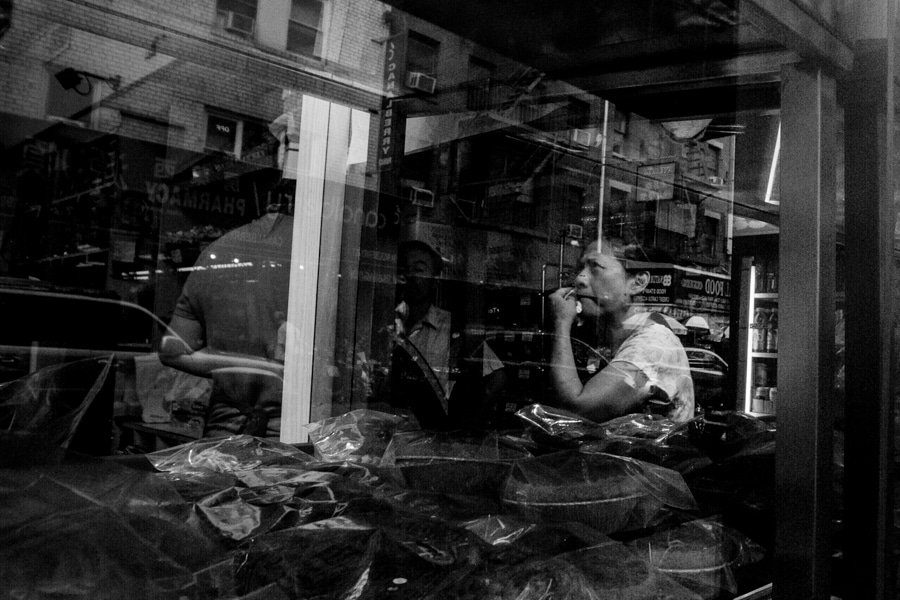
The full toolkit is in photography composition, with deeper guides on leading lines, framing, layering and negative space.
8. Learn your camera until you stop thinking about it
You need to know your grammar before you write prose. You don't need to shoot in manual mode, but you should know what your camera does without looking at the menu.
- Use aperture priority to control how much is in focus. A wide aperture (small f-number like f/2) gives a shallow depth of field and blurs the background. A narrow one (f/8) keeps more of the scene sharp.
- Keep the shutter speed at 1/250s or faster for moving people to avoid blurry pictures.
- Let auto ISO handle low light, and accept some noise over a blurry shot.
- Focus on the eyes when there's a face in the frame.

The exposure triangle explains how these settings interact, and street photography settings gives starting camera settings.
9. Carry one camera and one lens
If you think everything will be different with a new camera, you're most likely fooling yourself. I once had a bag of cameras and lenses, and the cheapest one, a small fixed lens camera, made me more creative than all the others combined.
With one focal length you stop preparing for every situation and start seeing in that frame. Pick one camera, or your phone, and one lens, and use nothing else for a month. The kit lens that came with your camera is fine. The best camera is the one you love and actually carry. If you do want to buy, read the best camera for street photography first. On a phone, how to take better photos with an iPhone covers the specifics.
10. Work the scene
When a scene interests you, don't take one frame and walk away. Take many. Move left, move right, go lower, wait for different people to pass. The first frame is rarely the best one.
A lot of famous photographs are one of a series made in the same spot. Look at the contact sheets of great photographers and you'll see the process: they circle the subject until it clicks. More in how to work the scene.
11. Be patient
Sometimes the light and the location are perfect, and only the subject is missing. Stay. Set up your frame and wait for the right person to walk into it. I call this a trap shot.
Patience also applies to whole outings. Not every day is a good day. Some days you find a gold nugget, some days you find nothing. A bad day doesn't mean you've lost it. It means you're photographing real life.
12. Shoot RAW and edit with a purpose
Film came with a look built in. Digital files are designed to be neutral and flat, so a bit of editing isn't cheating; it's finishing the job. Shoot RAW when you can, because it keeps more data and gives you more room to fix exposure and color.
- Darken the background slightly and brighten the subject. It pops at once.
- Crop out distractions at the edges.
- Pick one look, like a preset or a film simulation, and stick to it until you can predict the result before you shoot.
- Try black and white when color distracts from the shapes and light.
See how to edit street photography for a full workflow in Lightroom.
13. Be ruthless when you choose
Your portfolio is only as strong as its weakest photo, and the fastest way to look like a better photographer is to show fewer pictures. Keep your best, hide the rest.
The problem is that you're a poor judge right after a shoot, because you remember how exciting the moment felt. Let photos sit for a few weeks before you choose, and ask an honest friend for a critique. Flip them horizontally or look at them upside down to see only the composition. As a beginner, don't delete the rest: revisiting old files years later is how you find the frames you missed. The street photography hit rate guide covers culling in detail.
14. Study great photos, and not only photos
To learn from other photographers, deconstruct their work. Ask why each photo works: where the light is, where the lines go, what's left out, what the subject is doing. Start with famous photographers.
Then look outside photography. There's a story about a juggler whose act stood out because his inspiration came from everything except juggling. Paintings and films are full of lessons on light and placement. I wrote about what to borrow from the old masters in composition lessons from painters.
15. Shoot often, and shoot what matters to you
Every photographer was bad at some point. The ones who got good kept going. Shooting a little every day beats a big outing once a month, because seeing is a habit. If you need structure, try a 30-day photography challenge.
Photograph what's important to you first, like your family and your street. It's often the most meaningful work you'll make, and you'll never run out of access.
Quick fixes for common photo problems
| Problem | Likely cause | Fix |
|---|---|---|
| Blurry photos | Shutter speed too slow or missed focus | Use 1/250s or faster for people, focus on the eyes |
| Too dark or too bright | Camera metered the wrong area | Use exposure compensation, expose for the highlights |
| Cluttered, confusing photos | Busy background | Move your feet or use a wider aperture |
| Boring photos | No clear subject or flat light | Decide what it's about, then find better light |
| Subject gets lost | Something brighter elsewhere in the frame | Put the subject in the area with the most contrast |
| Everything looks the same | Same height, same distance, every time | Shoot low or high, try one new lens or location |
If the problem is that your street photos in particular feel flat, read why are my street photos boring.
Where to go from here
Start with the street photography for beginners guide if you're new. If you want the habits above taught step by step, our online street photography course, Phototactic, turns them into picture patterns you learn to spot, in short 3 to 5 minute videos with a cheat sheet for each module. It covers composition, emotion, editing and fear on the street, and it works with any camera.
Frequently Asked Questions
How can I take better photos?
Decide what each photo is about, then simplify the background so nothing competes with it. Pay attention to light before subject, and put your subject in the area with the most contrast. Change your angle, take several frames of a good scene and pick only your best. These habits matter more than new gear.
Do I need a better camera to take better photos?
Usually not. Most photos improve through light and composition, which any camera can capture, including a phone. A better camera helps in low light and gives cleaner files, but it won't fix a cluttered background or a missing subject. Learn the camera you own before you upgrade.
What is the most important skill in photography?
Seeing. That means noticing light and arranging the elements in a scene so the eye goes where you want. The basics of settings can be learned in a few days, while seeing takes regular practice. Studying great photographs and asking why they work speeds it up.
How do I get better at photography fast?
Shoot a little every day with one camera and one lens, and review your photos a few weeks later with fresh eyes. A daily challenge with one prompt per day helps you practise even when you lack ideas. Progress comes faster with a clear focus than with more gear.
How do I take good photos with my phone?
Use the main lens rather than digital zoom, and tap on your subject to set focus and exposure. Look for good light, like shade or a window, and keep the background simple. Shoot from different heights instead of always at eye level, and edit lightly to finish the photo.