
Street Photography in Udaipur
Udaipur puts palaces and lakes behind a lively old city of bazaars and ghats, where everyday life happens on the steps of Lake Pichola and in lanes full of textiles and miniature painters.
- Spots
- 7
- Best time
- October to March for mild weather
- Lens
- 35mm
- Photographing people
- Generally allowed
Udaipur is good for street photography because its old city is a working town built around a lake, so daily life happens against palaces and water. The ghats of Lake Pichola are where people sit and wash, and at sunset the steps fill with locals and visitors. The bazaars around Hathi Pol and Bada Bazaar are packed with textile stalls and miniature painters. Hii Stories, whose writer has shot the city many times, says almost everywhere you point a lens here gives you a frame. Kevin Standage, who has visited India many times, calls Udaipur possibly his favourite city.
Most people searching for Udaipur street photography or the best photo spots in Udaipur are visitors. I'd spend the morning at the Jagdish Temple and the City Palace, then work the bazaars until it is time for sunset at Ambrai Ghat. For the rest of India, see our guide to street photography in India.
Best street photography spots in Udaipur
Jagdish Temple
The Jagdish Temple is a 17th century temple to Vishnu, built in 1651 according to Aranyam Hotels and raised on a high plinth a short walk from the City Palace gate, at the heart of the old city. The steep steps and the carved stone give you a stage: worshippers climbing while scooters squeeze through Jagdish Chowk below. Morning and evening prayers bring the most people. Stand at the foot of the steps with a longer lens and let figures stack up the stairs. Rules on photography inside the shrine can differ from the outside, so ask at the entrance, and take your shoes off where others do. Ask before close portraits of worshippers.
Gangaur Ghat
Gangaur Ghat is the main ghat on Lake Pichola in the old city, with the arched gate of Bagore Ki Haveli beside it. Hii Stories calls the haveli the best spot in Udaipur for culture and performance photography, with an evening folk dance show, Dharohar, inside. On the ghat itself, locals and visitors sit on the steps at dusk as the palace lights come on across the water. During the Gangaur festival in March or April, the Indian government's festival site says processions carry the idols of Isar and Gangaur down to this ghat. People also wash and bathe on the lake steps, so never photograph anyone bathing.
Ambrai Ghat
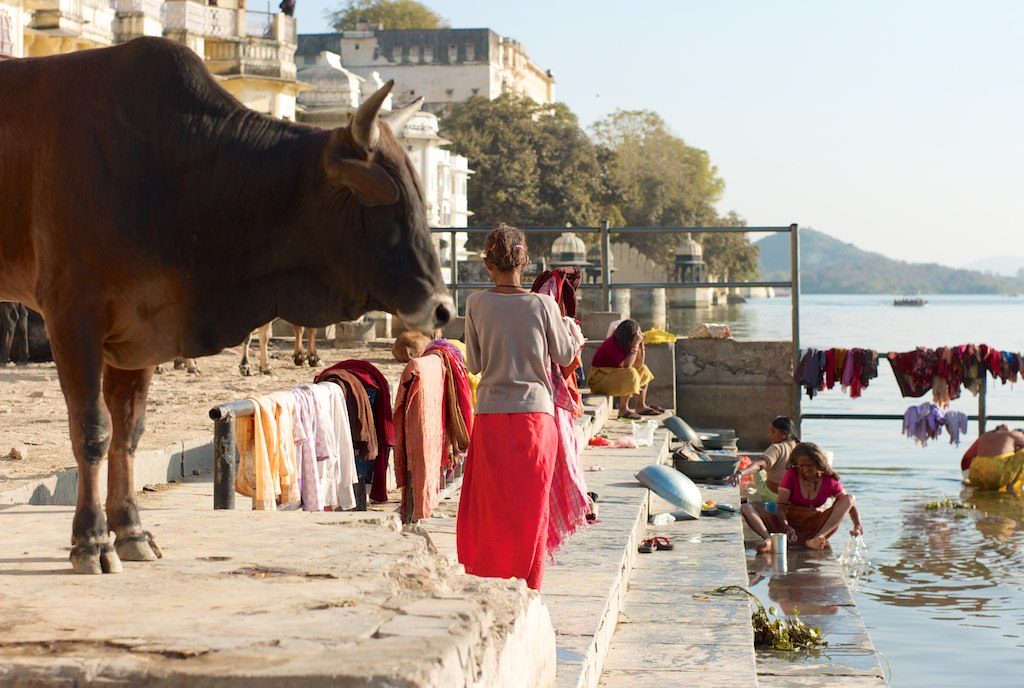
Ambrai Ghat, on the west side of Lake Pichola, is the classic sunset view of Udaipur. Hii Stories calls it the single best photo spot in the city, because it puts the City Palace, the Lake Palace and Jag Mandir in one frame across the water, and recommends arriving 30 minutes before sunset. Kaladwas notes it draws large crowds, especially at weekends and in tourist season. That crowd is your street subject: people sitting on the steps and the wall, silhouetted against the palace. Get there early for a spot on the edge. Locals also wash clothes and bathe on the ghats here in the morning, so be respectful.
Hathi Pol Bazaar
Hathi Pol, the Elephant Gate, marks one of the old city's busiest bazaars. Hii Stories lists Hathi Pol and Bada Bazaar as Udaipur's strongest spots for street and market photography, with narrow lanes of textile stalls and miniature painting shops, and says they photograph well in late afternoon light. Painters bent over tiny brushes in open shopfronts make strong portraits if they agree. The traffic is heavy, so find a doorway to stand in and let the street move past. Shopkeepers will invite you in to buy. A polite no is fine, and a purchase makes a portrait easy.
Bada Bazaar
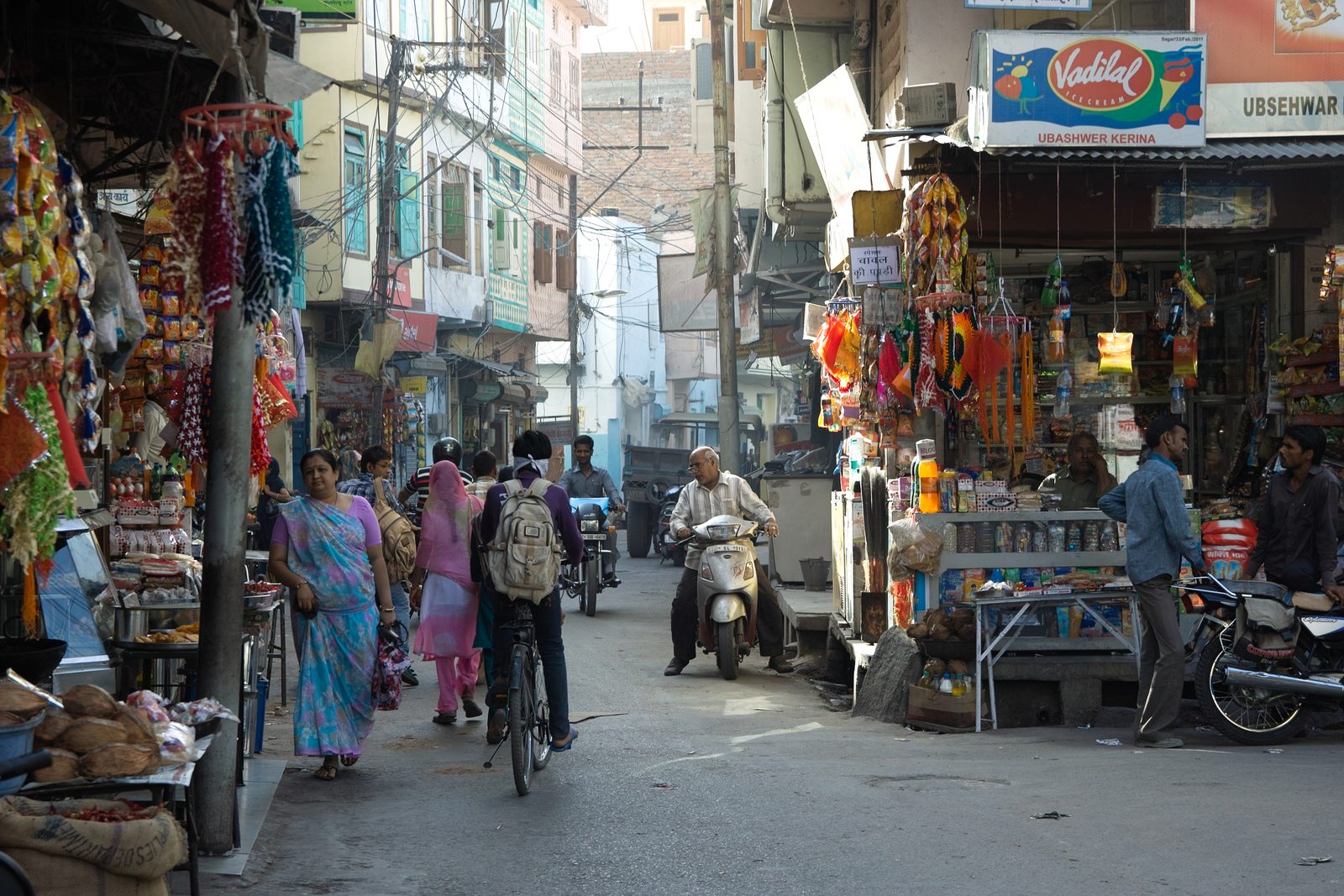
Bada Bazaar is the main market of the old city, a tangle of lanes between the palace area and the city gates. Hii Stories pairs it with Hathi Pol as the best place for market life. Here the customers are mostly locals: women shopping for saris and men on scooters loaded with goods. Late afternoon is busiest and has the best light slanting down the lanes. Work from the edge of a shop step to stay out of the traffic. Ask before photographing women, and accept a no with a smile. Mornings are quieter, as the shutters go up.
City Palace
The City Palace is the huge palace complex rising above Lake Pichola, now largely a museum. Hii Stories recommends going right at opening, before tour groups fill the courtyards, for the balconies and mirror work. It is not street photography in the strict sense, but visitors in the courtyards and at the lake windows give you frames within frames. The museum's FAQ says photography is allowed but flash is not permitted in the galleries, and commercial or professional photography needs permission. There is a camera fee on top of the entry ticket, so check current prices. The road outside the gate is busy with guides and vendors.
Fateh Sagar Lake
Fateh Sagar Lake, north of the old city, is where Udaipur residents come to stroll in the evening. The lakeside road along its banks fills with families and snack vendors, and Kaladwas notes it gets crowded at weekends. It feels more local than Lake Pichola, with fewer foreign visitors. Late afternoon and sunset are the times, with the Aravalli hills behind the water. Shoot people along the wall in silhouette against the lake, or work the snack stalls for candid moments. Ask before photographing women and families. It is a short autorickshaw ride from the old city.
Photographing people in Udaipur
Photographing people in public is generally legal in India. The limits are local rules and custom. Temples and palaces set their own camera rules and fees, and the City Palace museum bans flash in its galleries and requires permission for commercial photography. By custom, people bathing at the ghats are off limits. This is general information, not legal advice. See is street photography legal.
People in Udaipur are used to visitors with cameras, and many are happy to be photographed, especially shopkeepers and artisans. Ask before photographing women, and people praying, and accept a no. A few words and a smile go a long way, and some people will ask you to show them the picture. If someone asks for money for a portrait, it is your choice, but agree first. More in how to photograph strangers.
General information, not legal advice. More in is street photography legal?
What to photograph in Udaipur
- Ghat life: people sitting on the steps of Lake Pichola at dusk.
- Temple steps at the Jagdish Temple, with worshippers climbing.
- Bazaar lanes: textiles and silverware, with scooters squeezing past.
- Miniature painters at work in open shopfronts.
- Colour: turbans and saris against whitewashed and ochre walls.
- Festivals: Gangaur processions and folk dance in March or April.
- Palace frames: visitors framed by arches and windows at the City Palace.
- Evening strolls along Fateh Sagar Lake, with snack stalls and families.
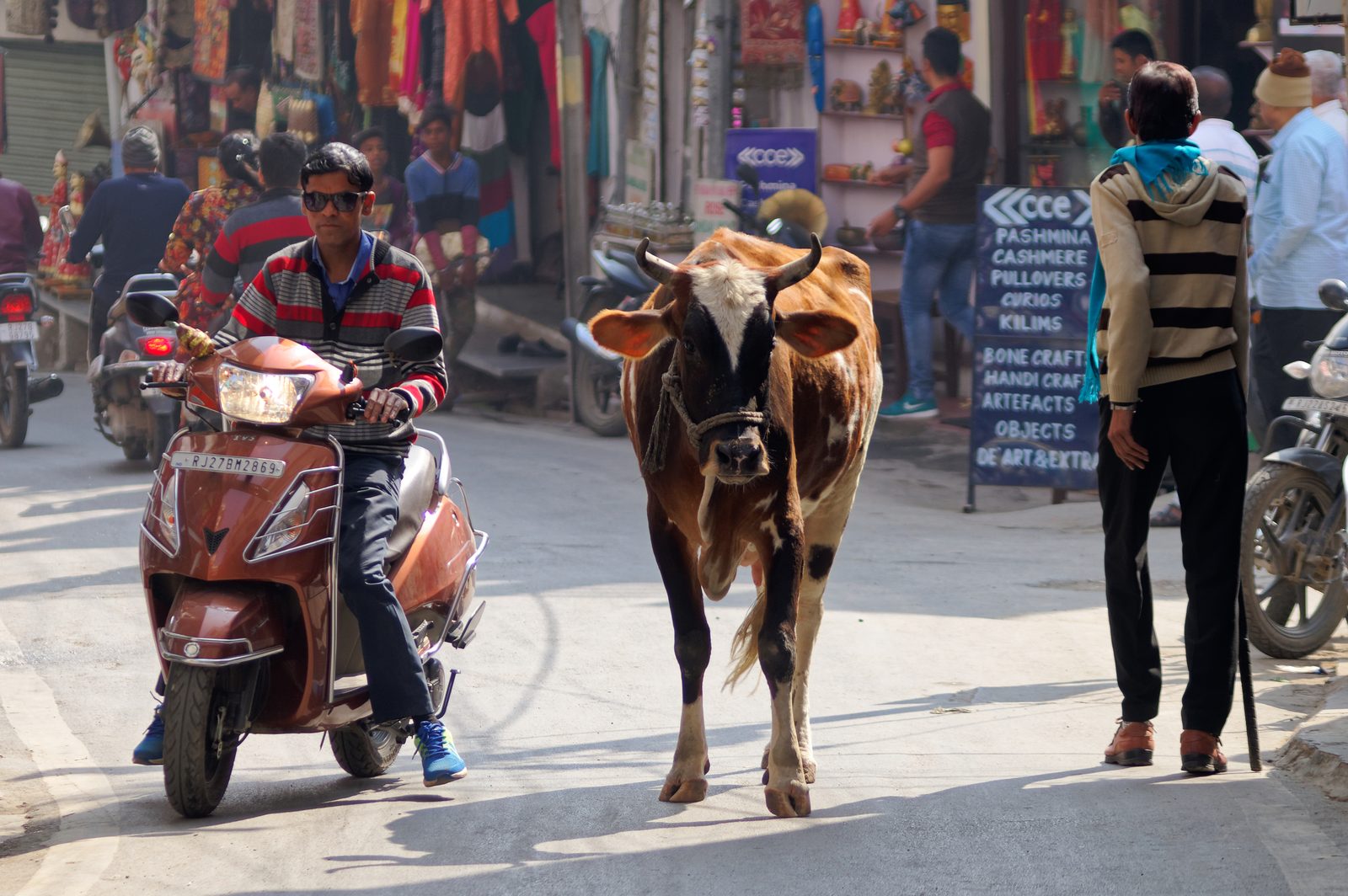
- Cows and dogs sharing the lanes with traffic.
- Rooftops: laundry and water tanks on the old city roofs, seen from rooftop cafes.
A one-day photo walk
- 7:00, Jagdish Temple. Morning worshippers on the steps, and the chowk waking up.
- 8:30, City Palace. About 3 minutes on foot. Be there at opening, before the groups.
- 11:30, Gangaur Ghat. About 5 minutes on foot. The ghat in daylight and Bagore Ki Haveli.
- Midday: lunch on a rooftop and a rest from the sun.
- 15:30, Bada Bazaar and Hathi Pol Bazaar. About 15 minutes on foot through the old city. Market life in late light.
- 17:30, Ambrai Ghat. A short autorickshaw ride. Sunset over the palace. On another evening, swap in Fateh Sagar Lake or the dance show at Bagore Ki Haveli.
When to shoot
October to March for mild weather. Gangaur and the Mewar Festival fall in the month of Chaitra (March or April), with processions to Gangaur Ghat. Summer is very hot. The monsoon (roughly July to September) fills the lakes and greens the hills.
The light
Warm, clear light in the dry season. Sunset over Lake Pichola is the famous time, from Ambrai Ghat. Late afternoon slants down the bazaar lanes. Early morning is soft and quiet on the ghats.
What to bring
A 35mm for the bazaars and ghats, and a short telephoto for the temple steps and lake views.
Safety
Generally safe and relaxed for visitors. Watch the traffic in the narrow old city lanes, and agree on autorickshaw fares first. Shopkeepers can be persistent.
Tips for Udaipur
- Gangaur: the festival falls in Chaitra (March or April), with processions to Gangaur Ghat. Check the date for the year you travel.
- Sunset: arrive at Ambrai Ghat 30 minutes early for a place on the edge.
- Ghats: never photograph people bathing, and remove shoes where locals do.
- City Palace: expect a camera fee on top of entry, and no flash in the galleries.
- Heat: from April to June, shoot early and late. See street photography settings.
- Traffic: lanes are narrow and scooters fast. Stand in doorways, not in the road.
- Boat: a sunset boat ride on Lake Pichola gives you the palace from the water, as Hii Stories suggests.
Frequently asked questions
Is street photography legal in Udaipur?
Photographing people in public is generally legal in India. Temples and the City Palace set their own camera rules and fees; the palace museum bans flash in its galleries and needs permission for commercial shoots. By custom, don't photograph people bathing at the ghats. Ask before photographing women, and people at prayer. General information, not legal advice.
Where are the best street photography spots in Udaipur?
Start with Jagdish Temple, Gangaur Ghat, Ambrai Ghat, Hathi Pol Bazaar. 17th century Vishnu temple on a high plinth near the City Palace gate. Worshippers on the steps and a busy chowk below.
When is the best time for street photography in Udaipur?
October to March for mild weather. Gangaur and the Mewar Festival fall in the month of Chaitra (March or April), with processions to Gangaur Ghat. Summer is very hot. The monsoon (roughly July to September) fills the lakes and greens the hills.
What lens should I bring to Udaipur?
A 35mm for the bazaars and ghats, and a short telephoto for the temple steps and lake views.
Is Udaipur safe for street photographers?
Generally safe and relaxed for visitors. Watch the traffic in the narrow old city lanes, and agree on autorickshaw fares first. Shopkeepers can be persistent.
More street photography in India
Start with the India street photography guide, then pick a city.