
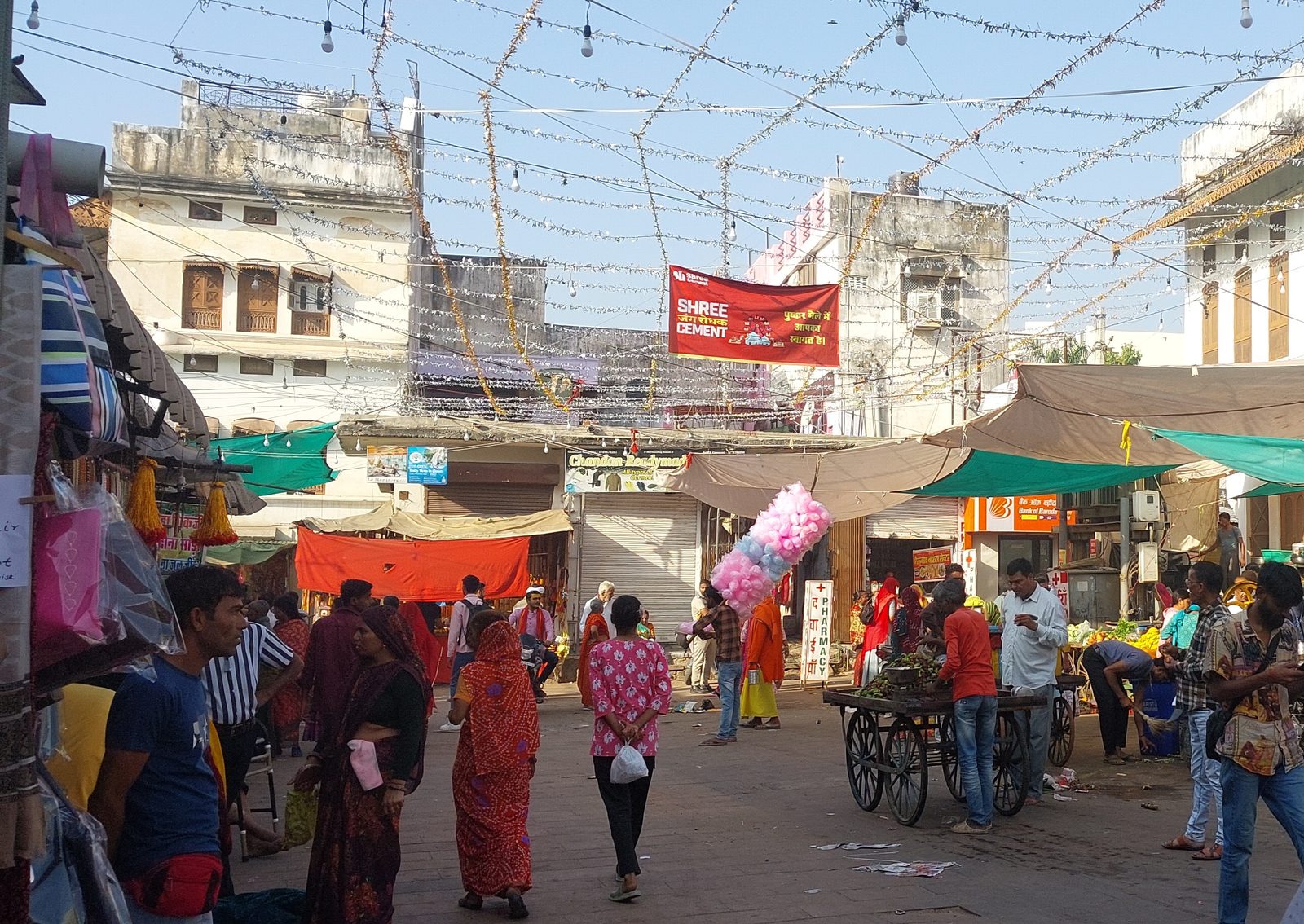
Street Photography in Pushkar
Pushkar is a small holy town wrapped around a sacred lake, and once a year the camel fair brings herders and their camels to its edge, which makes it one of India's most photographed places.
- Spots
- 6
- Best time
- October to March, when the desert is cool
- Lens
- 35mm or 00mm
- Photographing people
- Generally allowed
Pushkar is good for street photography because it packs a sacred lake ringed by white ghats into a town you can walk across in 20 minutes, and every November the camel fair adds one of Asia's great gatherings of herders and livestock. That is why it tops so many photography tour itineraries. Annapurna Mellor, writing for Remote Lands, calls the fair a photographer's paradise, but a hard one to shoot without knowing where to go.
Outside the fair, Pushkar is calmer and more touristy than you might expect. Tara Shupe found it harder to shoot portraits here than elsewhere in India because of the tourism, and a few people shouted about her camera. The rules matter too: no photos of bathers at the ghats, and shoes off on the steps. I'd come for the fair if you can: the camps at dawn, the dunes at sunset. Save the middle of the day for the bazaar lanes.
Best street photography spots in Pushkar
Gau Ghat
Gau Ghat is one of the main ghats on Pushkar Lake, where pilgrims come down the steps to bathe and pray. During the fair, the opening Maha Aarti is held on the ghats, a ceremony of lamps that Annika of Midnight Blue Elephant followed with the crowds. Evening is the time, as lamps are lit and the sky colors. Shoot wide scenes of the lake and the steps, and the lamps being raised by priests. Photographing bathers is strictly prohibited, and shoes must come off before the steps. Keep your camera away from anyone in the water.
Varaha Ghat
Varaha Ghat sits on the north shore, with white steps leading down to the water and temples behind. Cows wander the steps among the priests, and at sunset the light turns the lake gold. Annapurna Mellor recommends sweeping wide shots of the lake and town at sunset. Stand at the top of the steps with the water behind, and wait for a priest or a cow to walk into the frame. Expect offers of a blessing here, which can turn into a demand for money. Politely decline if you do not want one.
Brahma Temple
Pushkar is famous for its Brahma temple, one of very few in the world dedicated to him. Pilgrims queue at the entrance, and stalls outside sell flowers and offerings. Cameras and phones are usually not allowed inside, so work the approach: the crowds on the steps and the vendors in the lane. Morning is busiest with pilgrims. Stand across the lane and use the red spire and the gate as a background for people arriving. Leave shoes where you are told, and follow the temple's photography rules.
Sadar Bazaar
The main bazaar lane runs parallel to the lake, past the Old Rangji Temple, with shops selling jewelry and offerings. Tara Shupe found the shopkeepers warmer and less pushy than in Jaipur. Cows block the lane while pilgrims walk barefoot toward the ghats. Late afternoon light slants into the lane. Look for a patch of light and wait for a cow or a sadhu to step into it. The lane is narrow and crowded, so keep your lens short and your bag in front.
Savitri Mata Temple
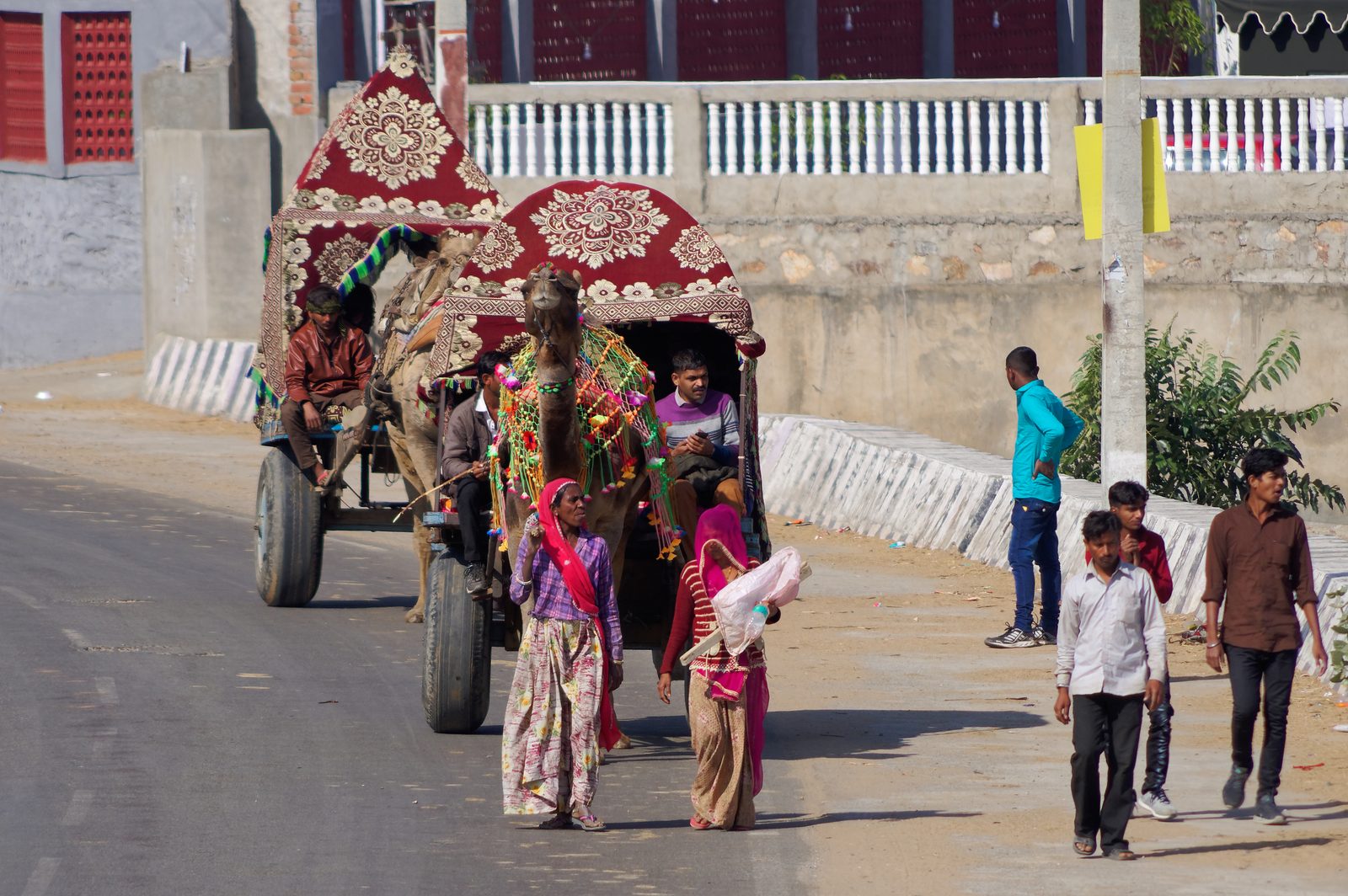
Savitri Mata Temple sits on a hill southwest of town, reached by a long flight of steps or a ropeway. During the fair, the camel traders camp on the dunes at the foot of this hill. Annapurna Mellor found dawn the best time for portraits there, with chai brewing on small stoves and herders feeding their camels. Many herders are happy to be photographed; some ask for small change or tobacco. At sunset, return for camel silhouettes against the dunes. Midnight Blue Elephant suggests going with a local guide, since the camps are a walk from town.
Pap Mochani Temple
Pap Mochani is a small temple on a hill north of town, reached by a climb of steps. Annapurna Mellor recommends it as a viewpoint in the morning, with the town and lake spread out below. Go early, before the heat, when haze and smoke from cooking fires hang over the rooftops. Use a longer lens to compress the ghats and temples into layers. Nag Pahar, the higher hill to the west, gives an even bigger view but is a long climb. Watch out for monkeys on the steps.
Photographing people in Pushkar
Photographing people in public is generally legal in India. The limits here are religious. Photographing people bathing at the ghats is strictly prohibited, as Annapurna Mellor notes, and shoes come off before you step onto the ghats. Temples have their own camera rules. The UK FCDO also warns that photography near military sites and railway stations may be misunderstood. This is general information, not legal advice.
At the fair, people expect cameras. Annapurna Mellor advises asking for permission, which also makes a better portrait. Many herders are happy to pose, while some ask for small change or tobacco. In town, the tourism makes candids harder, as Tara Shupe found. Dress conservatively and ask women before photographing them. Buying a chai first helps. More in how to photograph strangers.
General information, not legal advice. More in is street photography legal?
What to photograph in Pushkar
- Camel herders in bright turbans at the fair, with chai at dawn.
- Camels in silhouette on the dunes at sunset, and their reflections in water.
- Horse trading: buyers racing horses across open ground at sunset during the fair.
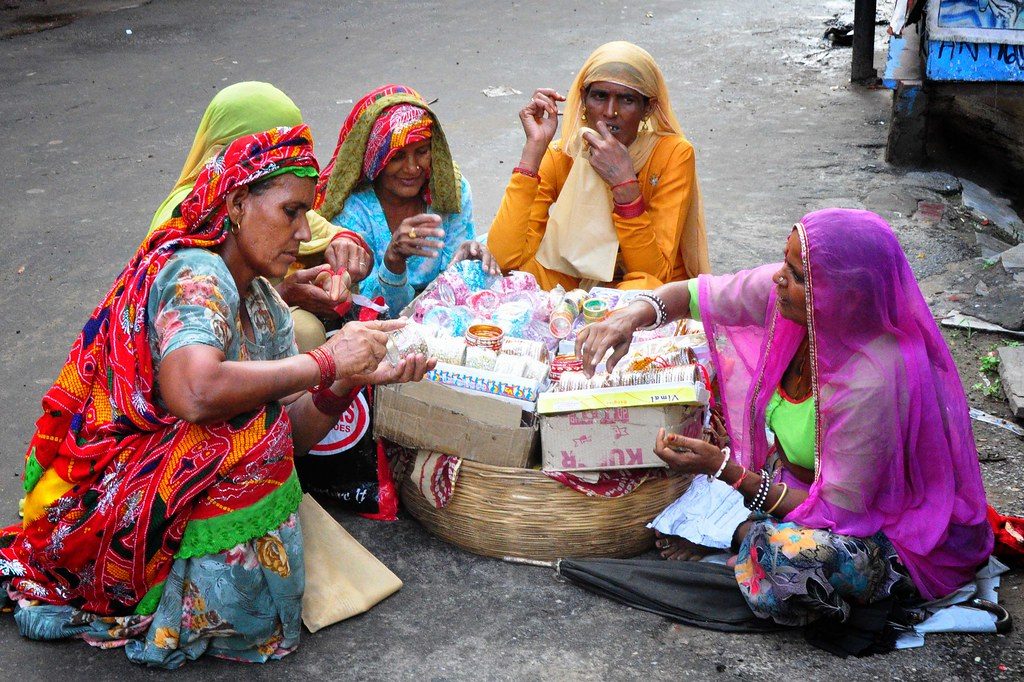
- Women in bright skirts and veils from the herder families. Ask first.
- Cows on the ghats and in every lane.
- Priests and sadhus with offerings on the ghats.
- White walls and street art in the backstreets, which Annapurna Mellor found on every corner.
- The mustache competition and dances in the fair's cultural program.
- Evening aarti lamps over the lake.
A one-day photo walk
A fair day.
- 6:00, camel camps below Savitri Mata Temple. By guide or auto rickshaw. Chai and portraits at dawn, before other visitors arrive.
- 9:30, Mela Ground. Back toward town. The cultural program in the stadium, where a long lens earns its place.
- 12:30, lunch and rest. Vegetarian only in Pushkar.
- 15:00, Sadar Bazaar. A slow walk through the lanes toward the lake, as the light starts to slant.
- 16:30, Brahma Temple. A 10 minute walk west. Pilgrims arriving.
- 17:30, the dunes again, for camels and horses at sunset.
- 19:00, Gau Ghat. Back in town for the evening aarti over the lake.
When to shoot
October to March, when the desert is cool. The camel fair (Pushkar Mela) falls in the Hindu month of Kartik, usually in November; one guide lists 17 to 24 November for 2026, with camel trading in the days before the official program. Dawn is best for portraits at the fair; sunset for the dunes and the lake.
The light
Clear desert light. Dawn is soft and dusty around the fair camps. The white ghats bounce light onto faces, and sunsets turn the lake gold. Midday is harsh and flat.
What to bring
A 35mm prime for the lanes and ghats, and a 70 to 200mm for the fair's cultural program and camels at sunset. A dust cover or bag for the fair.
Safety
Generally safe with normal care. Watch for the 'blessing' scam at the lake, where a flower offering turns into a demand for a large donation. Keep your distance from monkeys on the hill temples and from bulls in the lanes. Pushkar is a holy town: no meat or alcohol.
Tips for Pushkar
- Camel fair: usually in November, in the Hindu month of Kartik. Midnight Blue Elephant lists 17 to 24 November 2026. Trading happens in the week before the official program, so arrive early.
- Book ahead: prices skyrocket during the fair and rooms sell out.
- Dust: wear clothes you don't mind ruining, and change lenses inside a bag.
- Lens: a telephoto helps in the cultural program without intruding. See best lens for street photography.
- Light: dawn for portraits, sunset for dunes. See street photography settings.
- Scams: agree a price before any blessing at the lake, or decline.
- Food: Pushkar is vegetarian, and alcohol is banned.
Frequently asked questions
Is street photography legal in Pushkar?
Photographing people in public is generally legal in India. By local rule and custom, you must not photograph people bathing at the ghats, and shoes come off on the ghat steps. Temples set their own camera rules. Herders at the fair may ask for a small payment or tobacco for a portrait. Ask women before photographing them. General information, not legal advice.
Where are the best street photography spots in Pushkar?
Start with Gau Ghat, Varaha Ghat, Brahma Temple, Sadar Bazaar. One of the main bathing ghats on the lake. Evening aarti and pilgrims. Shoes off; do not photograph bathers.
When is the best time for street photography in Pushkar?
October to March, when the desert is cool. The camel fair (Pushkar Mela) falls in the Hindu month of Kartik, usually in November; one guide lists 17 to 24 November for 2026, with camel trading in the days before the official program. Dawn is best for portraits at the fair; sunset for the dunes and the lake.
What lens should I bring to Pushkar?
A 35mm prime for the lanes and ghats, and a 70 to 200mm for the fair's cultural program and camels at sunset. A dust cover or bag for the fair.
Is Pushkar safe for street photographers?
Generally safe with normal care. Watch for the 'blessing' scam at the lake, where a flower offering turns into a demand for a large donation. Keep your distance from monkeys on the hill temples and from bulls in the lanes. Pushkar is a holy town: no meat or alcohol.
More street photography in India
Start with the India street photography guide, then pick a city.