
Street Photography in Kathmandu
Temples and markets share the same narrow streets, and many people in Kathmandu are open to being photographed when approached with respect.
- Spots
- 7
- Best time
- October and November for clear skies and mild days
- Lens
- 28mm or 35mm
- Photographing people
- Generally allowed
Kathmandu is a very rewarding city for street photography because religion and daily life happen in the same crowded lanes, and most people are tolerant of cameras. Temples sit in the middle of markets. Porters and monks pass the same corner within minutes.
It is also rough. The air is dusty and the lanes are chaotic, but the dust and incense smoke do beautiful things to the light. My Inspired Eye page on Nepal features Shirren Lim, a Malaysian street photographer who spent about a week in and around Kathmandu with a Nikon D40X and an 18-200mm lens. She pulls her subjects out of their context and focuses on faces, and she had no problems photographing people there. The city still shows damage from the 2015 earthquake in places, alongside rebuilt temples.
Best street photography spots in Kathmandu
Asan Bazaar
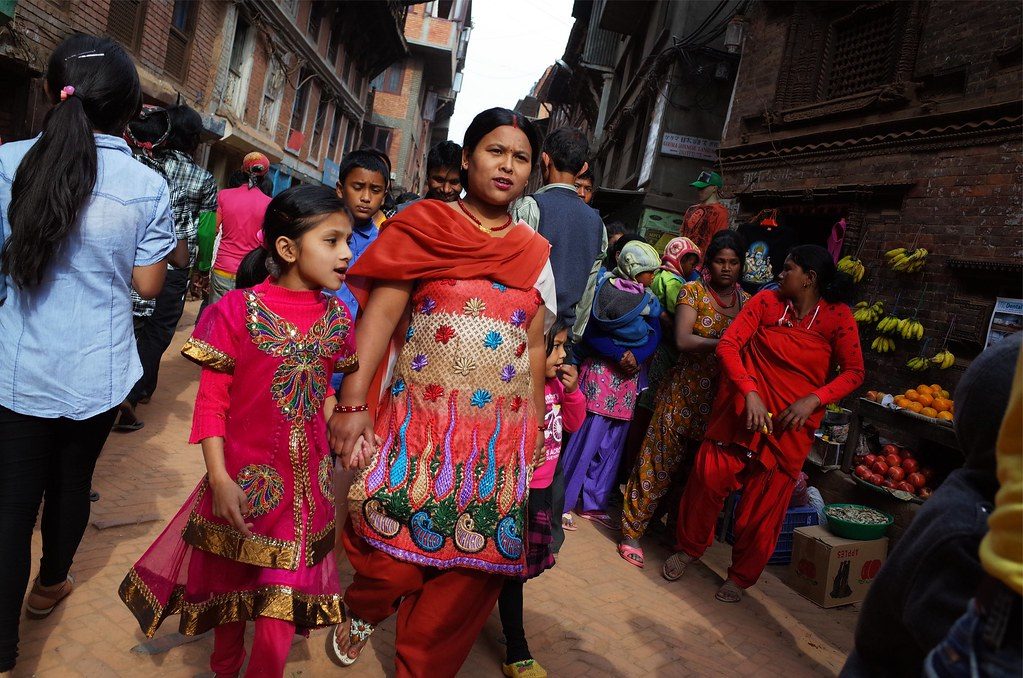
Asan is one of the oldest and busiest markets in Kathmandu, where several lanes meet at a small temple square. Early in the morning it is a vegetable and meat market, and it stays crowded from then until dark. Spice sellers and porters with huge loads fill the lanes. This is the place for complex, layered frames. If you prefer clean minimal pictures, it may not be for you. Composition idea: stand on a temple step for a little height and shoot across the crossing as porters pass. Caution: lanes are narrow and motorbikes squeeze through the crowd. Keep your elbows in.
Indra Chowk
Indra Chowk sits on the old trade route between Asan and Durbar Square. Small shops sell spices and textiles, and the street flows with shoppers and porters all day. It is a good place to find a spot and let the scene come to you. The buildings block a lot of sun, so shafts of light fall into the street in the morning. Composition idea: expose for a patch of sunlight and wait for a face to step into it. Caution: traffic is mixed and constant. Stand against a wall or doorway, not in the middle of the street.
Kathmandu Durbar Square
Durbar Square is the historic heart of the old town, with temples and palaces around a series of squares. Some damage from the 2015 earthquake is still visible. Foreign visitors pay an entry fee. It is busy with tourists, but locals still sit on the temple steps and kids play in the squares. An early market sets up next to the square: go by 7 am and stay until about 8:30, when traders pack up before the shops open. Composition idea: shoot from a temple platform down onto the crowd with the pagoda roofs as a frame. Caution: do not climb on temple structures that are marked off.
Thamel (the edges)
Thamel is where most travelers stay. The centre is full of lodges and tour operators, so there is less local life. Head to the edges instead, especially the streets running toward Chhetrapati and Asan. The lanes are narrow, with no pavements, and rickshaws and taxis squeeze past pedestrians. Light is scarce between the buildings, so either raise your ISO or use the shafts of light. Composition idea: find a beam of light in a lane and wait for a rickshaw to cross it. Caution: touts work the centre of Thamel. A polite no and walking on is enough.
Boudhanath
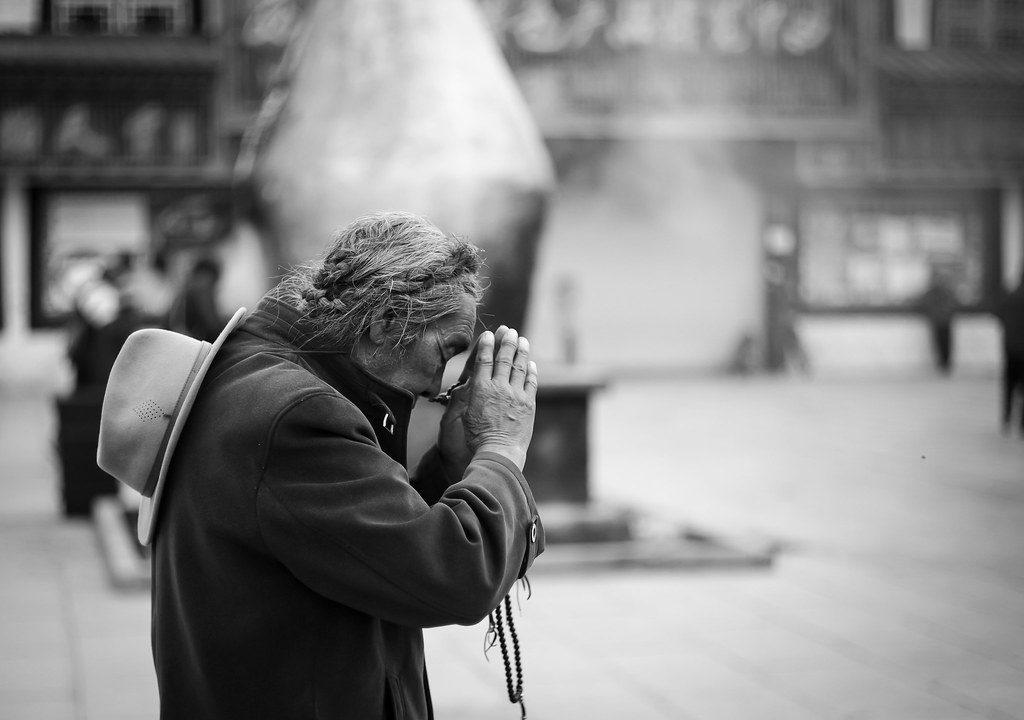
Boudhanath is one of the largest stupas in the world and the heart of the Tibetan community in Kathmandu. People walk the kora, clockwise around the stupa, all day. Incense smoke and thousands of pigeons add atmosphere. The busiest times are the prayers at dawn and dusk. Walk the kora with the crowd, then explore the streets and monasteries around it, where monks young and old come and go. Composition idea: shoot along the curve of the kora so walkers lead the eye toward the stupa. Caution: Tibetans are often less keen to be photographed than many Nepalis. Ask first, and ask before shooting inside monasteries.
Pashupatinath
Pashupatinath is the most important Hindu temple in Nepal, on the banks of the Bagmati River. Only Hindus may enter the main temple, but visitors can walk the wider complex, which has a fee. Cremations take place on the riverbanks and bodies can be clearly visible, so be ready for that. At sunset the aarati ceremony brings music and fire to the steps. Composition idea: frame the ceremony wide from across the river, with the crowd silhouetted against the fire. Caution: these are funerals. Keep your distance from grieving families and never use flash.
Swayambhunath
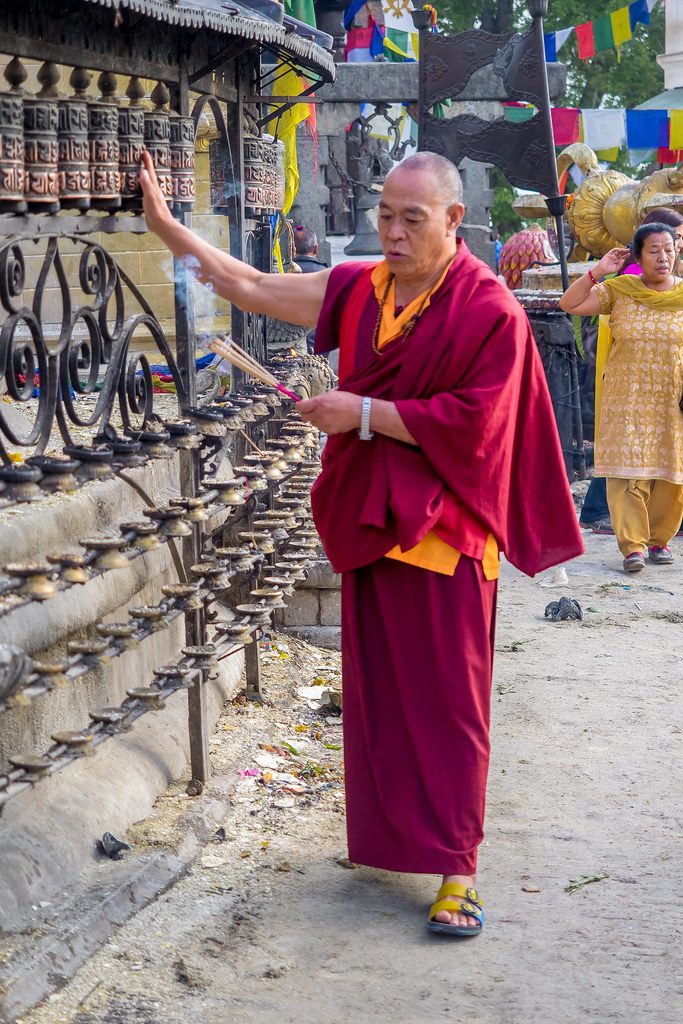
Swayambhunath, the Monkey Temple, sits on a hill west of the centre and gives you a view over the whole city. Because the hill stands alone, the light works at both sunrise and sunset. You can take a taxi to the top or climb the long stairway on the east side, passing small shrines and plenty of monkeys. People walk around the stupa clockwise and spin the prayer wheels. Composition idea: frame a pilgrim at a prayer wheel with the city haze behind. Caution: the monkeys grab food and loose items. Do not carry snacks in the open.
Photographing people in Kathmandu
Nepal is generally open to street photography, and people in Kathmandu are known for being tolerant of cameras. Religious sites need more care. At Boudhanath, Tibetans are often less keen on being photographed, so ask first. At Pashupatinath, cremations are real funerals. Shoot from a distance and never push into the mourners' space. Painted sadhus there usually expect money for photos. For portraits, a slight head nod can mean yes, which is easy to miss if you are not used to it. Shirren Lim worked candidly and then showed people the picture afterwards, which went well. Nepal passed a privacy law in 2018 that covers personal information, so avoid publishing anything that could embarrass someone. This is general information, not legal advice. See is street photography legal.
General information, not legal advice. More in is street photography legal?
What to photograph in Kathmandu
- Faces. Shirren Lim built her Nepal work around faces, with light and shadow across them. Kathmandu is full of strong faces.
- Porters and trade. Men carrying huge loads on head straps through Asan and Indra Chowk.
- Ritual. Offerings at street shrines, prayer wheels, kora walks and the evening aarati.
- Dust and smoke. Haze from traffic and incense softens backgrounds and catches beams of light.
- Masks. Many people wear face masks against the dust, especially on motorbikes.
- Riverbanks. Along the Bishnumati, people wash clothes and work, and the open space gives better light than the lanes.
A one-day photo walk
- 7 am, Asan and the morning market by Durbar Square. Catch the traders before they pack up around 8.
- 8:30 am, Indra Chowk to Durbar Square. A 5 to 10 minute walk. Work the square and its steps.
- 10:30 am, streets toward the Bishnumati. Walk west from Kasthamandap toward the river for local life with few tourists.
- 1 pm, the edges of Thamel. About 20 minutes on foot north. Eat, rest, then shoot the lanes toward Chhetrapati.
- 3:30 pm, Boudhanath. Taxi, around 30 minutes. Walk the kora and the side streets until the dusk prayers.
- Sunset, Pashupatinath. A short taxi ride. Stay for the aarati on the riverside steps.
When to shoot
October and November for clear skies and mild days. Early morning for markets and stupas, late afternoon for Pashupatinath. The monsoon runs roughly June to September.
The light
Strong golden hour glow, and dust and incense smoke that catch the light. Narrow lanes stay dark, so shafts of light are common.
What to bring
28mm or 35mm for tight streets, or a 24-70mm for a mix of scenes and portraits. A short telephoto helps at Pashupatinath from across the river.
Safety
Generally safe. Traffic in narrow lanes and air pollution are the main issues; a mask helps.
Tips for Kathmandu
- October and November usually bring clear skies and mild days. The monsoon, roughly June to September, brings rain and cloud.
- Look out for festivals. Indra Jatra fills Durbar Square around September, and Dashain and Tihar fall around October and November.
- Bring a dust mask. The air can be heavy with dust and smoke.
- Use a higher ISO in the lanes. Tall buildings and wires block the sun. See street photography settings.
- Bhaktapur, about 45 minutes away by road, is a quieter heritage town where locals outnumber tourists.
- Carry small notes. Several heritage sites, including Durbar Square, charge foreigners an entry fee.
- A zoom like Shirren's 18-200mm lets you shoot candid faces from a distance, even from a car stuck in traffic.
Frequently asked questions
Is street photography legal in Kathmandu?
Generally permissive for street work, but ask before close portraits, especially at religious sites. Never photograph grieving families at cremations. Non-Hindus cannot enter the main Pashupatinath temple.
Where are the best street photography spots in Kathmandu?
Start with Asan Bazaar, Indra Chowk, Kathmandu Durbar Square, Thamel (the edges). One of the oldest markets in the city. Vegetable and meat traders early, crowds all day.
When is the best time for street photography in Kathmandu?
October and November for clear skies and mild days. Early morning for markets and stupas, late afternoon for Pashupatinath. The monsoon runs roughly June to September.
What lens should I bring to Kathmandu?
28mm or 35mm for tight streets, or a 24-70mm for a mix of scenes and portraits. A short telephoto helps at Pashupatinath from across the river.
Is Kathmandu safe for street photographers?
Generally safe. Traffic in narrow lanes and air pollution are the main issues; a mask helps.
More street photography cities
Further reading: the Inspired Eye guide to Kathmandu.