
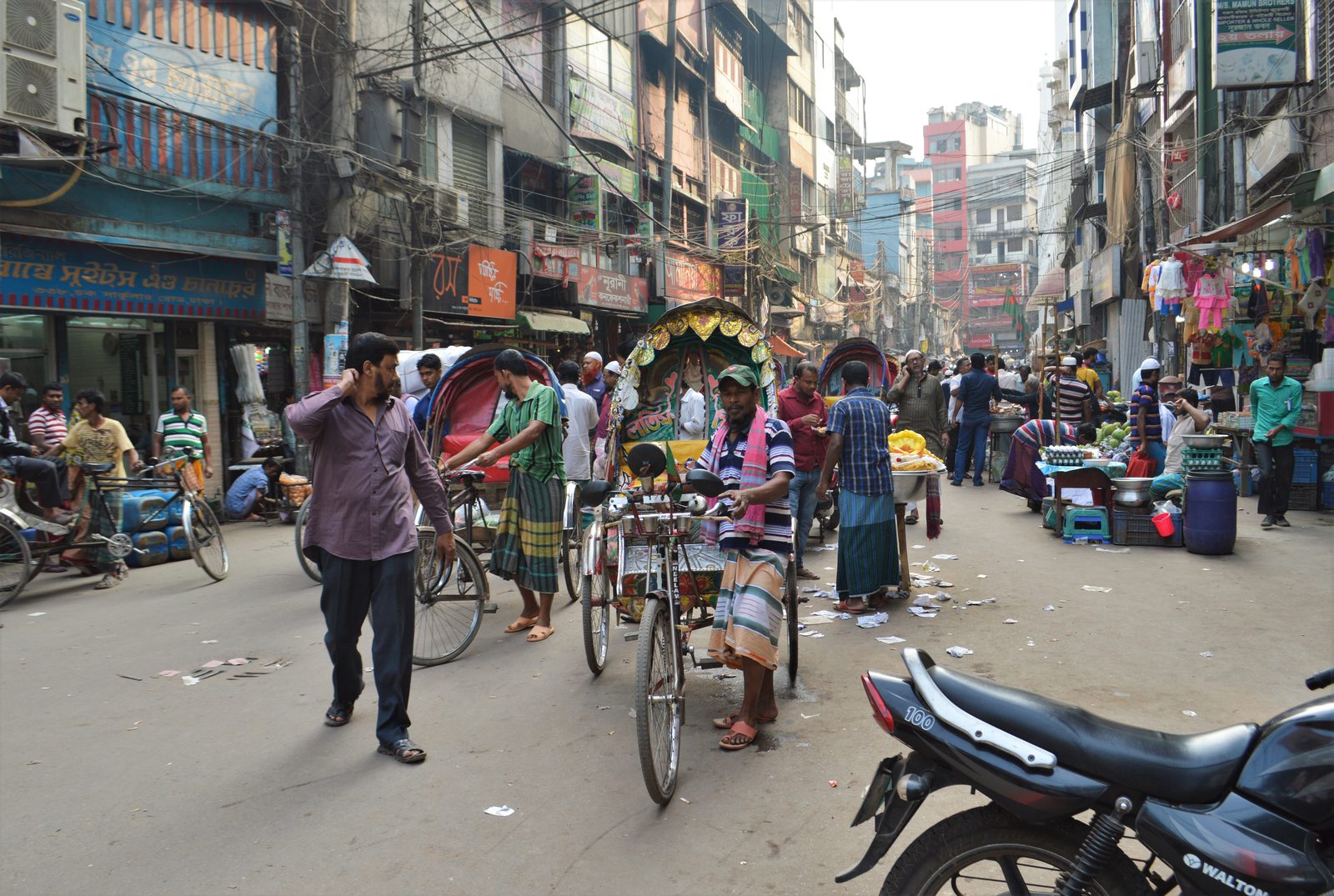
Street Photography in Dhaka
Dhaka is one of the densest cities on earth, with porters and wholesale markets in every lane, and people who welcome the camera.
- Spots
- 8
- Best time
- November to February for dry, cooler weather
- Lens
- 24mm or 28mm
- Photographing people
- Generally allowed
Dhaka is one of the best cities in Asia for street photography because life is everywhere and the people welcome cameras. Forrest Walker calls it the densest and fastest growing city in the world, and found people very friendly and curious toward photographers. Old Dhaka's lanes are packed with porters carrying huge loads on their heads between the rickshaws. The frames come to you. The challenge is organizing them.
Plan around traffic. Walker says Dhaka has the worst traffic he has ever seen, so leave early and work one area at a time. Old Dhaka and the river can fill a whole day. The city also has a strong local street photography scene, and many local photographers use flash to cut through the haze. Dress modestly and stay aware of the political mood. Rallies and strikes can close streets without warning.
Best street photography spots in Dhaka
Sadarghat
Sadarghat is the river terminal of Dhaka on the Buriganga. Forrest Walker calls it the busiest and most interesting area in the city, with porters unloading produce and boats of every size. Big passenger launches leave every evening for cities across the delta. Arrive in the early morning or late afternoon. A small wooden boat across the river costs very little and gives you the Old Dhaka waterfront in one view, according to A Walk in the World. At sunset, shoot the launches in silhouette from the water. The docks are very crowded, so keep your bag in front.
Shankhari Bazar
Shankhari Bazar is a single lane, barely three meters wide, where Hindu families have made conch shell bangles for centuries. The buildings lean close overhead, so the sky is a thin strip. Workshops open onto the street, and you can photograph artisans cutting and polishing at their benches. A Walk in the World suggests arriving before 10:00, before the crowds build. Shoot up the lane to show the compression, then step close for hands at work. Ask before portraits. Many shops also hold small shrines, so be respectful.
Tara Masjid (Star Mosque)
Tara Masjid is a small 19th century mosque covered in thousands of blue stars made from broken Chinese porcelain. A Walk in the World suggests the afternoon, when western light hits the facade, and timing your visit between prayers. The people are what make it street photography: men arriving for prayer and kids in the courtyard. Frame a figure against the star patterns. Remove your shoes and wait outside during prayer. Ask before photographing anyone at worship.
Chawk Bazar
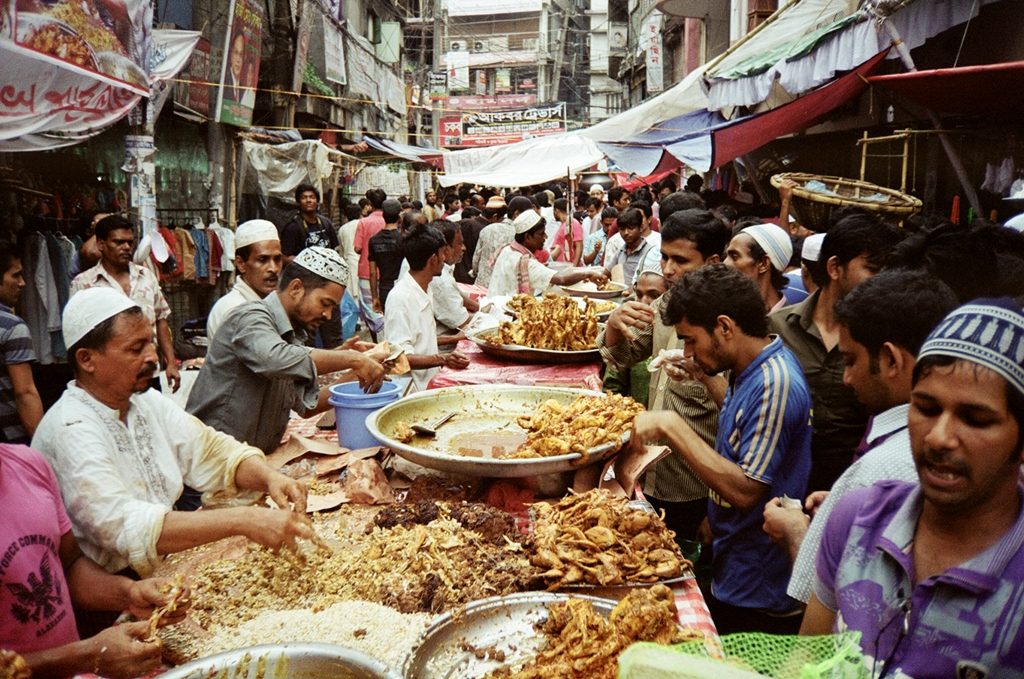
Chawk Bazar is one of the oldest markets in Dhaka, a working wholesale food market all year. During Ramadan it becomes the city's great iftar market. A Walk in the World describes hundreds of stalls from about 3 pm until sunset, with steam from biryani pots and smoke from kebab grills lit by low sun. Come at 3:30 and stay until the call to prayer. Shoot into the light to catch the steam. Crowds are intense, so keep gear tight and be patient. Ramadan moves about 11 days earlier each year.
Keraniganj shipyards
Across the Buriganga in Keraniganj, workers build and break down ships by hand. Forrest Walker counts it among his favorite spots in Dhaka, with welding torches and hammers everywhere and colorful hulls that throw shadow and color in sunlight. He reached it by rowboat. The yards are spread along the river, so go with a local guide or photographer who knows where work is happening. Midday sun gives strong shadows on the hulls. This is a dangerous workplace. Watch where you walk and stay clear of cutting and lifting.
Karwan Bazar
Karwan Bazar is one of the largest wholesale markets in South Asia. Trading starts around midnight and runs until about 8:30 am, according to local photographers quoted by Street Photography Gallery, so go at dawn. Trucks unload produce, porters carry baskets on their heads and buyers haggle under bare bulbs. Nearby, the train tracks are lined with stalls and life. Use a wide lens and stay close. The ground is wet and messy. Mustafa Habib Chowdhury warns to watch out for dealers on the way in and out.
Kamalapur Railway Station
Kamalapur is the main railway station in Bangladesh, designed by American architect Robert Boughey. Its shell shaped roof gives shelter, which Forrest Walker notes makes it a good spot when rain stops work elsewhere. Local street photographers like it for the green trains, and for passengers leaning out of the windows. Platforms give you side light from the open edges. Frame a face in a train window. Mornings and late afternoons are busiest. Stay back from the platform edge when trains move.
University of Dhaka
The University of Dhaka is the oldest university in Bangladesh and has a long role in the country's politics. Walker found it a popular hangout for young people, getting busier as the day cools. Tea stalls and students debating give you plenty of subjects. Nearby Ramna Park has cricket games and walkers. I'd come in the late afternoon. It is also a center of protest, so if a rally forms, put the camera away and leave. Official advice is to avoid all demonstrations.
Photographing people in Dhaka
Dhaka is one of the most camera friendly cities anywhere. Forrest Walker found he could shoot freely and receive only smiles, though people often try to pose their way into the frame. Local photographers still ask before close portraits, and a gesture toward the camera usually gets a yes. Accept a refusal with good grace. I couldn't confirm a specific law on photographing people in public in Bangladesh. This is general information, not legal advice.
Custom matters more than law here. It is a conservative Muslim majority country. Ask before photographing women, especially close up, and never follow anyone for a shot. Dress modestly, as official UK advice recommends for both men and women. Inside mosques and temples, ask first. Keep the camera away from soldiers and political rallies, which can turn violent.
General information, not legal advice. More in is street photography legal?
What to photograph in Dhaka
- Porters. Men carrying fabric rolls or stacks of boxes on their heads through lanes too narrow for vans.
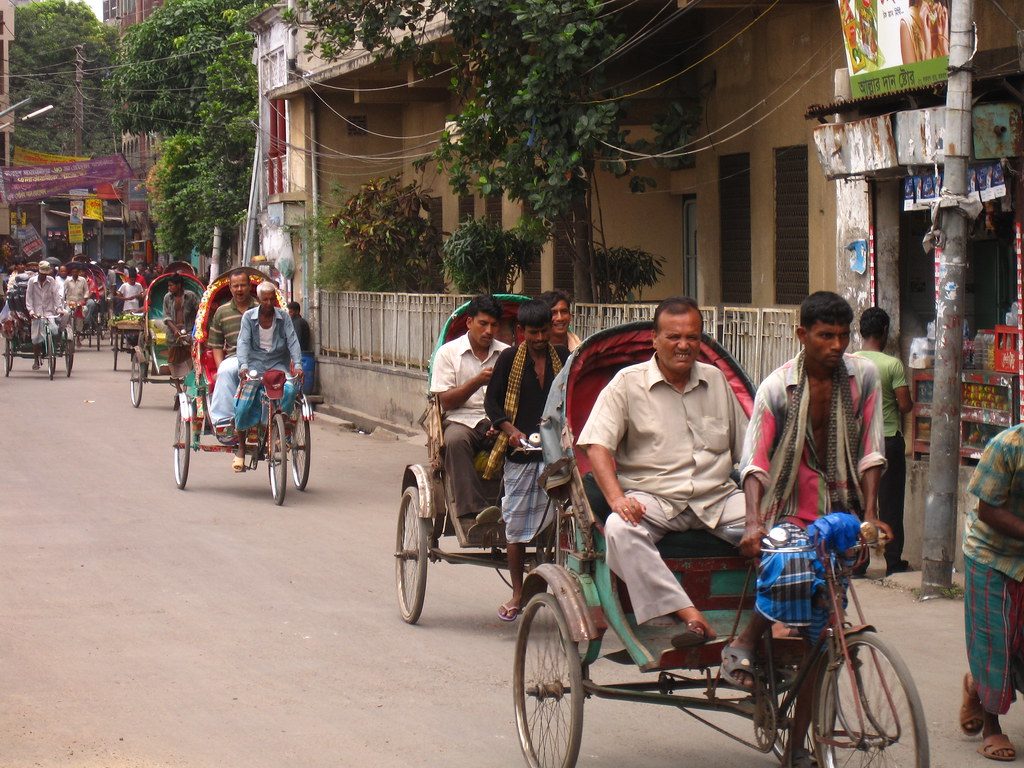
- Rickshaws. Painted cycle rickshaws in jams that fill a whole street.
- River life. Rowboats and ferries on the Buriganga, and passengers crowding the decks.
- Workshops. Artisans at open benches in Shankhari Bazar and around Old Dhaka.
- Tangled wires above the lanes, a signature of Old Dhaka.
- Food. Tea stalls, and the biryani pots of the Ramadan iftar markets.
- Light in the lanes. Slashes of sun cutting into dark shop interiors. Expose for the highlights and let the rest go black.
- Faces. People will often ask you to take their picture. Say yes.
A one-day photo walk
- 5:30, Karwan Bazar. The wholesale market at the end of its night shift. Ninety minutes.
- 7:30, University of Dhaka. About 15 minutes by rickshaw or CNG. Tea stalls and walkers.
- 9:00, Old Dhaka. About 30 minutes by rickshaw. Walk to Shankhari Bazar before 10:00.
- 12:00, Chawk Bazar. A 20 minute walk. Lunch, then shoot the market.
- 15:00, Tara Masjid. A 10 minute walk. Afternoon light on the stars.
- 16:30, Sadarghat. About 20 minutes on foot. Take a rowboat across the river at sunset. Arrange a car home, and expect the trip to take hours.
When to shoot
November to February for dry, cooler weather. Early morning (6:00 to 10:00) for light and calmer lanes. Avoid the June to September monsoon if you can.
The light
Often hazy and cloudy from heat and pollution. Low sun cutting through narrow lanes is dramatic. Many local photographers use flash.
What to bring
A 24mm or 28mm for the crowded lanes and a 50mm for faces. A small flash helps in dim markets.
Safety
Level 2 US advisory (increased caution). Petty theft in crowds, and rallies and strikes (hartals) can turn violent. Avoid protests and late night travel alone.
Tips for Dhaka
- Season: November to February is dry and cooler. The monsoon runs roughly June to September.
- Start early: traffic builds through the morning, so be out by dawn.
- Flash: the light is often hazy. A small flash helps in dark market interiors. See street photography settings.
- Lens: a 24mm or 28mm for crowds, a 50mm for faces. More in best lens for street photography.
- Pohela Boishakh: Bengali New Year on 14 April brings huge crowds in color around the university.
- Haggle: prices for visitors are often inflated, including rickshaws. Agree before you ride.
- Politics: check the news each morning and avoid hartals and rallies.
- Go with locals: the Dhaka street photography community is active and welcoming.
Frequently asked questions
Is street photography legal in Dhaka?
Photography in public is widely accepted and people are curious and welcoming. Ask before photographing women and inside mosques, and avoid military and government sites. Dress modestly.
Where are the best street photography spots in Dhaka?
Start with Sadarghat, Shankhari Bazar, Tara Masjid (Star Mosque), Chawk Bazar. River port on the Buriganga. Ferries and porters all day.
When is the best time for street photography in Dhaka?
November to February for dry, cooler weather. Early morning (6:00 to 10:00) for light and calmer lanes. Avoid the June to September monsoon if you can.
What lens should I bring to Dhaka?
A 24mm or 28mm for the crowded lanes and a 50mm for faces. A small flash helps in dim markets.
Is Dhaka safe for street photographers?
Level 2 US advisory (increased caution). Petty theft in crowds, and rallies and strikes (hartals) can turn violent. Avoid protests and late night travel alone.
More street photography cities
- KolkataIndia
- KathmanduNepal
- VaranasiIndia
- Chiang MaiThailand