
Street Photography in Chiang Mai
A compact old city with Lanna temples and working markets a short walk apart, and locals who are generally relaxed about cameras when you smile and ask.
- Spots
- 8
- Best time
- November to January for clearer air and cooler days
- Lens
- 35mm
- Photographing people
- Generally allowed
Chiang Mai is a good city for street photography because its temples and markets sit within walking distance of each other, and people here are generally friendly to cameras. You can cover most of the good ground on foot or by bicycle.
The mix is what makes it work. Warorot and Muang Mai give you busy local markets. The old city gives you Lanna temples and monks. The gates hold evening food markets, and Wua Lai has silversmiths at work. My Chiang Mai page on Inspired Eye is a gallery of pictures with no written guide, so this page draws on photographers who live and teach here. The one warning is the season: smoke haze in the late dry season can flatten your light and hurt your lungs, so plan around it.
Best street photography spots in Chiang Mai
Warorot Market & Chinatown
Warorot, also called Kad Luang, is the heart of Chinatown and the best place to start a day here. There is human traffic inside and out, and the old building gives you architecture to work with. Beside the Ping River, the flower market is busy through the day. Go before 9 am, when light comes in through the upper windows. Climb a stairway or the river footbridge for a view down onto the crowd. Composition idea: frame a vendor through the market's interior arches. Caution: vendors are working. Show them your camera with a smile and move on if they do not smile back.
Muang Mai Market
Muang Mai is the largest fresh market in Chiang Mai and it runs early. In the morning, trucks bring produce down from the hill villages, and cooks and home buyers come to stock up. Get there soon after sunrise, then walk the side alleys as well as the main aisles. Composition idea: wait for a transaction, the moment money or goods change hands, and shoot the faces. Caution: the ground is wet and trolleys move fast. Stay out of the lanes where goods are being unloaded.
Tha Phae Gate
Tha Phae Gate is the red brick landmark on the east side of the old city. You get tourists feeding pigeons and people resting under the trees. The wall is a strong backdrop. The light is softest early in the morning and in the evening, and before 7:30 am it is almost empty. Sit on the square for a while and let scenes come to you. Composition idea: use the flat brick wall as a clean background and wait for a figure with pigeons in the air. Caution: on busy evenings the square gets crowded and so does the road around it, so watch the traffic.
Wat Phra Singh
Wat Phra Singh is one of the most important temples in the old city, about a 15 minute walk west of Tha Phae Gate. It has a golden chedi and Lanna style buildings, and locals come to worship and leave offerings. Skip the standard temple shot and look for people and details: a monk crossing the courtyard, hands placing flowers. Mornings are calmer. Composition idea: stand in shade and shoot out into the bright courtyard so a figure pops against the sunlit wall. Caution: dress with shoulders and knees covered and never climb on Buddha images.
Wat Chedi Luang
Wat Chedi Luang has a huge ruined chedi in the middle of the old city. Between about 6 and 7:30 am it is almost empty, with warm morning light. Walk the alley on the east side too, where the chedi rises between old wooden houses. Composition idea: put a monk or a visitor small at the base of the chedi to show its scale. Caution: this is a working temple. Keep your voice down and ask before close photos of monks.
Chiang Mai Gate Market
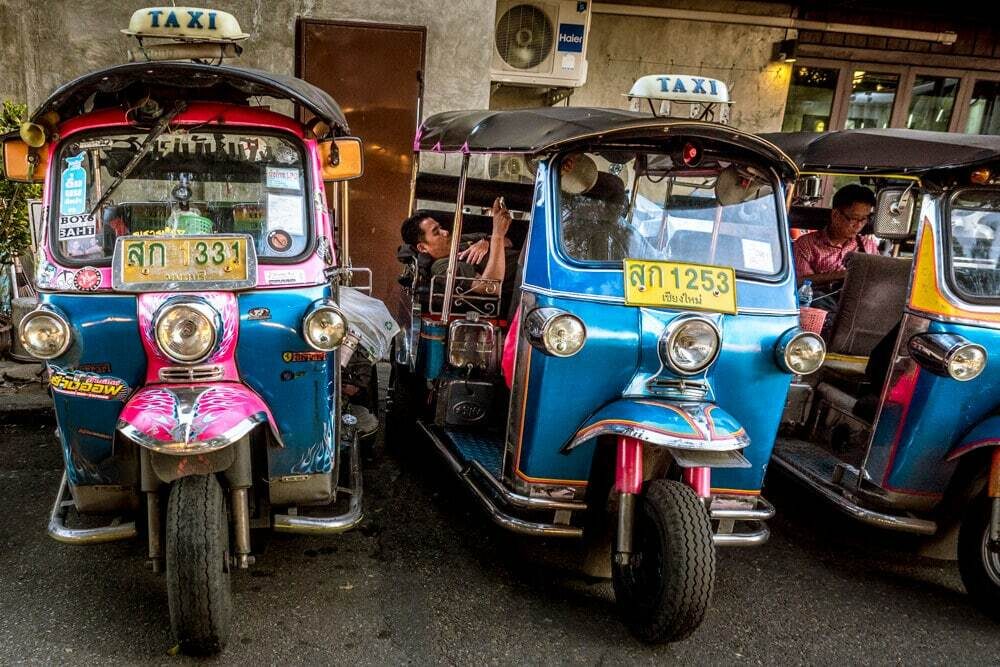
At Chiang Mai Gate on the south side of the old city, samlor (tricycle taxi) riders often wait for customers in front of the market. They are usually open to a portrait if you chat with them and show them the picture. The market across the road is dim, so push your ISO. In the evening, food carts set up along the moat. Composition idea: a rider seated in his samlor, framed by the vehicle's canopy. Caution: ask before a close portrait, and buy something if you spend a long time at a stall.
Chang Phueak Gate
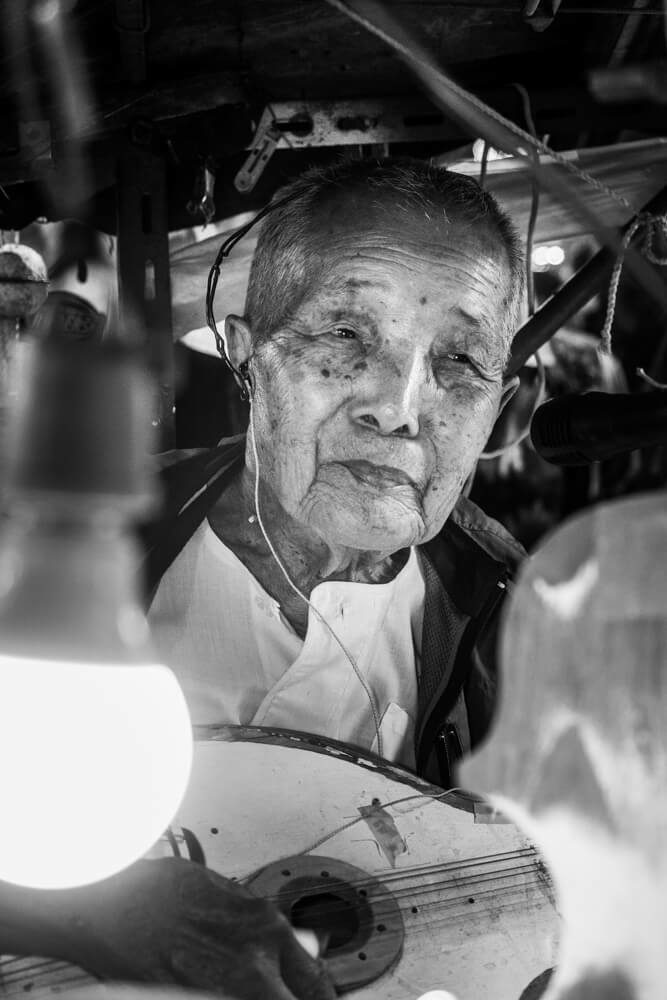
Chang Phueak Gate on the north side has an evening street food market. The evening light here can be very good: as the sun drops behind Doi Suthep, the moat reflects a warm glow. Arrive before sunset, work the cooks while there is still daylight, then switch to the lit carts. Composition idea: silhouette a cook against the steam lit by a bulb behind. Caution: carts and scooters share a narrow space with diners. Keep your bag in front and your elbows in.
Wua Lai Road
Wua Lai Road is known for silver work. Turn into the side streets and listen for hammers on metal, then follow the sound to a craftsman at work. There are temples decorated with pressed metal. On Saturday evenings it hosts one of the city's walking street markets, with crowds and lights. Composition idea: shoot the artisan's hands and tools close, with a wider frame to show the workshop. Caution: workshops are private spaces. Ask before you step in or shoot inside.
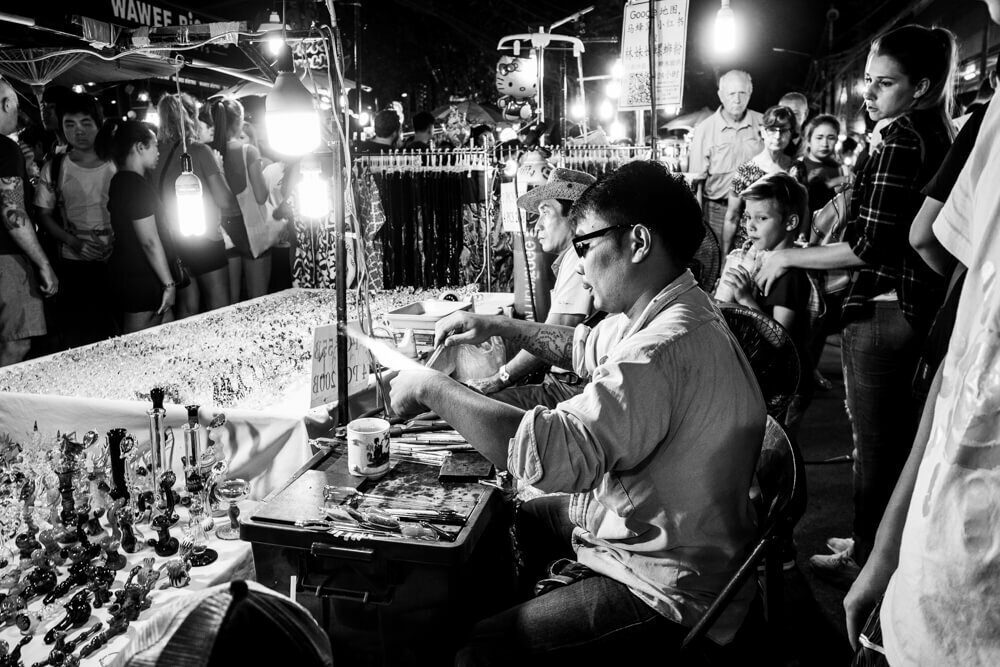
Photographing people in Chiang Mai
Photographing people in public is generally accepted in Thailand, and northern Thais are known for being friendly. Commercial use of a recognisable person needs their consent. Local photographers who teach here suggest a simple method: show your camera and smile. If the person smiles back, go ahead. If not, move on. Show people the picture on your screen, and samlor riders in particular often enjoy that. Temples have their own rules. Cover shoulders and knees, and never climb on or pose disrespectfully with Buddha images. Do not interrupt monks during the alms round, and women should not touch a monk. Thailand has strict laws about the monarchy, so do not treat royal portraits or images as props. This is general information, not legal advice. See is street photography legal.
General information, not legal advice. More in is street photography legal?
What to photograph in Chiang Mai
- Market work. Vendors and buyers at Warorot and Muang Mai, best in the morning.
- Monks. At dawn, monks walk down from Wat Si Soda along Huay Kaew Road to receive alms. Photograph from a distance and do not interrupt.
- Samlor riders and songthaews. The red shared trucks and tricycle taxis are part of daily life. Ride a songthaew and shoot out the back.
- Craft. Silversmiths on Wua Lai Road and cooks at the gate markets give you hands at work.
- Tourists and nomads. The old city and Nimman are full of travelers and remote workers. Treat them as subjects too.
A one-day photo walk
- 6 am, Wat Chedi Luang. Shoot the chedi and monks while it is nearly empty.
- 7 am, Tha Phae Gate. Walk east about 15 minutes. Work the square and the pigeons in low light.
- 8 am, Muang Mai Market. Take a songthaew or ride hailing car, about 10 minutes, and catch the tail of the morning rush.
- 9:30 am, Warorot and the flower market. Walk south about 10 minutes. Stay into late morning.
- Afternoon, Wat Phra Singh. Rest in the heat, then walk the western old city.
- 5 pm, Chang Phueak Gate. Shoot the food market and sunset over the moat. On a Saturday, go to Wua Lai Road instead.
When to shoot
November to January for clearer air and cooler days. Mornings for markets and temples, evenings for gate markets. Smoke haze is common in the late dry season, roughly February to April.
The light
Tropical sun is hard at midday. Early morning and late afternoon are warm and soft; market interiors are dim.
What to bring
35mm prime for portraits and markets, raise ISO indoors. A small mirrorless camera is discreet at temples.
Safety
Generally safe. Main risks are traffic and scooters. Air quality can be poor in the burning season.
Tips for Chiang Mai
- A 35mm lens lets you work close and talk to people while keeping some context. More in best lens for street photography.
- Market interiors are dim. Set a higher ISO before you walk in.
- Check air quality before you go. The burning season, roughly February to April, often brings thick haze.
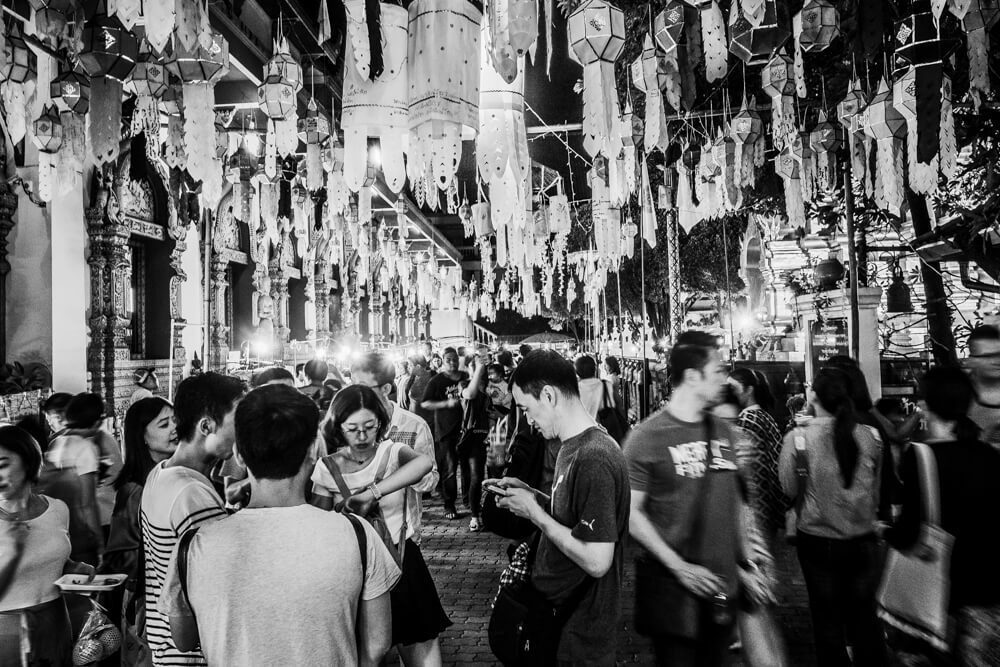
- Yi Peng and Loy Krathong, usually in November, bring lanterns and crowds to the river and the old city. Expect heavy crowds.
- Songkran, around 13 to 15 April, turns the moat into a water fight. Use a waterproof camera or a rain cover.
- Rent a bicycle or scooter to move between spots, or flag a red songthaew.
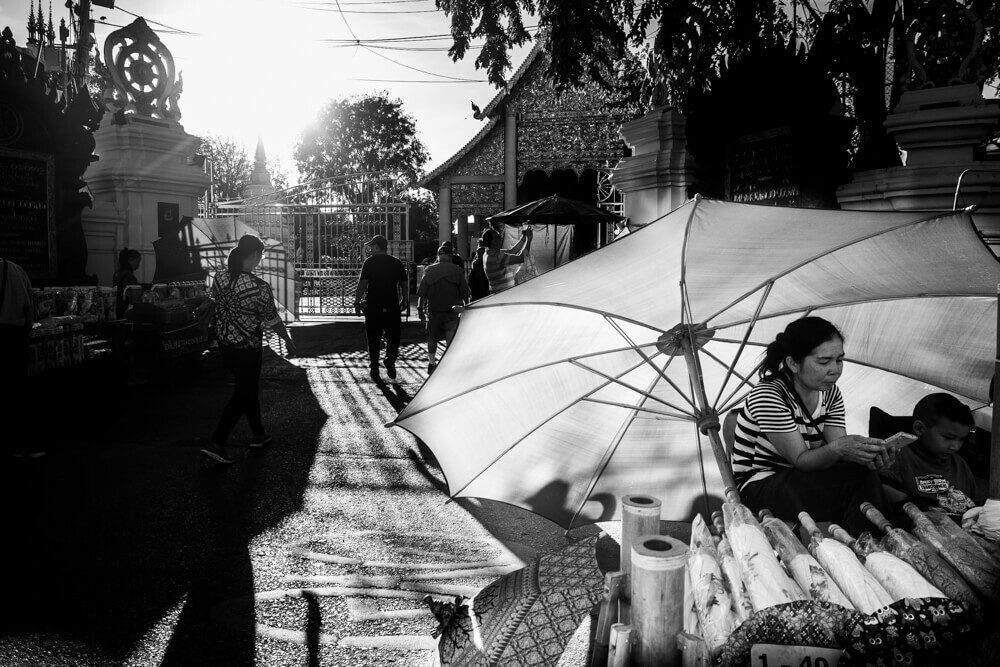
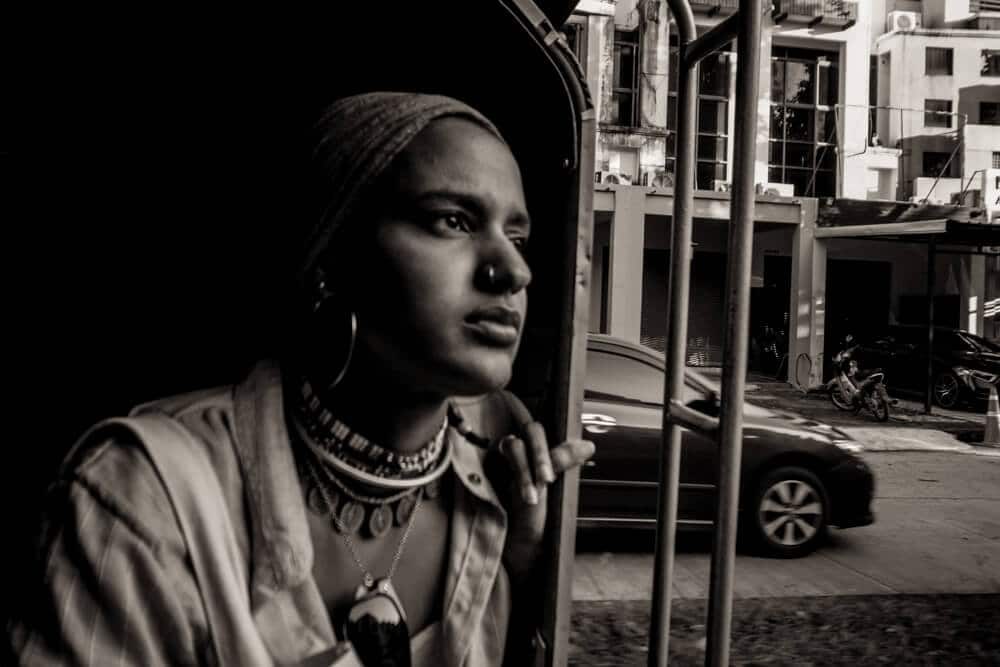
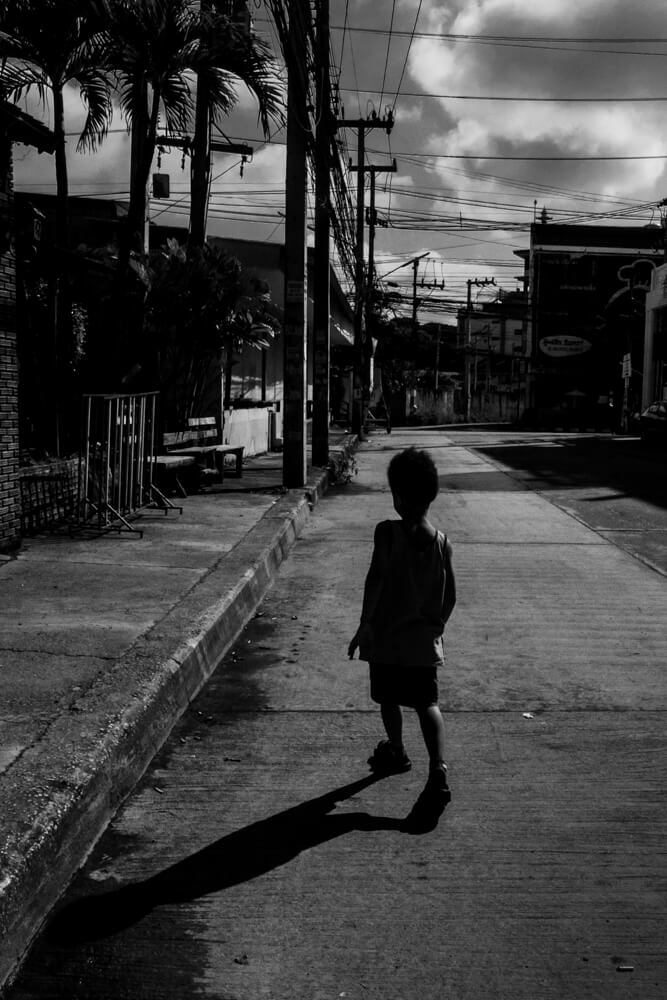
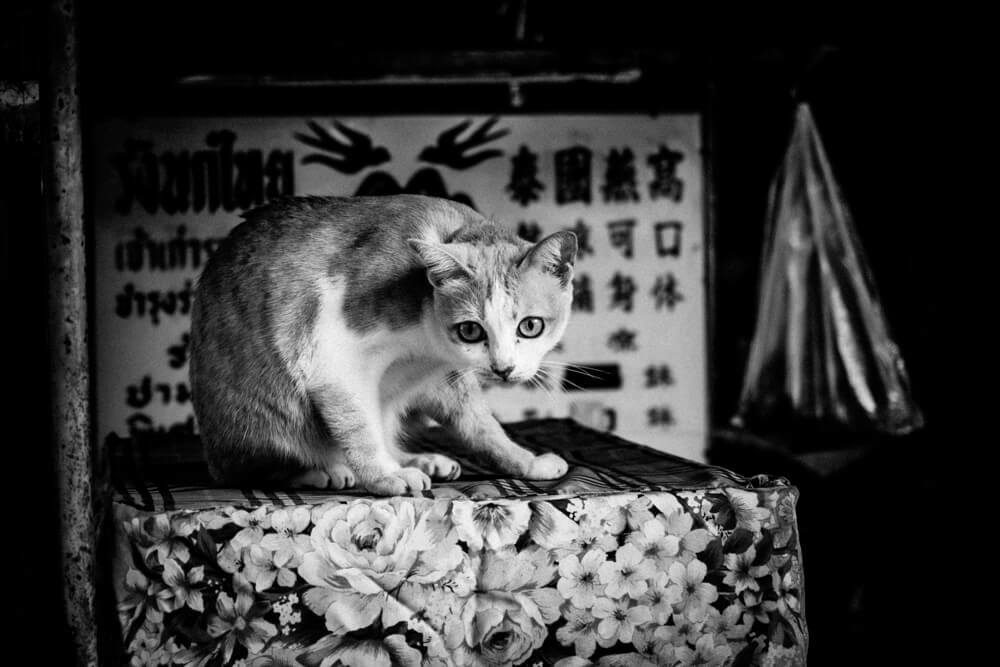
Photos by Olivier Duong in Chiang Mai.
Frequently asked questions
Is street photography legal in Chiang Mai?
Permissive. Photographing people in public is generally accepted in Thailand. Ask before close portraits, dress modestly at temples, do not disturb monks and treat images of the royal family with respect.
Where are the best street photography spots in Chiang Mai?
Start with Warorot Market & Chinatown, Muang Mai Market, Tha Phae Gate, Wat Phra Singh. Old Chinatown market east of the old city, with the flower market by the Ping River.
When is the best time for street photography in Chiang Mai?
November to January for clearer air and cooler days. Mornings for markets and temples, evenings for gate markets. Smoke haze is common in the late dry season, roughly February to April.
What lens should I bring to Chiang Mai?
35mm prime for portraits and markets, raise ISO indoors. A small mirrorless camera is discreet at temples.
Is Chiang Mai safe for street photographers?
Generally safe. Main risks are traffic and scooters. Air quality can be poor in the burning season.
More street photography cities
- BangkokThailand
- HanoiVietnam
- Phnom PenhCambodia
- Hoi AnVietnam
Further reading: the Inspired Eye guide to Chiang Mai.