
Street Photography in Kochi
Kochi mixes Kerala's old spice trade with centuries of Portuguese, Dutch, Jewish and Chinese influence, so you get fishing nets at sunrise and spice porters in Mattancherry within a short auto ride, all in slower, gentler streets than most Indian cities.
- Spots
- 7
- Best time
- November to February for dry, milder weather
- Lens
- 35mm or 28mm
- Photographing people
- Generally allowed
Kochi is a very good place for street photography because trade shaped every street here, and you can still see it working. Fishing crews haul the giant Chinese nets on the Fort Kochi shore, while porters carry sacks of pepper through the Mattancherry spice warehouses. Travelling Camera calls Jew Town endlessly rewarding for photographers. The pace is slower than in Delhi or Mumbai, which makes it an easier start if you are new to India.
Visitors search for Kochi photo spots, and most lists stop at the nets. This guide adds the working streets. I'd get to Mattancherry before the tour buses and come back to the nets for sunset. For more of the country, see our India street photography guide.
Best street photography spots in Kochi
Chinese Fishing Nets & Vasco da Gama Square
The Chinese fishing nets are cantilevered frames that dip into the water like giant hammocks, according to Kerala Tourism. It takes four or five men to lift one, which gives you teams of bodies pulling ropes in rhythm. Third Eye Traveller says the promenade near Vasco da Gama Square has the best view at sunrise and sunset. Operators may ask you to pay to climb aboard; agree a price first, and tip if you photograph the crew.
Fort Kochi Beach
Fort Kochi Beach is a short strip of sand and promenade just south of the nets. In the evening, families walk the path while vendors sell snacks from carts. Face west into the sunset and shoot figures as silhouettes against the harbour mouth, with ships passing behind. Keep children small in the frame unless a parent agrees. Local families come here to relax, so a smile and a nod before you raise the camera helps. After dark the promenade lights come on and the vendors' carts glow, which is worth staying for with a fast lens.
Princess Street
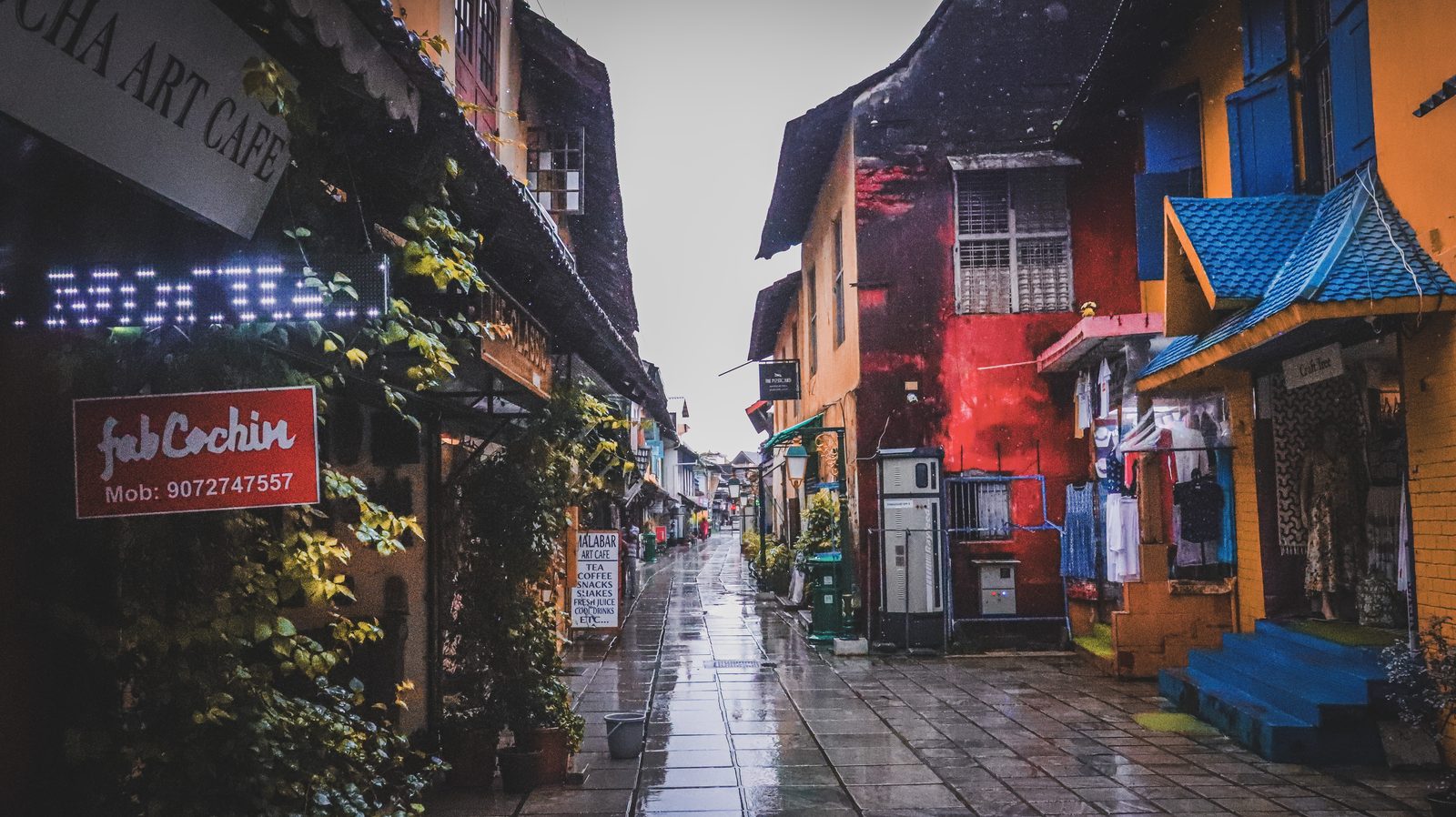
Princess Street is one of the oldest streets in Fort Kochi, lined with colonial-era houses, many now turned into cafés and guest houses. The faded facades and wooden shutters make calm backgrounds. Wait for an auto rickshaw or a walker with an umbrella to pass a coloured wall. Late afternoon light is softer here as it drops behind the buildings. It is mostly tourists by day, so the most local scenes are early in the morning.
Aspinwall House
Aspinwall House is an old waterfront trading compound that serves as the main venue of the Kochi-Muziris Biennale, a contemporary art show that usually opens in December and runs for several months when it is on. During a Biennale, the lanes around it fill with visitors, and art installations make unusual backdrops for people. Outside the Biennale it may be closed, but the road outside still has old warehouses and godowns. Check the Biennale dates before you plan around it.
Jew Town (Synagogue Lane)
Jew Town is a narrow lane of antique shops and blue-painted doors ending at the Paradesi Synagogue, built in 1568. Travelling Camera found it most authentic early in the morning, before most tourists arrive, with sunlight entering diagonally between old buildings. Use those beams to isolate a single walker. The synagogue has its own rules on visiting days and photography inside, so check at the door. Shopkeepers are used to cameras but not to being blocked, so step aside.
Mattancherry Spice Market (Bazaar Road)
Bazaar Road runs past the spice warehouses of Mattancherry. Kerala Tourism describes trucks and pushcarts moving loads while workers dry and sort spices. Travelling Camera arrived at 8:15am and found men hauling sacks of pepper, and light cutting through spice dust inside a warehouse. Ask before stepping into a godown. An old trader cleaning peppercorns simply kept working when photographed, which is the picture to wait for. Trucks load and unload in the narrow road, so keep to the side and watch behind you.
Broadway, Ernakulam
Broadway is an old shopping street on the Ernakulam mainland, next to Marine Drive. Kerala Tourism describes a narrow street of sloping-roofed buildings, with alleys of wholesale and retail shops. It is where locals shop, so it is busier and less posed than Fort Kochi. Work the alleys for porters and shopkeepers. As in any crowded market, keep your bag in front of you. Marine Drive, a short walk away, has a waterfront promenade for evening walkers.
Photographing people in Kochi
Photographing people in public is generally legal in India. The main legal line is voyeurism: since 2013 Indian law has made it a crime to photograph a woman in a private act, as noted on Wikimedia Commons. Religious sites and museums set their own camera rules. This is general information, not legal advice. See is street photography legal.
Kerala is friendly but more conservative than Goa. Ask before photographing women, and don't photograph people at prayer without permission. Fishermen and porters are at work, so don't slow them down; a tip or a thank you goes a long way. Some net crews expect payment for photos. For portraits, ask; see how to photograph strangers.
General information, not legal advice. More in is street photography legal?
What to photograph in Kochi
- Teams of fishermen hauling the nets at sunrise.
- Porters with sacks of pepper and ginger in Mattancherry.
- Blue doors and antique shops in Jew Town.
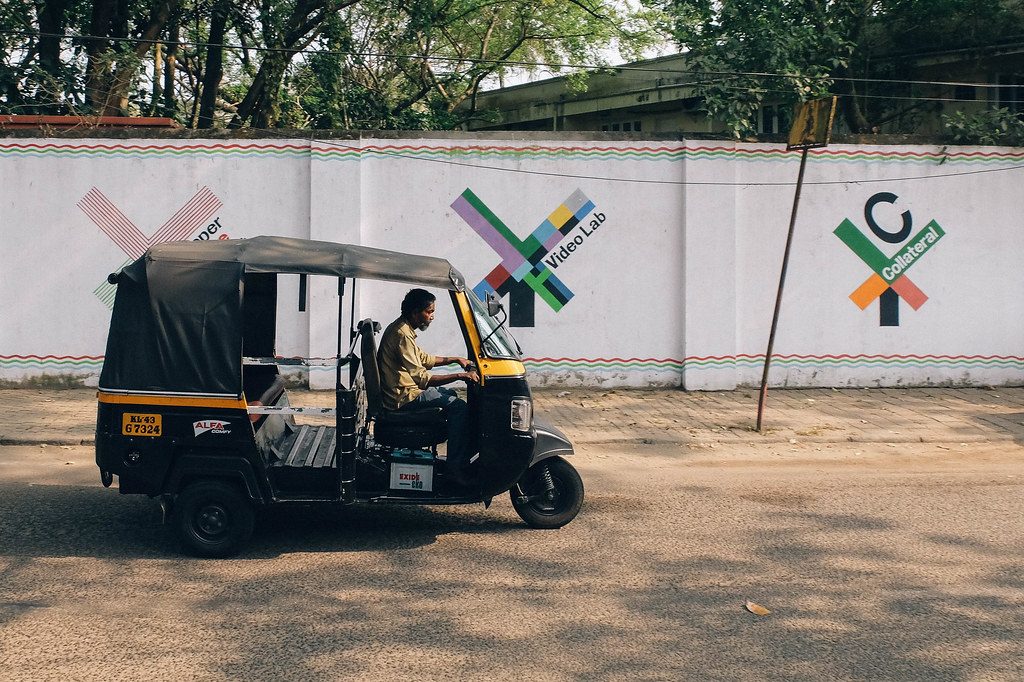
- Auto rickshaws passing faded colonial houses.
- Evening walkers on the Fort Kochi promenade.
- Communist flags and murals, a common sight in Kerala.
- Monsoon rain and umbrellas from June to September.
Photographer Geraint Rowland, who shot street portraits across South India, found most people friendly and happy to be photographed. Many will ask you to take their picture. Show them the result on your screen; it often opens the door to a better frame.
A one-day photo walk
- 6:30, Chinese fishing nets. The crews at sunrise. About an hour.
- 8:00, Mattancherry Spice Market. A 15 minute auto rickshaw ride. Warehouses opening.
- 9:30, Jew Town. A short walk. Before the tour groups.
- 12:00, Princess Street. Auto back to Fort Kochi. Lunch in the shade through the midday heat.
- 15:00, Broadway, Ernakulam. Take the public ferry across the harbour, then walk. Local crowds.
- 17:30, Fort Kochi Beach and the nets. Ferry back for the sunset silhouettes.
Distances are short, but the heat is not. Auto rickshaws are cheap for the hops between Fort Kochi and Mattancherry; agree the fare before you get in.
When to shoot
November to February for dry, milder weather. The monsoon runs roughly June to September, with heavy rain. Early morning for Mattancherry and the nets. The Kochi-Muziris Biennale, when running, usually opens in December.
The light
Humid and tropical. The sun is hard and high by 10am, and haze softens it. The nets face west over the harbour mouth, so sunset puts them in silhouette. Morning light slants between the Jew Town buildings.
What to bring
A 35mm or 28mm prime. A short tele for silhouettes on the nets at sunset. Protection for the monsoon.
Safety
Generally safe and relaxed by Indian standards. Some net operators charge tourists to climb on and take photos, and some offers are pushy. Heat and humidity are the bigger risk; carry water.
Tips for Kochi
- Season: November to February is the most comfortable. The monsoon, roughly June to September, brings heavy rain.
- Biennale: the Kochi-Muziris Biennale usually opens in December in the years it runs. Check the dates.
- Ferries: public ferries link Fort Kochi and Ernakulam cheaply and are full of commuters.
- Heat: the sun is hard from 10am. Shoot early and late, and rest at midday. More in street photography settings.
- Lens: a 28mm or 35mm for the lanes, a short tele for the nets. See best lens for street photography.
- Dress: cover shoulders and knees, especially near religious sites.
Frequently asked questions
Is street photography legal in Kochi?
Photographing people in public is generally legal in India. Voyeurism is a crime, so never photograph people in private situations. Religious sites set their own camera rules. Kerala is fairly conservative: ask before photographing women. General information, not legal advice.
Where are the best street photography spots in Kochi?
Start with Chinese Fishing Nets & Vasco da Gama Square, Fort Kochi Beach, Princess Street, Aspinwall House. Huge cantilevered nets on the Fort Kochi shore, worked by teams of fishermen. Best at sunrise and sunset from the promenade.
When is the best time for street photography in Kochi?
November to February for dry, milder weather. The monsoon runs roughly June to September, with heavy rain. Early morning for Mattancherry and the nets. The Kochi-Muziris Biennale, when running, usually opens in December.
What lens should I bring to Kochi?
A 35mm or 28mm prime. A short tele for silhouettes on the nets at sunset. Protection for the monsoon.
Is Kochi safe for street photographers?
Generally safe and relaxed by Indian standards. Some net operators charge tourists to climb on and take photos, and some offers are pushy. Heat and humidity are the bigger risk; carry water.
More street photography in India
Start with the India street photography guide, then pick a city.
More street photography cities
- DhakaBangladesh
- KathmanduNepal
- Chiang MaiThailand
- BangkokThailand