
Street Photography in Jaipur
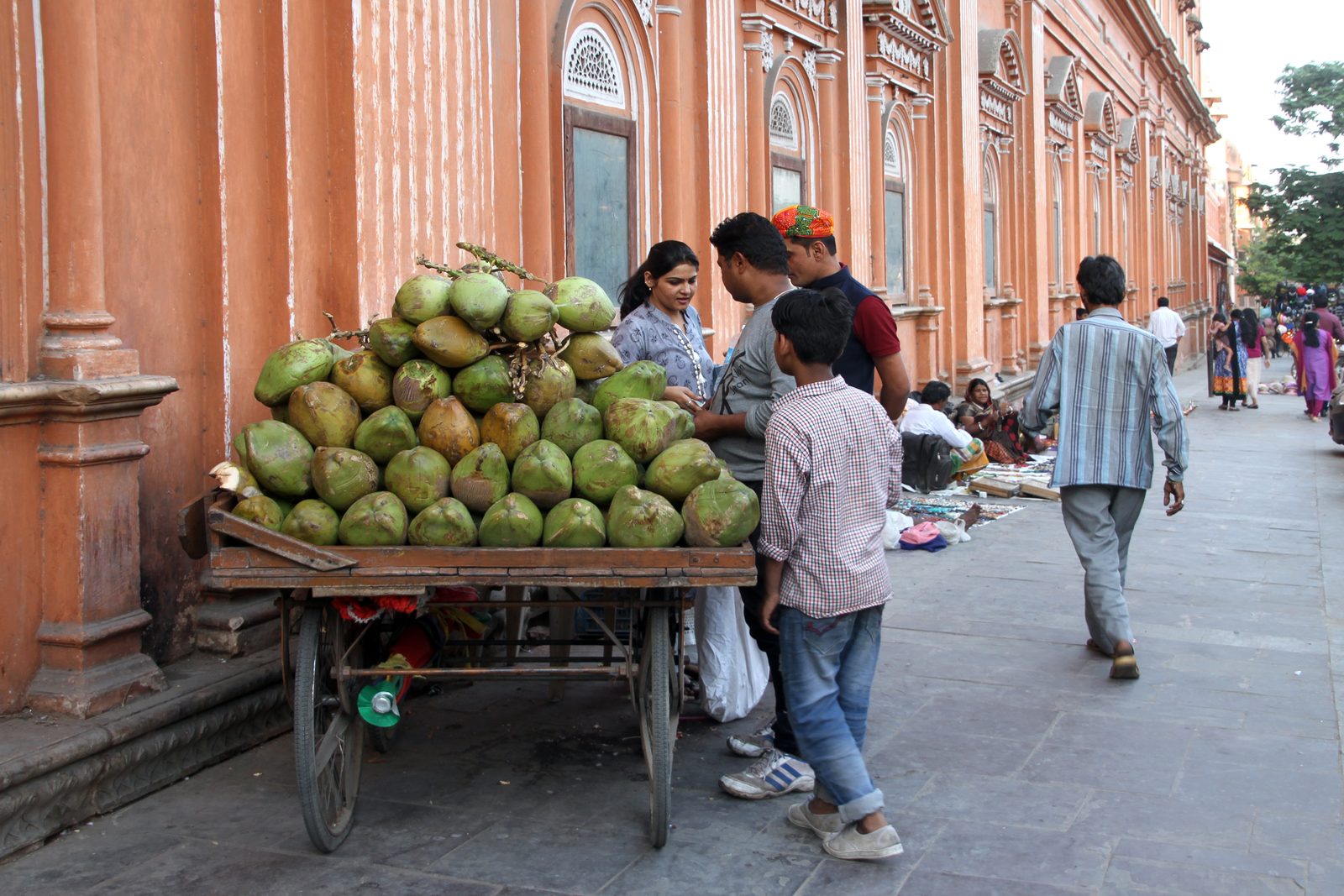
The walled Pink City is a grid of bazaars where craftsmen work with their doors open, framed by terracotta facades that glow in morning light.
- Spots
- 8
- Best time
- October to March
- Lens
- 28mm or 35mm
- Photographing people
- Generally allowed
Jaipur is good for street photography because its walled old city is one big working bazaar, painted terracotta pink and laid out on a grid you can walk. Shopkeepers and craftsmen work in open fronted stalls under long arcades, so the backgrounds are strong and the subjects are right there. Vito Tanzi of Chasing Hippoz rates it one of the most photogenic cities he has seen in 75 countries.
Most guides to Jaipur are about monuments and posed pictures. For street work, the monuments matter less than the lanes around them. I'd stay inside or near the walled city, be on Hawa Mahal Road by 7:00, and spend the morning in the bazaars as they open. Amber Fort is worth one early session. After 11:00 the light turns flat and hard, so rest and come back late in the afternoon.
Best street photography spots in Jaipur
Hawa Mahal
Hawa Mahal, built in 1799, is a five storey screen of 953 small windows facing the main road. It faces east, and Localgrapher's photographers say the light falls on the facade from about 7:30 to 9:00. The famous view is from the rooftop cafes across the road. For street work, use that height to shoot down on the road instead: rickshaws and vendors moving in front of the pink wall. Then go down and work the pavement at eye level. Inside, Localgrapher reports cameras other than phones are restricted. The road is chaotic, so watch the traffic.
Johari Bazaar
Johari Bazaar is the old city's jewelry and textile market, running south from Badi Chaupar under pink arcades. I Love Jaipur City recommends it for everyday Pink City street life. Arrive around 9:00 or 10:00 as shutters go up and shopkeepers sweep and pray at their doors. The arcades give you open shade and repeating arches. Frame a shopkeeper under an arch with the bright street behind. Sari shops are keen to sell, so expect invitations inside. A polite no and a smile keep things friendly.
Gopalji ka Rasta
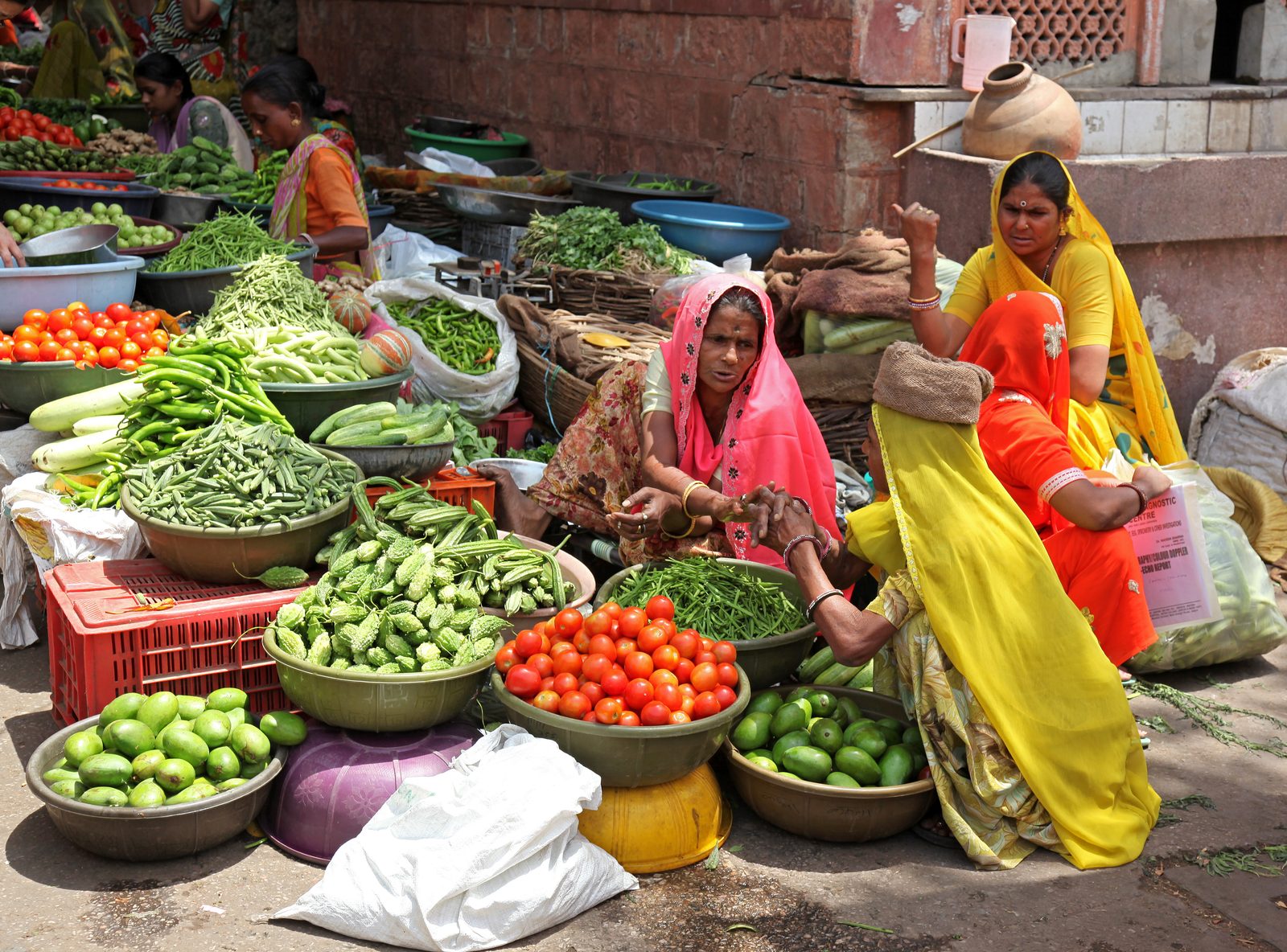
Gopalji ka Rasta is a narrow lane running off Johari Bazaar, lined with jewelers and small workshops. It is quieter than the main bazaar and more intimate. Doorways open onto benches where people are working with their hands, often under a single bulb. Stand at the door and ask before you raise the camera; small workshops are workplaces and some jewelers will not want pictures of their stock. Hands at work make strong frames. Morning, when the lane is in soft shade, is best.
Tripolia Bazaar
Tripolia Bazaar runs west from Badi Chaupar to Choti Chaupar, past the Tripolia Gate that leads toward the City Palace. It sells metal utensils and household goods, and the shops spill onto the sidewalk. The street is wide, so it takes more light than the lanes. Late afternoon sun comes along it from the west. Shoot shopkeepers backlit against the glow, or cross to the shaded side and work the arcade columns. Motorbikes use the sidewalks when traffic jams, so keep your back to a pillar.
Choti Chaupar
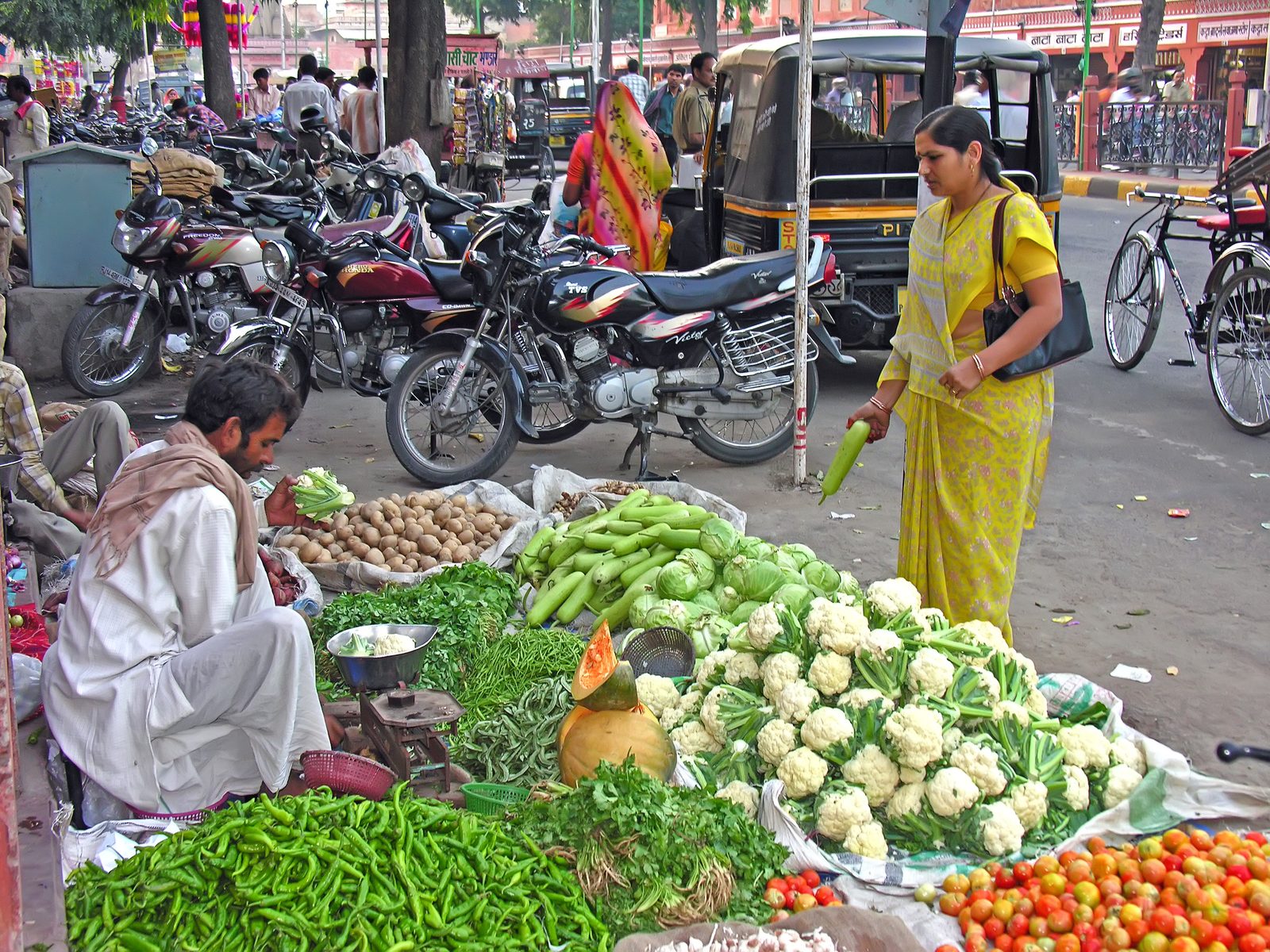
Choti Chaupar is one of the old city's main squares, where Tripolia Bazaar meets Chandpole Bazaar. JaipurThruMyLens made a morning photo walk here focused only on hands, from tea vendors to grain sellers at their morning routines. That is a useful idea in a place where faces pose. Come early, before 9:00, and look for small repeated gestures. The author notes that people are more relaxed around photographers who understand local culture. Traffic circles the square fast, so cross with care.
Phool Mandi, Kanwar Nagar
Jaipur's wholesale flower market used to sit at Badi Chaupar. JaipurThruMyLens reports it moved to Kanwar Nagar, not far from Hawa Mahal, because of the metro works. Ask a rickshaw driver for Phool Mandi, as the exact site may shift. Farmers bring flowers from surrounding villages overnight and trading is done early, so arrive around dawn. Expect heaps of marigolds and roses on the ground, with buyers bargaining loudly. Shoot low, with flowers in the foreground and faces behind. It is crowded and wet underfoot.
Amber Fort & Maota Lake
Amber Fort sits on a hill about 11 km north of the old city, above Maota Lake. Localgrapher says it opens at 8:00 and the first hour is the one to use, before tour groups arrive. The classic long view is from the road below at sunrise, with the lake in front. Localgrapher suggests a 50mm to 85mm for that shot. Inside, the painted Ganesh Pol gate and the courtyards give you frames for single visitors or guards. By 10:00 it is busy and the light is harsh. Touts at the base are persistent.
Panna Meena ka Kund
This 16th century stepwell is a short walk from Amber Fort, and its criss-crossing staircases make a strong geometric frame. Localgrapher suggests around 8:30, when light reaches the far wall. I Love Jaipur City reports that visitors can no longer walk on the steps, and a guard is on duty. So your subjects are the people standing around the rim. Shoot across the well with the pattern behind them, or wait for a single figure in a bright color. Respect the guard's instructions.
Photographing people in Jaipur
Photographing people in public is generally legal in India, with no general consent requirement for a street photo. Monuments set their own camera rules, and security sites are off limits. Using someone's image to sell something without consent is a different matter. This is general information, not legal advice. See is street photography legal.
People in Jaipur are used to cameras, maybe too used to them. Many men pose, and some people in costume near the monuments ask for money. JaipurThruMyLens makes the point that natural pictures come from understanding local culture, and that a group of photographers can draw less suspicion than a lone one. Ask women before photographing them. Ask craftsmen before stepping into a workshop. A quick exchange of names often turns a stall owner into a patient subject. See how to photograph strangers.
General information, not legal advice. More in is street photography legal?
What to photograph in Jaipur
- Arcades. Long runs of pink arches along the bazaars, good for repetition and frames.
- Crafts. Hands at work in jewelry and textile workshops.
- Turbans and saris. Chasing Hippoz notes the saturated reds and saffrons against the pink walls.
- Painted doors in blues and greens.
- Morning routines. Tea and prayers at shop fronts.
- Kites. Rooftops fill with kite flyers around Makar Sankranti in mid January.
- Traffic. Camel carts and cycle rickshaws still appear among the scooters.
- Street food. Kachori and chai stalls draw a crowd early in the morning, and the cooks work fast in front of big pans. Stand to one side and wait for steam and faces to line up.
A one-day photo walk
- 6:00, Phool Mandi. The flower market at dawn. About 45 minutes.
- 7:00, Hawa Mahal. A 10 minute rickshaw ride. Rooftop cafe, then the road at eye level while the facade is lit.
- 9:00, Johari Bazaar and Gopalji ka Rasta. About 10 minutes on foot south. Shops opening.
- 11:00, rest. The light turns flat. Eat and cool off.
- 15:30, Tripolia Bazaar. Walk west with the late light coming down the street.
- 17:00, Choti Chaupar. Five minutes further west. Stay for the evening crowd. Save Amber Fort for the next morning at 8:00. It is about 30 minutes by car or rickshaw from the old city, and Panna Meena ka Kund is a short walk from the fort.
When to shoot
October to March. The first two hours after sunrise, when shops open and the facades catch low light. Festivals include Diwali and the kite flying of Makar Sankranti in January.
The light
Bright and hard after mid morning. The pink walls warm up at sunrise and late afternoon; noon is flat and very hot from April to June.
What to bring
A 28mm or 35mm for the bazaars. A 50mm to 85mm for Amber Fort from below.
Safety
Generally safe. Touts and gem scams around the monuments. Heavy traffic in the old city.
Tips for Jaipur
- Season: October to March, when Localgrapher says the air is crisp and the light warm without being brutal. April to June is extremely hot.
- Base: Chasing Hippoz suggests staying in or near the old city so you can walk out at 5:30.
- Lens: 28mm or 35mm in the bazaars. See best lens for street photography.
- Exposure: pink walls fool meters on bright days. Check your highlights. More in street photography settings.
- Festivals: Makar Sankranti kite flying (January 14 or 15), Gangaur processions (March or April), Teej (July or August), Diwali (October or November), when the bazaars are lit up. Check dates each year.
- Dust: change lenses indoors.
- Shops: many old city shops open late morning and some close on Sundays.
Frequently asked questions
Is street photography legal in Jaipur?
Photographing people in public is generally legal in India. Monuments set their own camera rules and fees, and some ban cameras other than phones inside. Ask craftsmen before shooting inside workshops, and ask women first.
Where are the best street photography spots in Jaipur?
Start with Hawa Mahal, Johari Bazaar, Gopalji ka Rasta, Tripolia Bazaar. The honeycomb facade of 953 windows. Shoot it with street life from the rooftop cafes opposite, early morning.
When is the best time for street photography in Jaipur?
October to March. The first two hours after sunrise, when shops open and the facades catch low light. Festivals include Diwali and the kite flying of Makar Sankranti in January.
What lens should I bring to Jaipur?
A 28mm or 35mm for the bazaars. A 50mm to 85mm for Amber Fort from below.
Is Jaipur safe for street photographers?
Generally safe. Touts and gem scams around the monuments. Heavy traffic in the old city.
More street photography in India
Start with the India street photography guide, then pick a city.