
Street Photography in Dubai
Old Dubai around the Creek still has wooden abras and busy souks, but UAE law makes photographing people without consent a crime, so it rewards careful, scene based work.
- Spots
- 7
- Best time
- November to March, when it is warm rather than extreme
- Lens
- 35mm or 50mm
- Photographing people
- Strict: ask first
Dubai can be good for street photography around old Dubai Creek, where wooden abras cross the water and the souks stay busy into the night, but it is one of the strictest places in the world to photograph people. Under UAE federal law, taking or sharing a photo of someone without consent can be a crime. That changes how you work. The subject becomes the scene and the light. People appear small and unidentifiable, or with their permission.
If you accept that, the Creek is worth a day. Bur Dubai and Deira feel nothing like the towers of Downtown. The traders are talkative, and asking for a portrait often gets a yes. I'd plan for November to March, and shoot early morning and late afternoon, since summer heat at midday is extreme.
Best street photography spots in Dubai
Al Fahidi Historical Neighbourhood
Al Fahidi, also called Bastakiya, is one of the oldest parts of Dubai. It is a small grid of restored courtyard houses with wind towers and narrow lanes between sand colored walls, with galleries and cafes inside. The lanes are natural leading lines, and the walls take hard shadows well. I'd go early in the morning, when the light is soft and the lanes are empty. This is the place to make pictures of light and architecture, with a figure small in the frame and not identifiable. A person seen from behind at the end of a lane works. Anything closer needs their consent.
Bur Dubai Abra Station & the Creek
The abras are small wooden water taxis that cross Dubai Creek between Bur Dubai and Deira. The Wandering Lens notes the ride costs about 1 dirham, and it is the best way to see working Dubai from the water. Late afternoon light is warm on the Creek, and the boats and old buildings make a layered frame. Photograph the boats against the skyline. Your fellow passengers and the abra drivers are people too, so ask before you point a camera at them. Many drivers are used to visitors and some will agree.
Bur Dubai Textile Souk
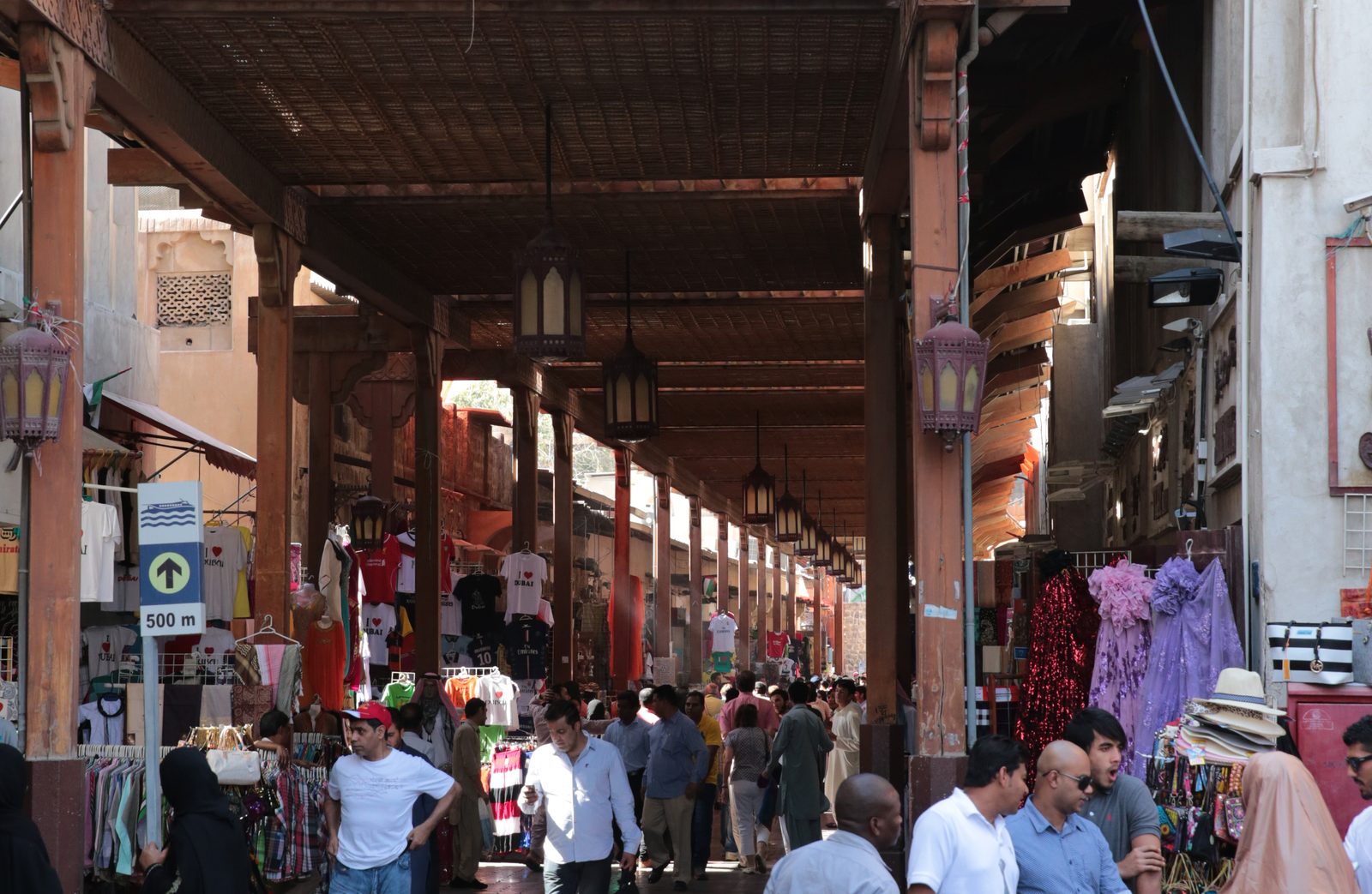
The textile souk runs along the Creek near the Bur Dubai abra station under a wooden roof. Shops sell fabric and souvenirs, and shopkeepers call out to passersby. The roof gives shade at midday and patches of light fall through it. The souk is busiest in the evening. I'd work the architecture and the fabric displays, and ask shopkeepers for portraits. Many will say yes after a chat. Do not photograph shoppers, especially women, without explicit permission. That is both rude and potentially illegal here.
Deira Spice Souk
Across the Creek from Bur Dubai, the spice souk is a set of small lanes with open sacks of spices, dried lemons, frankincense and dried fruit outside tiny shops. The Wandering Lens suggests visiting before sunset. Color and texture are the subjects: piles of spice, and hands weighing goods if the seller agrees. Traders are often happy to talk, and a question about a spice is an easy way to ask for a photo. Do not photograph customers. Expect firm sales pitches and keep moving if you do not want to buy.
Deira Gold Souk
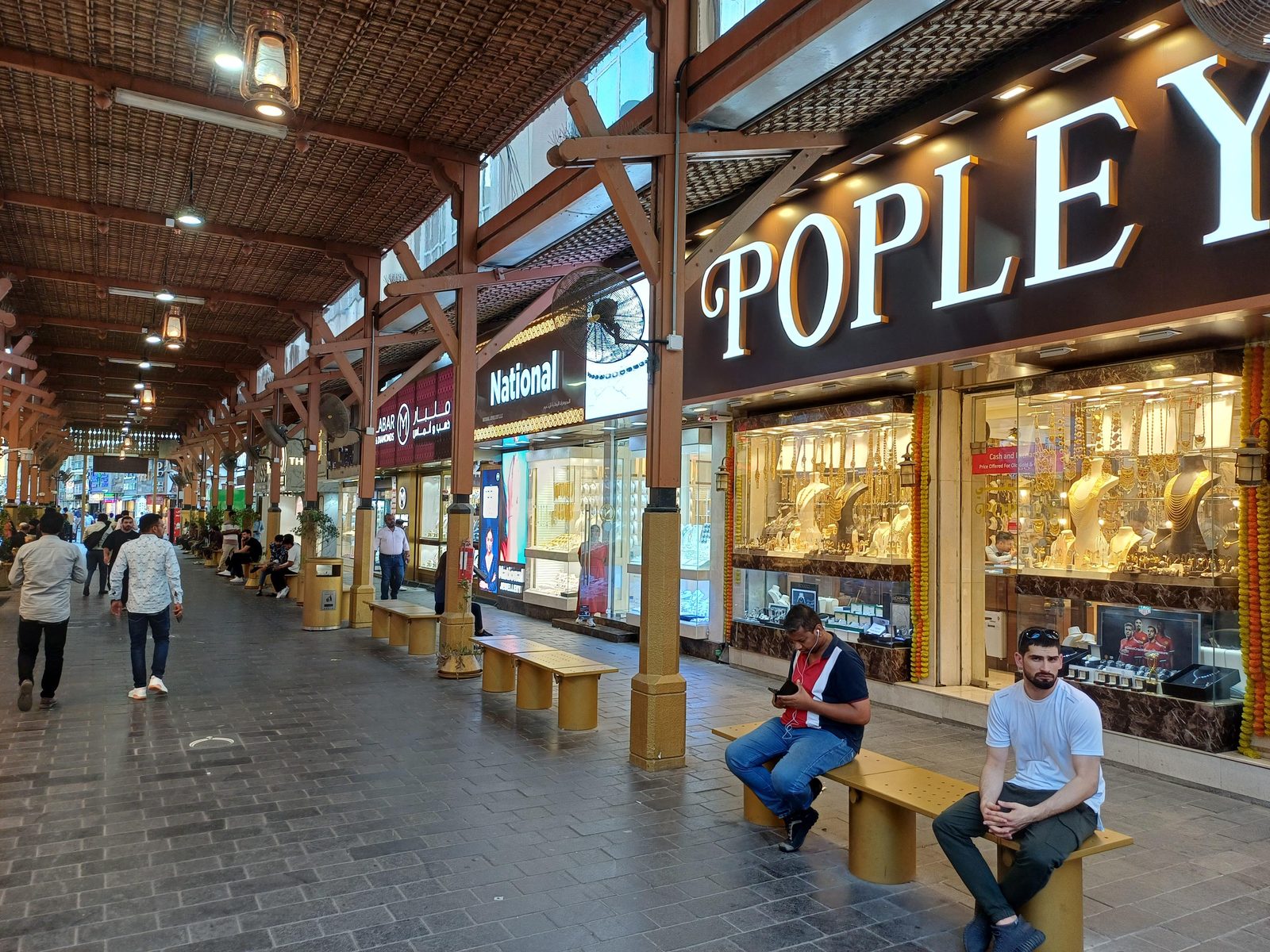
The gold souk is a covered arcade a few minutes from the spice souk, lined with shop windows full of gold jewelry. It is busiest in the evening. The windows are the picture: glowing displays, with people seen through or against the glass. That reflection can hide faces and still show the scene. Shop interiors are private property, so ask before shooting inside. Security staff may stop you photographing some displays. Do not photograph people buying jewelry, and keep your lens away from anyone who signals no.
Dhow Wharfage, Deira
Along the Deira side of the Creek, wooden cargo dhows tie up and load everything from tires to fridges for ports around the region. It is one of the last scenes of old trading Dubai, and the stacks of goods and hulls make strong compositions. This is a working area. Stay out of the way of loading, and ask crews before any photo of them. Some will agree, some will not. Late afternoon light is good. If port or security staff tell you to stop, stop.
Al Seef
Al Seef is a newer promenade on the Bur Dubai side of the Creek, built to look like the old town, with cafes and a waterfront walk. It is calmer than the souks and good at sunset and after dark, when the lanterns come on and abras pass on the water. I'd use it for night work: long exposures of boats and silhouettes on the waterfront. Treat people here the same way as everywhere in Dubai. Keep them small and unidentifiable, or ask.
Photographing people in Dubai
Strict: local law or custom protects people's image. Ask first, or keep faces out of frame.
This is the strict one. Federal Decree-Law No. 34 of 2021 on combating rumours and cybercrimes, Article 44, makes it an offence to invade someone's privacy by photographing them without consent, in public or private places, and to share such images. Khaleej Times reports penalties of at least six months' detention and/or a fine of AED 150,000 to 500,000. Photos of accident victims are specifically covered. Courts look at intent, but that is not something to test. Commercial shoots may need a permit. This is general information, not legal advice.
In practice: ask first, every time a person is recognizable. Never photograph women, families or children without explicit permission. Never photograph police, military sites or government buildings. If someone objects, delete the photo in front of them and apologize. See is street photography legal.
General information, not legal advice. More in is street photography legal?
What to photograph in Dubai
- Abras and dhows. Wooden boats against the Creek and the skyline.
- Souk displays. Spice sacks and gold windows as color and texture studies.
- Wind towers and lanes. Al Fahidi's walls and shadows, with a small figure for scale.
- Cargo. Goods stacked on the dhow wharves in Deira.
- Asked portraits. Traders and shopkeepers who agree to be photographed. See how to photograph strangers.
- Silhouettes and reflections. People against the light or in shop glass, where they cannot be identified.
- Night on the Creek. Lit boats and waterfronts at Al Seef.
A one-day photo walk
- 7:00, Al Fahidi Historical Neighbourhood. Soft light and empty lanes. About 1.5 hours.
- 9:00, Bur Dubai Textile Souk. A 10 minute walk west along the Creek. Shops open through the morning.
- 10:00, abra across the Creek. From Bur Dubai Abra Station to the Deira side, a few minutes on the water.
- 10:15, Deira Spice Souk, then Gold Souk. A 5 minute walk between them. Retreat indoors when the heat builds.
- 16:00, Dhow Wharfage, Deira. Taxi or a 30 minute walk along the Creek. Late light on the boats.
- Sunset and after dark, Al Seef. Taxi across the Creek, about 10 minutes. Night shots of abras and the waterfront.
When to shoot
November to March, when it is warm rather than extreme. Early morning and the two hours before sunset. Summer heat from June to September is dangerous at midday. During Ramadan, eat and drink discreetly in public.
The light
Very bright, hard light most of the day, often with haze. Low sun along the Creek in late afternoon; souks and arcades give shade and mixed artificial light.
What to bring
A small, quiet camera and a 35mm or 50mm prime for asked portraits and scenes. Avoid big lenses and tripods in the souks.
Safety
Very low street crime. The main risks are legal (photos of people, posting online) and heat. Carry ID.
Tips for Dubai
- Season: November to March. From June to September, midday heat is dangerous, so shoot at dawn and dusk.
- Ramadan: the dates move each year. Eat and drink discreetly in public during the day, and be extra respectful with cameras near mosques.
- Lens: a 35mm or 50mm prime for asked portraits and scenes. A long lens pointed at strangers looks like exactly what the law forbids. See best lens for street photography.
- Posting: sharing a photo of an identifiable person online is also covered by the law. Blur or leave out faces you did not get consent for.
- Exposure: hard light and haze. Expose for highlights and use silhouettes. More in street photography settings.
- Dress: modest clothing in the souks and old town.
- Drones: separate aviation rules apply. Do not fly one without registration and permission.
Frequently asked questions
Is street photography legal in Dubai?
VERY STRICT. Under UAE Federal Decree-Law No. 34 of 2021 (Article 44), capturing or sharing images of people without their consent can be a criminal offence, with detention of at least six months and/or a fine of AED 150,000 to 500,000. Always ask first. Never photograph women or families without explicit permission, or children, accidents, police, military or government buildings.
Where are the best street photography spots in Dubai?
Start with Al Fahidi Historical Neighbourhood, Bur Dubai Abra Station & the Creek, Bur Dubai Textile Souk, Deira Spice Souk. Wind towers and narrow lanes between sand colored walls. Early morning for soft light and empty alleys.
When is the best time for street photography in Dubai?
November to March, when it is warm rather than extreme. Early morning and the two hours before sunset. Summer heat from June to September is dangerous at midday. During Ramadan, eat and drink discreetly in public.
What lens should I bring to Dubai?
A small, quiet camera and a 35mm or 50mm prime for asked portraits and scenes. Avoid big lenses and tripods in the souks.
Is Dubai safe for street photographers?
Very low street crime. The main risks are legal (photos of people, posting online) and heat. Carry ID.