
Street Photography in Riyadh
Riyadh mixes a small mud-brick old centre with vast modern districts, and it rewards photographers who work with architecture and light first, because photographing people without their consent can be a crime under Saudi law.
- Spots
- 7
- Best time
- November to February, when days are mild
- Lens
- 35mm
- Photographing people
- Strict: ask first
Riyadh can be good for street photography if you shift your approach, because the city has strong architecture and desert light but strict laws on photographing people. Saudi Arabia's Anti-Cyber Crime Law punishes invasion of privacy with a camera with up to a year in prison, and the UK and Canadian governments both tell visitors to photograph people only with consent. So here, street photography means places and light first, and people only with permission or as small, anonymous figures in a wide frame.
Within that, there is plenty to shoot. The mud-brick old centre around Masmak and Souq Al Zal is warm and textured, and Diriyah's At-Turaif glows at sunset. The new districts add glass towers and a metro station by Zaha Hadid. Norah Alamri, a Saudi street photographer, shoots mostly on a phone because it helps people feel comfortable. Before you plan a trip, read the current travel advisories. As of September 2026 they are serious.
Best street photography spots in Riyadh
Masmak Fortress
Masmak Fortress is the clay and mud-brick fort at the heart of old Riyadh, now a museum. Discover Riyadh says photography is generally allowed in the courtyard and public areas, but to check with staff at the entrance, and some exhibits may be off limits. The exterior in morning light is the shot: warm walls glowing against a clear sky. For people, keep them small in the frame, like a figure crossing in front of the gate, and ask before any portrait. The old centre around it also holds government buildings. If you are not sure what a building is, don't photograph it. The square in front is a good place to wait for light.
Souq Al Zal
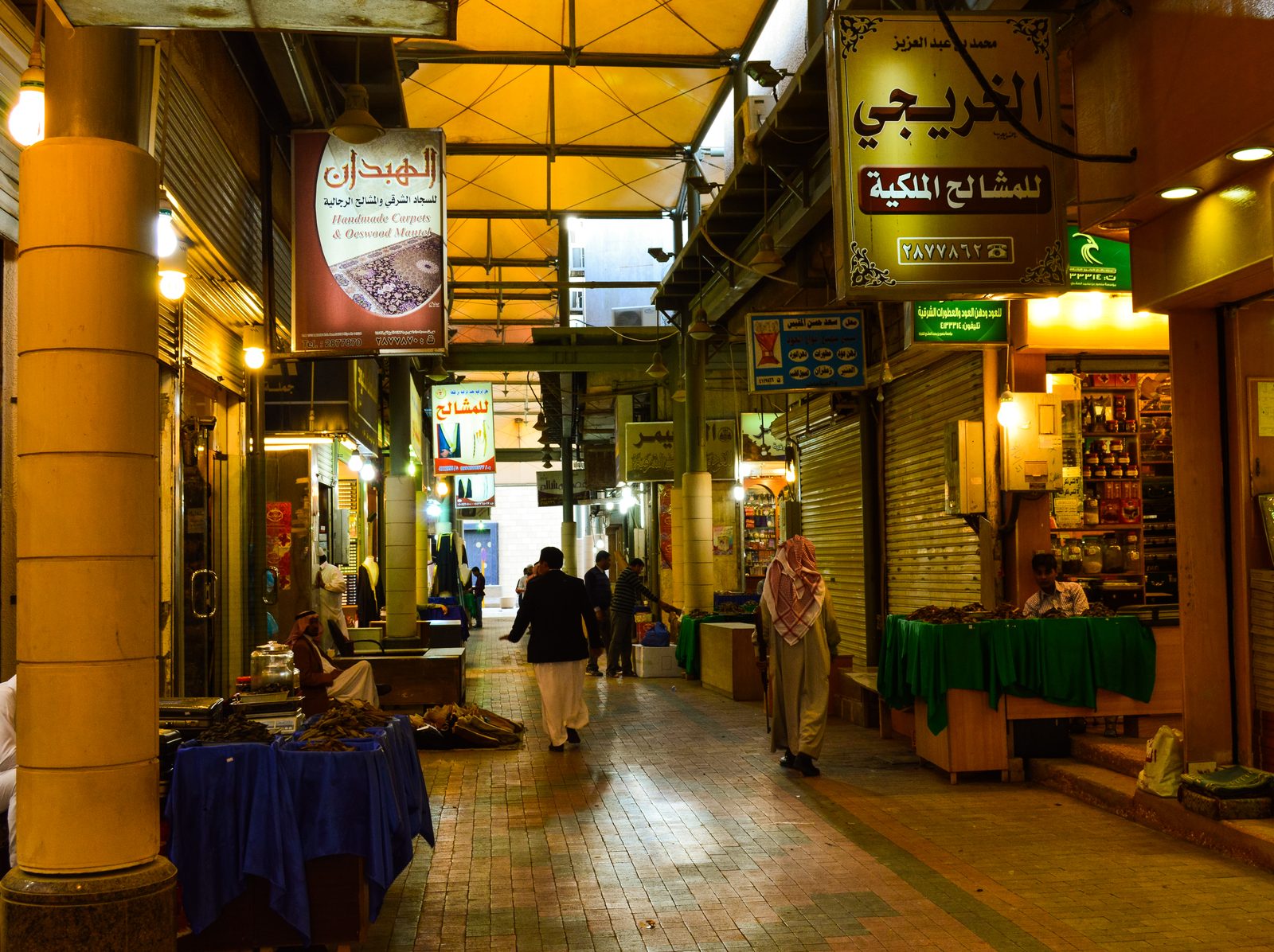
Souq Al Zal is one of Riyadh's oldest markets, a few minutes' walk from Masmak. Its narrow lanes are stacked with antiques, rugs, daggers and incense, and the smoke of oud marks the central lanes. Discover Riyadh says it is busiest on Thursday and Friday evenings, and that many stalls close during prayer times and reopen afterward. The lanes and stacked goods make good documentary frames, but ask before photographing any vendor or their stall up close. Many will say yes. A friendly "Mumkin sura?" (can I take a photo?) opens the conversation. Never photograph women shopping or families without clear permission. Buying something is the easiest way to start a portrait.
At-Turaif, Diriyah
At-Turaif in Diriyah is the UNESCO World Heritage site where the first Saudi state began, a quarter of restored mud-brick palaces and walls on the northwestern edge of the city. Discover Riyadh says exterior photography is permitted, while some interiors under restoration or holding artefacts may be restricted. The orange clay walls glow in late afternoon, and morning gives softer, cooler tones. The site is built for visitors, so people here expect cameras more than in the old souqs. Still, ask before photographing anyone recognizable. Use the walls and doorways as frames for small figures, or shoot across the wadi toward Al Bujairi.
Al Bujairi
Al Bujairi is the restored quarter across the wadi from At-Turaif, home to Bujairi Terrace and its restaurants and cafes. Discover Riyadh says the dining area is open for photography, and suggests shooting from one side of the wadi toward the other, where the modern terrace and the ancient ruins face each other. Evenings are the busiest, when Riyadh families come to eat and walk. That makes it one of the liveliest public spaces in the city, but most people here are families, so wide scenes are the safe choice. Get explicit consent before any close photo of a person, and don't point a camera at women or children.
KAFD Metro Station
The King Abdullah Financial District is Riyadh's new business district of glass towers, and its metro station, designed by Zaha Hadid, is a photography destination in its own right, according to Discover Riyadh. The same guide says photography of station architecture is permitted. The sculpted white curves and long lines give you graphic frames, with commuters as small shapes moving through them. Weekday rush hour gives the most movement. Keep people small and anonymous in the frame, or ask. The district's towers look best at golden hour, when the glass picks up the sunset.
Boulevard City
Boulevard City is an entertainment zone of restaurants, lit facades and fountain shows, and a hub of Riyadh Season, which usually runs from October to March. Discover Riyadh says these zones actively encourage social media sharing, and that wide shots of crowds at events are fine, while close shots of individuals need the same consent as any portrait. That is how to work it: wide frames of crowds under the lights, and silhouettes against the fountains. Evenings are when it comes alive. It is full of families, so avoid close shots of women and children entirely unless you have permission.
Kingdom Centre Sky Bridge
The Kingdom Centre's Sky Bridge spans the arch at the top of the tower, and Discover Riyadh calls the arch and the city views the most photographed subjects in Riyadh. It is ticketed. Go before sunset to watch the city turn gold, then stay for the lights. From the bridge, people on the streets below are tiny and anonymous, so this is one of the easier places to photograph city life. The Olaya district around the tower gives you street-level foregrounds, with Al Faisaliah Tower's golden sphere in view. The glass has reflections, so press your lens close to it.
Photographing people in Riyadh
Strict: local law or custom protects people's image. Ask first, or keep faces out of frame.
This is the strict part. Article 3 of the Anti-Cyber Crime Law covers invasion of privacy through the misuse of camera-equipped phones and similar devices, with up to one year in prison and/or a fine of up to SAR 500,000. Saudi lawyers read it to include photographing people without consent and posting such photos. The UK FCDO says to photograph local people only with their consent, and Canada says to seek permission before taking photos of individuals. This is general information, not legal advice. See is street photography legal.
In practice: ask first, every time a person is recognizable. Never photograph women or families without explicit permission, and leave children out unless a parent agrees. Men and vendors are often willing when asked. Don't publish anyone who hasn't agreed. If someone objects, delete the photo in front of them and apologize.
General information, not legal advice. More in is street photography legal?
What to photograph in Riyadh
- Mud-brick walls at Masmak and At-Turaif, in morning and late light.
- Souq textures: stacked rugs and curling incense smoke in Souq Al Zal.
- Vendors who agree to a portrait, which many do when asked.
- Modern architecture: KAFD towers and the Kingdom Centre arch.
- Crowds at events during Riyadh Season, shot wide.
- Silhouettes against fountains and lit facades at Boulevard City.
- The city from above, from the Sky Bridge at dusk.
- Coffee culture: cafes and Saudi coffee served with dates, with permission from staff.
- Men in thobes and bishts at the souq, often happy to pose when asked.
- Shadows: hard midday shadows in the old lanes, with no one identifiable in them.
A one-day photo walk
- 7:30, Masmak Fortress. Morning light on the clay walls before the heat.
- 9:00, Souq Al Zal. A few minutes on foot. Quieter weekday morning lanes for textures and asked-for portraits.
- Midday: rest indoors. The light is harsh and, for much of the year, so is the heat.
- 15:30, KAFD Metro Station. By metro or taxi. Architecture and commuters as small figures.
- 16:30, At-Turaif and Al Bujairi, Diriyah. About 20 to 30 minutes by taxi. Golden hour on the ruins, then the terrace as evening crowds arrive.
- 20:00, Boulevard City. About 20 minutes by taxi. Lights and wide crowd scenes. On another evening, swap in the Kingdom Centre Sky Bridge at sunset.
When to shoot
November to February, when days are mild. Summer is extremely hot, and March to May brings sandstorms. Riyadh Season usually runs from October to March, with big crowds at Boulevard City. Souq Al Zal is busiest on Thursday and Friday evenings.
The light
Clear, dry desert light. Mornings are clean and cool-toned, and golden hour turns clay walls amber. Midday light is harsh. Sunset is roughly 17:15 in winter and 18:30 in summer.
What to bring
A small, discreet camera or a phone for people, plus a wide lens for architecture. A blower for dust.
Safety
Check advisories before you go. As of September 2026, the US rates Saudi Arabia Level 3, Reconsider Travel, over Iranian drone and missile threats, armed conflict, terrorism, exit bans and social media laws. Canada advises avoiding non-essential travel. The UK FCDO reports Houthi missiles and drones targeting cities including Riyadh since 13 July, and advises following Saudi Civil Defence alerts. Street crime is low. Heat and legal risk are the day-to-day concerns.
Tips for Riyadh
- Advisories: check the advisories linked in the sources before booking and again before you fly. They were updated in September 2026.
- Security: never photograph government buildings, embassies, military or security sites, palaces or police. Canada also warns against filming military activity or damage, which includes any missile or drone debris.
- Drones: you need authorization to import or fly one.
- Social media: Canada warns that Saudi law covers what you post and even what you like. The US advises deleting content that might be seen as controversial or inappropriate before you travel.
- Prayer times: many souq stalls close for prayers, then reopen.
- Heat and dust: shoot early and late. Use a blower on your lens, never a cloth, since sand scratches.
- Portraits: learn "Mumkin sura?" (can I take a photo?). See how to photograph strangers.
Frequently asked questions
Is street photography legal in Riyadh?
VERY STRICT. Article 3 of Saudi Arabia's Anti-Cyber Crime Law punishes invasion of privacy through the misuse of camera-equipped phones and similar devices with up to one year in prison and/or a fine of up to SAR 500,000. Saudi law firms read this to cover taking photos of people without consent and posting them online. The UK FCDO says to photograph local people only with their consent, and that photographing government buildings, diplomatic premises, military installations and palaces is illegal. Canada's advice adds holy sites and sensitive installations, and warns that filming military activity or damage can bring severe penalties. Drones need authorization. Never photograph women or families without explicit permission, and leave children out unless a parent agrees. General information, not legal advice.
Where are the best street photography spots in Riyadh?
Start with Masmak Fortress, Souq Al Zal, At-Turaif, Diriyah, Al Bujairi. Clay-brick fort in the old centre, now a museum. Warm walls in morning light.
When is the best time for street photography in Riyadh?
November to February, when days are mild. Summer is extremely hot, and March to May brings sandstorms. Riyadh Season usually runs from October to March, with big crowds at Boulevard City. Souq Al Zal is busiest on Thursday and Friday evenings.
What lens should I bring to Riyadh?
A small, discreet camera or a phone for people, plus a wide lens for architecture. A blower for dust.
Is Riyadh safe for street photographers?
Check advisories before you go. As of September 2026, the US rates Saudi Arabia Level 3, Reconsider Travel, over Iranian drone and missile threats, armed conflict, terrorism, exit bans and social media laws. Canada advises avoiding non-essential travel. The UK FCDO reports Houthi missiles and drones targeting cities including Riyadh since 13 July, and advises following Saudi Civil Defence alerts. Street crime is low. Heat and legal risk are the day-to-day concerns.