
Street Photography in Tel Aviv
Tel Aviv packs a busy market and a long urban beach into a small, walkable city under hard Mediterranean light, and it has one of the densest street photography scenes anywhere.
- Spots
- 8
- Best time
- March to May and October to November
- Lens
- 28mm or 35mm
- Photographing people
- Generally allowed
Tel Aviv is good for street photography because a crowded market and a beach promenade that runs for kilometers sit within walking distance of each other, under light so hard it shapes the whole local style. F. D. Walker counted more well known street photographers per head here than anywhere he had been, and ran into several of them in the Carmel Market in a single week. Alexander Kreslavsky, who leads workshops in Israel, says attitudes to cameras are easier in Tel Aviv than in most of the country.
The first thing to know is not photographic. The US State Department rates Israel Level 3, Reconsider Travel, and the UK warns of rocket and drone attacks throughout the country. If you go, know where the nearest shelter is wherever you are shooting. With that in place, I'd spend mornings in the markets and late afternoons on the beach.
Best street photography spots in Tel Aviv
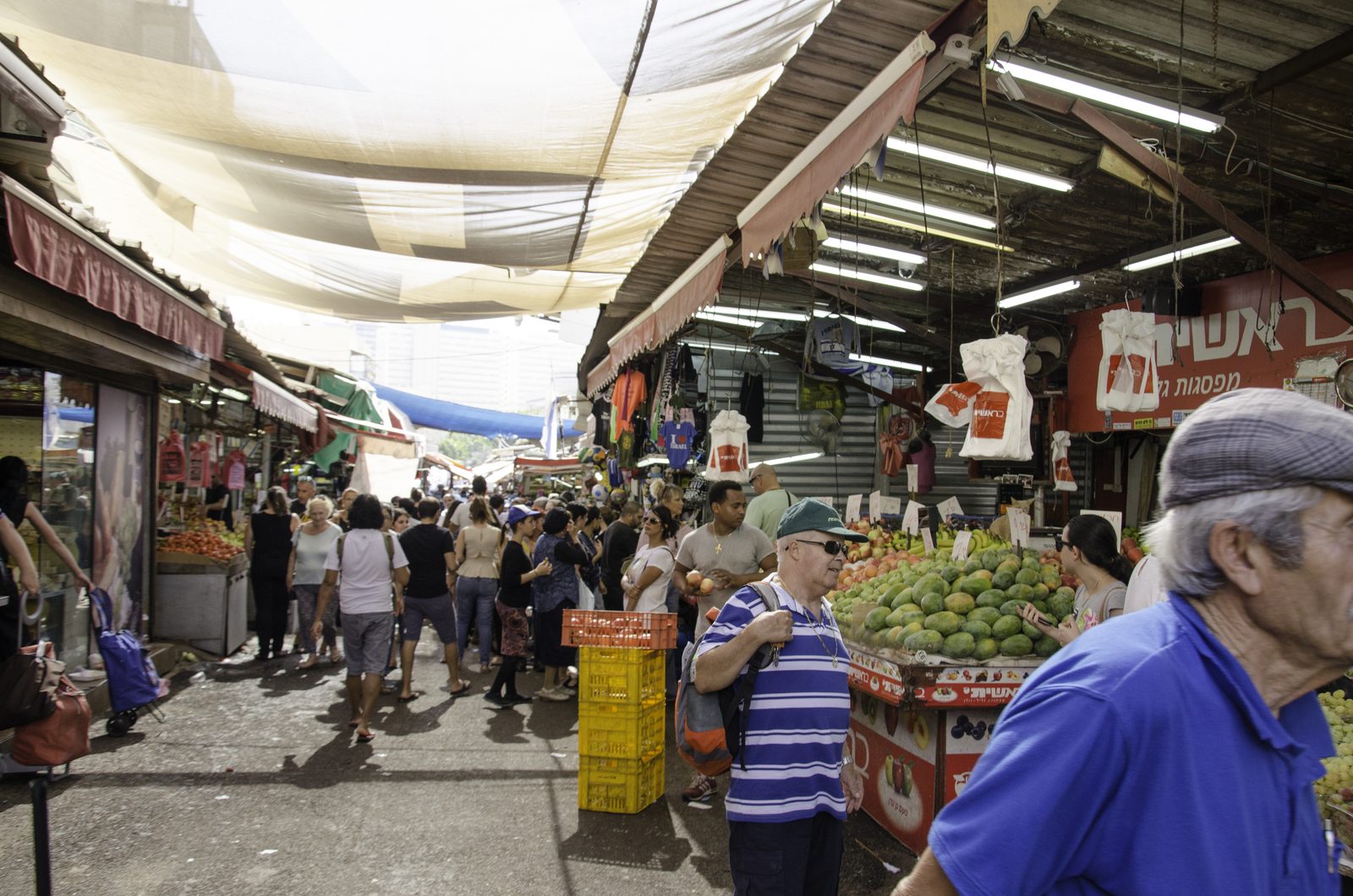
Carmel Market
The Carmel Market is the city's main shuk, a long street of produce stalls and cheap clothes running from Magen David Square toward the sea. Kreslavsky calls it probably the most popular place for street photography in Tel Aviv, and several well known photographers work it almost daily. Friday morning is the peak, as everyone shops before Shabbat. The awnings leave slices of sun on the ground, so find one bright gap and wait for a face to cross it. It is closed on Saturday. Vendors shout and joke, but some will wave you off; move on without arguing.
Nachalat Binyamin
Nachalat Binyamin is the pedestrian street running beside the Carmel Market. On Tuesdays and Fridays it hosts an arts and crafts fair with stalls down the middle and street musicians. It draws a crowd of characters that Kreslavsky says photograph really well. Come on Friday late morning, when the fair and the market overlap. Stand behind a musician and shoot the faces of the people who stop to listen. The Bauhaus and eclectic facades above give you strong lines if you shoot upward. The Friday crowds are dense, so keep your bag closed.
Rothschild Boulevard
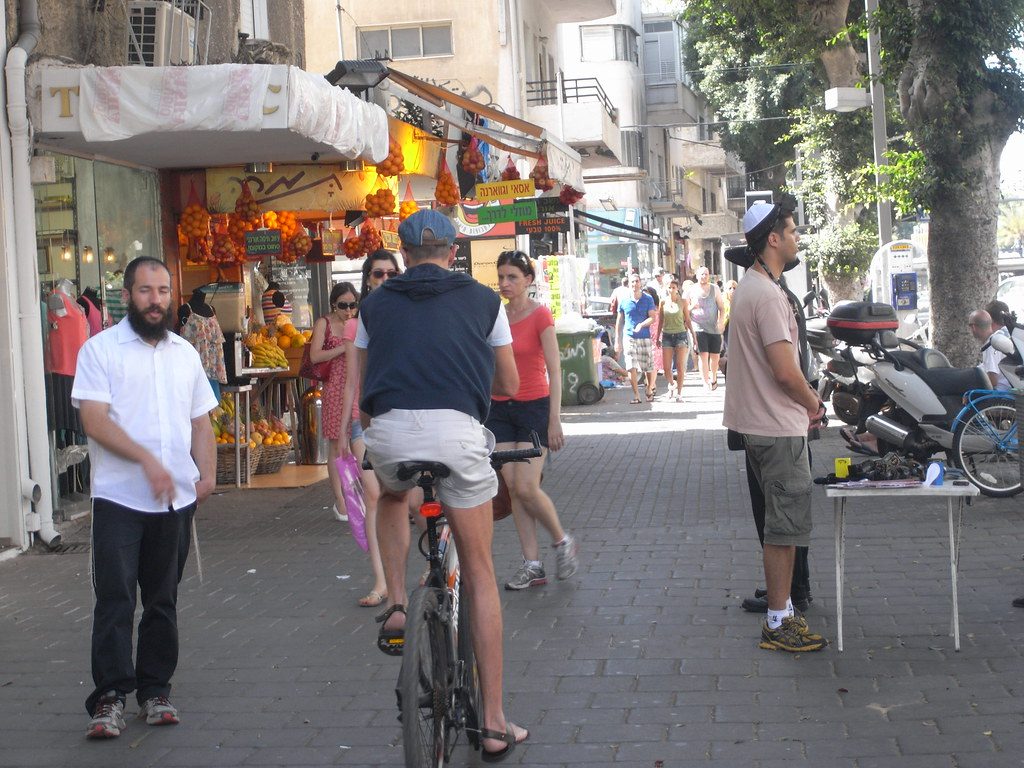
Rothschild is a wide boulevard with a shaded walking and cycling strip down the middle, lined with kiosks and cafes. It is where Tel Aviv shows off its daily life: cyclists, office workers, dogs and people reading on benches. Morning and late afternoon give you dappled light through the trees, which is good for isolating one figure in a pool of sun. Stand near a kiosk and let people come to you. Watch for e-scooters and bikes on the central path, which move fast and quietly.
Dizengoff Square
Dizengoff Square is a round plaza in the White City, the district of 1930s Bauhaus buildings on the UNESCO list. The plaza was lowered back to street level in recent years, and its circular shape gives you curves and repeating shadows. On some mornings an antiques and flea market sets up here. Come in the late afternoon, when people walk home and the low sun cuts across the circle. Shoot from the edge with a wider lens so the curve leads to a walker. Dizengoff Street runs north from here for more shopfront scenes.
Florentin
Florentin is a south Tel Aviv neighborhood of small workshops and cheap bars, popular with students and artists. Kreslavsky mentions it for its graffiti covered walls and busy nightlife. By day the workshops and wholesale shops give you working scenes, while at night the bars spill onto the pavement. I'd come around 17:00 to catch both. Use a mural as the background and wait for a passerby to add scale. The Levinsky spice market sits on its northern edge. Late at night, stay on the busier streets.
Jaffa Flea Market
The flea market spreads across the old streets just inland from Jaffa's clock tower, with old furniture and junk piled into the road. It gets busy in the early morning, when sellers lay out their stock, and Kreslavsky notes beautiful morning light there. He also warns that this is one of the places where people do not like being photographed. Shoot wider scenes of buyers digging through piles rather than close portraits of traders, and ask first if you want a face. It is closed on Saturday. Cafes around it make a good base.
Jaffa Port
Jaffa Port is one of the oldest harbors in the world and still has working fishing boats below the old city. It is quieter than the rest of Tel Aviv and suits slower work. Come in the late afternoon, when fishermen mend nets and the sun drops into the sea behind the breakwater. Frame fishermen against the water, or shoot silhouettes on the breakwater at sunset. From the hill of old Jaffa above, you can look back along the beach to the Tel Aviv skyline. The quay has no barriers, so mind the edge.
Gordon Beach
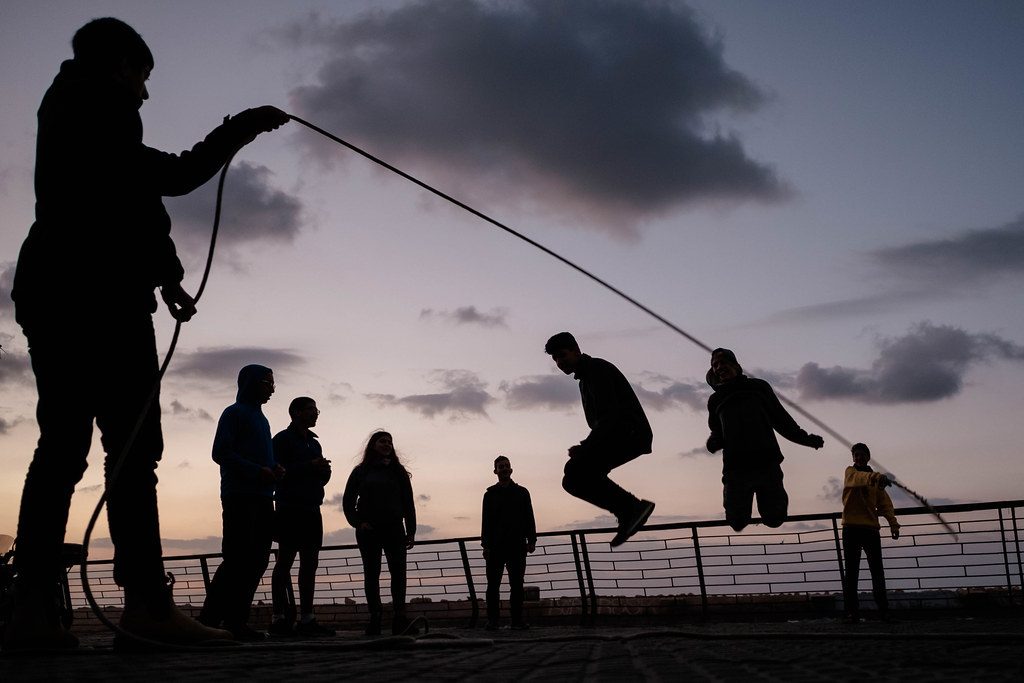
Gordon Beach is the central city beach, with an outdoor gym on the sand and the promenade running above it. F. D. Walker called the beach walk from Jaffa to the port one of the longest continuously active beach walks in any city. Late afternoon is best, when the sun is low over the water and players of matkot, the local paddle game, crowd the waterline. On Saturdays, when Shabbat closes much of the city, the whole beach fills. Shoot silhouettes against the backlit sea, or stand on the promenade and look down. Avoid close shots of people in swimwear.
Photographing people in Tel Aviv
Photographing people in public is generally allowed in Israel. The Protection of Privacy Law, 5741-1981, is about privacy, not public streets: it covers photographing people in private settings and publishing images that could humiliate them. Harassing someone with a camera is covered too. Kreslavsky sums it up as: you can photograph people in public, but do not harass them and do not publish photos that cost them their dignity. The Wikimedia Commons summary links the law's text. Do not photograph military or security sites. This is general information, not legal advice.
Reactions are mixed. Kreslavsky says Tel Aviv is easier than most of Israel, but you might get shouted at in tourist spots, and people can be hot headed, so avoid a confrontation. Apologize and delete if someone insists. In Orthodox areas, and anywhere on Shabbat, leave the camera down. More in how to photograph strangers.
General information, not legal advice. More in is street photography legal?
What to photograph in Tel Aviv
- Matkot players and the constant slap of paddles at the waterline.
- Market vendors shouting prices under torn awnings.
- Hard shadows on white Bauhaus walls, the local style's raw material.
- Friday afternoon as shops close and people carry flowers home for Shabbat.
- Soldiers off duty, rifles slung, eating in the market or heading home on a Friday. Do not photograph bases or checkpoints.
- Dogs, everywhere, including on dedicated dog beaches.
- Cyclists and e-scooters on the boulevards.
- Fishermen on the Jaffa breakwater at sunset.
- Festivals: Purim costumes in the streets in late winter, and the Pride parade, usually in June, though it has been cancelled or scaled back in recent war years.
A one-day photo walk
- 8:00, Jaffa Flea Market. Morning light as sellers lay out stock.
- 9:30, Jaffa Port. A 5 minute walk down the hill. Fishermen and boats.
- 10:30, beach promenade north. About 30 minutes on foot toward the Carmel Market, along the sea.
- 11:00, Carmel Market and Nachalat Binyamin. Work both together, best on a Tuesday or Friday.
- 13:30, lunch and rest. The midday light is brutal in summer.
- 16:00, Rothschild Boulevard. About 10 minutes on foot. Dappled light under the trees.
- 17:30, Gordon Beach. About 20 minutes by bus or a 30 minute walk north. Stay for sunset and the last paddle games.
When to shoot
March to May and October to November. Summer is hot and humid with very hard light; the beach stays good into October. Shabbat, from Friday sunset to Saturday night, shuts the markets but fills the beaches. Travel conditions change fast, so check current advisories first.
The light
Very strong sun and deep shadows most of the year, which is why many local photographers work in hard contrast or with flash. The beach faces west, so late afternoon gives backlight and long shadows on the sand. White Bauhaus walls act as giant reflectors.
What to bring
A 28mm or 35mm prime for the market. Add a small flash if you like the local hard light style. Protect gear from sand and salt on the beach.
Safety
The US State Department rates Israel Level 3, Reconsider Travel, due to terrorism and unrest (renewed 26 August 2026). The UK FCDO does not advise against travel to Tel Aviv but warns of a risk of rocket and drone attacks throughout Israel, including shrapnel falling from interceptions, amid regional tension over Iran in 2026. Learn where the nearest shelter is and follow Home Front Command instructions. Street crime is low; watch bags on the beach.
Tips for Tel Aviv
- Safety first: install the Home Front Command alerts and know where the nearest shelter is. The UK FCDO warns of rocket and drone attacks throughout Israel.
- Season: March to May and October to November. The beach stays warm and sunny into October.
- Shabbat: from Friday sunset to Saturday night the markets close and most public transport stops. Spend Saturday on the beach.
- Friday morning: the Carmel Market's best hours, as the city shops for the weekend.
- Exposure: protect your highlights. Expose for the sunlit part and let shadows go black. See street photography settings.
- Flash: several Israeli photographers use fill flash to tame the contrast. Try it on the beach.
- Airport: expect long security questioning and possible device searches at Ben Gurion.
Frequently asked questions
Is street photography legal in Tel Aviv?
Photographing people in public is generally allowed in Israel. The Protection of Privacy Law 5741-1981 restricts photographing people in private situations and publishing images that humiliate them, and repeatedly photographing someone against their will can count as harassment. Do not photograph military or security sites. In Orthodox areas and on Shabbat, keep the camera down. General information, not legal advice.
Where are the best street photography spots in Tel Aviv?
Start with Carmel Market, Nachalat Binyamin, Rothschild Boulevard, Dizengoff Square. The main market and the city's most photographed street. Busiest on Friday morning, closed on Saturday.
When is the best time for street photography in Tel Aviv?
March to May and October to November. Summer is hot and humid with very hard light; the beach stays good into October. Shabbat, from Friday sunset to Saturday night, shuts the markets but fills the beaches. Travel conditions change fast, so check current advisories first.
What lens should I bring to Tel Aviv?
A 28mm or 35mm prime for the market. Add a small flash if you like the local hard light style. Protect gear from sand and salt on the beach.
Is Tel Aviv safe for street photographers?
The US State Department rates Israel Level 3, Reconsider Travel, due to terrorism and unrest (renewed 26 August 2026). The UK FCDO does not advise against travel to Tel Aviv but warns of a risk of rocket and drone attacks throughout Israel, including shrapnel falling from interceptions, amid regional tension over Iran in 2026. Learn where the nearest shelter is and follow Home Front Command instructions. Street crime is low; watch bags on the beach.