
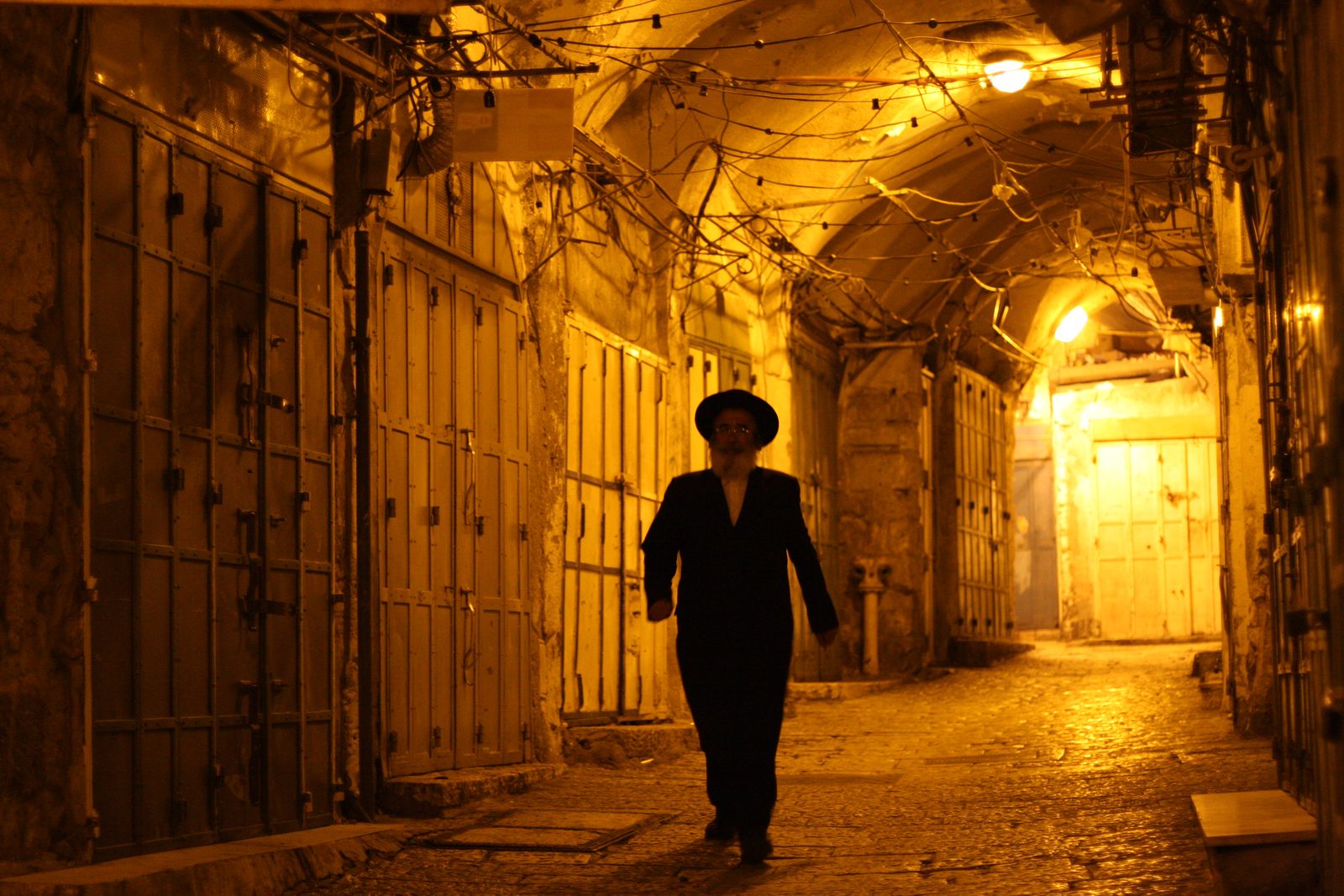
Street Photography in Jerusalem
Jerusalem packs several religious worlds into a few square kilometres, so within an hour on foot you can move from the Old City souks to the ultra-Orthodox streets of Mea Shearim.
- Spots
- 8
- Best time
- Spring (March to May) and autumn (October to November) for mild weather
- Lens
- 35mm or 50mm
- Photographing people
- Generally allowed
Jerusalem is one of the most intense cities in the world for street photography, because several religious worlds share a few square kilometres and live much of their lives outdoors. Photographer f.d. walker calls it a city unlike any other, and says the ultra-Orthodox neighbourhood of Mea Shearim is even more interesting to photograph than the Old City. Add the Thursday rush before Shabbat at Mahane Yehuda, and you have more subjects than you can cover in a week.
Before you plan, read the current travel advisories. At the time of writing, the US rates Israel Level 3, Reconsider Travel, and Canada advises avoiding non-essential travel to Jerusalem. The details are under safety below. If you do go, I'd split the city in two: the Old City in the early morning, and the markets and neighbourhoods of West Jerusalem in the afternoon.
Best street photography spots in Jerusalem
Damascus Gate
Damascus Gate is the grand northern entrance to the Old City and its busiest. Photographer Kreslavsky notes it is busy all day, especially on Fridays and Saturdays. Crowds stream in and out across the stepped plaza outside the gate. Stand on the steps and shoot down at the flow. This is also a flashpoint: police and border police are always present, and it has seen violent incidents. Don't photograph security forces up close, and leave if tension rises.
Muslim Quarter souk
The Muslim Quarter has the most market life in the Old City, walker says, along a maze of covered lanes. Porters push carts past pilgrims following the Via Dolorosa. Light falls in shafts through gaps in the vaulted roofs, which is your best tool: wait for a face to enter a beam. Mornings are calmer. Many shopkeepers will wave you in to sell something; a friendly no is fine. Ask before photographing women.
Church of the Holy Sepulchre & Ethiopian Monastery
The Church of the Holy Sepulchre draws pilgrims all day. Walker advises exploring the inside with your camera, where candlelight on the faces of pilgrims makes strong scenes. His favourite is next door: a doorway in the corner of the courtyard leads to the Ethiopian church and up to the rooftop monastery, where Ethiopian monks and residents live. Keep your shutter quiet and flash off, and never block people who are praying. Some chapels ask for no photos.
Western Wall Plaza
The Western Wall Plaza is an open prayer space in front of the Wall, the holiest site where Jews can pray. On weekdays you can photograph worshippers, and on Monday and Thursday mornings families bring boys for their bar mitzvahs. The Wall's administrators do not allow photography on Shabbat and Jewish holidays. Men and women pray in separate sections. Stay back from people praying and shoot wider. Access to the Temple Mount above, called Haram al-Sharif by Muslims, is limited for non-Muslims and can close at short notice.
Mea Shearim
Mea Shearim was founded in 1874 as one of the first neighbourhoods outside the Old City walls, and today it is home to an ultra-Orthodox, mostly Hasidic population. Hidden Insite describes men dressed as in 19th century Eastern Europe, and wall posters in English rejecting Zionism. Walker found no pushback on weekdays, and was even asked if he was getting good photos. Dress modestly, especially women. Never shoot on Shabbat, and avoid close portraits of women and children.
Mahane Yehuda Market
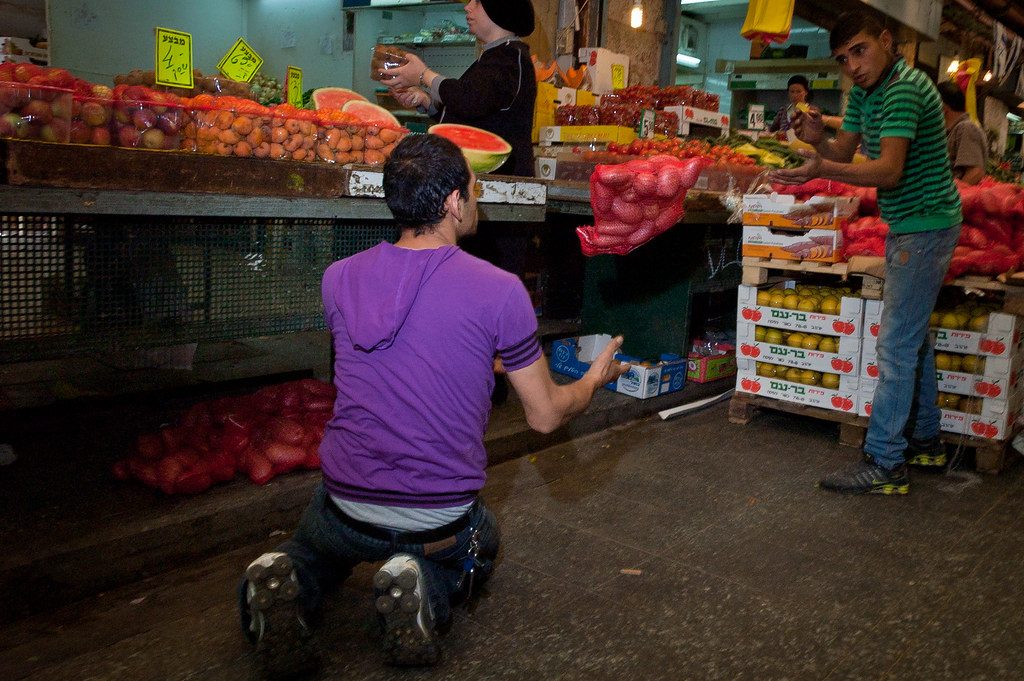
Mahane Yehuda is Jerusalem's main market. Teacher Ouria Tadmor told Hidden Insite that Thursday afternoon, as the city gets ready for Shabbat, is the best time for street photography, when every Jewish culture mixes in one bakery. Kreslavsky adds that at night the eateries and bars turn it into a party, especially on Thursdays. Tadmor's lesson: set your exposure and zone focus at f/8, then wait for moments. The aisles are packed, so shoot from stall corners.
Nahlaot
Nahlaot is a warren of small lanes and courtyards across from Mahane Yehuda. Kreslavsky calls it picturesque at sunset, and particularly photogenic during Hanukkah, when residents light candles in their windows and doorways each evening. Its stone walls and doorways make natural frames. It is residential, so keep your voice down and never shoot into homes. Some parts are religious; follow the same Shabbat rules as elsewhere. Late afternoon light warms the stone, and the lanes are quiet enough to wait for a single figure.
Jaffa Road & Davidka Square
Jaffa Road is the city's main street, with the light rail running down it. Tadmor likes shooting at the intersection of neighbourhoods, where different types of people meet. His advice is to pick a strong frame, like a crosswalk or the light rail platform, and let a story walk into it. Davidka Square, near the market, is a good corner for that. Kreslavsky notes street performers along the pedestrian stretch. Watch the trams when you step back for a wider frame.
Photographing people in Jerusalem
Photographing people in public is generally allowed in Israel. As Kreslavsky explains, the Protection of Privacy Law 5741-1981 restricts photographing people where they expect privacy, and continuously photographing someone against their will can be harassment. Don't publish photos that cost someone their dignity. Security forces and military sites are not subjects. This is general information, not legal advice. See is street photography legal.
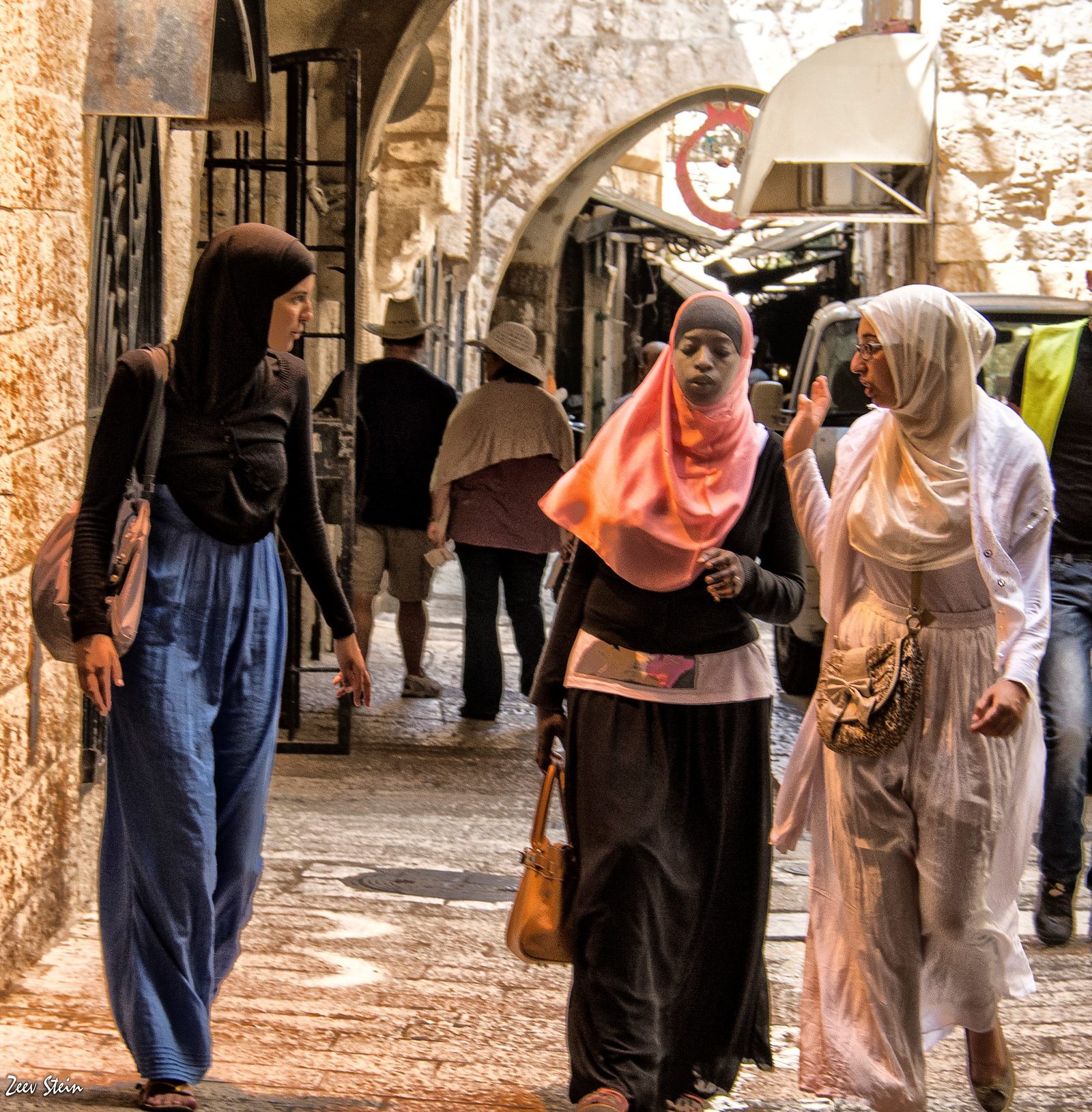
Kreslavsky finds the attitude mixed: easier in the Old City, harder in tourist hot spots and Orthodox neighbourhoods, where you may get shouted at or uncomfortable looks. Many Orthodox and Muslim women do not want to be photographed. Dress modestly and accept a no. For portraits, ask; see how to photograph strangers.
General information, not legal advice. More in is street photography legal?
What to photograph in Jerusalem
- Pilgrims with candles and crosses in the Old City churches.
- Ultra-Orthodox men in long coats and hats hurrying through Mea Shearim.
- Shopkeepers and shafts of light in the covered souks.
- The pre-Shabbat rush at Mahane Yehuda.
- Worshippers and family celebrations at the Western Wall on weekdays.
- Crosswalks and light rail platforms on Jaffa Road.
- Hanukkah candles in Nahlaot windows.
Religious holidays change the city. Check the religious calendars for your dates, because each festival brings its own crowds and its own restrictions. Easter processions in the Old City and Ramadan evenings near Damascus Gate draw huge numbers, and security tightens at the same time.
A one-day photo walk
- 7:30, Damascus Gate. Morning arrivals and vendors. About 45 minutes.
- 8:30, Muslim Quarter souk. Walk in and follow the lanes south. About an hour.
- 10:00, Church of the Holy Sepulchre and Ethiopian Monastery. A 5 minute walk.
- 11:30, Western Wall Plaza. About 10 minutes on foot. Weekdays only.
- 14:00, Mea Shearim. A 20 minute walk north-west through Musrara. Not on Shabbat.
- 16:00, Mahane Yehuda, Nahlaot and Jaffa Road. A 15 minute walk. Best on Thursday, into the evening.
From Friday afternoon to Saturday night, public transport stops and religious areas close to cameras. Plan Shabbat for the Christian and Muslim quarters instead.
When to shoot
Spring (March to May) and autumn (October to November) for mild weather. Thursday afternoon and Friday morning at Mahane Yehuda. Avoid photographing in religious areas from Friday sunset to Saturday nightfall. Check travel advisories before planning any dates.
The light
Bright and hard for much of the year, reflecting off pale Jerusalem stone. Early morning and late afternoon give warm side light in the Old City lanes, while the covered souks stay shaded. Local teacher Ouria Tadmor talks about Jerusalem's holy light on Thursday afternoons.
What to bring
A 35mm or 50mm prime. Keep kit small and discreet in religious areas.
Safety
Check official advice before you go. The US State Department rates Israel Level 3, Reconsider Travel, due to terrorism and unrest (renewed 26 August 2026). Canada advises avoiding non-essential travel to Jerusalem (updated 24 September 2026). The UK FCDO does not advise against East Jerusalem but warns of rocket and drone attacks throughout Israel, lists recent shooting attacks in Jerusalem, and says anniversaries can bring demonstrations and clashes.
Tips for Jerusalem
- Advisories: read the US advisory and the UK FCDO advice before you go, and again before each day out. Canada's advice is stricter on Jerusalem itself. The FCDO says to follow Home Front Command instructions if an alert sounds.
- Shabbat: no photography in Orthodox areas or at the Western Wall from Friday sunset to Saturday night.
- Thursday: the best day for Mahane Yehuda.
- Dress: cover shoulders and knees for the holy sites and Mea Shearim.
- Lens: a 35mm or 50mm, as Tadmor taught with tape on a zoom. See best lens for street photography.
- Settings: zone focus at f/8 in the markets. More in street photography settings.
Frequently asked questions
Is street photography legal in Jerusalem?
Photographing people in public is generally allowed in Israel. The Protection of Privacy Law 5741-1981 restricts photographing people in private situations and publishing images that humiliate them, and repeatedly photographing someone against their will can be harassment. Do not photograph security forces at checkpoints or military sites. Religious sites set their own rules. General information, not legal advice.
Where are the best street photography spots in Jerusalem?
Start with Damascus Gate, Muslim Quarter souk, Church of the Holy Sepulchre & Ethiopian Monastery, Western Wall Plaza. The busiest gate into the Old City, especially on Fridays and Saturdays. Heavy police presence.
When is the best time for street photography in Jerusalem?
Spring (March to May) and autumn (October to November) for mild weather. Thursday afternoon and Friday morning at Mahane Yehuda. Avoid photographing in religious areas from Friday sunset to Saturday nightfall. Check travel advisories before planning any dates.
What lens should I bring to Jerusalem?
A 35mm or 50mm prime. Keep kit small and discreet in religious areas.
Is Jerusalem safe for street photographers?
Check official advice before you go. The US State Department rates Israel Level 3, Reconsider Travel, due to terrorism and unrest (renewed 26 August 2026). Canada advises avoiding non-essential travel to Jerusalem (updated 24 September 2026). The UK FCDO does not advise against East Jerusalem but warns of rocket and drone attacks throughout Israel, lists recent shooting attacks in Jerusalem, and says anniversaries can bring demonstrations and clashes.